Software
Houzz Logo Print
tmo84

Clover invasion

11 years ago

Hi all - lived in New England here and have a question about my lawn. Quick background: Bought my house two years ago with pretty much a bare backyard. I raked, aerated, and reseeded. Grass came in great. Never treated for weeds and just have used Milorganite for fertilizing.

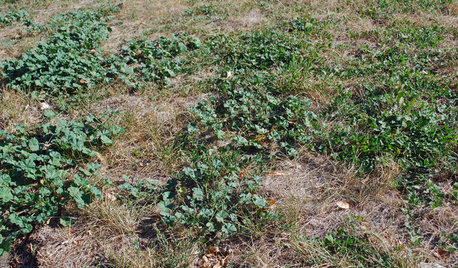
This spring, however, my lawn has been invaded by dandelions and thick clover. Not just spots but pretty much the entire lawn. I know some clover is good but in some spots it's thick.

My question is as follows: how do I get rid of it organically? Is it OK to use one application of chemical weed control? Am I better off letting the grass outgrow it?


I've reseeded some bare spots this spring so whatever treatment I chose I may have to wait regardless for the new grass to come in.

FYI - soil test came back around 6.0-6.3, good for fescue and KBG. Lots of earthworms, etc, so I know the soil is good.


Thanks all.

Comments (2)

  • 11 years ago

    You can try to let the lawn overgrow the clover and dandelions by cutting at your highest mower setting. That does help a little.

    In areas where they're dominant, that may not help and some creative chemistry may be required to get on top of the situation before you move back to cultural controls. Weed B Gon Clover, Chickweed, and Oxalis will take care of the issue in one shot. But it's your choice if you want to use it.

    In new grass areas, wait for the third mow before spraying. Losses mount the younger the grass is.

    Just FYI--the difference between 6.0 and 6.3 is a factor of two in acidity, and also the difference between too low and probably too low (it depends on where your soil balances; mine does so at 6.2, most balance closer to 6.5). If you post your soil test, I'll take a look at it. Hopefully there's enough information for an accurate read as pH reflects the sulfur, calcium, magnesium, and potassium ion amounts--which means some specific numbers and capacities have to be listed or I can't get an accurate read on what's required.

  • 11 years ago

    I'm going to guess that you have a fescue lawn, that it thinned out last summer, and that you didn't notice or thought it would fill back in. Fescue does not fill back in without annual overseeding in the fall. When it thins and opens up the turf canopy, that allows room with bare soil for the weeds to encroach. Then with the right moisture conditions, those weeds will germinate and can smother out the rest of the grass.


    Before I go on, I'd like to say that clover makes a very plush looking lawn when that's all you have. Most people don't remember that clover was once a staple component of "lawn seed" sold back before the 1960s. The chemistry technology that occurred during WWII came to the civilian world in the form of very specialized herbicides, insecticides, fungicides, and fertilizers. When those herbicides were applied to a normal grass lawn, they killed the clover. So the seed suppliers saw that handwriting on the wall and stopped putting clover seed into grass seed. So now you have to decide, do you want a 100% clover lawn or a 0.00% clover lawn.

    In theory you can kill clover with vinegar. I've used vinegar successfully on other weeds, but it also kills my grass. So it has the benefit of not being harmful to the environment, but it's a tough love approach to weed control. The Weed B Gone that morph mentioned is the evolution of the WWII chemicals. These are the chemicals you hope to never have to use once you "go organic." Going organic means one thing if you're raising veggies for sale. That industry is regulated. But if you're growing your own grass, nobody is looking over your shoulder. If you are strictly looking for an organic solution, vinegar is the only one I know of. On the other hand, if you want to blast out the weeds in a hurry, not harm any of the real grass, and get on with your lawn hobby with minimal disruption, then Weed B Gone CCO is your product. It will not ruin your life. In your situation with a lot of weeds, you could get the bottle that goes on the end of the hose. For some weeds it acts fast and others might take 2 weeks. It will leave behind large dead spots where the clover is most dense, and now is a terrible time to put down new grass seed, so I would suggest something else.

    Live with the clover this season and take care of it properly in the fall. Get a WeedHound tool to pluck the dandelions out or you could spot spray individual weeds with vinegar (minimize overspray because it will kill surrounding plants). The WeedHound was all the rage about 5-8 years ago on all the forums. It allows you to stand up an pluck out the taprooted weeds about as fast as you can step on them. I used it extensively this year on thistle I had at my new house. It's a back saver. Learn to take care of your lawn (explained below) so that you have minimal weed pressure next year. Practice these guidelines all this season so you will have a fairly nice looking bunch of weeds in the fall. Then in the very early fall, blast it with Weed b Gone and reseed the bare spots. Reseeding in the early fall gives you time before the frost to see if you got enough seed down. Repeat as needed in the fall. DON'T SEED IN THE SPRING. If you have a dense turf next spring, then the weeds won't get a foothold. Here's something I wrote a few years ago to help people unlearn their lawn care habits and develop better ones.

    Basics of Lawn Care

    After reading numerous books and magazines on lawn care, caring for lawns at seven houses in my life, and reading numerous forums where real people write in to discuss their successes and failures, I have decided to side with the real people and dispense with the book and magazine authors. I don't know what star their planet rotates around but it's not mine. With that in mind, here is the collected wisdom of the Internet savvy homeowners and lawn care professionals summarized in a few words. If you follow the advice here you will have conquered at least 50% of all lawn problems. Once you have these three elements mastered, then you can worry about weeds (if you have any), dog spots, and striping your lawn. But if you are not doing these three things, they will be the first three things suggested for you to correct.


    Watering
    Water deeply and infrequently. Deeply means at least an inch in every zone, all at once. Infrequently means monthly during the cool months and no more than weekly during the hottest part of summer. Do not spread this out and water for 10 minutes every day. If your grass looks dry before the month/week is up, water longer next time. If that does not work, then you might have to water more than once per week during the summer's hottest period. Deep watering grows deep, drought resistant roots. Infrequent watering allows the top layer of soil to dry completely which kills off many shallow rooted weeds.

    You will have to learn to judge when to water your own lawn. If you live in El Paso your watering will be different than if you live in Vermont. Adjust your watering to your type of grass, temperature, humidity, wind, and soil type. It is worth noting that this technique is used successfully by professionals in Phoenix, so...just sayin.' The other factors make a difference. If you normally water 1 inch per week and you get 1/2 inch of rain, then adjust and water only 1/2 inch that week.

    Mowing
    Every week mulch mow at the highest setting on your mower. Most grasses are the most dense when mowed tall. However, bermuda, centipede, and bent grasses will become the most dense when they are mowed at the lowest setting on your mower. In fact there are special mowers that can mow these grasses down to 1/16 inch. Dense grass shades out weeds, keeps the soil cooler, and uses less water than thin grass. Tall grass can feed the deep roots you developed in #1 above. Tall grass does not grow faster than short grass nor does it look shaggy sooner. Once all your grass is at the same height, tall grass just looks plush.

    Fertilizing
    Fertilize regularly. I fertilize 5 times per year using organic fertilizer. Which fertilizer you use is much less important than numbers 1 and 2 above. Follow the directions on the bag and do not overdo it. Too much is better than too little*.