Software
Houzz Logo Print
tom123_gw

Butterfly garden

11 years ago

This has been the best butterfly year ever for me. I think it's because of the wet weather we had early this spring and the lack of a freeze here in Central Florida. (I live in Clermont, which is about twenty miles due west of Orlando.)

Today I saw a Viceroy on my willow (black willow, I think.) I see one or two of them a year, it seems. This one was laying eggs all over the willow.

The one butterfly that I have not seen in any numbers is the Polydamas or Gold-Rim. I don't know why that is. I have the same Pipevines and they are growing, but no Polydamas or just a few. I do have some Pipevine butterflies, so that's good.

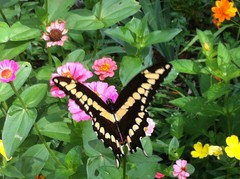
Bunches of Zebras and Fritillaries and lots of Monarchs and Sulfurs are around. I have only seen two Tigers so far, but there are lots of Giants and some Eastern Blacks, Palamedes and one or two Spicebush. So far no Queens. I only see a few of these every year.

The two best nectar plants for me are the large red pentas and the large purple porterweeds. The purple porterweed is a favorite of hummingbirds also.

How about you guys...and girls? Good butterfly season?

Comments (25)

  • 11 years ago
    last modified: 11 years ago

    Actually, yes. Today while working in the yard I thought that while the number of butterflies flitting around the beds was slightly above normal, what was really interesting was the larger than normal variety of butterflies. I actually had 3 monarchs fluttering around today when I was lucky last year to see one. I even already have Zebra Longwings even though my Firebush isn't blooming yet. I have also seen Zebra Swallowtails, though they are fleeting, no signs of nibbling on my one, lone, small pawpaw. I don't know if I would attribute it to the weather as much as my beds maturing though, there are more flowers this year and larger masses of the colors.

  • 11 years ago

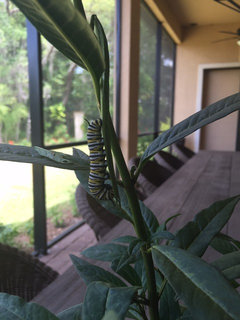
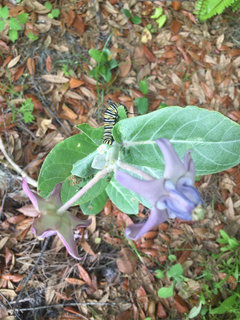
    Too good in our center's kids garden - sulfur caterpillars stripped our cassia tree bare & I had to buy another which is still quite small, same happened w/ our milkweed & monarchs. I'm hoping the new cassia has a chance to grow before the sulfurs find it. Kids did get to see a lot of pupae hatching over the last few months, tho .We have the big porterweed as well & it is a popular nectar source w/ various varieties of butterfly. Along w/ fritillaries, sulfurs & monarchs, I've seen red admirals, skippers & azures @ the porterweed . Mistflower is another stalwart nectaring plant for us & it reseeds readily. I love the sweet smell it has - reminds me of sweet clover.

    I noticed that the zebra longwings in my yard seem to prefer my verbena bonariensis for nectar. I have the corky-stemmed passiflora (subarosa?) both @ home & @ work for the fritillaries & longwings. Funny, tho, I only see zebra longwings @ my house - thinking I should plant some verbenas @ work.

  • 11 years ago

    Yes we are have a good year for them also. The butterflies show up around 10 am every day, sometimes we have a dozen or more at one time. The Monarch's have been hatching from my wife's parsley plants. Plenty of Zebra Longwings, Southern White and Gulf Fritillary butterflies. Also have many very small gray butterflies on the Scorpion Tail wild flowers. I think they are Gray Hairstreaks. We had a Purple Passion flower vine growing up the Sand Pine which the Gulf Fritillary loved, many cats on that vine. A recent storm knocked the pine over. We haven't relocated the vine yet but it faired much better than the pine tree did.

    Craig

  • 11 years ago

    I have tons of butterfly plants so I see them all year, unless it gets really cold. But I have planted all these plants with butterflies and bees in mind. I haven't been outside as much due to surgery, but I know I see a lot of them through the kitchen window.

  • 11 years ago

    Just had to add my two cents upon stumbling across this discussion. I first read about the vastly depleted numbers of Monarch butterflies, and a few others, almost a year ago. I have the room on my shy 1/4 ac lot, was looking for another project, so went out and enthusiastically jumped in.

    When all was completed 4 months ago, I wound up with two butterfly gardens. The 1st, and largest, is across the front of my mobile home and consists of 9 plants : 5 Milkweed; 2 Penta's, (one white, one red ); and one each Mexican Petunia, and one Porterweed.

    The butterfly garden behind the lanai is smaller, - only 3 Milkweeds and 1 Porterweed. All except the Porterweed out front, are in huge wood and clay pots and are thriving. Both gardens are visible from the lanai.

    Lo and behold, starting 2 months ago, the butterflies came a calling in ever increasing numbers. Am sure my 2 gardens are small compared to most, also am clueless to their individual identities except for the gorgeous Monarchs, - but this project has turned out to be a great joy to me and my guests,..sitting there on the lanai mesmerized both by those flitting darts and also by the intoxicating incense from the 20 ft tall Southern Magnolia blossoms from the tree on the front lawn,..just a few steps away from the front butterfly garden

    Now to study up and try to be able to identify the various butterfly types. In short tho, this has turned out to be a great experience as the numbers of butterflies seem to be increasing on a daily basis. May soon have to start charging admission to my lanai with the increasing numbers of friends & neighbors, all of a sudden, " just casually " stopping by. ( smile )

    Can't do stuff like this in Manhattan ( smile ),..

  • 11 years ago

    Hey, jofus, glad to see that you have joined the butterfly enthusiasts crowd. What's great about the Monarchs is that once they discover the milkweed they stick around and reproduce. Other butterflies will come to your flowers, but if you really want to see other types you will need to get more plants, especially larvae plants. One of the easiest is a passion vine that you can get in most nurseries. There are many different types (don't get the ones with red flowers); they will bring you Zebra Longwings and Gulf Fritillaries. Another easy plant that you can also eat is parsley. The Eastern Black Swallowtails will lay their eggs in it and you will see some beautiful butterflies.

  • 11 years ago


    My first flower bed since moving in FL about a year ago is in full bloom and the butterflies are finding it. So far we've seen, tiger and zebra swallowtails and pearl crescents. Jofus I love milkweed but no one around has it. Where did you get it?

  • 11 years ago

    Bea, check with your local Big Box stores. My local ones have had a
    small selection of the Tropical Milkweed for the past year. Some will
    argue that the Tropical Milkweed is part of the issue with declining
    populations as it will persist almost year-round here and keep the
    Monarchs in the area until it is too late or diminish genetic
    diversity. There could be some truth to this, but as one person who is
    very much into using natives, natives and more natives has said, "It is
    really hard getting native milkweed established and with the current
    plight of the Monarchs, it is better to have the wrong milkweed than no
    milkweed at all." If worried about the Tropical Milkweed keeping the
    Monarchs around, you can just cut them to ground in October to encourage
    them to move on.

    Another option is to order seeds from Florida Wildflower Co-Op in the
    fall and spread the seeds in a bed. Let them ride out the winter and
    sow themselves. You will get spotty germination compared to starting
    them in pots and trays, but the ones that do germinate will have a
    higher chance of surviving. Also, by ordering from the Co-Op, you are getting 'locally' sourced seeds which are more adapted to Florida's conditions than seeds from other parts of the country.


  • 11 years ago

    Thanks for that link to the FL Wildflowers site - what a great resource!

  • 11 years ago

    Bea, once you get the milkweed, save the seeds to replant. They will self sow as well, but you might not recognize the seeding at first and weed it out. I know what it is now and replant it where I want it. :o)

  • 11 years ago
    last modified: 11 years ago

    Giant and eastern tiger swallowtails really like my zinnias. They prefer them over the pentas, cosmos, gallardias, salvias, primroses and marigolds in my bed.

  • 11 years ago
    last modified: 11 years ago

    our season has been so-so..very few zebra, mostly monarchs, but I probably need to add a few more plants..

    here is our garden..

    winter was pretty rough on it, but the milkweed, lantana, butterfly bush and firecracker bush all came back..the firecracker is still coming back so it's not offering much protection to them now.

    and here are some of our guests in action..

    based on your recommendation bea, I'll be adding some zinnias...

  • 11 years ago
    last modified: 11 years ago

    Forgot to mention I have citrus trees, so I get the giant swallowtails in my yard.

    Thanks for the links Jeremy - very nice!

    Here's the Butterfly Gallery @ Floridata - handy ID of many FL butterflies...

    http://mobile.floridata.com/tracks/butterflies/butterflies.html

  • 11 years ago

    Thanks Carol..we have 3 citrus trees, so hopefully they start attracting some of the swallowtails, that would be great.

  • 11 years ago

    Here is a swallowtail on the zinnias. It laid eggs on my citrus tree after it was done visiting the flowers yesterday!

    Jeremy would you like some zinnia seeds? They are an heirloom variety that I have been growing for over 30 years and collect the seeds. You can see the clump on the left side of the photo in the post about irrigation.


  • 11 years ago

    Great picture Bea. Yes, I'd definitely be interested some zinnia seeds. can't go wrong with something that's got 30 years behind it...I just saw this guy this morning, pretty sure it's a black and blue butterfly..photo doesn't really do it justice.


  • 11 years ago

    Can't really tell from the picture, but it kind of looks like a Pipevine Swallowtail. They are a bit smaller than Monarchs, they fly very fast and they have blue on their tails. Might be a Morning Cloak also.

    I will consult with the butterfly forum.

  • 11 years ago

    thanks Tom..this was definitely smaller than a monarch and fast..wish I had been able to get a more focused picture..he did have some orange on the underside of his wings if that makes any difference.

  • 11 years ago

    The answer I got back is that it is a Red Spotted Purple. Congratulations. They are not common butterflies. They seem to like wild black cherry trees and other trees with small fruit. Any of these close by?

  • 11 years ago
    last modified: 11 years ago

    Jeremy I PM you on FB

  • 11 years ago

    Been busy in my yard, too.


  • 11 years ago

    Tom, I've got quite a few trees, some of the citrus has small fruit if that counts..

  • 11 years ago

    I don't believe they use citrus, Jeremy. Here is and excellent link that provides information about these butterflies.

  • 11 years ago

    thanks for the link. That's definitely the butterfly I saw..

Sponsored
Custom Home Works
Average rating: 4.6 out of 5 stars10 Reviews
Franklin County's Award-Winning Design, Build and Remodeling Expert