Software
Houzz Logo Print
ruth_batt

Seeding a lawn

11 years ago

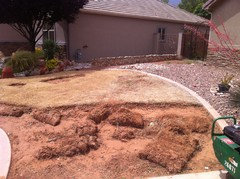
I'm in the process of killing the bermuda grass (pretty sure it's all dead) that invaded my entire front lawn. It's about 200 sq ft. We're going to rip out the top (which is all currently dead) with a sod cutter, and then I would like to seed new lawn. I've never done this before. Should I put some rich topsoil on top of the dirt? Till it?? I already see weeds coming up in some areas that we tried to rip out by hand (shovel). I'm not sure if it's bermuda grass, but I don't think it is. Is there some kind of pre-emergent I can put down alongside my seed? How thick do I need to sprinkle the seeds? How long do I need to keep my lawn wet? Any and all advice appreciated! Thank you!

Comments (13)

  • 11 years ago


  • 11 years ago

    Bump?

  • 11 years ago

    I'm in St. George, Utah. It's Barrobusto Tall Fescue, Barlexas II (RTF) Tall Fescue, Barrington Tall Fescue, Bar Fa 7676(RTF) Tall Fescue and .21% other crop seed. Does this make any sense to you? :)

  • 11 years ago

    I'm not very familiar with those cultivars but taking a look at them in a Google search they look like they should do fine but they won't make it through the heat of summer if planted now. I'm not saying all of it will die but at least half or more won't make it.

    That being said, since you've already started the work I only see 3 options:

    1- Take your chances and seed now but plan to remove the weeds that will come up and seed again in the fall.

    2- Install sod which would give you an instant lawn but is much more expensive.

    3- Just wait it out and deal with a dirt lawn through the summer and seed this fall.

    Either way, do not till. Either sod or seed will grow in the dirt you have and tilling will just make it bumpy. Use RoudUp to kill any weeds that are growing. You can spray the weeds and be ready to plant in a week providing you don't use the RU Extended control. For seeding tall fescue, the rate is 8lbs of seed per 1,000 square feet. Just spread it as evenly as possible and it will figure it out. Once the seed is down water lightly 3 times per day just for at least 2 weeks just enough to keep the top layer of soil moist. You can cover the seed with 1/4" of peat moss or compost if you like but not necessary.

    Ruth B (zone 8a) thanked forsheems
  • 11 years ago

    Thanks for that information. My husband wants to put on sod. I'm not opposed, but our lawn is super uneven right now. We hand-dug that portion shown in the picture, then with the sod-cutter he did the rest. It only cut down the top about 3/4 inch of lawn. So there's a section that's about 5-6 inches lower than the rest. I guess we'll just have to dig it up by hand to make it even, not sure what to do about that.

  • 11 years ago

    Ouch! Sounds like that will require a lot of manual labor to fix.

    I would do a little research here on putting down sod. I've never done it so I have no experience. Make sure to water it correctly to get the roots established.

    Ruth B (zone 8a) thanked forsheems
  • 11 years ago

    Your choice of grass is completely inappropriate for St George. Unless you install underground drip irrigation and leave it running 24/7 from May through September any fescue will die every single summer. I'm sure you can find fescue growing in Las Vegas but those are commercial operations where they water several times a day simply to keep the sod from baking. If you had fescue before, the reason the bermuda invaded was that the fescue died out and the bermuda blew in to take advantage of the bare soil.


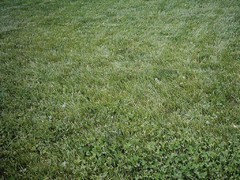
    You might consider getting a hybrid bermuda. It has only minimal resemblance to the wild common bermuda you acquired. Or, now that I think about it, you are a perfect candidate for a mix of wheatgrasses and blue grama. Those are prairie grass which look like this when seeded heavily and mowed monthly...

    This is bpgreen's lawn in Salt Lake City. It was taken several years ago. He included strawberry clover in his seed mix but you don't have to. Check with your county extension agent to see which varieties of wheatgrass will do best in your area (hotter than Salt Lake City). These will thin out in the shade of a building or north side of shrubs or trees.

    What you need to do is level your lawn. That is a big project which requires either a landscaper or a beer drinking/pizza eating team of friends to help out. Proper drainage is all that is important. All water must drain away from your home and buildings. This means at a distance of 10 feet from your house the surface of the soil should be 6 inches lower than the soil up against the house. Secondarily you want to bring the high spots down and raise the low spots. DO NOT USE A ROTOTILLER to get this done. Use scrapers, shovels, rakes or whatever it takes to maneuver the soil at the surface only. Rototillers disturb the soil's existing structure. If you do that then over the next 3 years the soil will establish a new structure. That new structure will be bumpy at the surface. If you only work at the surface now you will not have the 3-year waiting period to see what happens. You already have it. Just don't mess it up. Take soil from the high spots to fill the low spots. Walk all over the low spots to tamp the soil down. As it happens your weight is perfect for tamping it down. You don't have to dance on it, just walk on it. DO NOT BRING IN ANY NEW TOPSOIL unless you have low spots you need to bring up to improve your drainage. Your soil is fine as is. If you want to improve it, there are two aspects to that. You can improve the soil chemistry by getting a soil test (get the $25 test at Logan Labs in Ohio and post your results here for further advice). The other way to improve the soil health is by dosing it with organic fertilizer. Most of us in the lawn forum industry use simple products from the local feed store. I like ordinary corn meal and/or alfalfa pellets (rabbit chow). Morpheuspa like soybean meal and Milorganite. You can use any ground up bean, nut, or seed at a rate of 15 to 20 pounds per 1,000 square feet, so get whatever is easy to find at your feed store. Cottonseed meal is great, too. Apply any day of the year, rain or shine. It won't hurt anything.

    The flaw in my seeding suggestion is that those prairie grass seeds really need to go down after the summer heat breaks. About the only thing you could do now is to seed or sod bermuda or to sod St Augustine. Those are the only two "normal" turf grasses appropriate for your heat. You just started this project at an unfortunate time of year. OR, you could get your soil surface profiled like you like it and spread a shredded tree mulch over the surface. You won't have to do anything else to it and by late September your soil will be very much improved and healthy. Then you could rake up the mulch and seed it. Again, the only problem is you jumped the gun on this renovation. Spring is a bad time of year to renovate a lawn, but summer is a horrible time to renovate.

    Ruth B (zone 8a) thanked dchall_san_antonio
  • 11 years ago

    Thanks very much for all the information. dchall_san_antonio I'm confused why you are referring to SLC and saying that fescue is terrible for St. George. I'm about 400 miles from SLC and our highs in summer are 115 and weather is nothing like SLC. Fescue is the only grass that grows here. The turf farm grows only fescue. Our backyard is sod fescue and it does great. I have bermuda from my NEIGHBOR'S lawn which is 100% bermuda. Maybe it's a hybrid and the only seeds that grew in my lawn were the wild side from his, but that is the only reason it grew. That and 3 years of neglect to our front yard added to the problem. Now we have time to tend the front. I'm also confused why you say spring is the worst time to renovate? We have had an unseasonably cold spring so far so there's no danger to high heat yet. We've barely scraped 70 this spring and it's usually in the high 90s by now. To be fair, I thought we'd do the lawn back in April and be done with it but it's just been dragged out and haven't had enough beer-drinkin' friends to come help us. :)


    My husband does want to do sod, so at this point we just need to even the soil, and I appreciate all the tips on that. We put sod down this same time two years ago in the back and it was much hotter and it did great. My biggest worry right now is that the bermuda survived/will survive the sod process and will just come through anyway--after all this work to get rid of it. =/

  • 11 years ago

    Fescue is considered a northern or cool weather turf. There are some fescues that Midwest farmers use for erosion control, but those are not the turf type of fescue. St George does not have the climate characteristics of a northern tier, so tell me more about your care for the fescue. I've seen fescue in Palm Springs, but that doesn't mean it didn't take a Herculean effort to keep it alive. So what is your watering schedule to keep the fescue alive?


    Ruth B (zone 8a) thanked dchall_san_antonio
  • 11 years ago

    I generally water about 15-20 mins pre-dawn twice a week. The back yard seems to require more so I give it an extra watering 1-2 times a week (my secondary water schedule is every 3 days). Mind, this is during the temperate spring months. When the heat hits I'll have to increase it but I've never needed to do daily waterings. It's probably some special fescue variety breeder specifically for here. I know the really soft kind of grass that grows in the SLC area will NOT grow here, or, requires herculean efforts. :)

  • 11 years ago

    I'm going to suggest you try to extend your watering schedule and water a little longer each time. Put out some cat food or tuna cans and time how long it takes to fill the cans. That will be your target time for watering every time from now on. That is the time it takes to apply one inch of water. I'm going to take a wild guess that it takes 3.5 hours. Consider that your first deep watering. Then watch the grass for signs of wilting. As soon as you see any part of the grass wilting, water it again for 3.5 hours (or whatever your time turns out to be). Then watch it again. I'm going to predict again that the grass will go an extra day before it looks wilty again. Water immediately for your new normal time. By doing this your grass will develop deeper roots that can go deeper into the soil to get the deep water that you're applying every time. The soil surface will become dry and even hard before the grass shows any signs of wilting. That's what you want to see. Weed seeds cannot germinate on dry soil, so there's another plus for this style of watering. The deep roots will be more drought resistant so that if your sprinklers break or you miss a day, the effect will not be catastrophic. We used to read about people who went on vacation and someone broke off a sprinkler head. Net effect was the yard didn't get its daily water and it all died. I think more and more people are getting onto the deep and infrequent bandwagon, because we don't see those problems too much anymore.

    Generally with temps in the 90s you should expect to water deeply once per week. With fescue growing in the high desert, you might need to go to every 5 days in that heat. Also generally with temps in the 80s, the grass should last 2 weeks between deep watering. And again your high desert (warm summers with low humidity) will be different but not much.

    Hope this helps.


    Ruth B (zone 8a) thanked dchall_san_antonio
  • 11 years ago
    last modified: 11 years ago

    Great idea! I tried it today. I set my timer for 45 minutes. The tuna can was about 85% full at the end. I have to laugh that you say weed seeds cannot germinate on dry soil. Perhaps you're right, but where we get an average of about 7 days of rain per year here, I don't know what the weeds are germinating on if it's not dry soil. :) I have a lot of yard with no water to it and it's just dirt, but weeds abound. :) Anyway, back to my grass. Can you clarify what you were saying about wilting and watering? This is what you said: "Then watch the grass for signs of wilting. As soon as you see any part of the grass wilting, water it again for 3.5 hours (or whatever your time turns out to be). Then watch it again. I'm going to predict again that the grass will go an extra day before it looks wilty again. Water immediately for your new normal time."

    Okay so when I see wilty spots, water it. Then in a day if it looks the same water again? My backyard does pretty well, but the highest part of the lawn looks pretty much stressed all summer because all the water drains away from it (I'm guessing is the reason).

    Another question: We have no pets, and I noticed a circular yellow spot (in the backyard, all fenced in, no access for animals unless it was a cat?) about the size of a large grapefruit. I pulled on the grass to see what was going on. The roots were wet and pulled up not easily. Now, a week or two later, the 6 inches in a doughnut around the yellow grass is very dark green and longer and fuller than the surrounding lawn. What the...?