Software
Houzz Logo Print
enmnm

How to build a mini retaining wall / border edge

11 years ago

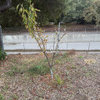
I have a small (6 by 9 feet) plot underneath a dogwood that I would like to edge with brick and build a mini (2 brick high) retaining wall on two sides only. That is, 15 feet of edging, with about 3 feet of 2 brick high retaining wall. (tiny, regular sized bricks! The highest part of the wall is about 8 inches high.)

Do I need to plan for drainage? Can I dry stack them? Do I need to backfill with gravel?

Any tips would be most appreciative.

Thanks.

Comments (13)

  • 11 years ago

    Do you plan to raise the soil level within this raised area? Directly under the dogwood? If so, that is highly unadvised.

    If not, this is really only just a tall edging, not a retaining wall, and you can build it however is easiest for you. No worries about drainage, no need to backfill with gravel and dry stack is fine. Have you considered putting the brick on edge rather than laying it flat? That would give you close to your 8" and be more stable than dry stacking two rows of brick.


  • 11 years ago
    last modified: 11 years ago

    Yes, tall edging might be a better word. Actually, I was going to put the brick on its long edge, but the land does slope and I will probably have to have two rows of brick at some point. I want to replace the plastic edging thing below.

  • 11 years ago
    last modified: 11 years ago

    I was think more along these lines.

    Although those in the photo are mortared in place (not necessary), it is the short edge that is implanted, not the long edge so you get both your height and the stability with a single row.

    Or, you can place them at an angle.


  • PRO
    11 years ago

    Actually, why do you need edging at all? You have a walk that creates and edge to the bed. If it's just because you don't want mulch spilling onto the walk, it's doing that because the soil level is high. Lower soil below the mulch, put the mulch back and problem solved in the cleanest was possible. It you're doing the brick for decorative purposes, what gardengal suggests is probably the best way to go.

  • 11 years ago
    last modified: 11 years ago

    The dogwood tree roots take up much of the surface area.

    This is what I have to work with, so far. I could easily do 4 rows of brick at the end, but that's too much--I'd rather the wall step. Or slope. Would using Liquid Nails for outdoor stone help? It's beginning to look a bit much for dry-stacking.


  • PRO
    11 years ago

    The first thing I'm wondering is why you want to do this...? It's pretty much the case that where landscape structures are built that cut corners in their design and construction, it's a downgrade. It is far better to scale back the project and do something lesser, but that is nice and well done. Not sure what your objectives are here. If it's to level the area, you need a real retaining wall whose taller end returns back into the hill at 90*. It could not be dry-stacked with thin material like what you are showing. It would need to be 8" thick if you're using mortar. Thicker if you're not. So much bother! Seems like you'd be much better off with the brick edge that flows with the grade, if you must have edging. If it were in my yard, I'd scrap it all and plant this sloped area solid with whatever lovely groundcover I thought would look best. As the groundcover knit together, there would come an end to adding mulch, and mulch washing. Also, I'd limb up the tree a little so the stuff beneath could get light and grow.

  • 11 years ago

    I was having trouble finding a groundcover that was suitable for the shade that didn't look dingy in the winter.

    Let me look at the possibilites for removing a bottom limb or two.

  • PRO
    11 years ago
    last modified: 11 years ago

    To be sure, you're limited in the shade if you must have evergreen. While I'd guess we're in the back yard, the picture does not make clear what the surroundings are like, making it hard to make a suggestion. Also, I don't think your location is known. If you're in a place where it grows, what comes to mind is liriope -- not as an edging like most, or many, people use it, but as a full and thick, broad (3' or so) border. You could surround the trunk of the tree with more of the Hosta, solid. That way, you're only missing the centerpiece during the winter, while the broad border remains. Well cared for 'Big Blue' Liriope blooms for a fairly lengthy period and looks handsome and tidy. No hardscape edging needed.

  • 11 years ago
    last modified: 11 years ago

    Ah. Front yard. It abuts the driveway and path to the front door. I am in the milder part of zone 6.

    The reason I wanted an evergreen groundcover is to keep the soil and mulch in its place year-round. That is basically all I really want to do. As I couldn't find an evergreen groundcover...I started considering a high edging.

    The camera is pointed north, so the plantings get a south sun. I lobbed off a few interior branches (after reading the above post) that were crossing over others and the ground gets a little more light now, though you'd never know it by looking at this picture.

    If I go with this (below) the wall would be stepped (nicer as shown). My first choice was really to have the whole thing nicely mulched with a few well-placed large rocks but I couldn't make it work. Where the edge of the soil bag and hosta is...that's the root edge. Nearly solid roots behind it and shallow roots in front.

    I've been tinkering here for 3 years so any landscaping advice you gurus have would be most appreciated.

  • 11 years ago
    last modified: 11 years ago

    I second Pachysandra, (although I really like Yarkvaark's more interesting suggestion). I have it as a ground cover all across the back of the house under Hydrangea. It is evergreen, neat, and never looks beat up. As a bonus, there is absolutely no maintenance. Zone 6a.

  • PRO
    11 years ago

    I third the pachysandra. It's a great suggestion.

  • 11 years ago

    I scaled back. Perhaps if the sedum takes hold I can remove the bricks.