Software
Houzz Logo Print

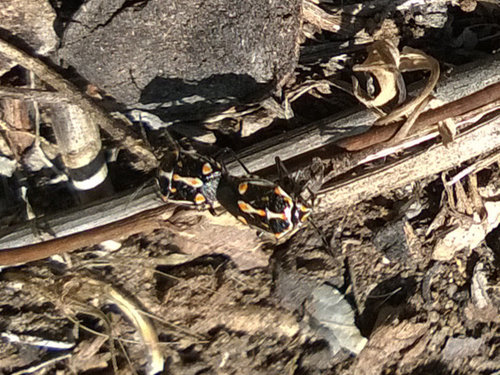
I'm cleaning up some weeds around an orange tree, and these bugs/beatles started scampering around after one weed was pulled out. What type of bug/beatle is it, and is it harmful to the orange tree? It's just a bit smaller than 1/2" long.

I'm going to be putting a few chive plants around the tree this week or next. Would that help keep these bugs away?

Comments (12)

  • 11 years ago

    Thank you for that info, and the name of it - looks like a match. After some more searching, it doesn't look like it's a problem for citrus trees, nor a problem for the garlic/onion chives I want to plant around it this next week. But it could be a problem with legumes and/or snap beans, which I was also thinking of planting in that area for the nitrogen fixing side of them. It just seemed a little odd that I had pulled up maybe 30 or 40 weeds, and after this one about 20-30 of this little guys started scampering about. It was a weed that I think ends up being a tumbleweed when bigger.

    A couple interesting posts on it -
    http://www.ipm.ucdavis.edu/pestalert/pabagradabug.html
    http://www.ipm.ucdavis.edu/PMG/PESTNOTES/pn74166.html

    So when you say to contact the local Extension office, are you talking about the UC Cooperative Extension office, like mentioned here in the 'report any sightings area? - http://www.ipm.ucdavis.edu/pestalert/pabagradabug.html

    Or maybe better for me the county agricultural commissioner?

    If they want it sealed, I'm guessing they don't want it live?

    Mine all went back under ground pretty quick.
    But I'm only 1/3rd the way through those weeds, so they probably are migrating to another, and I'll get one then.

  • 11 years ago

    I would contact the local extension office. They will let others know of your findings. You can put one in a baggie to show them or just use a picture.


  • 11 years ago

    Just wanted to follow up with the response from the

    Deputy Agricultural Commissioner/Sealer
    Riverside County Agricultural Commissioner’s Office

    in case it helps others that see it...

    ~~~~~~~~~~~~~~~~~~~~~~~~~

    If the insect pests you found are Bagrada bug, there is no need to send any to us. We are well aware of this problem and have had them in the county for a number of years. I have attached the most recent profile of the pest from the University of California. They are mostly a pest now in home gardens and prefer a number of winter vegetables. The growers have fought with this pest as well, but keep in under control with chemical applications and cropping rotations. However, the pest is still very troublesome for homeowners.<?xml:namespace prefix = o ns = "urn:schemas-microsoft-com:office:office" />

    ~~~~~~~~~~~~~~~~~~~~~~~~~

    Greg

  • 11 years ago

    Interesting responses. I really like the UC Davis IPM site. A constant go-to for me. You might want to consider making azadirachtin [Azatrol, Azamax] + spinosad A & B [Monterrey Garden Insect spray] sprays to further disrupt their effort to colonize your landscape. Both of these insecticides are hugely effective against a broad spectrum of landscape pests causing little or no harm to the existing beneficials or your living environment. Sanitation is also highly effective which does a lot to disrupt their solitude and nesting sites.

  • 11 years ago

    Thank you Gary, will check out the spray.

    I planted some purple tree kale plants a couple weeks ago, and the Bagrada bugs attacked them too - they were sucking the life out of them when I finally looked and found them under the wood chips.

    I found another site that said to mix a tablespoon or two into some Dr. Bronner's soap - about 16oz and poored it around the plants - the bugs stopped moving within 15-20 seconds, and so far haven't returned. Can't say for sure if I got it quick enough, or if the soap will hurt the tree kale. But it did halt the Bagradas in their tracks pretty quick once they came in contact with it.

  • 11 years ago

    I'd be careful using Dr. Bronners. I've used that soap for 3 decades and absolutely love the product. But, it is a powerful detergent and although effective as a suffocant, I'm pretty sure that the soil's biota might suffer too when drenched. After reading up on this new garden pest, I'm wondering how long it will be before we begin doing battle with it here in Portland, OR!??!

  • 11 years ago

    The two purple tree collards I planted outside in the ground do seem to be in limbo since the Dr. Bronner's bath. They still seem to be alive, but not growing. Not sure what's happening underground with the roots. They were starter cuttings to begin with, so not established plants already.

    But I have a third inside in a pot with Mel's mix, and no Bagrada bugs inside the house... yet :-)

    That one is progressing well and actually doing good considering my normal purple thumb history with keeping any plants alive.

    A Ventura site is where I saw Dr. Bronner's mentioned -
    http://www.edhat.com/site/tidbit.cfm?nid=100493

    And interesting that they skipped Tulare?
    http://cesantabarbara.ucanr.edu/Strawberry_Production/Bagrada_Bug_Distribution/

    But it does seem like it prefers to move East, rather than North - http://entomologytoday.org/tag/bagrada-bug/

    So Oregon might be okay on this one for a while(?).

  • 11 years ago

    " Both of these insecticides are hugely effective against a broad spectrum of landscape pests causing little or no harm to the existing beneficials or your living environment. "

    Both the Neem Oil, " azadirachtin", and spinosad can cause harm to beneficial insects if not used with care. All insect poisons are just that poisons and have the potential to do harm to most insects and is why they are referred to as broad spectrum. Simply because an insect is not listed as a target of that poison does not mean it will not harm them.

    Dr. Bronners produces soaps, not detergents. Even though the Food And Drug Administration no longer recognizes the difference between the two there is a major difference.

    kimmq is kimmsr

  • 11 years ago

    The qualifier in my earlier statement is that they [biologic & bio-rational pesticides] are know to cause little or no harm to Beneficials. However, in spite of the pro's and cons of pesticide usage to act capriciously with pesticides is to invite problems both short and long term. Analogous to human use of antibiotics...No one would do well if they arbitrarily ingested these drugs day in and day out. Instead we receive and hopefully use them at the prescribe dose for the prescribed period of time. Sadly, we live in a culture where more is preferred and instant gratification the desire. I'm reminded to temper my sharing with the appropriate caveats as I see that I am clearly on the side of informed practice. Thanks for sharing.

  • 11 years ago

    I'm curious if Bagrada bugs provide any benefits.
    So far, I haven't seen any reason to think they do.
    They feed on my food and they don't give anything in return, at least not that I know of, yet.
    I'm also not seeing many that consider Bagrada bugs to be lunch, so they don't have predators that eat them?

    So far, the only value I'm seeing in Bagrada bugs is their cool shell coloring.

    If they provide no benefit to the ecosystem, then maybe I should plant more kale plants and turn the Bagrada bug shells into Bagrada Bracelets? :-)

    And thanks for all the input - this is all new to me. You're giving me good things to search for, and understand better.

  • 11 years ago

    Apparently the Bagrada Bug is a member of the stink bug family and are an invasive insect species that is a pest of cole family (cabbage) crops.

    They are of little to no benefit to our environment.

    kimmq is kimmsr

Sponsored
More Discussions