

What is considered "dated" now?
I'm curious about what is considered to be somewhat dated now or you would stay away from. I don't like to be too trendy but there are certain styles I like. I notice comments often here about something being from a prior year, such as 80's, 90's and such. I'm sure it's impossible to build something that won't look like it was built in a general time period. I'm just curious what seems to be "out" now so to speak or what you would stay away from. I plan to use an architect so hopefully that will help. Although, if I really love a look I would probably do it anyway. To some degree I believe you have to build for yourself, since you'll be the one living in it and enjoying it. Not everyone has the same taste.
Comments (60)
 11 years agolast modified: 11 years ago
Well, the MN fall home tour 2014 had many homes much as you describe Amber. These were homes in the 400 - 500K range. So yes, it is still out there.
My parents had board and batten on their 1969 "modern" Polynesian-style home so I think b&b will survive the "modern" farmhouse movement!
Search for lights on Amazon some time. There are hundreds of thousands of choices. Every style imaginable. I think it is the great paradox of our day. Literally everything is a click away, yet we all desire a certain look for the kitchen island pendants.
I think Pottery Barn, Restoration Hardware, Elm Creek, and others are successful because they curate newer trends for us.
The craftsman look for every home will move on. In 20 years the Houzz forums will be replete with dilemmas from people looking to change their "craftsman" exterior to something else. Real craft will live on in whatever form it appears as.
 11 years ago
I'm originally from Wisconsin and I completely believe that's what's in high end homes up there! I saw my first stainless steel fridge up there in 2007. Granted, I from a very - very, very, like not on a map and people from 40 minutes away have never heard of it - rural area. Dark cabinets haven't even started happening where I'm from, and my friend who moved from Cali to Wisconsin was completely amazed that they had to go to Minneapolis to get granite because it was completely unheard of at the time (10-15 years ago). Life in a small town. ;)
Related Professionals
Gloucester Architects & Building Designers · Oxnard Architects & Building Designers · Salem Architects & Building Designers · Provo Architects & Building Designers · Queens Architects & Building Designers · Portland Design-Build Firms · Flint Design-Build Firms · Albert Lea Design-Build Firms · Sacramento Design-Build Firms · Cowansville Design-Build Firms · Crestview Home Builders · Monroe Home Builders · Harrisonburg Home Builders · Napa Home Builders · San Luis Obispo Home Builders 11 years agolast modified: 11 years ago
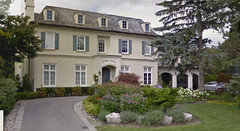
Timeless styles date very little. Indeed, even though I'm a builder, I was fooled by a home on the street behind us that I took to be a 1960s era French Manor style home. (Only 1960s as that was when this subdivision was created.) Instead, it turns out it was built in 2004.
 11 years ago
Exactly. Accurately recreating a specific style will stand the test of time mostly.
 11 years ago
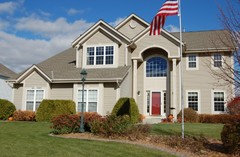
I think most people can tolerate almost any style house if it's well executed, regardless of whether or not the date of construction is evident. The kiss of death for a recent house dating badly is A) an arbitrary mishmash of mcmansion architectural features or B) a "slice of cake" house where the only architectural features are on the front and/or very busy roof.
- 11 years ago
Renovator, how about starting a thread showing good contemporary design in many different styles. I am trying to finish up a drawing but when I need to sit to take a break (I draw standing up) I'll be happy to add to the thread. It would be especially helpful if when you post, you explain why it works. I know I can explain good design in terms of fabric (my past job) or good composition and a home really needs to rely on good composition too.
I agree one has to study what came before and to look at architects work. We don't live in a vacuum and I know even before I started I studied, visited, etc many many homes. My first home was a 1927 craftsman bungalow and my second home an 1898 colonial revival/victorian.
- 11 years agolast modified: 11 years ago
Aww bpat will probably hate my home with its tower :P
kiwigem - is that house pic you've shown a good or a bad design? To me, the arch roof over the door looks wrong, and the double gable over the triple-ganged window, but overall its not terrible.
- 11 years ago
I would stay away from any design where the garage dominates the front elevation of the home and sticks out way beyond the rest of the front of the house. IMO you want people to notice your front door more than your garage door. I don't know if that's considered dated, but it's a look I'd like to see less of.
- 11 years ago
It's weird, but I don't tend to think of architecture as dated. At least not in a negative way. Sure, there are houses I see and know instantly what decade it was built in. So what? Why is a sign of "bad design" that I recognize a mid-50s ranch, or an 80s tract home? How is it an accomplishment that a home in the 1980s looks like it was built in the 1880s?
"Dated" tends to refer to decor, IMO. I also don't think anyone says "it's 2015, my house must have gables" like they would with specific paint colours. And fixtures become ubiquitous because they're cheap and easy to come by. Look for stuff not stocked in a pile in the aisles by your local big box store, and it'll be a little harder to know what year you decorated.
- 11 years ago
Ok I was looking at homes in my area in FL and came upon this not yet built home. Personally I think they should forget about building it altogether!
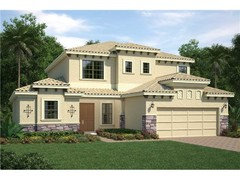
And this is one of the better ones I've seen recently.
- 11 years ago
We bought our first house as a newlywed couple in 1977. It had plastic drawers and no microwave in the little galley kitchen. I bought one of the first huge Sharp microwaves for that kitchen to inhabit my faux butcher block countertop. Shag carpet and a brick pattern linoleum completed the look. That house had good bones and a great layout. Several houses came and went over the next few years... all new, indulging one or more of the latest trends. The Jenn Aire indoor grill I never used, for example. Wine rack room partition. Block paneling (which I still love). Flowered wallpapers and (gasp) borders. We never put down Berber carpets though:-)
When we sold our last house in 2012, one realtor wanted me to rip the brass fixtures out and put in wrought iron spindles on the exposed staircase. We refused, knowing that the bones of the house would speak to our buyer(s). We got close to asking price, and they redid everything they found dated. Better them than me, because I still loved the feel of that house, and it would have been a guessing game for me to try to anticipate a stranger's taste.
I feel you need to live in what you love- what works personally for you. We walked through a Usonian house near Mt. Vernon and loved the "feel" of it, but it was certainly dated. Would live there in a heartbeat, but only with one other person- the place is tiny:)
 PRO11 years ago
What renovator8 said! Thoughtful and expertly designed work stands the test of time. Before the advent of air conditioning, buildings were designed based on their climatic and site conditions, giving distinct regional and area differences. Air conditioning meant that the climate and site no longer mattered and thus regional differences tended to disappear.
Said differently, the painting Mona Lisa by Leonardo de Vinci in the early 1500s and the statue David by Michelangelo, also in the early 1500s, are as appealing and inspiring today as when they were first unveiled. They are hardly dated, and likely never will be!
Of course, architecture is a more functional art, in that we have to live our lives in and around it, rather than simply see it in a museum once or twice in a lifetime. That said, there are many architectural designs that are as fresh today as when they were created (although we each have our own personal opinions about them to be sure). For example, German and Dutch influenced Colonial homes in the northeast, Wright's Usonian homes, the Bauhaus or "Modern" movement of houses, Eichler's post and beam homes in California designed by a number of the leading architects of the day, to mention a few. And of course there are many legitimate historical styles of residential architecture in the U.S. which remain appealing over many generations--Colonial, Greek Revival, Victorian, Mission, Prarie, Craftsman, etc.--we all have our favorites. The legitimate examples never are dated and never go "out of style"!
Why is that, do you suppose?
The real challenge for "timeless" architecture that will not look dated and will stand the test of time is to really understand, respect and utilize the major aspects that characterize these architectural designs, including climate and site, and blend them with today's technology, building skills/knowledge and regulatory requirements.
This is not an easy task, and there are compromises that have to be made if the timeless nature is to be preserved. For example, humongeous walk-in closets and vast laundry rooms with cubbies sufficient for an army may not be possible. A garage with enough space for a car, an extended cab pick-up, an RV and winter and summer recreational equipment will certainly not be possible! So compromises and other creative solutions have to be found if timeless architecture is important.
Unfortunately, there are not so many in the design and construction industry that know or care about these things. And the same applies in the consumer world. But, with care and diligence, one can still find folks in the design and construction world, and in the consumer world, who truly care and are capable of continuing the wonderful tradition of architecture that isn't (and won't be) dated! It just requires a lot of due diligence! And some compromise and other creative solutions for all that accumulated stuff!
- 11 years ago
And some compromise and other creative solutions for all that accumulated stuff!
boy have I been learning about that with what we want to build. things like an outside porch being considered under roof so instead of being able to extend my porch the width of my home, I'm limited to just 1/3 of the width of the house.
- 11 years ago
I wonder what the folks who grew up in original Victorian homes thought of subdivisions full of new Craftsman homes?
- 11 years ago
Many probably wanted to change their homes and make them more craftsman. Many did try.
- 11 years ago
The legitimate examples never are dated and never go "out of style"!
Why is that, do you suppose?
To some extent, I believe it's snobbery. There are plenty of beautiful homes that don't fit an official, "legitimate" style, so they are derided.
Why is it okay that homes 100 years ago were built for the way people lived at the time, but it's not okay to build homes now with large garages and laundry rooms when people have multiple vehicles and children enrolled in dozens of activities?
- PRO11 years ago
Amberm145, if I may respond (your question is a very good one, which I think many folks may also have), it is perfectly OK to build what you and your family believe you need. But the OP was asking about what is considered dated (and conversely asking what is not--what is timeless). Four car garages, huge laundry rooms, master suites and closets larger than any other space in the house and all the rest of what may be considered essential in many of today's homes in the real estate market may be what many families want, but IMO such homes will never be considered timeless, nor are they likely to create the fond rememberances of times past, as many of us have with historical homes in North America. I'd suggest, if one does some historical investigation, the houses that many folks consider most memorable and timeless have some of the most simple and straight-forward floor plans. Do some research and see. Here's a thought: the more complex a floor plan, the less likely that the visual image of a home, inside or out, is going to be appealing for long periods of time and it is unlikely, IMO, that such homes will ever be timeless. In other words they are going to be dated sooner rather than later. Just my experience and opinion. Others mileage may vary, which is just fine.
 11 years ago
Oh, lookintomyeyes, I'll bet I LOVE your tower! I always wanted one. It's just that I lived in a neighborhood quite happily in my 60s split-level while all around me towers were going up...and sometimes they had no relationship to the style of the house. (And certainly none to MY house lol)
- 11 years ago
no offense taken, bpathome, I was largely teasing. there's quite a variety in personal tastes on these boards.
- 11 years ago
Good design has nothing to do with "snobbery". Or economics of the build either. You can throw a lot of money at bad design for sure, while a simple inexpensive cottage will have great charm. Good design is usually easier to see in hindsight from a lay person, but even then, that's not assured. Some people have no discernment of space and proportion. To others, it's not important.
To most looking for the best dollar investment on the most expensive expenditure of their life, good design IS important. It's just not easy for most to "see" what that might be from a set of floor plans and elevations. And they treat a home design as a commodity, which it is not. It's not a dozen eggs and a bag of apples that you can buy at the corner grocery. Good design takes interactive WORK between the customer and the professional. And too many people don't budget for the one thing that can make a huge difference in how they live their life, as well as the appeal of that home once their phase of life in that home is concluded.
Bad design is pretty easy to spot. Good design is harder. It's almost "invisible", because things just seem "right", and the flow works from inside to out. It takes a lot of hard work to make something so important and difficult to seem to be so easy that anyone can do it. And that's why we see so many bad self drawn plans on this forum. People are deceived into thinking it's easy to create something workable and pleasant to look at both. Most design "floorplans" without any mental connection to thinking of how it will present as a 3D structure in real life. This is a tangent to a thread on the Kitchen Forum about tough love. I wrote there that , "people who cannot think in 3D should not be designing houses or kitchens." I stand by that. Maybe 10% of the population has the visualization skills needed in order to be successful at self designing something that isn't an atrocious cliche topped off by a giant top hat. Then there are the architectural equivalent of puppy mills that turn out badly drawn but in demand sickly inbred plans.....etc.
- 11 years ago
To me, it's snobbery when a house has to be a true Eichler to be beautiful. Or an exact copy. Any kind of modification to a named architect's work (or approved style) is wrong.
Also, "good design" has to work for how one lives, not just be pretty.
- 11 years ago
And Virgil, I think I disagree with this statement: I'd suggest, if one does some historical investigation, the houses that many folks consider most memorable and timeless have some of the most simple and straight-forward floor plans.
If we're talking about exterior treatments, you're probably right. If we're talking about interior layouts, then my experience is different. I remember interior character. I grew up in a house that was as simple as it comes. A square, single story house with no basement. There was a kitchen/living room combo in one corner, and 3 bedrooms and a bathroom along 2 sides. I am not nostalgic for that place at all. It was boring, and so not memorable at all. When I get nostalgic, I think of great grandma's house, with the back staircase off the kitchen, and window seats in many rooms. I think of my aunt's farmhouse with the 3rd floor, and the front porch that was enclosed to make a toy room for my cousins and I. I also think of my grandparents' 1970s side split with all the crannies to explore, and so many places to hide.
But to be honest, I don't remember what the rooflines of any of these houses looked like, or how many dormers or gables they had.
If we're going to talk about great historical homes that we all know, they tend to be grand homes, with many rooms for every purpose.
- 11 years ago
A lot of good comments on this thread.
I really don't think we live that much differently today. It's our expectations for how we should live that are different.
An older home would be a slightly loose fit for a childless couple...cozy for a few years with some siblings sharing bedrooms, toys and equipment in the garage and attic and basement, a few extra cars parked on the grass...and roomy again when the nest empties.
The expectation now is that a house should fit everything that you now have or do, or think might have or do. And that each of these requires a separate answer, a separate exclusive space. No sharing, no overlap, no ambiguity.
But the problem really isn't the desire or need for a larger house. People have been able to design and construct these well for centuries.
It's the idea that you could stuff all of this into a smaller house design that worked, making [parts of] it bigger, changing all of the proportions, incorporating every single wishlist item, and still have it work as a composition. Design and materials get stretched thin (or design gets robbed to buy more house) and you end up with a garage with attached house all under a big circus tent roof. The style goes on last, or right before the plan is plopped down on the lot.
So, start with your site, and your family, and your ideals. Work with your architect on a clear vision/concept for the house, and test all of your choices against that. Maybe some ideas don't make the cut. Give the architect some latitude, you might not yet have seen what you love. Be consistent. Maybe your house will be dated as 2015, if it's a solid and purposeful 2015 then you can rest easy. In another 25 years, the best of the 80s and 90s will be sought out and preserved. Aim for a house where someone in 25 years will think twice before changing out the door hardware with oil rubbed satin pickametal because what's there is meant to be in that house. - 11 years ago
lookintomyeyes, sorry I've been off the board and didn't see your question. I used that photo as an example of a "slice of cake" house with a mishmash of design elements all on the front. You're right, it's not hideous, but I didn't interpret the OP's comment in that way.
Regarding snobbery, that's a word that can mean different things to different people, but I don't think anyone is implying that good design needs to be expensive. There are loads of cute little cottages that were built before WWII that were quite humble but still had good design. - 11 years agolast modified: 11 years ago
I agree with much of what's been said. Simple, well-proportioned styles constructed of natural materials are more likely to stay timeless.
Just remember that what we now consider classic may have been considered tacky in the past, too. I'm from Boston, and the "old money" Bostonians from Beacon Hill considered the 19th c. brick townhouses in the South End and Back Bay (now coveted and chic) to be nouveau-riche, cookie-cutter, unstylish embarrassments full of awful black walnut (as opposed to the simpler, white-painted interiors of old Beacon Hill). Here are examples of the "ugly" and "bourgeois" according to tasteful people of the nineteenth century:
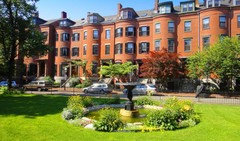
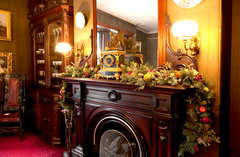
Henry James described the English country house pictured below (c. 1860) as "Philistine," "tasteless," and "hideous":

- PRO11 years ago
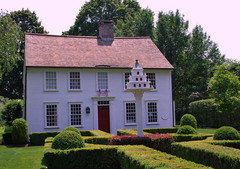
The 1860 English country house pictured above is certainly pretentious and hideous when compared with an American Colonial built in 1734. The Colonial is an example of a simple, straightforward floor plan which translates into a simple, yet timeless design. To my eyes at least, this home looks as appealing in 2015 as it must have in 1734. The house may be old, but it is not dated in a negative fashion!If more modern design is your choice, take a look at this lovely design classic which I suspect will be as attractive fifty years (or more) from now as it is today. Scroll down and see just how simple the plan is, and you will see how much a simplified plan really has to do with timeless design: [https://www.houzz.com/magazine/houzz-tour-texas-family-trades-traffic-noise-for-frog-songs-stsetivw-vs~48639943[(https://www.houzz.com/magazine/houzz-tour-texas-family-trades-traffic-noise-for-frog-songs-stsetivw-vs~48639943)
- 11 years ago
Dadereni has a good point about "needing" rooms for every purpose. We've designed a house with no extra rooms for formal occasions. We're not formal people, and land is too scarce here to waste it on spaces we'd use twice a year. But plenty of other new homes nearby have tiny little rooms that would never be usable because someone declared you MUST have 2 "living" rooms, and with limited space, they just made these rooms little.
And my use of the term snobbery had little to do with money. It was in response to Virgil's use of the term "legitimate", twice. It's about the idea that if you have a Colonial house, you can't have a Mission style front door, and your windows must be divided light, double hung. It seems to me that pointing out details like that serve mostly to show off that you know something about architecture, and little to do with proportion and scale.
Like lalala's examples of "tacky" architecture in Boston. The elite of the 19th century hated those houses because they weren't "legitimate".
- PRO11 years ago
Com'on, amberm145, if you own a Colonial house and you want to put a Mission style door on it, of course you can! And you can paint it violet if you want--as long as you live in a community that doesn't have an architectural control board or historical commission. But if you have a real, historical Colonial house (or any other recognized historical style), and respect that tradition and history, why would you want to do such things? IIRC, this thread isn't about personal freedom or choice. Perhaps we should get back to the subject which was raised by the OP, i.e., what's dated (or conversely, what's timeless). A Colonial with a Mission style door (and the house painted violet) will certainly be dated, even if it's your freedom of expression. Can we return to dated and timeless?
- 11 years agolast modified: 11 years ago
I think there's a theme in a number of threads, most clearly on the decorating forum (maybe by palimpsest?), pointing out that "dated" <> ugly or bad, and "trendy" <> beautiful or good. A craftsman house might be dated to 1920 but plenty of folks will love it, even if they might want to open up some walls.
At one point I was asking our architect's opinion on lighting fixtures for the house. She said to me, "if I did a good job, the house should be able to tell you what it wants."
On the subject of houses being called "Philistine", "tasteless", and "hideous," I recently toured the Winchester Mystery House in San Jose. My friend described it as a "hot mess" and I can't argue that (especially inside). But it is on the National Register of Historic Places, the exterior certainly is not unattractive, it and sells lots of tickets :-)
- PRO11 years ago
Why did Sarah Winchester build the world’s strangest home, containing 160 rooms and costing more than $5,500,000? The mystery remains unsolved to this very day. But is it dated? Is it timeless? Is it somewhere one would want to live for a long time?
 11 years ago
Ugh. I was excited to see what came out of this thread until it became another architect soapbox series....
- 11 years ago
Perhaps we should get back to the subject which was raised by the OP, i.e., what's dated (or conversely, what's timeless). A Colonial with a Mission style door (and the house painted violet) will certainly be dated, even if it's your freedom of expression. Can we return to dated and timeless?
But what I'm reading from you is that if you want to be timeless, you have to be void of personal style and stick to the rules set out by someone famous in architectural circles. A Colonial style house and a Mission door are individually timeless. But putting them together would be dated??? Wild and crazy personal expression? Because the people who defined the Colonial and Mission styles didn't dictate that they should go together? The average person doesn't know what constitutes a Mission door vs a Colonial door. I had to actually Google a Colonial door, and guess what, a couple of the examples were actually Mission doors. So I find it really hard to believe that if someone built a Colonial house and put a MIssion door on it, or casement windows, that 10 years later, it's going to be widely perceived as ugly, or "so 2015".
And we're on a "building a home" forum, so we aren't talking about honouring a historical building.
- 11 years ago
And the Winchester house, although I've never been, is probably not dated. I doubt anyone is going to look at it and instantly know what decade it was built in. I think that's true of any unique home. That doesn't necessarily mean it's "timeless".
- PRO11 years ago
What is trendy and to be avoided? Well, here's a running list taken from a Google search of "badly designed houses" and personal experience: popcorn ceilings, TV as artwork, great rooms which aren't, "theme" rooms, McMansions on tiny lots, fake brick or stone siding on the front and vinyl (or stucco) on all the other exterior walls, metal awnings, stacked gable roofs, 4-car garages, snap-on window grids, fake flooring, pink anything, lime green anything, stucco quoins, crazy chairs, wall paper, too much storage, not taking advantage of natural light, unused "multi-spaces", stadium kitchens where no one cooks, kitschy kitchens, abused bathrooms, faux anything, cute anything...and for those who want to go into the trendy scene in depth, here's a Pinterest site on trendy, which illustrates everything to avoid at all costs: https://www.pinterest.com/babyt91492/trendy-house-ideas/
- 11 years ago
That list is mostly decor rather than architecture.
And I can't tell if that Pinterest board is curated as a list of what not to do, or a legitimate collection of things the user likes. Either way, it's personal preference. There's a lot in that list that I would actually like. And very little that I see everywhere in real life, because a lot of it is expensive and/or time consuming. So we see it a lot online, because it's pretty. But I doubt it'll become a hallmark of 2015 because very few people are actually putting wood on their ceiling, or building giant kitchens with multiple islands.
And I disagree that personal preference shouldn't be considered. Doing what everyone else does without consideration for your own likes is EXACTLY how to become dated. That's how you walk into a room and say "1995 called and wants it's decor back". Going AGAINST what everyone else does is how you get a space that doesn't scream out a specific decade.
- 11 years ago
I had been conflating “dated” and “tacky” to some extent,
but I think it’s possible to have non-tacky elements that are still likely to
become dated. I’d say something is
at risk of becoming dated if it is:-primarily decorative, not functional (shutters that don't close, stone + wood siding together on one house just for fun, turrets with nothing in them or pillars that don't have a structural purpose)
-new to the scene in the last few years but not really
innovative (long, skinny accent backsplash tiles)-a “designed-up” or “modernized” version of something
classic (subway tiles in different colors, sizes, textures, materials; neo-anything that takes traditional elements and mixes it with modern style [Colonial with a big two car garage attached to the front and a two-story entry foyer])-the latest cheap version of something natural (wood laminate
floors, faux marble counters, vinyl siding, vinyl fences)-mass-produced, can be found in multiple major retail
outlets, favored by builders everywhere (25 years ago, cheap oak cabinets; 10
years ago, cheap cherry cabinets and black sparkly granite; now, cheap white cabinets and stainless
appliances).We already know that skinny jeans and ankle boots will look
dated in 10 years. People could just wear straight-leg jeans and a white
button-down shirt, or a black sheath dress with straight, shoulder-length hair,
and never be embarrassingly dated. But most
people don't. They really don’t care if (or don't realize that) their kids are going to laugh at pictures of them
in skinny jeans in 20 years. - 11 years agolast modified: 11 years ago
I think "dated" is often used as a code word for designs that have been overused or were of commonplace design quality to begin with and might even be seen as unattractive to buyers. Its a legitimate concern in today's fickle housing market.
But out dated designs are not unusual; it has been the pattern in the US for centuries. What we now think of as "classic styles" were once reactions to previously dominant and possibly overused house styles.
According to Virginia & Lee McAlester, authors of "A Field Guide to American Houses" the Greek Revival style gained popularity in the 1830's because of interest in archeological discoveries in Greece, sympathy for the Greek war of independence, and a loss of interest in British architecture during the War of 1812. Soon afterward the Italianate and Gothic Revival styles emerged as part of a Picturesque movement based on the romantic past and was a reaction to long established formal classical ideals in art and architecture.
Then in the second half of the 19th century the Victorian styles took over. In America the balloon frame, factory fabrication of house elements and railroads allowed houses to become more complex and elaborately detailed. Details were freely adopted from Medieval and classical precedents with little concern for historic accuracy. The Second Empire style was considered very modern and popularized by expositions in Paris in 1855 and 1867. It became out of fashion after the panic and depression of 1873.
Then came the Victorian styles of Stick, Queen Anne, Shingle, Richardson Romanesque and Folk Victorian. The trend that ended the Victorian styles was an interest in copying earlier styles with more accuracy especially those of Colonial America. It began with the Centennial celebrations of 1876 and became dominant in the 20th century. This trend accounts for the borrowed Georgian and Adam/Federal details seen in many late Victorian houses built in the Shingle and Queen Anne styles.
The first half of the 20th century in America was dominated by the Colonial revival style. "The Georgian and Adam styles form the backbone of the Revival, with secondary influences from Postmedieval English or Dutch Colonial prototypes. Details from two or more of these precedents are freely combined in many examples so that pure copies of colonial houses are far less common than are eclectic mixtures." [McAlester p.322]
It is a very rare house that doesn't rely on some kind of precedent: another house, a combination of elements from other houses, even highly modified elements. But that doesn't mean that adhering to historic examples and using authentic detailing is a guarantee of a successful design. Putting a 3 car garage on a Greek Revival house is going to be difficult regardless of skill. So, be critical of bad designs but be specific rather than use characterizations and don't say it is wrong to copy, we are all someone else. I don't remember who said that.
- 11 years ago
The architect Walter Gropius once said that an architect should understand building codes well in order to not be limited by them. I think that works for all design knowledge in a slightly different way. If you study the history of architecture long enough and in enough detail, the ideas and forms become part of a reservoir upon which you can draw freely rather than searching for appropriate elements and precedents that might apply to what you are designing. Its like a learning vocabulary and grammar in order to use a language creatively. Of course, it helps if you can find something to love in all of it.
I don't think anyone could sit in a darkened room looking at slides with James S. Ackerman pacing across the screen explaining with enthusiasm and affection what he had discovered about Palladio and not fall in love with it all.
For a house style more adaptable to modern needs study the Shingle Style.
- PRO11 years ago
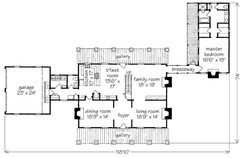
Would a 2-car garage on a Greek Revival with a detached master suite cause it to become an Eclectic Excessive? Or possibly just a Trendy Greek?
- 11 years ago
"And I disagree that personal preference shouldn't be considered. Doing what everyone else does without consideration for your own likes is EXACTLY how to become dated. That's how you walk into a room and say "1995 called and wants it's decor back". Going AGAINST what everyone else does is how you get a space that doesn't scream out a specific decade."
Exactly. If you are choosing because you truly love it.
For example, for as long as I can remember I've loved craftsman and victorian homes. the old original ones. However I have had a hard time finding one I can work with in my preferred neighborhood. I say work with because I have no problem renovating and updating. However since I can't find what works for us, we will build one.
I have also loved shaker cabinets long before they became trendy. I wanted them over 30 years ago when most people were wanting those white formica cabinets with the wood trim. I wanted wood floors when most people were still insisting on carpet. I wanted cabinet room dividers back when I had my first home (a craftsman bungalow).
However I also consider the things I love and want timeless. they have stood the test of time. My mother's house when sold, yes had dated kitchens and baths (after all they were 30 years old) but they still looked classy and the rest of her home looked classic because she picked things she loved and she picked things with an eye towards quality.
there is a reason good design stands the test of time. It has to do with how our brains perceive things. the cream of the crop will still rise to the top.
- 11 years ago
Actually there are plenty of mass produced items which will become classics too. Just because something is cheaply produced doesn't make it tacky or less likely to be timeless. think for example of the adirondack chair. It's produced in wood, vinyl, in colors, etc and it's still timeless.
- 11 years ago
For a house style more adaptable to modern needs study the Shingle Style.
Robert A.M. Stern?
- 11 years agolast modified: 11 years ago
Stern is one of the very best but a little difficult to take in person. His typical project cost would be enough to allow most of us to retire.
I recommend an old friend, Patrick Ahern, in Boston.
and the books of Vincent Scully, the Yale historian who named the style,
and the houses of Sanford White,
and thisbook,
and this book,
and many Shingle Style articles like this one.
- 11 years agolast modified: 11 years ago
"What is trendy and to be avoided?…pink anything, lime green anything…."
Context matters.
Capetown, S.A.

St. John's, Newfoundland, Canada
- 11 years ago
I think relying on artificial energy exclusively is now dated in home design in Australia. Planning for passive energy is in. In bushfire areas, multiple roof angles are discouraged as trapping embers. Shade is encouraged, depending what part of the country you are in. I believe the open plan trend for families was partly driven by parents needing to see what the kids were viewing on the computer. With the advent of smart phones, that became moot. Young families do need sight lines, but teens and parents need space from one another at times.
 11 years ago
It is so easy to generalize. To bash the so called McMansions, faux things, pink anything...... In my experience, in life we have to compromise in many areas. Everyone's circumstances are different. For some, the largest lot or largest backyard is not important. Some people are indoors people. For others, they'd prefer a tiny house as long as the backyard is about a half dozen acre.
We all have to sort out our priorities. From the size lot, to the functionality of the house, to things we can't absolutely not live without, things we can upgrade later. Work on the structure and bones of the house. I don't think there is anything wrong with starter grade granite, or cosmetic things that can be changed later. Some starter grade granites are really pretty! That's all a matter of taste.
I want to build a house for the way I live, while still considering what's happening around me, to keep it salable. BUT, I'm building primarily for me.
With that said, and regarding cosmetic finishes, I am staying away from brass fixtures. I think gray walls are pretty, but everything gray may be a look that will be dated soon. Super dark floors (gorgeous, but a pain to clean, may be going out of style where I live), ORB fixtures still prevalent, but I think it's also fading away. But hey, that doesn't mean they are ugly. Give it enough time, it will come back in style.
If you like gables, go for it, if your circumstances dictate you go for a McMansion, go for it. Find out what you like, and go for it.
I like pretty things. But ultimately function wins. So whatever house plan you find, make sure you can see yourself moving in there and living in there.- 11 years ago
Be aware that much of the things we see as being "in fashion" are not just a reflection of personal tastes and priorities, they are often largely created by manufacturing efficiencies, construction economies, product placement, internet shilling and, of course, omnipresent advertising.
Oil rubbed Bronze would have been prohibitively expensive 40 years ago but now there are many inexpensive ways to imitate that finish so it has shown up in hardware brochures and retail displays as new and refreshing when it looks a lot like the hand pump on my grandfathers back porch.
Tall hipped roofs, once expensive, are now built with inexpensive trusses but apparently they still need to be dressed up with front facing gables that show no concern for economy, function, logic or history.
60 years ago (yes, I still remember the 50's) brick on a residence was only for the wealthy but the advent of the brick veneer cavity wall system on wood studs changed that. It also allowed a little brick here, a little there and even a little brick on the second story above wood siding. It is so commonplace now that a certain % of brick is required by many subdivision covenants.
There was a time when solid core formica was seen as a great breakthrough in kitchen counter design but now that they are available at Home Depot , stone and solid synthetic imitations are preferred.
Increasingly I find my clients to be world travelers, if not foreign born, and they seem influenced by fashionable hotels and resorts from places I've never visited but they are strangely enamored with authentic New England homes so my toughest design problems are often with local historic commissions. Designs that are "In Fashion" would be far easier for me but far less interesting so I can't complain.

User