

Tomato Plants Sets Fruit That Won' Grow.
Have you experienced this ? : The flowers get pollinated ( They won't drop) . So technically fruit is set/formed BUT the fruit(s) Don't seem to be growing.
Case in point:
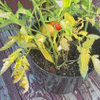
One of my Brandy Boy plants flowered more than 3 weeks ago. ( 2 of them). They did not drop. They are still on the plant but not getting any bigger than they were 2 weeks ago.
I want to know what causes this. I am sure they were pollinated otherwise they would've shrivelled and fallen long time ago (called blossom drop due to lack of pollination).
I have seen this last year on my Pineapple and Mortgage Lifter. Eventually some of them grew to be a small ugly fruit, as I recall.
Anybody has experienced this ?
What is the cause here ?
Thanks in advance.
Sey
Comments (48)
 11 years ago
I'm not really sure what's happening. Are you saying the blossoms are still there but not forming fruit, or that you have small tomatoes but they're not growing. Sometimes it seems to take a long time from the formation of flowers to the formation of fruit.
 11 years ago
Just because a bloom dies but doesn't fall off doesn't mean it set fruit. Dead blooms can remain on the plant for a period of time for many reasons - sometimes they remain even if you rattle/tap on them. Potential causes are insufficient pollination, lack of wind or restricted air circulation, even nutrient imbalances such as high phos or circulating moisture content, and if on cluster-type plants some will remain while the others in the same cluster set fruit. If they hang on for too long I just knock them off.
Dave
Related Professionals
Hannibal Landscape Architects & Landscape Designers · Syracuse Landscape Architects & Landscape Designers · Chula Vista Landscape Architects & Landscape Designers · Elizabethtown Landscape Contractors · Westminster Landscape Contractors · Aurora Landscape Contractors · Laconia Landscape Contractors · Potsdam Landscape Contractors · Shreveport General Contractors · West Plains General Contractors · Dallas General Contractors · Charlottesville General Contractors · Portland General Contractors · Sault Ste. Marie General Contractors · Salinas General Contractors 11 years ago
I had this happen last year - mainly with some of my grape/cherry tomatoes but also a few others. They did wind up growing into normal fruit a lot later, but seemed to be in stasis or something for a while. I just leave them alone in case it makes a fruit later.
Seysonn_ 8a-NC/HZ-7
Original Author11 years agoDave , No it is not as you describe. It is not dead blossom hanging in there. There is even a tiny tiny fruit but just not growing (there are 2 of them).
Gigi , yeah that is it. Pollination has taken effect, fruit has formed >>> but not growing.
My own theory is that the fruit is lacking something. Maybe plant does not take care of it as it should, because not enough ovules got pollinated, BECAUSE OF COLD but i cannot be sure.
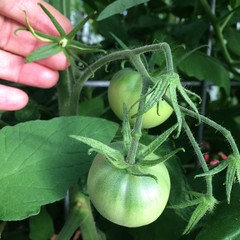
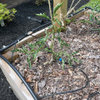
this is the picture taken on 5/24 .Do you see what I mean ?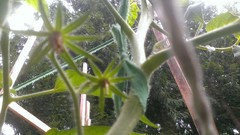
Sey- 11 years ago
<One of my Brandy Boy plants flowered more than 3 weeks ago. ( 2 of them). They did not drop. They are still on the plant >
Sorry I just took your comment at face value to mean they [the blossoms] were still on the plant.
But in the pic what you may be seeing is just a partially/incompletely pollinated ovule. If so, in most cases they don't develop into anything but it all depends on the degree of pollination that occurred. What caused the poor pollination may well be weather. If you want to read the technical study synopsis about the various types of tissue involved see: http://www.ncbi.nlm.nih.gov/pubmed/18410478
Dave
- 11 years ago
I'm in the camp that they will probably grow eventually. I did some reading on pollenation recently. One of the things I read is that what is sometimes thought to be pollenation failure is really just a *delay* in the development of the fruit. In other words, the plant will put the fruit "on hold" until it decides it has the resources to devote to growing the fruit.
So perhaps the first blossoms pollenate, but the plant is primarily interested in growing larger, so it devotes energy to vegetative growth instead. Then maybe later, it comes back to the first tomatoes it started. Or, maybe not. (As some have noted perhaps this creates a small or inferior tomato.)
From this, and my own observations this year, I've concluded it's completely unnecessary to worry about picking blossoms off a small plant when transplanting. But that's just my take on it!
Jenn
Seysonn_ 8a-NC/HZ-7
Original Author11 years agoThanks, Dave and Jenn.
Yeah , it seems that growth of fruit is on hold.
I had similar situation with Big Beef which flowered at the same time as Brandy Boy. Today I saw one fruit bigger than a pea, smaller than a cherry. So it is growing. I think and hope that current warm weather should move them soon.
Sey- 11 years agolast modified: 11 years ago
Great to hear they are growing!
I noticed some have Brandy Boy growing faster than Big Beef (Hudson) and some the opposite (barrie2m).
I notice many tiny, embryonic fruits set on my Pineapple, but it is mainly growing leaves right now - just like your Brandy Boy. But, I hope it comes back to the fruits. Black Krim has many baby fruits now - all of a sudden!
Jenn
 11 years agolast modified: 11 years ago
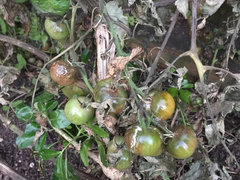
I also see this problem on every variety of tomato that we plant - including cherry tomatoes. I would be interested in any research that explains the issue. I have searched the web - but must not be using the right terminology as I find very little written about it - other than the link Dave posted (thanks - I need an interpreter to understand the article) which explains the tissues involved but the article doesn't say how to correct the problem - does it? Here are a few photos - Jersey Boy, Big Pink and Better Boy - these photos show what is happening on my plants - I think this is the same thing Sey and everyone is talking about?
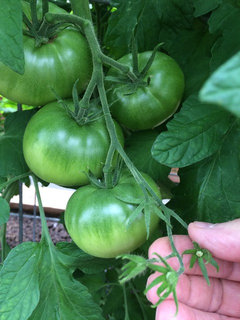
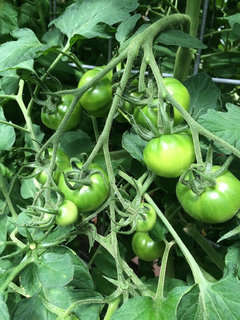
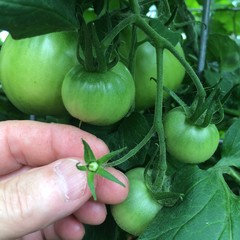
Seysonn_ 8a-NC/HZ-7
Original Author11 years agoThat is it Hudson. I had a lot of those on my Pineapple last year.
My guess in poor/partial pollination. In tomato flower there are many many ovules (female parts), when pollinated each will produce a seed, just like silks on corn. Every pollinated one will produce a kernel. Seems that some plants won't grow the fruits with just a few ovule pollinated. Then there are designed tomatoes that will grow fruits with zero pollination. They are called "parthenocarpic". Legend is one, developed by OSU. I am growing few of them. It is sort of like seedless watermelon.
On the better news side , my Indigo Rose has set fruits. I just noticed it today.
So it seems that the process has started.
Sey- 11 years ago
Sey I have the same problem. It is usual that the first flowers do not set fruits, however this year is very bad. Tomatoes are flowering for about a month but very few set fruits. The bushes are quite big and nice but they drop flowers or do not grow them into the fruits. Legend has the most tomatoes set so far, 7 totally, but it also do not develop fruits from all the flowers. The others have 1-3 fruits and some have none. Tomatoes that have fruits are Malachite box, Lida Ukrainian and Japanese truffle pink, all of the Russian origin and probably more cold tolerant. I blame our very cold and wet spring, the soil was loaded with water and the nights were cold. Now we had about a week of warm and dry weather and I see more fruits forming. Yesterday I finally found 2 or 3 pea sized Brandy Boys. I do hope that when the weather turns right they begin to set fruits like crazy, since my plants are quite big and are ready to support all those fruits.
- 11 years agolast modified: 11 years ago
Just correcting my comment from yesterday, it was Pennypond who's Brandy Boy are way ahead of Big Beef, not Hudson. And then the opposite with Barrie.
My Pineapple has lots of those little fruits just as shown in the last picture but today I notice some have grown to pea size. I think the plant has been in more of a veg cycle, but reached a certain size and now is ready to grow fruit. Or at least I'd like to think that :)
- 11 years agolast modified: 11 years ago
So - In Summary - what we are saying is that for fruit to set properly on a blossom - all the environmental conditions must be adequate for pollination for the particular tomato variety we plant. If the blossom drops or does not set fruit or is only partially pollinated - to correct the problem - environmental adjustments must be made to accommodate proper pollination??
So - Mother Nature is responsible for the environmental conditions and the gardener is responsible to make the adjustments to the environment - which is obviously not always possible??
So - blossoms that drop or do not set fruit or the fruit that does not grow because it is only partially pollinated is caused by the gardener not monitoring the environmental conditions and making changes to the environment during the time pollination of the blossom occurs - that will allow fruit to properly set??
So - In a perfect blossom pollinating environment - every blossom on a truss would set fruit and the fruit would develop into a ripe tomato??
So - the only one to blame for a blossom not setting fruit that ripens is - ourself - the gardener - for our lack of environmental adjustments and control during pollination and plant growth??
Therefore - an understanding of the necessary environmental conditions during pollination such as - temperature, watering, growing conditions, sun, wind, plant spacing, disease and fertilization etc and proactive changes by the gardener to maintain adequate pollinating environmental conditions will have a direct impact on the success of ripe fruit per blossom??
Do I understand it correctly?
Seysonn_ 8a-NC/HZ-7
Original Author11 years agoBlossom drop is a different issue, IMO. It can be cause by several factors, leading to NO pollination. Extreme weather conditions, excess fertilizing ( especially N) can also cause blossom drop.
But In this thread the issue is not blossom drop. I have not had a single blossom drop on any and all of my tomatoes so far.
Then from my living example and experience, this can be also a varietal related. As reported ( and my past experience) Pineapple and ML did that.
On the opposite side, I have a Hahms Gelbe Topftomate that has been fruiting before any other even having a flower and it keeps doing it. Indigo Rose ( a late store bought seedling) similarly is setting fruits.
Sey 11 years ago
Please allow me to babble just a bit on this issue. In hudson's
pics, I'm noticing that it appears all of those little tomato nubs (or whatever
you wish to call them) are at the end of the trusses.I'm wondering if even though there was pollination to create
the little nubs, perhaps the plant runs out of resources to allow the nub to
grow into a tomato. The tomatoes further
"up the line" absorb everything the plant has to offer so that there’s
nothing for the nubs. In other words,
perhaps there's limit as to how many tomatoes a plant can handle at one time,
which very well may be related to environmental issues.I'm also wondering if perhaps these nubs just go dormant for
awhile and can possible develop later on.
Over the course of a plant's life, the plant grows and develops new
trusses, usually further up from the ground as the plant grows higher. However, I've noticed that sometimes I'll
find occasional ripe tomatoes in the lower part of the plant. Now I'm wondering if these were at one time
nubs that were put "on hold" until the other tomatoes on the truss
finished developing. I'm just not sure -
I haven't paid that close of attention to this.The plants may not necessarily be able to control
pollination of the flowers, but perhaps they have some control over how many
tomatoes they can support at one time.This leads me to also wonder why all tomatoes on a plant
aren't almost exactly the same size. Why
are some bigger than others?- 11 years agolast modified: 11 years ago
These articles talk about blossom drop and fruit set - "Heavy Fruit Set" paragraph supports your opinion Nitsua
https://edis.ifas.ufl.edu/hs1195
Causes of both fruit set and blossom drop appear synonymous? Very interesting reading here! The length of the style determined by genetics and growing conditions and light, temperature and humidity have direct impact on fruit set. Poor pollination is regarded as a major cause of incomplete fruit set and undersized fruits.
- 11 years ago
Fascinating discussion. I've got to admit I've never paid all that much attention to the flowers and whether or not they developed fruit. I know a lot did not one year when we had a heat wave right at the time the flowers were blossoming -- perhaps it was too hot right then.
My Anna Russian, which has a # of fruits growing including one that's fist-sized and starting to change colors, also has a # of brown blossoms that are just hanging there but have not developed a fruit yet. I'll have to follow the progress of those and see what happens. - 11 years ago
Nitsua - after your comment about the underdeveloped fruit is the last one on the truss - I looked this morning to see if I could confirm that - I could NOT. It is true that there were a lot of trusses where the last blossom(s) on the truss was underdeveloped - but there were just as many trusses from observation that had underdeveloped fruit on the first blossom(s) of the truss. The order for which blossoms pollinate and develop does not appear to be a function of truss sequence but rather a function of pollination - IMO.
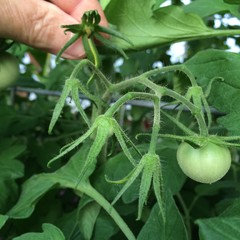
Seysonn_ 8a-NC/HZ-7
Original Author11 years agoHudson wrote:
Poor pollination is regarded as a major cause of incomplete fruit set and undersized fruits.
&&&&&&&&&&&&&&&&&&&
Amen ! That is what I suspected and mentioned too.
But what causes it ? There seem to be more factors. I believe genetics is the major player. Air/soil temperatures could be other, as in Hudson's summary.
Now it appears to me that " Blossom Drop" is altogether different. One of the reasons/causes being NO pollination. This is similar what happens in cucurbits. When No pollination, plant just aborts it.
I used to think that all it take just one pollen (male part) to set fruit, as it is the case in mammals ( one sperm). But I was wrong. In the plants kingdom it is different. They produce multitude of babies (seeds) and for that they need multitude of pollens and ovules. IT IS A MASS PRODUCTION system.
Sey.- 11 years agolast modified: 11 years ago
Nitsua, I think you've stated it extremely well. Even though it turns out it's not a simple function of the tomatoes "upstream" getting all the juice, I do think everything else you said is right based on the reading I have done. Looks like I have some more reading to do in the links above, thanks Hudson!
To take Sey's analogy a little further: The plant only has enough resources to grow so many "children" (so many mouths to feed!) It's ability to "conceive" children outpaces its ability to actually raise those children (just like humans...) But unlike humans, the plant seems to have the wisdom and ability to keep some of those children "infants" until others have grown and left the nest.
In the case of Hudson, say, where conditions are controlled, the plants blossom and pollenate very well. But, there has still got to be a maximum number of fruit that the plant can support. So even if all blossoms pollenate just fine, the plant has to "decide" not to grow all the fruit it has set, at least not all at once.
How does it decide which ones grow and which ones done? That's unclear to me. Of course, it's true that by that time, other infants have been conceived, and maybe they are higher up and get more sun, so maybe the plant in some cases never gets back to some of those original infants. Or perhaps, by that time disease pressure or other conditions compromises the quality of those fruits that were put on the back burner.
It does occur to me that a plant may partly "decide" which tomatoes to grow and which ones to put on hold based on how many set on a truss. If the truss gets so heavy it breaks off, the plant does not accomplish its goal.
Maybe I need to go back to Tomatoville and see if Carolyn has more insight on this, but I thought, if I could see a perfect little infant tomato, that adequate pollenation has occured. I have found some blossoms that when they fell off the plant, there was no baby tomato inside - just a dark spot. So I have been thinking THOSE were ones where pollenation failed. But you guys are suggesting pollenation may have failed even when we see the infant. So now I am re-thinking, wondering what I'm actually observing.
Now I'm wondering about something additional. Do flowers on a truss always open with the "first" flower opening first? I mean the one closest to the stem. This is another one of these things I would have guessed, but I have never actually observed.
- 11 years agolast modified: 11 years ago
Hi Wormgirl - I agree with what you say - see Levy, Rabinowitch and Kedar, 1978 research (pg 202, 210 & 215) - they have a great explanation about development of fruit on a truss by truss position (pg 215).
The final size of the tomato fruit is also closely related to the number of locules fertilized in the ovary - a function of pollination? Apparently the successful number of ovules pollinated in the ovary has to happen first before all of the other factors come into play - like the truss position, environmental conditions - etc etc. - Do you agree with that??
In other words - poor pollination = poor fruit set and size - regardless of other factors - including truss position, environmental conditions and plant resources??
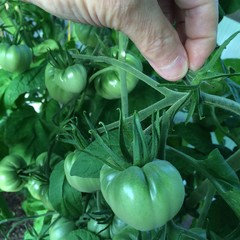
Therefore - Poor pollination is regarded as a major cause of incomplete fruit set and undersized fruits. Pollination then would determine which fruits on a truss set and in which sequence and the size of the fruit - if all of them are pollinated properly on a truss - then the largest fruits (oldest - first, 2nd, 32d, etc blossoms on the truss) and other inhibitors explained in the study would take over from there. In this photo the sequence of development appears to have been determined by pollination (locules pollinated in the ovary) because normally - the first blossoms on a truss would develop fruit first - as explained in the study? Am I understanding the process correctly?
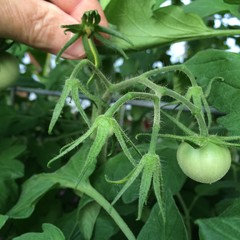
Seysonn_ 8a-NC/HZ-7
Original Author11 years agoAlright. Now we know what we are talking about:
-- FRUIT SETS BUT WONT GROW---
Lets see if there is any way that it can be prevented.
If it is nutrients related, maybe we can do something about it but if weather related then we can just talk about ( just like the weather itself) and cannot do a thing about it. Hehe
But good news (in my case) is that there are several more trusses in bloom and I am hopeful that they will grow fruits.
Sey
BTW: I have the followings growing fruits, NO problems:.
== Hahms Gelbe Topftomate ( Amazing dwarf)
== Big Beef ( High expectations on this one)
== Indigo Rose ( This surprised me. I bout it as a small seedling and planted out even later than most)- 11 years ago
hudson ... You do seem to get very good pollination, but I would guess that in a GH you don't have wind or bees. (Or maybe you do??) So, what's your secret to maximizing pollination? Large industrial fans in the GH? Making the rounds with the electric toothbrush?
You also touched upon one of my other questions regarding fruit size, which I was curious about.
I'm also wondering about flower size. It seems a truss can have some nice big flowers as well as smaller flowers. Does this relate to tomato size in some way? - 11 years ago
I am getting the same thing on the lone survivor of batch 2. I think it's too much fertilizer. It certainly isn't too cold. This is Miami and it's near 90*.
- 11 years agolast modified: 11 years ago
Nitsua - We do get good pollination in the GH - but I know I can do better now that I understand better the effect of pollination on fruit setting and tomato size. No bees - but we do run fans for ventilation that may help pollination some. We vibrate the blossoms on our plants by suspending the cattle panel that supports our tomato plants on two galvanized pipes from chain that hang from the rafters as seen in this photo.
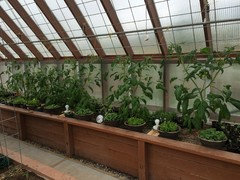
The cattle panel is 28' long - as the plants grow vertical - I tie the stems to the panel. All I have to do is bang on the panel at one end or anywhere on the panel and the entire 28' panel vibrates all the blossoms on all the plants - quick and easy. I need to do a better job of making sure I do it more frequently though. The advantage of a GH is controlling the environment and I can achieve better pollination than garden grown tomatoes.
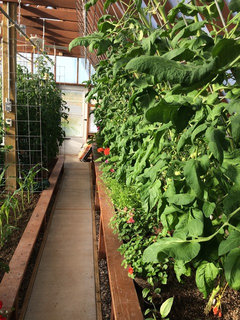
From my reading - the number of ovules in the ovary that are pollinated is directly related to fruit size. Take a peek at this thread on blossom size/fruit size - it may help.
http://forums.gardenweb.com/discussions/2218686/blossom-size-versus-tomato-size
- 11 years agolast modified: 11 years ago
I haven't had a chance to read all these links yet, but Hudson, I think you just summarized it for me. I picked 2 more Sungold today, one is normal sized, and one is a teeny tiny fruit, pea sized. So you just explained why that happens -- poor pollenation -- which would be more common in the spring when the weather can be cool, rainy, etc.
So perhaps sometimes the pollenation happens, but is so poor the tomato just decides to cut losses and go on to the next one? As in the photo you showed?
Jenn
Seysonn_ 8a-NC/HZ-7
Original Author11 years agoI thing tomato pollination does not require any help because the male and female parts are so close togetter. I think it is the question of the viability of pollens or the ovules. Just my thinking.
Sey- 11 years ago
Sey - You have the unsolicited help of the bees and wind in your garden so vibration of the blossom is taken care of for you! Although the blossom is both male and female the successful transfer of pollen to the ovules is increased by bees and wind. In the GH I am able to emulate the bees and wind by vibrating the blossoms. It is true that the fruit will set in a GH without any vibration (assuming correct environmental conditions) - but research from one study states - "the success of vibration in a GH suggests that successful pollen transfer is more important to consider than viable pollen production". With optimal environmental growing conditions in the GH the tomato plant is able to produce viable pollens/ovules - but the optimal transfer of pollen - in a GH - is improved with the help of vibration - IMO.
I do agree with your statement for garden/field grown tomatoes because the bees and wind take care of the needed vibration for optimal pollen transfer - IMO.
Just wanted to clarify that my comments above were referring only to GH production - I keep forgetting that most participants on this particular forum "Growing Tomatoes" are mostly growing tomatoes in their gardens not a GH.
- 11 years ago
Interesting discussion- out of my first many trussed tomato plants, which are Kimberley and 0-33, every single flower set fruit which is growing well.
- 11 years ago
Thanks for your pollination explanation, hudson. Very impressive how you figured out an easy way to stimulate mass pollination.
I'm inclined to agree that the electric toothbrush can help, particularly during hot weather. - 11 years agoSey, I agree with you. I've never seen any bees on tomatoes. Tomatoes are self pollinating. This is why we can plant so many varieties of tomatoes close to each other and still collect the true seeds from each variety. So pollination between male and female parts of the same flower should be easy and fast. However in the cold and in the hot weather something is going on that prevent pollination. There might be problems in the pollen viability or desynchronization in the development of female and male part on the flowers. After pollination there is probably some hormonal exchange between the plant and the fruit, since the plant can support only certain amount of fruits. One beefsteak tomato equals probably 50 cherry size tomatoes, this is why tomatoes with the smaller sized fruits generally set fruits easier. It is an interesting question if we can trick tomato plant into setting more fruits than it wants.
- 11 years ago
I agree antmary and Sey. Craig LeHoullier says most tomato flowers self-pollenate as they open.
However, as we have been talking about sometimes maybe they don't pollenate very well. Perhaps they might make small or catfaced fruit in this case? So perhaps, in challenging conditions the toothbrush, tapping, shaking greenhouse structure, etc could assist in *better* pollenation?
This morning, I noticed something intersting. A blossom had dropped from the Mortgage Lifter. I looked and it did have an infant tomato. I am pretty sure I did not knock this blossom off by accident, it fell by itself.
OTOH, here is my Pinapple today. It had just infant fruits a few days ago. So it seems like it can go either way.
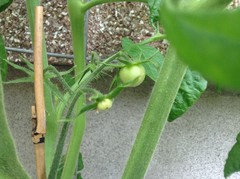
Jenn
- 11 years agolast modified: 11 years ago
Bees can cross pollinate a tomato if they catch it at just the right time. I think I read that tomato seeds are true 95% of the time when unbagged. But to guarantee 100% you have to bag them. I have bees all over my garden right now and they love the tomatoes, but also the beans and patty pan squash. so I am only using the tomatoes set early in the season for seed saving. I am growing a bee crossed tomato in my mystery orange cherry. Interesting discussion, I have enjoyed reading this and learning! I have many little tiny tomatoes that set fruit long before others and are still tiny while others are growing. this helped me inderstand why.
Jennie
- 11 years agolast modified: 11 years ago
I'm afraid I am going to agree with the research - the NUMBER of ovules pollinated in the ovary is increased with wind, insects and vibration. The number of ovules in the ovary that are pollinated is directly related to fruit size. We can just agree to disagree.
- 11 years ago
I actually agree with both of you. Pollenation isn't strictly needed, but can also be enhanced.
I thought of this thread today as I was watching a bumblebee getting busy trying to cross my tomatoes!
I did read those links - turns out I'd read a couple before, Carolyn had linked me to them on Tomatoville. The one I hadn't read went into more detail about the pollenation process. Interesting stuff!
Jenn
Seysonn_ 8a-NC/HZ-7
Original Author10 years agoBUMP.
This has been such a good discussion. And there is another similar thread started. So by bringing in up some others might have a chance to read it and during the upcoming season to pay attention and make observation.
I have mentioned somewhere, not to use electric tooth brush. I HAVE CHANGED MY MIND. I will use it this year I think electric tooth brush makes vibration with much higher frequency and can/may loosen up more pollen , even sticky ones. Just a theory.
Sey 10 years ago
I'm thinking of using it when the temperature gets above 85 and is very humid.
- 10 years agolast modified: 10 years ago
I agree - there are claims that you can increase your yield up to 30% with the use of a electric pollinator. I am using an electric toothbrush this year and I have seen a difference in fruit set - IMO.
Here is a link to an interesting product - take a look and watch the video too. I have never tried the "collection pollen" method - but perhaps that would even increase my % of fruit set? The VegiBee is more expensive than an electric toothbrush but may last longer? Has anyone tried one?
I am not convinced that with the number of blossoms if have to pollinate and the high current success we have with fruit set that I have time to collect the pollen on a spoon and stick the stigmas into the extra pollen. But I am convinced that the use of an electric toothbrush or a pollenating tool such as the VegiBee increases fruit size and fruit set! So far - the first fruit that has set on the plants in our GH is the largest size fruit that I have ever had set - even on the same varieties I have grown in the past. Maybe just a coincidence?
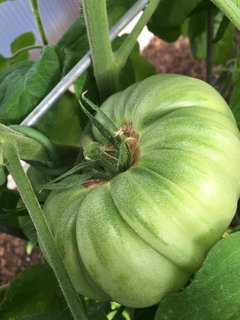
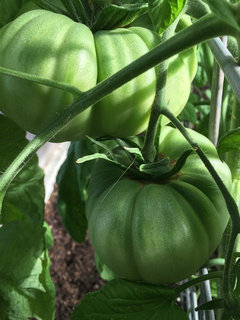
Here are some examples - all of these are approaching (if not already) one pound. They were the first to set fruit in our GH this year and although the should ripen soon - they are still growing!
Brandywine Sudduth
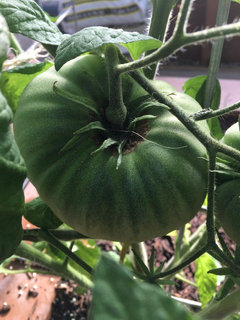
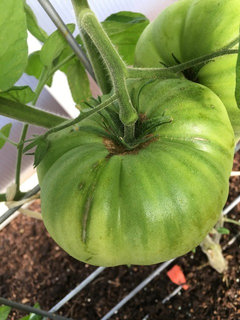
Big Brandy
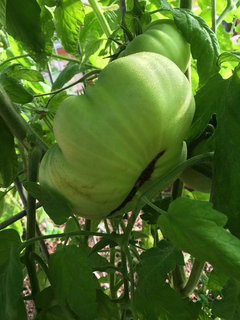
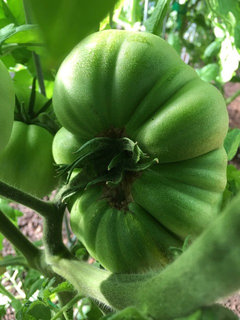
Brandy Boy
- 10 years ago
Wow! Beautiful and humbling Hudson. I skimmed through the prior discussions and will probably add some electric pollination assist. My outdoor environmental conditions are looking pretty amazing this morning and may not need any help from me: windy, plenty of bees, it rained yesterday, today is sunny without a cloud in the sky, 62 already and is supposed to hit 70. I am inclined to stay out of the way today.
 10 years ago
Great thread. I've had the same issue and always wondered why it happens. I do happen to notice that it happens more when the heat rises. Thanks for the post and the bump!
 9 years ago
So glad I came across this thread! Like others here, I've found it incredibly difficult to find any information on this particular issue.
One of my plants just keeps stalling with these guys. I literally have ONE tomato on this particular plant. Hoping the recent cool down aids in fruit setting, otherwise I'm at a total loss as to why I cant seem to get even a second tomato out of this plant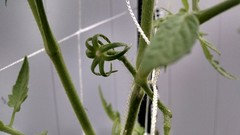
- 9 years ago
Temps are going down next week in ne oklahoma (tulsa) going to see what happens with my one lonely surviving tomato plant
Seysonn_ 8a-NC/HZ-7
Original Author9 years agoI have not find a thorough explanation of this either ;
It happens mostly with early flowers, in cool spring weather. It also happens when you have a big truss of flowers but only a few sets and grow big. Some won't set and some will stay as nub. This happens more with the variety with large tomatoes.
I have a theory that either the pollens or the ovalry are not quite viable. So what is set stays just in a very midget form.Maybe the cause is bad nutrient uptake !!
Sey




Seysonn_ 8a-NC/HZ-7Original Author