

Is this septoria on my tomatoes?
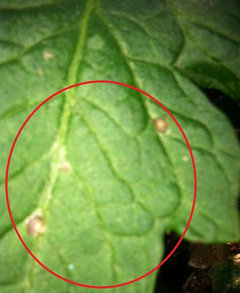
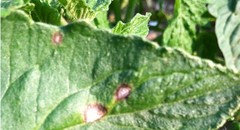
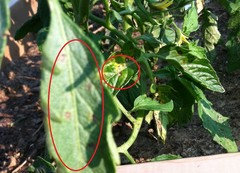
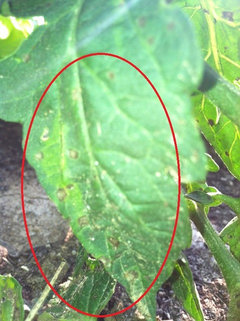
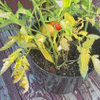
I posted a picture earlier and someone thought there may be septoria on my tomato plant leaves. It was suggested that I just cut off that portion of the stem leading to those leaves, however when I took a closer look I found many leaves on at least 3 of my 4 tomato plants. These leaves have just a couple spots and nothing nearly as bad as the earlier picture I posted. Can anyone tell me if i have a problem here? And if so, how can I treat it? These are too many leaves to cut off, right?!
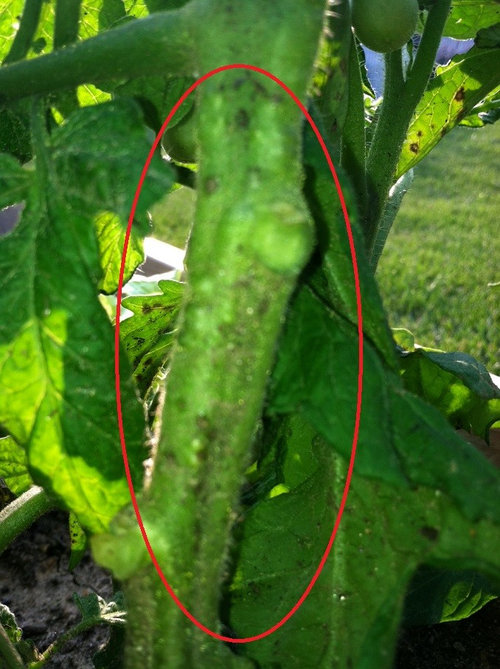
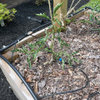
And is this a problem growing up the main stem? At least it looks like those spots are on the stem itself.
Comments (22)
 11 years ago
I have always regarded Septoria as a somewhat superficial tomato disease. It seems to progress slower than Early or Late Blight and I have had Septoria on plants all season long and noticed no drop in yield or fruit quality. Only when combined with other diseases, such as Early or Late Blight does plant health and vigor start to deteriorate at a quick clip. Mulch your plants (straw, pine tags best), prune off branches with leaves touching the ground and commit to a fungicide spray program for the rest of the season, to ensure a decent harvest.
Related Professionals
Baltimore Landscape Architects & Landscape Designers · Altoona Landscape Architects & Landscape Designers · Ardmore Landscape Contractors · Charleston Landscape Contractors · Kankakee Landscape Contractors · Greenfield Landscape Contractors · Niles Landscape Contractors · Jamestown Landscape Contractors · Syracuse Landscape Contractors · Queens Landscape Contractors · Tuscaloosa General Contractors · Pensacola General Contractors · Savannah General Contractors · Hopkinsville General Contractors · Waco General Contractors
m_gold
Original Author11 years agoDo I just prune the leaves or the whole branches? And do I prune the ones that have these black spots too, or only the ones touching the ground?
Do you suggest I prune ones touching the ground on tomato plants which have 0 leaves with black spots (for now)? thank you.
m_gold
Original Author11 years agoAnd I know it may be hard to tell from pictures, but does this look only like septoria to you? Could it be Early/Late Blight? the pictures on google look too similar to an armature's eyes like mine.
- 11 years ago
Daconil is a good one. There are many. It is best to address it....but H is correct regarding it not usually being fatal or profound. Funny, my maters developed Sep lately...and I sprayed just yesterday. Last night I discovered I did another "senior moment thing", and I had sprayed an insecticide by mistake. duh...
- 11 years ago
It is possible what you see on the stem is totally unrelated and it could be different fungal / bacterial problem. Septoria has very characteristic concentric circles and black dots/ often/ but not always inside the circle. Yellow around usually starts a bit later. EB usually more blotchy and has no circles. Copper is most widely used organic choice for Septoria.
 11 years ago
I don't think that is correct. EB is the concentric circles, not Septoria.
- 11 years agolast modified: 11 years ago
The pruning and spraying are both preventive measures. Do them both on all of your plants regardless of infection. Myself, I tend to rotate fungicides, usually between Copper, Daconil and Mancozeb. About the stem, I am not sure because the picture is a little blurry, but could be bacterial lesions, but I have had similar injury from twine rubbing stems if I was staking/tying.
m_gold
Original Author11 years agoI cannot get ahead of this problem.
The Septoria (I think that's what it is) continues to show on my tomatoes. I did not prune off all the leaves with this, because that would take too high a percentage of leaves off one of my plants. I noticed that the leaves are worst closest to the bottom of the plant or out to the side, but the tops have no issue. I have a raised bed garden and plan to use this soil again next year, is Septoria something that will stick around? Must I do something in the fall/winter months or can I replant tomatoes in this area without worry?
I ordered this but not sure it helped (it was also difficult to cover all the leaves on all the plants with this spay) http://www.amazon.com/gp/product/B000FOMRUC?psc=1&redirect=true&ref_=oh_aui_detailpage_o03_s00
I only use the spray once per week (just twice total so far), so I don't want to overreact, but since I am still having this problem persist, can someone suggest another spray I can use or try once I empty this bottle? thank you- 11 years ago
Septoria will stick if any leaves/ stems will fall on the ground and yes, it is pretty hard to make it very clean. Copper will work slightly better than Serenade, get a concentrate and dilute yourself. Unfortunately it is only to slow down disease progress not cure. No such thing as cure.
You can attempt to use Daconil if the weather remains dry. Keeping lots of air around your plants help. Mulching soil so plants are not touching soil with bottom leaves helps.
- 11 years agolast modified: 11 years ago
Agree with what lindalana said. These fungicides are preventive, which means it will kill the fungal spores on the leaf tissue, preventing it from spreading further, it will not turn a discolored leaf back to green again. Also agree that Serenade has not served me too well in the past, Copper, Daconil, etc (see previous recommendations) are better options IMO. I would also do some research into tomato pruning if I was you, because there are some newer methods suggesting heavy removal of branches below lowest bloom set. I'm not an expert on this but it is out there.
m_gold
Original Author11 years agoThank you to you both.
Should I worry about this fungus for next year? Is this something that will stick around in the soil and can attach back to my tomatoes next season? Or once I remove these tomato plants in the fall, will the fungus be removed along with the old plants?
- 11 years agolast modified: 11 years ago
Before you prune, make up a sanitizer solution with bleach. Do an internet search. I'm not sure about this disease, but it is good practice to clean your tools after working around any type of infected plants. If you neglect to clean your tools (and your hands for that matter) you will simply spread the disease to otherwise healthy areas.
Also, while you are doing this work, do your best to not touch anything but the infected areas. You could use dishwashing gloves of you want to keep your hands cleaner, rubber gloves are easiest to wash.
Lastly, especially if it's dry, and if you are dealing with spores, resist crushing or over agitating the infected plant parts. As was mentioned, spores are easily airborne.
I'm not saying you have to be surgically clean, you can be as careful as you like, but simply precautions can minimize spread.
m_gold thanked rgreen48 m_gold
Original Author11 years agoDave & rgreen thank you!
I would need to remove 1 entire plant (maybe 2) if I have to prune all the infected leaves. It is my first garden so I am growing a few different tomato plants in hopes of learning what I want to grow next year. So I am not as concerned about losing one whole plant, I expected to already have excess tomatoes to harvest. But how do you suggest I go about this. Should I prune all the leaves and even if it's more than 3/4 of what the plant has to offer and wait to see if the plant still survives? Or do I just remove the whole plant if there will be much less than 1/4 leaves remaining on any single plant?
- 11 years agolast modified: 11 years ago
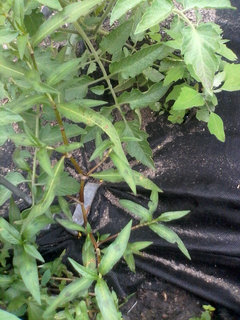
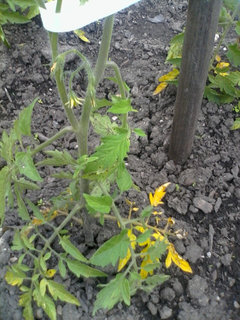
I think Septoria does overwinter here, am thinking assumption that it is only airborn no longer holds. Look what I have on surrounding me veggie plots at community gardens...plants are literally do not have enough foliage to go on...
m_gold
Original Author11 years agolindalana, wow, there are so few leaves on your plant - how much does this stunt the development of your fruit or decrease your total output? Does this alter the taste and quality of the tomato itself?
 11 years ago
< Should I prune all the leaves and even if it's more than 3/4 of what the plant has to offer and wait to see if the plant still survives? >
Exactly. Please don't take the 3/4 so literally. We have all seen posts where nothing but a bare stem with 3 leaves was left and the plant recovers. Not that I am recommending that. :) The point is to get the infected leaves off the plant and give it a chance OR just pull it and replace it this early in the season. Your choice.
Lindalana - why would you think the plant in the photo doesn't have enough foliage to go on? I have seen deer do more damage than that and the plant recover. But if you have replacement plants then replace it if you wish.
<I think Septoria does overwinter here, am thinking assumption that it is only airborn no longer holds.>
I don't know that I have ever seen the claim that Septoria, or any of the common fungus diseases are only airborne. They aren't. The point is that they are no longer considered to be only soil-borne issues as used to be the case prior to all the research. Further that the dormant spores are present in the air all around us all the time, that active spores can travel over great distances, and that proper use of soil bed mulching can eliminate the majority of soil-borne fungus diseases but not air-borne. Failure to mulch well therefore increases your odds of contamination greatly.
As to over-wintering, only on tomato plant debris or weeds or debris from other members of the nightshade family. Assuming good fall garden hygiene and periods of hard freeze then that shouldn't be an issue, especially given most zone 5 winters.
Dave
m_gold
Original Author11 years agoDave, if I am too skittish to prune that many leaves and this fungus hangs around for the rest of the growing season what is the risk for me. Will it takeover the whole plant and cause my plants to not fruit or disrupt the amount of fruit produced? Will it cause problems to the fruit directly? Or is this simply an ugly looking fungus that will keep attacking leaves but not fully destroy the plant itself?
- 11 years ago
mgold - have you done any research on Septoria since you got the diagnosis? There is literally tons of info available about it and how to deal with it. But yes, just like all the other fungus diseases, it can destroy the entire plant and it can affect the fruit and and it spreads to any other plants and even to neighbor's gardens. It can wipe out 100% of the related crops in the garden. Can't say it any more clear than that, sorry.
So skittishness in dealing with it really doesn't serve you or the plants in any way. ;) You aren't doing them, or yourself, any favors by not being aggressive in the treatment, ok? Often in gardening we have to become aggressive in our methods for the good of the rest of the garden and new gardeners have to learn when to go for the guts and glory and when to sit back and let nature take its course. This is a guts and glory situation so if you can't remove all the necessary leaves and give it a chance to recover then pull the whole plant and get rid of it.
Dave - 11 years ago
Mgold- those are not my plants but plants from community garden plots where I garden. To my experience they are goners. Too early, too much disease, weather remains rainy and humid, which is perfect breeding ground for Septoria and rest of lovelies, our summer is too short to get ahead and recover to get some yield.
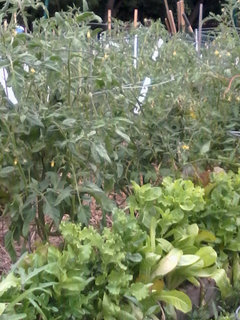
My garden, not great but holding. Lots of effort to keep disease pressure off, including removing leaves from bottoms of the plants. To date- 2 application of copper, weekly compost tea aerated foliar, compost extract soil drench, 3 aspirin water treatment, 1 treatment of Excel LG with Actinovate. Today I started Aminoacid foliar application and will likely continue all I am doing. 6 weeks to go does not look very promising but I have run out of previous year canned supplies LOL
.


digdirt2