Software
Houzz Logo Print
yugoslava

Daffodils in grass?

11 years ago

I have an area, it's between two trees, planted with daffodils. They bloom from early spring to June. There are some smaller bulbs and a few anemones. I have been adding bulbs for the last fourteen to fifteen years. It's something I enjoy seeing in the spring and many other people stop to look because it's facing the street. The soil is clay. I've added compost and peat moss and also shredded leaves. When I started planting daffodils the grass around them was short as I waited for foliage to die down. However, over the years taller grass moved in and as I wait for foliage to turn brown the whole area looks weedy. I get snide comments and explanations don't make any difference. I've read an English book on Daffs and writer says to be patient. I've seen English riverbanks full of bluebells and fields with daffodils. Are English more patient to wait out. I'm thinking of killing grass after all foliage does down. What can I have in it's place? Something I really enjoyed has turned into an irritation for others! People used to tie daffodil foliage. I have no time for that, besides there are too many. I would very much appreciate suggestions.

Comments (17)

  • 11 years ago

    Would you be able to add a pic of this spot? Your zone/location?

  • 11 years ago

    I planted my daffies in a setup just like yours and the foliage dieback time is a pain precisely b/c of the weeds that creep through. I do some pulling of the ones that are glaringly obvious and let the rest be. I live in the country (semi-suburb) so I can get away with the unsightly stage of daffodil growing. I would discourage any city or suburban dweller to grow daffies, unless containerized or unless its in a section totally hidden from view of disapproving HOA and neighbors' eyes. One thing that has help with the weeds during interim period is Preen. I apply in fall and before bloom time and weeds have decreased. But spring rains and bird gifts make sure there is a steady supply. Preen has no negative effect whasoever on the bulbs. I've done this for two years already.


    I had a neighbor that grew TX bluebonnets in his ditch and they were the UGLIEST thing during the dieback period. While I understood what was happening, the untidy look convinced me I would not grow TX bluebonnets. His house was nice and the rest of the landscape was manicured, but the weedy ditch gave the entire property an abandoned appearance. I can see how irritating it would be to passers by that do not understand the necessary cycle such plants have to go thru for an eventual perennial show.

  • 11 years ago

    Same problem here. My daff bed gets some shade, so this year I squeezed in caladiums in-between and transplanted a couple of hostas. Now that the caladiums and hostas are getting bigger, it helps distract from the photosynthesising daffs and surrounding weeds. I just pull the bigger weeds and the rest don't look as bad since the eye goes to the bright red caladiums and now the hostas are fuller, too. Hopefully when the caladiums are even bigger, they'll shade out most of the weeds. I also put some glads and a rose bush in the same sight line as the daffs (when looking at the yard from the street/curb). That helps the eye look somewhere else other than the Wild Weed Party going on in the daff beds. I'm not in any mood to relocated 30 feet of daff beds so I decided to take the advice I used to give my daughter when she was worried people are staring at the zit on her face - wear a bright outfit or jewelry to make them notice something else while looking in your direction : )

  • 11 years ago

    I did a mono-daff bed because I was trying to get a large naturalized massed drift look at the edge of the grass but the grass (and weeds) have crept in over time. The first couple years were OK - dug up grass, tilled, planted, mulched - but now the grass has grown back all in-between the flowers and its been hard to pull it all. So, I end up having tall overgrown grass while the daff leaves are doing their thing.

  • 11 years ago

    Possibly the problem was the tilling. The technique used here for naturalising is just to insert the bulbs into the lawn with a trowel or bulb planter. The grass isn't removed. The grass just grows through it. After the daffodil leaves are dead the whole thing is mowed and reverts to lawn. Without tilling weeds don't get a foothold.

  • 11 years ago

    'Finally - nobody has any business making snide comments. Ignore them. They're just plain ignorant. Maybe you should park a wrecked truck there and then they'd have something to moan about.'


    Spot on!

  • 11 years ago

    Floral, your garden bed is absolutely lovely but unless my eyes are deceiving me, it doesn't look very big. I think the OP is talking about a location with Hundreds of Daffies. A field of daffies is going to look ugly after flowers are spent and there's not much that can be done. Many of us who dreamed such daffies fields didn't consider the after blooms look and now not much we can do, sigh.

  • 11 years ago

    bossyvossy - it is indeed very small. But I you can do the same with a bed of any size. But this is a different concept from naturalising in grass. In the latter case you'd keep the lawn mown short around the leaves until about 6 weeks after flowering and then go over the whole lot. As long as the mown area is crisp and neat I'm sure people will understand why the long grass is there..

  • 11 years ago
    last modified: 11 years ago

    1.) You could treat the daffodils as annuals. Just mow them. They won't be able to restore their energy and will die out...but lots of folks plant annuals they know won't last the year. Daffodils are cheap.

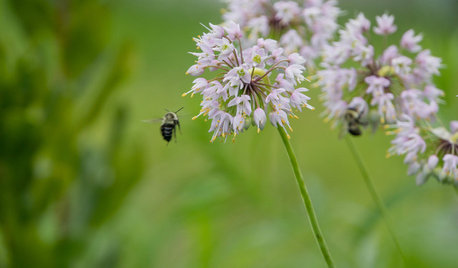
    2.) Plant some taller plant that flowers later around the area. Nodding onion or bee balm. Ferns could hide the foliage. (Sort of what floral_uk did. Say, what are the leafy things in her May picture?)

  • 11 years ago

    Quite a few are ferns.

  • 11 years ago

    Mowing won't kill daffodils at all, at least not where I am! I've excavated hundreds of them from areas that have been mowed regularly for decades.

  • 11 years ago
    Won't kill them at all but in a case where you are trying to expand your daffie patch(es), you gotta let foliage die naturally. Once I have the look I have envisioned, I will not hesitate to mow immediately past blooming. But for now I must suffer thru that stage of I want naturalization to occur.
  • 11 years ago
    last modified: 11 years ago

    Perhaps interplanting with full sized hostas would work to keep the weeds down after narcissi flowering, which normally happens before the hostas are fully expanded. There is a similar problem with many of the flowering alliums, their fading foliage is also unsightly, and that often happens before they flower.

  • 11 years ago

    bossyvossy - if you mow immediately past blooming you will kill them. They need at least 6 weeks. Then you can mow, even if they are not completely died down.

  • 11 years ago
    Not so. FIL mows immediately after blooms are spent and has done so for 50 yrs. he doesn't like daffies but planted them to please wife. At the first sign of yellowing he mowed. That's on okla USA, don't know if it Friends of Jerrys Jungle know what it's all about, "A passion for plants". What Jerrys Jungle is not, is a Retail Nursery. I have had inquiries of plant prices. Plants are priced according to availability, size, caricature and recipients attitude. Jerrys Jungle Gardens was created for a select group of people. Friends with a passion for plants. Over the years, with the help of these friends, Jerrys Jungle collected and attempted to propagate a large array of collections of plants. These collections are looking for a new home.

    Rain, Rain, Rain, go away, come back in August.
    If we get another rain before the 27th, please call to verify the parking situation. Parking is limited,
    so the area for parking may not be available. If that's the case, we'll do it on July 4th, or July 11th, or July 18th, whenever the ground is dry.
    FYI. August will have 5 three-day weeekends.
    Here it is!
    Jerrys Jungle Gardens
    712 Hill Rd 77037
    9 to 4, Saturday, 27th
    832-431-7599

    Some of the collections:
    Gingers: Alpinias, Curcumas, Hedyciums,
    Costus,
    Trees subtropical: Dombeya wallichii, Ambu
    Yhombii, Tipu Tipu, Many more.
    Cordyline: Hawaiian Ti,
    Amaryllis: Red, Orange, Yellow, Variegate,
    Pachypodium: 7 varieties
    Palms: 10 varieties
    Philodendrons:8 varieties
    Clerodendrums: 6 varieties
    Succulents: aloes,aloes,aloes and more
    Cactus: who knows
    Euphorbias: too many
    Bamboo:Timber, punting pole, weavers, 3
    types of variegated, golden goddess, 20 more types.
    Crinums: Asiaticums, Procerums, Jerrys
    Hybrids, and 30 more varieties.
    Cycads: a large selection of rare, hard to
    find.
    and this is just a start.

    We look forward to seeing old and new friends again.

    Bobette Baker A makes a diff, I doubt it
  • 11 years ago
    Not so, FIL mows at the first sign of yellowing foliage following blooms and has done so for 50+ years. His patch is a 2 ft x 15 ft strip and it has been that size forever. No proliferation but no death either.
Sponsored
HomeCraft Remodeling
Average rating: 5 out of 5 stars5 Reviews
Custom Craftsmanship & Build Solutions in Franklin County, Ohio