Software
Houzz Logo Print
beth_willett

Cloudless yellow sulfur question

11 years ago

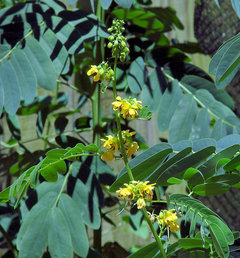
Today I was at the nursery and there were several pretty yellow butterflies gathering around a group of plants - so I had to see what the plant was. It was a "popcorn" cassia. I picked it up and the butterflies landed on it over and over! Lo and behold there was a cute little striped caterpillar on the top which of course had to come home with me with the plant. So now WHERE am I going to find a place to plant this! AND...can I raise this caterpillar in the same mesh cage as my monarchs? Anyone with experience with either this plant or butterfly?

Comments (16)

  • 11 years ago

    Popcorn cassia is an excellent larval plant for sulfurs or yellow butterflies. An interesting thing about this plant is that when the cats eat the yellow flowers the caterpillars become yellow. When they eat the green leaves they are mostly green.

    I'm sure you can raise them in your cage--as long as they have food to eat they should do well there. This plant grows quickly, but is cold sensitive. I don't know where you live, but if you are below zone 9 I would put this in a large pot and then bring it in for the winter months.

    Beth Willett thanked Tom
  • 11 years ago

    Interesting! I even found an egg on the plant too! So in the cage it goes and we will see how much it eats. I bought another plant just in case its as voracious as the monarch. Are there other plants it eats? I saw one of the butterflies in my backyard when I got home. I have dill, parsley , fennel , garbanzo beans, any of those? I can't keep running out and buying more cassia plants like I do milkweeds!

  • 11 years ago

    I want one!! Good thing I have that flowerbed (photos coming soon) in the work. Current temp is 90! Three degrees cooler than last night!

  • 11 years ago

    Who eats garabanzo beans, Beth? I sure do, but I don't know any butterflies that do.

    I don't know any other larval food for Sulfurs that is easy to get. Supposedly some eat alfalfa, but around here they eat different cassias or sennas. Again, your popcorn cassia should grow quickly.

  • 11 years ago

    Various sulfurs native to the Pacific Northwest can be seen by the dozens in local alfalfa fields--but never in the nearby cities.


  • 11 years ago
    last modified: 11 years ago

    Hahahaha Tom.....I didn't think I was that far off..."larva host plants for the cloudless yellow sulphur include legumes in the fabaceae family!" That would be a chickpea or a garbanzo bean plant, right? I really didn't think they would eat the actual bean! The cassia plants are so pretty .....I just need a spot! And Kristi you do need one!

  • 11 years ago

    Thanks for the link! That was interesting to read with my morning coffee! The butterflies are so pretty and bright...kind of a lime green, chartreuse yellow, and they are pretty big! But fast! After reading that, I'm even more excited to try to raise this one - right now protected in an organza bag, happily eating my popcorn cassia! Striped yellow. I wonder if it will change to green now that there are no more flowers?

  • 11 years ago

    No cassia at my nursery tonight, though I came home with a car full of plants!!

  • 11 years ago

    I live in z7b in central Arkansas and grow Senna marilandica, which is hardier and overwinters here. I'm sure it isn't as pretty as the Popcorn Cassia being discussed but it will host the same butterflies. If this is the main reason to grow this family of plants and you live in a cooler climate, you might consider this hardier plant ... Mary

    Maryland Senna information


  • 11 years ago

    I have a Cassia (Senna) which blooms in November. I have had it for over 15 years and have never noticed butterflies or caterpillars using it. Is this a different kind? or am I missing them? I have many plants for birds, bees and butterflies but have only this summer begun to try to identify the butterflies using them. I had no idea that my cassia was a host plant. When I read that I went right out into the garden and looked all over it but found nothing. I will continue to check it --I would love to see some Sulphurs on it!

  • 11 years ago

    I think that your Cassia will probably host some Sulfurs. The caterpillars are easy to miss since they are pretty much the same color as the leaves. You should look near the tips of the branches; if you see some of the leaves that have been munched that's a good indication that they have been around.

    If you see yellow butterflies around your property it's probable that they are using the Cassia as a host plant.

  • 11 years ago
    last modified: 11 years ago

    There's one type of cassia that comes from South America that the sulphurs won't touch, Junco - yours could be that one. I gave up on the one I had a long time ago. I can't remember the name, but I'll try to find which one it is and post later.

    I'm raising some cloudless sulphurs on partridge peas, which is their favorite around here. They'll lay their eggs on Cassia oblongifolia/sicklepod and Christmas cassia/C. bicapsularis occasionally. I'm also raising a few sleepy oranges on sicklepod, which is their favorite. Partridge peas and sicklepod will get big, much bigger than they grow roadside, when you raise them in good garden soil and fertilize them a little. One of the cloudless suphurs made its chrysalis last night.

    Yes, you can raise sulphurs of all types yourself like you do monarchs. But, like Tom said, popcorn cassia is cold tender - I had one a few years ago, and it didn't make it through the winter, and I'm in zone 8b. Christmas cassia grows to bush/small tree size, and is much more cold hardy. Sicklepod is supposed to be an annual, but it comes up in EXACTLY the same place year after year here, so I think it may be a perennial, at least in some zones. It comes up readily from seed, too.

    I found the cassia that they won't use - Cassia corymbosa.

    Sherry

  • 11 years ago

    Thanks for the info--I had concluded that my cassia is bicapsularia, only because it doesn't bloom until November. I'll keep a closer watch on it for any activity.

  • 11 years ago

    Well, I complain of no butterfly activity and lo and behold, I watched a Cloudless Yellow Sulfur laying eggs on the Senna marilandica, which has been blooming for two or three weeks now. She seemed to prefer the blooms for her eggs but I did locate 3 eggs on leaves. Eggs are so tiny I can't see them on the blooms.


    ... Mary

  • 11 years ago

    That's great, Mary! That reminds me to go outside and look for more sulphurs!

    Sherry