Software
Houzz Logo Print
mike_jw_gw

Yellowish colouration on leaves

11 years ago
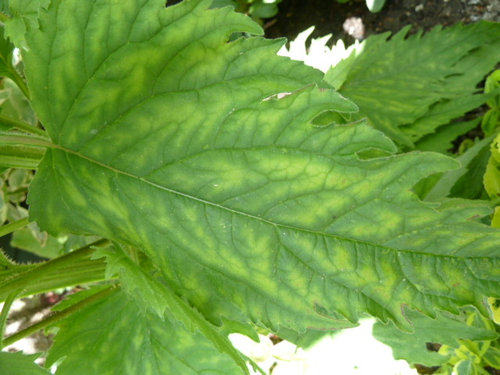
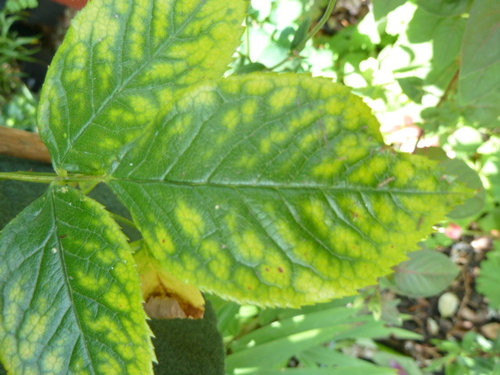
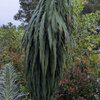
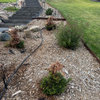
We have 2 plants in our garden where some of the leaves are exhibiting a sort of yellow mottling as if affected by a nutrient deficiency. One is a rose, and the other is a Campanula, but the condition doesn't effect the whole garden. Is this just a natural thing?


Comments (12)

  • 11 years ago

    could be ... and i would start with a soil test ... to find out ...

    ken


  • 11 years ago

    If it's on older leaves, try a small amount of Epsom salts in water. If it's on newer growth, try a few rusted nails. It's not always a necessary addition, but there could be something about the soil where those plants are located.

    it looks like N yellowing, but the veins are green. Could be N, but the Mg, and Fe could also be an issue... as to the cause... yep soil test.


  • 11 years ago

    Rust is not soluble. Rusty stuff put into the soil does not supply iron.


  • 11 years ago
    last modified: 11 years ago

    jean... it's true that unchelated iron is in a form not immediately available to plants. However... plant roots secrete acids which do chelate minerals - including iron from rusty nails.

    The main issue is soil pH. If soils are alkaline, then the secreted acids are not as effective. Thus, a high pH soil is often the cause of iron deficiencies.

    All this aside, from these pictures, it looks like the problem with these plants is more likely Mg, or another issue, anyway. :-)

  • 11 years ago

    Yellowing of plant leaves, Chlorosis, has numerous causes, most related to the soil. There are a number of myths (Epsom Salts, rusty nails) that keep popping up but the main culprits may be soil pH, Magnesium/Calcium ratio, Nitrogen, a too wet soil, and a too dry soil, and some other reasons. Perhaps this article might be of some help.

    http://extension.illinois.edu/focus/index.cfm?problem=chlorosis

    kimmq is kimmsr

  • 11 years ago

    Mmmmm, the more I read about this is the more uncertain it becomes. The yellowing on the plants in question are on the lower leaves. I did a simple pH test years and years ago which determined that the soil was more or less neutral. But, as far as I can remember, several samples have to be taken at various location around the garden to obtain a 'mean' reading, more than a 'spot' sample. We have a great deal of different plants in the garden which are not showing this effect. I'll do a full soil test in any case, just to see what it shows up. Thanks for everyone's comments.


  • 11 years ago
    last modified: 11 years ago

    Hey Mike... A full soil test is the only way to find the cause. Since it's on the older leaves, for a quick fix that will not contribute to any future problems, epsom salts are NOT a myth. Please, instead of taking my, or anyone else's word for it, look it up for yourself. I would add 1 tbsp of the salts to a gallon of water and apply it in moderation. I'm sure you can find a recipe and application rate online.

    Now, this is not a permanent fix. It should not be a substitute for long term soil health, but it will supply Mg to the plant in a very available form, and one or 2 applications will keep the plant healthy until you can find and fix the underlying problem. The likely cause is probably related to pH or more likely a mineral conflict or imbalance.

  • 11 years ago

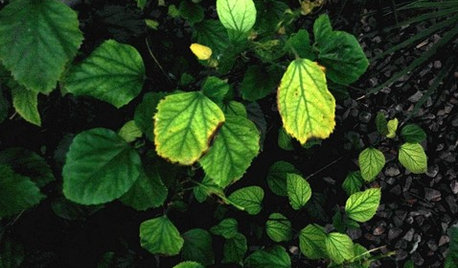
    mike_jw, when I look at the horizontal pointing leaf in the second image, I can discern a green triangle fringed by a lighter colored tissue. This is often an indication of magnesium deficiency. I would try the application of Epsom salts. Buy it from the chemist (your equivalent to our pharmacist). It is usually cheaper than from the nurseryman. LINK

  • 11 years ago

    One tablespoon of Epsom Salts contains about 35 grams of Magnesium Sulfate, about 10 percent. Usually when correcting a soil nutrient deficiency the amount of a product to use is given in pounds (50 or more) per acre and there are about 435 grams per pound. If you mix 1 tablespoon of Epsom Salts in one gallon of water you dilute that even further, so there is not enough MgSO4 being applied to the plant to correct the problem.

    Rather than stumble around with guesses about what the problem is get a good reliable soil test done to see what the problem is and use that as the basis for correcting any nutrient deficiencies. Possibly putting something that is not needed into the soil could make the problem worse by making the nutrient deficiency worse.

    kimmq is kimmsr

  • 11 years ago

    A tablespoon of epsom salts in a gal. of water for the isolated instance of just 2 plants is neither too diluted, nor going to make the problem worse.

    I'm not going to argue, I will just reiterate to Mike that he look online for information from sources like this University Cooperative Extension... http://lee.ces.ncsu.edu/2012/08/epsom-salts-and-plants-is-it-worth-using-epsom-salts-as-a-plant-fertilizer/

    Or, better yet, a page from the Royal Horticultural Society... https://www.rhs.org.uk/advice/profile?PID=456

    I dare say that the Brits got it right.


  • 11 years ago

    As is clearly noted in the RHS article the signs and symptoms of Magnesium or Manganese, or Iron deficiencies are very similar, so which do you have? only a good reli8able soil test will really tell you.

    kimmq is kimmsr

  • 11 years ago

    kim... that we definitely agree on. And living and gardening in the U.S. gives little experience to the soils of the UK.