Software
Houzz Logo Print
corey_snyder

Help after a soil test.

11 years ago
I recently did a soil sample test and here are my results.

So as you can see it's pretty terrible. The two products I recently purchased to start using are the 5-1-1 fish fertilizer and the 9-3-6 foliage pro. Based on my current situation and products what should I do? Any advice on how to get my dirt back to being rich?

The dirt I started with was 40% dirt, 40% mulch, 10% peat, 10% organic compost. So how he heck is my garden so depleted? Can over watering it wash away the nutrients?

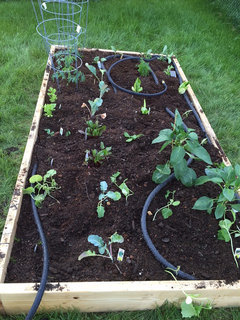
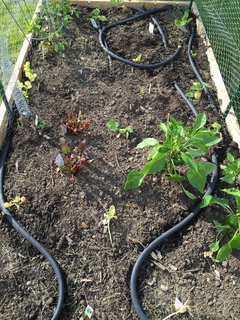
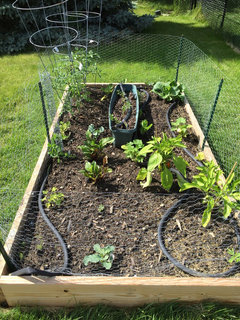
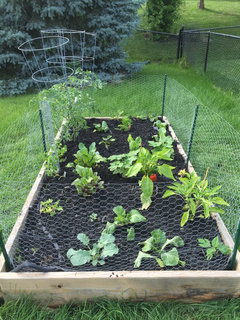
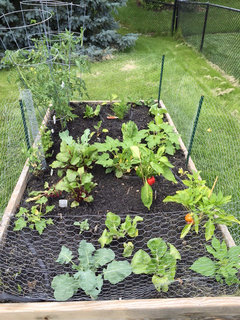
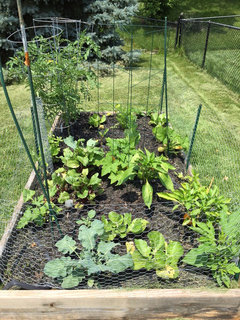
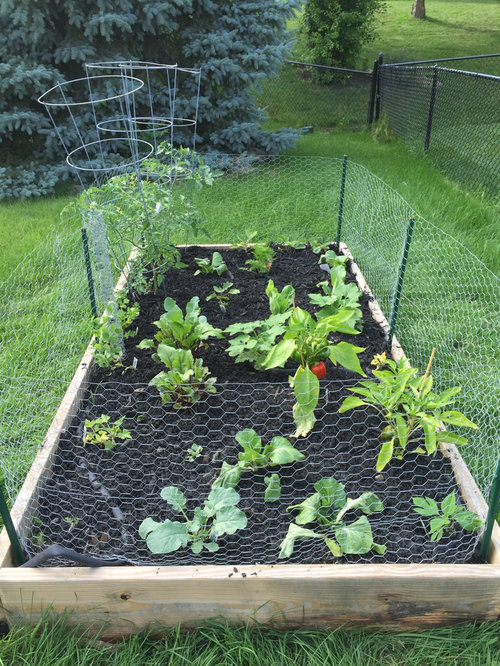
Here's a picture of my garden:


Comments (25)

  • 11 years ago

    The results aren't there.


    Corey Snyder thanked lisanti07028
  • 11 years ago

    Well it won't let me edit my original post to add the results so I'll add them here:
    PH Level: 7.5
    Nitrogen N0- depleted
    Phosphorus P0 - depleted
    Potassium K0 - depleted

  • 11 years ago

    The soil pH is near to okay, most all plants prefer a soil pH in the 6.0 to 7.0 range and 7.5 is not that far out of range. The rest tells us nothing. What is the amount of Phosphorus, Potash, Calcium, Magnesium, Cation Exchange Capacity (CEC)? How much organic matter is in that soil? How well does that soil drain? How well does that soil retain moisture? What kind of life is in that soil?

    What was the "mulch" material that was put in the soil mix?

    Why Peat Moss?

    kimmq is kimmsr


    Corey Snyder thanked kimmq
  • 11 years ago

    Did you dig in 'mulch' as a soil amendment? What kind of mulch? Usually purchased mulches are shredded wood which is a great mulch but a terrible soil amendment. For one thing it depletes nitrogen while it decomposes.

    That soil looks very rich and dark to me though. The plants look OK.

    If this was a home soil test kit, I would not trust it. How your plants look and how they grow will tell you more than that.

    Corey Snyder thanked toxcrusadr
  • 11 years ago

    Here are the answers to a bunch of your questions:

    • I did the test using this kit . It may be junk?
    • I have no idea how much Phosphorus, Potash, Calcium, Magnesium, Cation Exchange Capacity (CEC)?
    • How much organic matter is in that soil? 10% Organic
    • How well does that soil drain? Not sure how to measure
    • How well does that soil retain moisture? Pretty well, a day after rain it's still moist if I dig down an inch or two.
    • What kind of life is in that soil? I have no idea what this means
    • What was the "mulch" material that was put in the soil mix? No idea
    • Why Peat Moss? The stuff was premixed from a lawn and garden place
    • When was the raised bed constructed? 4 months ago
    • Did you dig in 'mulch' as a soil amendment? No. It came pre-mixed. All I did was put mulch on top of the bed once everything was dug in. Here is the soil I bought

    @toxcrusadr The darkness you see could be the new mulch I added on top. If you say the plants look OK then I guess I wont worry. I bought the test after the garden not producing much fruit. Really nothing has produced fruit except the bell peppers and those are very deformed and diseased.

    When I first built this I set up a hose timer and a water leaker hose and I went out after about a week and realized I was over-watering it significantly. To where the grass down-hill from the raised bed was very soggy & grown up like crazy. I thought maybe I washed all the nutrients into the grass. This is my first garden so I don't have a lot of experience in the garden space.

  • 11 years ago
    last modified: 11 years ago

    Here is a photo timeline of my garden growth and dates.

    5-15

    5-27 (Things got smaller b/c a rabbit ate a bunch of it down to the roots!)

    6-16

    6-22

    6-28

    7-4

  • 11 years ago

    Home soil tests are pretty worthless. If performed properly you can get a decently accurate pH number, but that's about it. I guess the organic percentage is possible too. 7.5 pH is passable anyway, but I would be skeptical given the high level of organic material.

    Honestly, the recent growth seems perfectly acceptable. Have you had cool weather?

    My first bet would be that you have been overwatering. Second would be leeching N out of the soil. Doubt its more than that with all the organic stuff in the soil. You could put a little (very little) ammonium sulfate for two or three weeks to perk it up.

    Corey Snyder thanked kokopellifivea
  • 11 years ago

    The soil mix is maybe not the best for a raised bed and is pretty darn expensive but it should work OK. And it should have a decent nutrient load. So to address your first point, yes, the soil test is pretty much junk. ANY home soil test kit is pretty much junk - you just cannot duplicate the results of professional lab tests at home and results from home testers will always be very approximate - dubious at best and downright inaccurate at worst.

    In a 4 month old raised bed filled with imported soil, there is not going to be huge populations of soil life present (soil life = microorganisms and soil insects that process organic matter and release nutrients). That happens over time. And drainage in raised bed is seldom an issue. But over watering can be :-) It is important to remember that growing in raised beds is distinct from both growing inground or planting in containers. It is a bit of a hybrid planting situation and draws some growing requirements from both but doesn't duplicate either situation.

    The plants don't look too bad to me, either. But it won't hurt to supplement with a water soluble fertilizer. Just avoid one that is too heavily weighted towards N. And since the bed contains NO mineral soil (real 'dirt'), I'd go with one of the DynaGro products, as they contain all the necessary trace elements/minerals most ferts lack.

    Corey Snyder thanked gardengal48 (PNW Z8/9)
  • 11 years ago

    To know how much Phosphorus, Potassium, Calcium, Magnesium, or any other nutrient you need to know more than "depleted". Do you need to add 1 pound per 1,000 square feet or 10 pounds per 1,000 square feet? Those home soil test kits do not tell you that. The CEC, Cation Exchange Capacity, is a measure of how the soil will hold on to, or let go of the nutrients in the soil.

    Soil life, the earthworms and other wee critters that live in the soil and digest the organic matter in that soil and convert it to nutrients the plants can use. In a soil only 4 months old I would not expect to see much, if any. Probably there is 10 percent organic material in that soil mix rather than 10 percent organic matter. Organic matter in soil is what is left of organic material after the digesters munch on it, and that could be why the soil test shows nutrients "depleted", they are not yet available to the plants, and any soil bacteria may well be using the available Nitrogen to try to digest that organic material so that Nitrogen is not available to the plants.

    If you live in the United States contact your local office of your stat universities Cooperative Extension Office about having a good reliable soil test for pH, P, K,, Ca. Mg. and CEC done and dig in with these simple soil tests,

    1) Soil test for organic
    material. From that soil sample put enough of the rest to make a 4 inch level in
    a clear 1 quart jar, with a tight fitting lid. Fill that jar with water and
    replace the lid, tightly. Shake the jar vigorously and then let it stand for 24
    hours. Your soil will settle out according to soil particle size and weight.
    For example, a good loam will have about 1-3/4 inch (about 45%) of sand on the
    bottom. about 1 inch (about 25%) of silt next, about 1 inch (25%) of clay above
    that, and about 1/4 inch (about 5%) of organic matter on the top.

    2) Drainage. Dig a hole
    1 foot square and 1 foot deep and fill that with water. After that water drains
    away refill the hole with more water and time how long it takes that to drain
    away. Anything less than 2 hours and your soil drains’ too quickly and needs
    more organic matter to slow that drainage down. Anything over 6 hours and the
    soil drains too slowly and needs lots of organic matter to speed it up.

    3) Tilth. Take a handful
    of your slightly damp soil and squeeze it tightly. When the pressure is
    released the soil should hold together in that clump, but when poked with a
    finger that clump should fall apart.

    4) Smell. What does your
    soil smell like? A pleasant, rich earthy odor? Putrid, offensive, repugnant
    odor? The more organic matter in your soil the more active the soil bacteria
    will be and the nicer your soil will smell, to a point. Too much organic matter
    can be bad as well.

    5) Life. How many
    earthworms per shovel full were there? 5 or more indicates a pretty healthy soil. Fewer than 5,
    according to the Natural Resources Conservation Service, indicates a soil that
    is not healthy.

    to see what you have and what you might need to start to get that soil into a good, healthy soil that will grow strong and healthy plants.

    kimmq is kimmsr

  • 11 years ago

    Ohio Mulch, ugh. Anyway they do not give percentages of ingredients, only: " Green Envy Potting Soil is a mixture of composted food, pine fines, peat moss, sand, and perlite." gardengal is absolutely right, this is probably way too high on the organic matter scale and doesn't contain much mineral soil (other than sand and perlite, but apparently not much by the appearance). This is better for containers rather than gardens. It will decompose and shrink. Next season, if you have to top it off, I would recommend digging in some soil from elsewhere in your yard, or a couple of bags of topsoil (just make sure it's soil and not just more compost - you have to look inside the bag).

    Lack of blooming and fruiting could be related to a phosphorus deficiency relative to nitrogen, so you get greenery but no fruit. Hard to tell without a good lab test, but unless the others here think I'm nuts, you could use a little soluble fertilizer when things dry out, one that has a higher middle number. For long term improvement you can add some bone meal in the fall. Over time as you amend with a little compost every year, P will be maintained. It doesn't leach away as fast as N.

  • 11 years ago

    I think it is very cool you sought out a locally produced soil blend from recycled yard waste. Your photos show reasonable growth. But, as is indicated by the various posts, adjustments need to be made in order to improve your garden's tilth. Your pH of 7.5 is not alarming, but, I would prefer to see it in the low 6's. The use of a balanced fertilizer with a mycorrhizal inoculum would serve you well. I prefer Jobe's Organic Granular product line and am especially fond of their All-purpose 4-4-4 blend. Given the composted nature of your purchased soil, it's probably teeming with soil biota. But, you want to ensure that the soil remains alive and through judicious amendment using things like gypsum, azomite, kelp, alfalfa meal, fish bone meal, humates and the aforementioned organic fertilizer you will certainly perpetuate the soil's life. Like most things, garden soils take time to bring around to our total satisfaction. Balanced amendment with your emphasis being placed upon the judicious addition of the amendments will contribute greatly to your eventual success. Getting the soil food web revved up will go along way in the evolution of your garden's soil and overall wellness.

  • 11 years ago

    Most plants prefer a soil pH in the 6.0 to 7.0 range where most all soil nutrients are most readily available.

    The fungi that make that mychorrhizal (beneficial) relationship with plants are pretty plant specific so if you go out and buy some be sure they will develop that relationship with what you are growing. Then be sure the seller makes provision to keep the media those fungi are kept in has adequate moisture levels and is kept at the right temperatures since the wrong ones can kill off the fungi. If the gardener works at making the soil into a good healthy soil then the fungi that form those relationships will be there. Adding some expensive stuff that is supposed to have these fundi to a soil that is not capable of supporting them is a waste of your money.

    Do not arbitrarily add anything except organic material (compost, shredded leaves, vegetative waste) without a good reliable soil test to guide that application (organic "fertilizers", gypsum, Azomite. "humaters", etc.). Most of those products are over priced and of little real value.

    kimmq is kimmsr

  • 11 years ago

    I agree with kimmsr on the amendments. About all I've ever added to my soil is compost, tons of compost. It has all the micro-nutrients, microbes and organic matter the soil needs. And, it's not mined or imported. I make it right in my yard with 'waste'. :-]

  • 11 years ago

    Wow. Soil testing is essential for sure. Soil amendment as a result of said test helps with pH, macros & micros. Bold assertions disclaiming the real value of non-burning and highly useful amendments such as humates, gypsum and azomite speak to a lack of appreciation for their function and contribution to the soil food web. The comments regarding mycorrhizae are very misinformed. But, it is important to know which form one needs to be effective and also know that not all plants enjoy the same symbiotic relationship with the mycorrhizae. Lastly, compost is nothing more than a homogenized assembly of yard wastes and sometimes contains manures. Not all micros may be present since it depends upon the micro content of the materials comprising the compost. While it does add microbial activity to the soil, it by no means contains every single viable soil microbe. And, in excess, is ruinous. I guess what it boils down to is how sophisticated a level of gardening one prefers. So, not wanting to come off as a bad actor in here, misinformation and stagnant thinking tends to distort the reality of what is...and, what is for me is that my garden is filled with healthy, vibrant and nutrient dense fruits, flowers and vegetables as a consequence of applied horticulture. Honestly, do I sound as if I have no idea to what I am speaking? No experience to support my sharing? Go easy folks, it's all about sharing. Please save the undo criticism for battles of importance. Peace out, yo.

  • 11 years ago

    In an article in a recent issue of Fine Gardening magazine Jeff Gillman, PhD in Horticulture, pretty much stated that spending your money on something called mycorrhiza fungi some of the reasons I outlined above. The comments are not misinformed.

    Compost is much more than a " homogenized assembly of yard wastes and sometimes contains manures." Compost is the best soil amendment one can apply to soil and is part of the essential organic matter soils need to grow strong and healthy plants.
    "

    kimmq is kimmsr

  • 11 years ago

    I guess the main point I'd like to make is that the OP is a beginning gardener and IMHO we shouldn't confuse them with an overabundance of 'sophisticated' gardening tips. Having said that, I'll respond below to a couple of points in detail.

    I think the need for trace mineral supplements is overstated in MOST cases. Maybe not in a pile of beach sand, but the OP's soil has plenty of micros. I personally tested a couple dozen commercial and homemade composts a couple years back, and the 'major micros' (if I can call them that), Cu, Mn, Fe, etc. were all 'there'. Granted, in different concentrations, but plants adapt and absorb what they need within a reasonable range.

    One other thing jumped out at me from your post: Why would you think this soil needs gypsum (a non-pH-affecting calcium source) without any tests showing a lack of Ca? This seems to be unnecessary amending for the sake of amending.

    None of your suggestions would hurt anything, and if the garden grows well afterwards, it would be easy to assume that they helped, but it would be a logical fallacy.

    I'm in favor of ANY amendment IF there is first a demonstrated need and second a discernible effect.

  • 11 years ago

    Gillman, frankly is a very misinformed Ph.D. of which there exists hundreds. Having direct experience with Dr. Linderman and Dr. Amaranthus considered by many to be global authorities on the use, manufacture and application of mycorrhizae plus my own extensive usage globally allows me to state with confidence my appreciation for the value these important soil fungi represent. However, this is not a place to argue who knows better than the other, but, rather a forum for the sharing of experience minus hardline opinions that serve only to alienate rather than invite. With regard to mycorrhizae products on the shelf of your local retailer...ALWAYS look for the expiration date and buy & use what you need so as to gain full efficacy therefore making for a dollar spent wisely.

  • 11 years ago

    Gary, the body of peer reviewed research does not show that commercial mycorrhizae preparations are at all useful. Now there is plenty of research the shows mycorrhizae is beneficial but that doesn't translate into commercial preparations being useful. A common mistake. Compost, mulch, and water will take care of the microherd.

  • 11 years ago

    The fungi that form that mycorrhizal relationship with plants will appear in soils with adequate levels of organic matter. Dumping something from a store onto the soil that lacks adequate levels of organic mater will not do anything, other than waste your money.

    To get the fungi that form these symbiotic relationships with plants work on getting the soil into a good healthy condition and they will appear without your intervention.

    kimmq is kimmsr

  • 11 years ago

    Poor Corey. All he did was get up in the morning and ask a question about a raised bed. LOL Sorry dude!

  • 11 years ago

    The condition of the plants in your photos suggests that they are a a bit deficient in nitrogen. You put a lot of organic material into your soil mix, and most of it contains little nitrogen. As this stuff is consumed by soil microbes, they also grab any nitrogen they can get hold of, leaving little for your plants. A non-organic nitrogen fertilizer will result in the quickest fix, or use a nitrogen-rich organic source (guano, chicken manure compost, etc.).

    ps mycorrhizae can not supply nitrogen

  • 11 years ago

    No one even knows where this raised bed is.

  • 11 years ago
    last modified: 11 years ago

    Guy out of Canada has done lab work on azomite and it is a waste of money. Best to stick to compost amending with deep rooted plants. He can be found on utube along with his results.

  • 11 years ago

    [smiles]...if one understands what the purpose of azomite is, then by its judicious application certain benefit is gained. My purpose in using this amendment is to contribute to the healthy proliferation of the soil food wed with azomite figuring prominently in my choice of amendments. For me, it works. And I know this because upon examination of the root structures, absence of disease & inset problems along with nutrient dense produce or vibrantly colored flowers. Nay saying comes easy. And, albeit my sharing here is purely anecdotal my before and after observations speak for themself.