Software
Houzz Logo Print
kelly_jorgensen

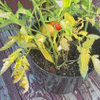
Yellow leaves at the top

11 years ago

Looking for some help/suggestions. My potato leaf heirlooms one brandy wine and one I do not recall if it is a pineapple or not is having a heck of a time this year. A few of the other tomatoes around them are also struggling but the peppers in the same bed and zucchini is doing great!
The leaves of these tomato plants are turning yellow at the top, curling up and the blossoms come but dry out and turn brown right away. Any suggestions/ideas of what this could be?

Comments (10)

  • 11 years ago

    What you describe is often a sign of low nutrients, especially nitrogen, but that is only a guess without much more information. What and how much have you fed them? What is your weather like? Your location? In ground or containers? Watering regimen? etc. Aphoto is also a big help.

    Dave

  • 11 years ago
    last modified: 11 years ago

    Location ? Pictures ?

    Ooops, Dave was faster.

  • 11 years ago


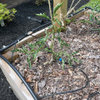
    I just fertilized with Dr earth about a week ago for the first time this season. They are in raised beds that were built this year the newest of our beds. I am in Minnesota and our weather hasn't been too hot or too cold this summer. We water every other day depending on the temperature and rain amounts. Here is one photo

  • 11 years ago


  • 11 years ago

    I did use blood meal early in the season when planting. I have put some iron in the soil last week and now today magnesium.
    Our soil is organic compost manure mixed in, with 1/3 peat moss and a 1/3 vermiculite. We have never had issues like this before except when we did containers one year with Heirlooms big mistake.


  • 11 years ago

    Well that very tip in the pic looks like grey mold but the leaves in the pic look like nutrient issues with their interveinal chlorosis and burned/brown tips and edges like nitrogen burn would cause. What Dr. Earth product - they make several - did you spray these plants where it could be foliar burn from the fertilizer? And is it really necessary to water that often? That's awfully frequent watering, especially so if you are getting rains too. Over-watering and the consistently too wet soil can cause root rot and root rot symptoms include the dying off of new growth.

    Dave

  • 11 years ago

    We use Dr Earth Homegrown for tomatoes and veggies. My husband does the watering and he said it actually isn't as much as I said but maybe still too often after talking to other people. We water at the base of the plant and also poured the fertilizer there also.
    Should we fertilize every 2 weeks as the package suggest and slow down on watering before we pull those plants?
    I was thinking of also testing the soil tomorrow. I would really like to see these plants bounce back but I did buy 2 additional plants today to replace them if need be. To pull or not to pull that is the question :)
    Kelly

  • 11 years ago

    Had to look that up. It is a dry granular organic rather than a liquid so if you applied it just a week ago it likely won't have had enough time to do anything. That is the problem with granular ferts. They are so slow acting you have to stay ahead of the demand for them. Especially with organics as the soil micro herd has to have the time to digest them so the plants can use them.

    But when you say "poured" it at the base of the plant you mean literally poured it? And right against the base of the plant? Not a good idea generally. No side dressing, trenching, or mixed in with the soil? I assume the directions give some sort of rate/amount of application per plant or something? But yes, if that is what you are going to use then it needs to be used per the label instructions. That's true for most any supplement but especially true for organics since they are low-dose and slow.

    Home kit testing of soil is usually a waste of time as the results it gives you depends on the pH of your water so the results are often very mis-leading.

    As to watering, normally it is more like a once a week exercise and with rain maybe once every 10-14 days, not every other day or even every third day unless you have very poor soil tilth or very shallow beds. Are you just going by the surface rather than sticking your hand down into the soil to check the moisture level at the root level? Are the plants mulched as they should be?

    So the problems with the plants in the pic could be over-watering, under-fertilization, or nitrogen burn from the blood meal (risky stuff) or, if it continues to spread and if the conditions remain overly wet - grey mold. Be sure to remove any and all damaged parts of the plants and dispose of them away from the garden. Don't leave them on the plants ok?

    Dave

  • 11 years ago

    Thanks Dave for all your help! We went out this morning and clipped away all the damaged parts. Here is hoping we get something from these plants. I appreciate all your info.
    Kelly

  • 11 years ago

    Kelly, I think your proposed plan (fertilize every 2 weeks and cut back on watering) sounds like a reasonable plan. Your raised bed mix is extremely moisture retentive and sounds like it has no drainage material. It's possible this is becoming more of a problem this year, because of soil compaction? So I suspect your hubby might have been overwatering without realizing.

    Stick your finger, or better yet a wooden chopstick or skewer, down into the soil to judge moisture and water when the soil is dry, not by any sort of schedule. You might consider adding drainage material to your raised beds next year - I might try a composted bark soil conditioner type product. I use a bark based potting mix in containers and it drains extremely well.

    Good luck and keep us posted!!

    Jenn