Software
Houzz Logo Print
hzdeleted_19690731

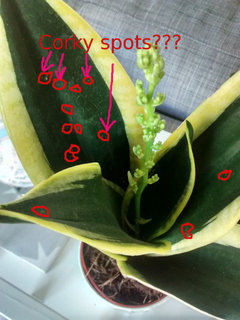
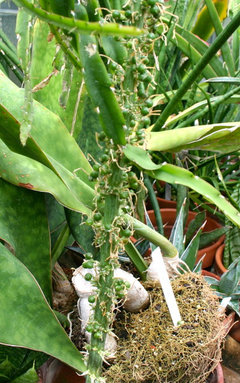
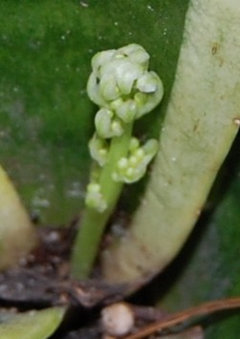
My sans is flowering

11 years ago
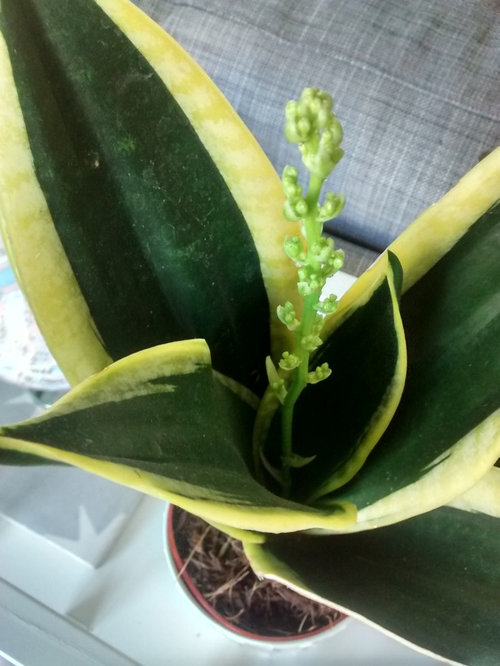
Just sharing this picture, pretty exciting!


Comments (27)

  • 11 years ago

    Good job.


    User thanked dert17
  • 11 years ago

    Nice and doesn't happen much. Notice the flower is coming from the terminal bud. This means that the plant is done growing from that stem/rhizome. New pups should form giving you many more plants. The leaves will continue to grow some and live on.

    User thanked Stush2049 Pitts. PA, zone 6
  • 11 years ago
    last modified: 11 years ago

    I have a question. I'm reading a book called "The splendid Sansevieria". This is from this book.

    "After flowering, sansevierias do not grow any further, but are guaranteed to produce new growth by means of rhiizomes or stolons".

    Let's imagine that soon (after flowering) maximum height of Ninkasi's plant is N centimeters. So Ninkasi's plan will never be above N centimeters (for example, N+1), is it true or not?

    User thanked dert17
  • 11 years ago

    No. The newest leaves in the crown can still continue to grow but the major growth is not expected to continue. Say, the newest leaf in the center is 6 in. It may grow another inch or so but not be be expected to grow to max. height.

    User thanked Stush2049 Pitts. PA, zone 6
  • 11 years ago

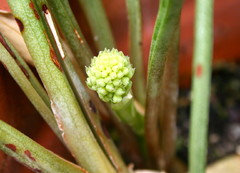
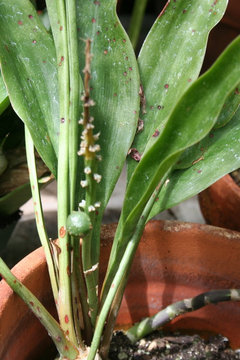
    Not a frequent bloomer, S. Lavranos 5749, nr. concinna. Yale


    User thanked mfyss
  • 11 years ago

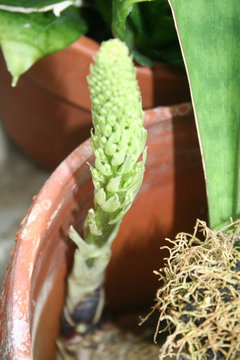
    Another Sans about to open, S. masoniana. Yale

  • 11 years ago
    last modified: 11 years ago

    This is from the book: "When sansevierias are not subject to the
    correct watering program, the grower will notice "corky" spots
    devoloping on the face of the leaves. The more disproportioned the
    watering practice, the larger the number of "corky" spots that will
    appear
    ."

    Are there "corky" spots? We have these "corky" spots because this sansevieria is not subject to the correct watering program, is it true or not?

  • 11 years ago
    last modified: 11 years ago

    And I have another question. I have a "Laurentii". If I would water bad Would I always have "corky" spots
    devoloping on the face of the leaves? Can these "corky" spots tell me that I water bad? How quickly will I see "corky" spots after a bad watering?

  • 11 years ago

    I dont know what the spots are most likely salt deposits. With these plants its pretty hard to go wrong with them.

  • 11 years ago

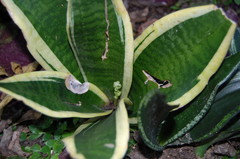
    Ninkasi, that is a very nice photograph! Is that a Sansevieria Futura Simplex?

    User thanked Sans2014
  • 11 years ago

    Sans2014, thanks! I have no clue on the variety though.

  • 11 years ago
    last modified: 11 years ago

    This is from the book: "This is done by watering with water only [to keep potting mix "clean"], two times in a row and fertilizing the third time the plant needs water or, of couse fertilizing less often... The practice of watering very little produce build up of salts in the mix which is very detrimental to the roots of plants. "

    1. Why salts is very bad for roots of plants?

    Ninkasi wrote: "I dont know what the spots are most likely salt deposits. With these plants its pretty hard to go wrong with them".

    If she would water as B. Juan Chahinian wrote in his book "The splendid Sansevieria" Her plant will not have the corky spots, is ir true or not? Or am I wrong, and Ninkasi wrote about something else? I don't know this subject very well.

    And I have 2 question. We need to water 3 times in row our plants, right?

    variant A

    1. water

    2. water

    3. water + fertilizing

    Or we need to water 2 times in row?:

    variant B

    1. water

    2. water

    3. fertilizing

    I don't know how I can add the fertilizer without water If I use liquid fertilizer. I use the liquid fertilizer, so I need to use the variant A, is it true or not?

    If I will water 3 times in a row I will not have any salts in my soul, is it true or not?

    Let's talk about the variant B. How can I add the fertilizer without water? Maybe I do not know something important. Perhaps the author does not use a liquid fertilizer, what do you think?

  • 11 years ago

    And I have a third question.


    I thought that I need to water 3 times in a row only once every month to remove salts. But I don't sure it now. B. Juan Chahinian did not write about it in his book. How often do I need to water a lot to remove salts? It will be enough once a month?

  • 11 years ago

    dert 17. Unfortunately (or fortunately) soils mixes and water are not an exact science and depend a lot on conditions. Where are you and where do you grow your plants (e.g. outside in Florida, in a greenhouse, in full sun, in a dark cool room?). Porous mixes are good. In cool, shady conditions a porous mix is a necessity. In very warm, humid tropical conditions they are actively growing and seem to do ok in a heavier soil mixture. An actively growing plant is going to need more fertilizer than a dormant one in winter. A newly planted plant in fresh good soil will not need fertilizer right away. A small pot will need watering more often than a large pot (with same size plant). If you fertilize often and have small pots it is good to give extra water once and a while to flush out excess fertilizer. A crowded trifasciata pot, in warm weather, actively growing in summer may need watering 4 times a week. the same plant may need watering one times a month in cool winter.

    User thanked woodnative
  • 11 years ago

    woodnative(6), thank you.

  • 11 years ago
    last modified: 11 years ago

    woodnative(6), thank you explained to me what we don't have ideal soil because we need to use various mixes in various conditions.

    If I find ideal mix for my flat It can be bad mix for other people who live in other conditions.

    Maybe this is reason why my Spider Plant grows bad in 5:1:1 mix, and why another Spider Plant grows so well in coconut + universal potting soil.

  • 11 years ago

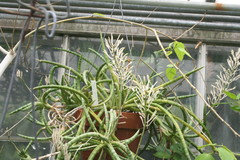
    Blooming again, with multiple spikes. Hard to see them all, but at least 8, but this S. suffruticosa does not readily produce seeds. Yale

  • 11 years ago

    nice blooms!

  • 11 years ago

    Gorgeous, Yale!

  • 11 years ago

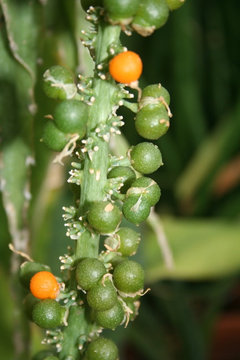
    About a month ago, posted photos of Sans in bloom, and now have a few seeds. No seeds from S. suffruticosa or S. hallii, but lots from S. masoniana (photo posted)


    and one seed from S. Lavranos 5749. All are still green. Inflorescence from S. masoniana was 6 inches when posted here, now over 2 feet. Yale

  • 11 years ago

    Very cool!

  • 11 years ago

    Nice job

  • 11 years ago

    Thank you for the updates and all the cool pictures of flowering sans. I especially like the different species types!

  • 10 years ago

    Just a single seed, but it should be turning red soon. This is S. Lavranos 5749 nr concinna. Yale

  • 10 years ago

    Not quite 2 months since my last photo of this plant and S. masoniana has a few


    fruits turning orange, but you can see many more to come.

  • 10 years ago

    Noticed a bloom stalk forming on this!

Sponsored
Franklin County's Heavy Timber Specialists | Best of Houzz 2020!