Software
Houzz Logo Print
xrayelassi

Citrus Rootstocks and Leafminer

11 years ago
last modified: 11 years ago
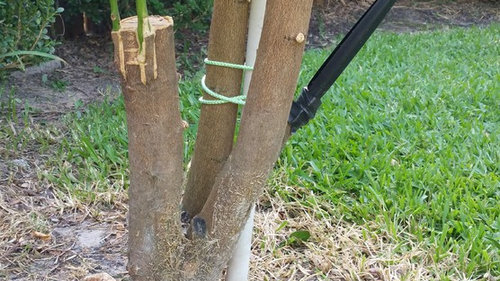
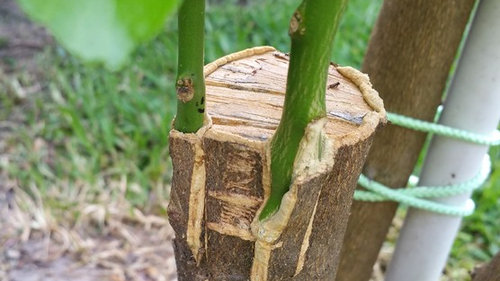
Recently, I grafted a few Genova/ Genoa lemon cuttings onto what I believe is a trifoliate rootstock. The old citrus tree was a Jaffa orange. A freeze killed the Jaffa part and left the root stock. This "trifoliate" rootstock grew to 15 feet and produced sour oranges for a couple of years. Because the rootstock grew so vigorously, I decided to graft onto it.

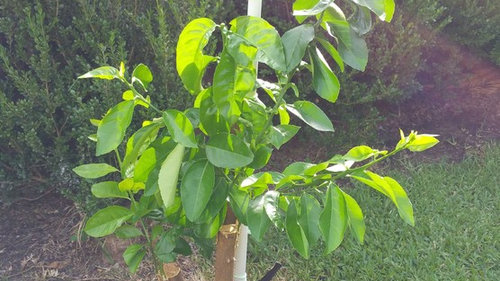
The Genova/ Genoa cuttings that I used came from a new potted tree that I recently bought and planted into the ground. This Genova/ Genoa tree or bush is growing very rapidly. The Genova/ Genoa bush is pushing new growth every 2-3 weeks. It's very healthy looking with no leaf miner damage.

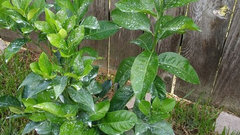
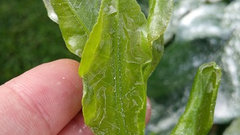
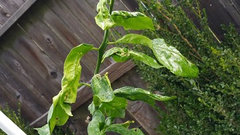
The grafts that I have growing on what I believe is a trifoliate rootstock have an infestation of leaf miners. I've been killing these leaf miners daily. I can't keep up. Does anyone else have any experience with different rootstocks? My observation that I have more leaf miner damage on one rootstock compared to the other should've been noticed by others. We should think about using rootstocks with anti leaf miner properties. These are pics that I took about 6 weeks ago. I need to take pic of the infestation I am having. I keep using diatomaceous earth on all my citrus trees, but doing this does not make an impact of the leaf miners.

Comments (8)

  • 11 years ago

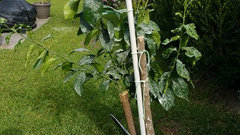
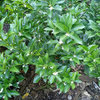
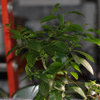
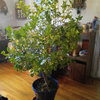
    I have added some pictures here to help show this observation. Thank you very much for the advice on imidacloprid and spinosad. I'm seriously considering a systemic; all this time I've been thinking to keep this as a sacrificial citrus tree to help keep others from being infested.

    This is the Genoa/Genova lemon with no leafminer damage or very very little damage.

    Here are the grafts on different rootstocks with and infestation of leafminers;

  • 11 years ago

    The rootstock is not the issue; it is the phenology of the shoots. CLM, like many other pests prefer the newest, tenderest leaves.

    Mc Lovin thanked johnmerr
  • 11 years ago
    last modified: 11 years ago
    I would agree except that the Genoa/Genova tree that is in the ground also puts out new growth, and the new growth hasn't been attacked by the leaf miner. It seems like the trifoliate rootstock is putting out "chemicals" or properties into the limbs that citrus leaf miners enjoy more so. Could you comment or give more insight? I am just trying to learn.

    Thanks for posting.

  • 11 years ago

    It seems they do have a preference with "smell". Here's a source I looked at:

    http://stoppinginvasives.com/dotAsset/587ddfa1-b644-4b54-9cdf-43cf5ccebddf.pdf

    It says they prefer grapefruit and pummelos, but are found on other plants in the family Rutaceae. Interestingly, they also infect incompatible hosts like jasmine, but are unable to complete their life cycle in them. I know that citrus blossoms smell awfully like jasmine---so it looks like you're on to something, McLovin'!

    -Tom


  • 11 years ago

    I repeat, it is not the rootstock that is making the difference; unless it is because of different timing of the flushes. Sometimes the CLM is present and sometimes it is not, or is in between life cycles.


  • 11 years ago

    mc lovin, what John said :-) The CLM simply hasn't discovered your other tree's very tender leaves, yet. YOur rootstocks cannot impart insect-repellant qualities to the scion. I have never head of this quality imparted to the cultivar scion. The treatments of choice for CLM are either Spinosad (which you can mix with a hot oil such as Volck or Neem for a "sticking" quality, as long as your daytime temps are below 85 degrees F), or systemic imidacloprid. You will need to spray the Spinosad every 3 weeks through about October (in my area), or, apply Imidacloprid about 2 weeks prior to CLM showing damage in your area. For me, that is usually mid-June application. There is no "preference" with citrus cultivars, I think this article, being rather old, is simply missing data. Re-read the article, and you'll see there isn't a "preference" listed or stated, just that the article mentions that is "most commonly found on pummelos and grapefruits". When in fact, ALL citrus are affected if they have new and tender flush, as John has mentioned. What you will find, is during their infestation time, those cultivars that tend to flush heavily at that same time will also suffer the most damage. For me, that tends to be grapefruit/pummelos and lemons. Which may be why this early article cited these two citrus cultivars. But, I can tell you with complete certainty, that any of my citrus with new flush will be attacked without preference.

    Patty S.


  • 11 years ago

    Thanks for the post Patty S. I keep going out in the mornings and the evening and use my finger nail to split the little CLM larva within the leaf, but I've reached my limit. You wrote that I should use Imidacloprid 2 weeks before showing damage. Would it help to use it now? All of my trees are very young. Where do I get Imidacloprid?

Sponsored
Industry Leading General Contractors in Franklin County, Ohio