Software
Houzz Logo Print
beaglemom12

Pine Needles as Mulch?

11 years ago

I live in South Coast MA, and I'm considering my options for mulch on my property. I haven't seen many people in my area using pine needles as mulch, and I believe the most commonly used mulch in my area is hardwood mulch (the kind in big bags you always see at Lowes and Home Depot). However, this seems to be the least economical option, as it needs to be replaced and/or added to every single year, and fades drastically before the season is even over, no matter what brand I try. I also can't use hardwood mulch in my backyard because my dogs will chew on it. I need something that's low maintenance, that my dogs won't chew on, and that stays looking nice for longer than a couple of months, but is also economical (we are not wealthy by any means - money is tight).

I have considered river rocks, but they are very expensive and also difficult to maneuver around if I decide I want want more plantings. I would also have to buy weed-blocking material to put under it unless I want hundreds of weeds popping through my expensive river rocks, and the weed-blocking material in addition to the river rocks, also adds up to money we don't have.

One concern I have about pine needle mulch is that I've read that rodents like to burrow in it. This being a colder climate for the majority of the year, I worry that rodents will become a problem. Now, I'm a vegetarian and animal lover and am against setting bait traps, so I don't want to attract rodents to my yard and then hurt them or disturb their habitat. Does anyone who uses pine needles as mulch ever have a rodent problem? I also read that it only happens if the pine needles are more than 3 inches deep, so if I keep just a thin layer, would that be okay?

I've also read that pine needles are great for acid loving plants, but does that mean they hurt plants that are not acid loving?

Comments (12)

  • 11 years ago

    I've use pine needles as mulch on occasion. I have a row of white pines, and the pine needles have the advantage of being free for the raking. They have to be used thickly, or they won't stop weeds. I don't know if that encourages rodents because I have two cats who think that any wild rodent is some sort of really cool cat toy. The biggest negative I've found with them is that they don't decompose, so they don't do any soil improvement. It was amazing how bad the soil was underneath them compared to areas mulched with regular shredded hardwood.

    They don't do anything to change pH, unfortunately, since that would help my azaleas.


    At this point, my mulch of choice is last years' chopped leaves. If I use them in the fall, then I have had rodent problems, since the cats are as finicky as anybody about weather.

  • 11 years ago
    last modified: 11 years ago

    I don't have dogs, so I can't answer that part of your question, but I think in general that folks don't use pine needles as mulch since they aren't readily purchased in this part of the country, though they are available bailed in the southeast in areas with southern pine plantations. I've in the past helped gather white pine needles off other folks' lawns (with owner permission) to use as mulch, but they do take work and a truck, so it's less convenient than having a load of wood chips delivered or picking up a few bags from the big box store. I put mulch down several inches deep, and only replace every 2 or 3 years, not annually, but I have no problem with the silvery gray color that wood chips fade to. I usually put down a layer of corrugated cardboard or several layers of newspaper under the chips since I use mulch largely for weed and moisture control.

    Other free mulch sources I've used include chopped leaves (both from my own yard and from neighbors), wood shavings from the family woodshop (so if you know a woodworker, they may be willing to share), sawdust from a sawmill (best if used mixed with something else since it can get hydrophilic), and chippings from a tree service, either the crew hired to clear the power lines, or someone doing trimming in a suburban yard (I find they are happy to drop their load in a nearby driveway or yard.) None are as even in color as shredded bark mulch from a commercial source, but in my rural area and with my planting density, it doesn't matter. I suppose you could add a light topcoat of commercial mulch for appearances sake.

    Don't use rocks unless you want to spend lots of time weeding and blowing out stuff that has blown into the rocks. Neither the rocks or the weed cloth will enrich the soil at all, and will often inhibit movement of air and water into the soil, so most folks eventually come to regret using rocks in areas as moist and weed-friendly as New England though they may work better in drier parts of the country. At least with organic mulches, any weeds that do sprout are easily removed, unlike with rock mulches.

    If you have a larger area to mulch, buying by the truckload is easier and less expensive than buying by the bag IME.

    I find I have vole, mole, mouse, and chipmunk issues regardless of what I use as mulch and even in the areas with no mulch. The only thing I've found that works to reduce rodents is preditors, whether a domestic animal like a cat or a terrier, or wild preditors like fox, coyote, hawks and owls.

  • 11 years ago

    sometime in late summer the 3 rd year white pine needles drop by the ton. We have a "composting center" for our town and I go there and pick up bags and bags and bags of "pine straw" for free. I use them in my woodland garden. They are not the very best for suppressing weeds, but they work well enough for me. They look very appropriate for the setting, are light and easy to spread. The garden smells wonderful. They break down quickly, however. The price is right.

    We bought a new leaf mulcher and mulch all the fall leaves. Sometimes I pick up bags of dry oak leaves at the compost center and use shred those for the other garden areas.

    Linda Chalker-White, one of the Garden Professors who have done a lot of research on mulches, favors "arborists wood chips" which is what NHB is talking about. LC-W group has documented that "Arborists' chips" are the best for weed suppression without interfering with O2 exchange in the soil and encouraging good soil micros development.

  • 11 years ago

    DtD said: "...try not to leave too much mulch visible - use ground covers or let
    plants grow together. The trend of wide swaths of mulch showing 'on
    purpose' was begun with shopping malls and other utilitarian sites - the
    fact that it's been adopted by homeowners is a real tragedy, IMHO!"

    I agree whole-heartedly. Mulch is an essential tool for the garden, but "decorative mulch" seems to me to be an oxymoron. If you look at pictures of English or other European gardens you really won't see much mulch - you see plants.

    I use whatever the trees (pines and oaks and cherries mostly) discard plus my own compost plus plant clippings, and the garden flourishes.

    I have gotten free wood chips from arborists or the town. My only concern there is whether the trees had been removed because of beetle infestation. Pine bark beetles are a local problem and it's possible to transfer them to your own yard.

    Claire

    beaglemom12 thanked claireplymouth z6b coastal MA
  • 11 years ago

    So true Claire and diggingthedirt! Wish I could afford enough plants to fill it all in! Digging, you spoke of ground covers instead of mulch. Do you know of any good ground covers that crowd out weeds?

  • 11 years ago

    I have common thyme almost everywhere - I'm on the cape, and it spreads freely here. If you'd like a few dozen plants, come by sometime! It can be a pest, I admit, in some areas where it tries to climb over other plants - right now I wish it wasn't so happy in one particular bed, where the Russian sage look like they're under attack.

    I also get huge numbers of volunteer 'basket of gold' alyssum every year; those fill in really nicely - some people think they're weedy, but I love the silvery foliage, and the flowers are just so bright. I have a few other spreaders, but mostly not ones I'd suggest (snow in summer gets horribly ratty looking about now).

    In early spring I look for the 6-packs of plants that the nurseries are planning to pot up and sell individually. That's a great way to get lots of one thing, like lavender, which looks so good in a mass planting, for short money.

    beaglemom12 thanked diggingthedirt
  • 11 years ago
    last modified: 11 years ago

    If you have time, starting plants from seeds works well. I know thymetodig has started many things from seed. I've had success with Siberian iris, Amsonia hubrichtii, Iberis (perennial candytuft), basket of gold alyssum, among others. Check out the winter sowing forum for an easy way to start perennials. If you are up for a field trip up I-93 into NH some day, I'd be happy to give you some divisions of various things as well.

    Ask around in your area for plant swaps or sales, (or check on this forum in the spring and fall for postings); they are a good way to get divisions of plants, often ones that spread well. Later on you can replace them with other plants if you want, but if you are looking to fill in space, it's a way to start that is less expensive. The swaps I go to, there are always plants available for new gardeners who may not have anything to share yet.

    I also get perennial super 6 packs which around me are 6 good-sized plants for $10. Since they are often big enough to bloom the first year, that's quite a deal.

    beaglemom12 thanked NHBabs z4b-5a NH
  • 11 years ago

    I also wanted to add that putting down brown corrugated cardboard, as mentioned above, will really help stretch the budget for the first year while you start plants from seed, get divisions from other gardeners, keep a eye out for the tree trimmers, and collect leaves that your neighbors have put out for collection to help fill in with more plants and other mulch material. Over any of the mulches, including the cardboard, you can put a 1" layer of commercial mulch to hide the lower layers while still having good weed control.

    beaglemom12 thanked NHBabs z4b-5a NH
  • 11 years ago

    I have a huge number of white pines on the property, and they
    are always dropping something: pollen, seeds, needles, cones. I
    decided a few years ago to use the needles as mulch. They look pretty
    good (even with some leaves mixed in), and they are free. Not much more
    work than digging the store bought stuff out of a pile and wheeling it to the
    right location (I still have some of that lingering here and there). I
    put the pine needles on fairly thick, but they do compress. I do not have any
    rodent problems with it. The smell is nice and it goes with the natural
    surroundings. I do like some unplanted spaces so that I can navigate.
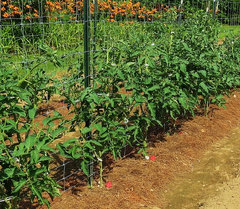
    I also use it in the vegetable garden (mostly under my tomato plants). Like others have said, Houzz won't let me post pics right now, but I will do so when that issue gets sorted out.

    Susan


    beaglemom12 thanked homegrowninthe603
  • 11 years ago

    beaglemom

    Well, on your way from the Cape (dtd) to New Hampshire (NHB) stop in Lexington, MA

    and I'll give you "geranium macrorrhizum spessart." which is a very pale pink/white weed suppressing,low water, spring flowering groundcover. Or geranium sanguiguem which has all the same qualities except it is magenta. ...They spread well but are easily controlled because a lot of their root system is rhizomious )sp and easily pulled.

    Marie


    beaglemom12 thanked Marie Tulin Boston burbs z 6a
  • 11 years ago

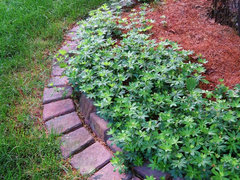
    A couple of photos to go with my comments above. I guess for the time being, I have to create "ideabooks" in order to post photos.

    Sweet woodruff under the birch tree with pine needle mulch

    Pine Needles · More Info

    Mulch under tomato plants

    Pine Needles · More Info

    Susan

    beaglemom12 thanked homegrowninthe603