Software
Houzz Logo Print
roserich

Update on possible RRD

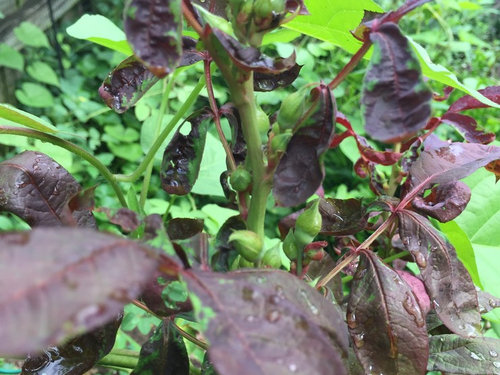
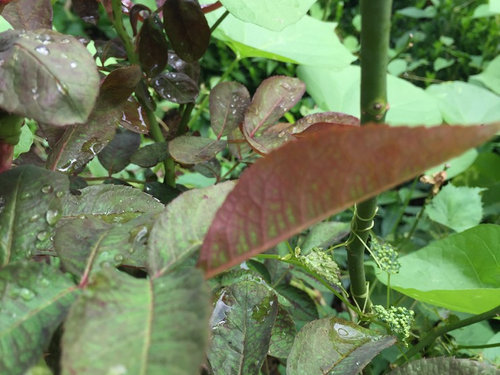
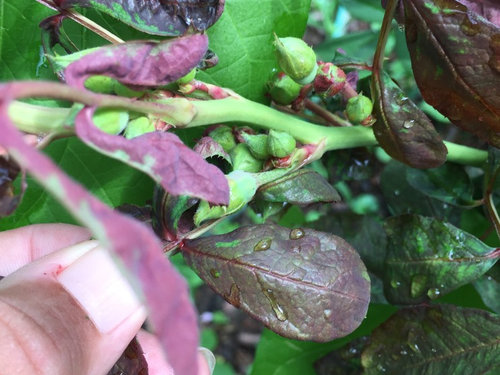
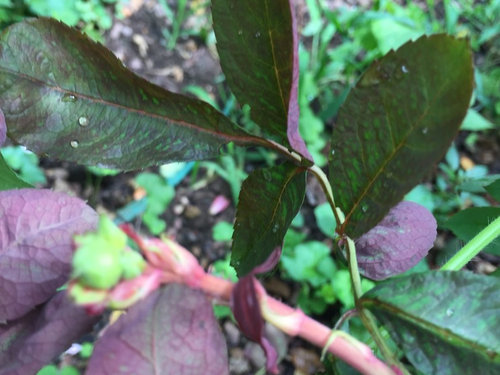
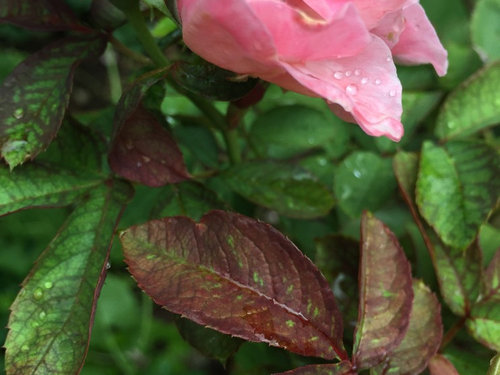
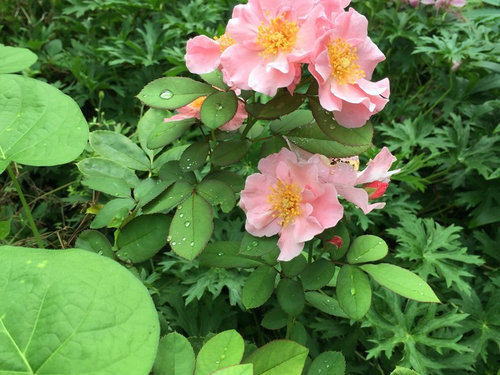
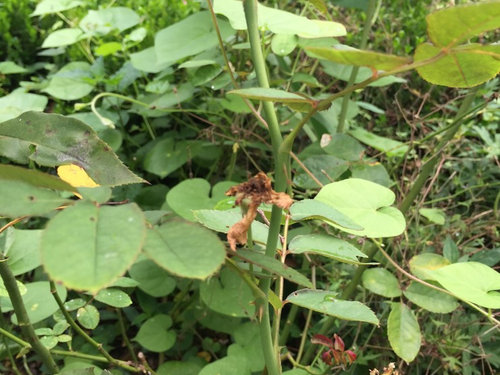
Hello. Remember the coleus like foliage on Clair Matin? I've waited a bit and this is what I have now. It is all on laterals of one older cane. Yikes! Susan


There is no hyperthorniness. No witches broom. The last two shots are from a different basal.

Susan

Comments (78)

  • 11 years ago

    I just meant, don't add 30% water to alcohol without seeing whether it is already diluted. See the label for what strength it is.

    I use four parts gin to one part white vermouth and a green olive. Hate the pickled onion thing.

  • 11 years ago

    See: http://apsjournals.apsnet.org/doi/pdf/10.1094/PDIS-94-5-0542

    The ZeroTol (activated 27% hydrogen peroxide) was tested at a 100 to 1 dilution rate; the label recommends 1 to 50 to 1 to 100 dilution rates.

    http://www.biosafesystems.com/assets/zerotol-2.0-specimen-label.pdf

    Drug store hydrogen peroxide is 3 %.

  • 11 years ago

    Just caught this thread- - Yikes! I am pulling for you, out in this heat! And pulling for your rose, too!

    A couple of posts up, did you say damage began on ends of canes or that is all you can see bcs of size & density? If damage is beginning not near bottom of canes, is it more likely herbicide damage or is that wishful thinking?

    And not to hijack the thread, but what's the deal with hairspray & does it work?

  • 11 years ago

    The hairspray is thought to keep any mites still on the outside of the bush from falling off while cutting it down. I don't believe I've ever seen an article on how well this works.

  • 11 years ago

    Thanks!

  • 11 years ago
    last modified: 11 years ago

    Holly--RRD begins in a growth bud, usually in a leaf axil, and at first usually affects a whole lateral stem (not a basal) growing out of that bud, along with any sub-laterals produced from from that stem in turn.

    It is possible, but apparently uncommon, for a basal cane to be the first infected.

    Early symptoms show in newer growth on one stem and may take a while to move downward to the crown and infect the whole plant. Then new growth coming from other canes will show symptoms.

    If symptoms begin on a single lateral stem or cane, it is more likely to be RRD. If early symptoms are widely distributed, it is likely to be herbicide damage. Inspect often so you see the early symptoms.

  • 11 years ago

    Well, looks like I'm joining the party. I went out to see if the rain smashed anything, and spotted RRD infection on my 'Yellow Sweetheart, Climbing' -- you know it's infected when it suddenly has a thorny stem. I ripped it out and threw it in the trash. It hadn't been doing so well, anyway, so I'm not that sad about losing it. I AM, however, annoyed that this means I'll have to keep on the lookout, daily, for signs of it on any of my other almost 100 roses. And I just may have to get out the big guns and go chemical to kill off any mites carrying the infection that might still be in the garden. My apologies to all the innocents I will hurt along the way.

    :-(

    ~Christopher

  • 11 years ago

    Christopher...I am sorry to hear this news.

  • 11 years ago

    Oh, Christopher, I am so sorry! If you have to use insecticide, I know you make that decision thoughtfully and carefully. Saving your 100 roses does indeed, in my humble opinion, merit chemical intervention.

  • 11 years ago

    Welcome to the club Christopher. It's a different ballgame now. I hate that you are now a member.

    I have 300 roses now and I despise how RRD has changed the way I feel about roses and my garden.

    glad you didn't lose one of your precious treasures!!!!

    RRd was also behind my earlier post suggesting we share cuttings of rare and found roses. If something becomes infected here I can replace it from the folks I've shared it with. Now that I've got some acreage I have the room to grow.

    Is insecticide effective? I thought it wasn't.

    Susan

  • 11 years ago

    Also Christopher, did you take any photos?

    Susan

  • 11 years ago

    Patty, Holly, and Susan -- Thank you for your condolences. And thankfully, it was 'Yellow Sweetheart, Climbing', which is a rose I was probably going to shovel prune, anyway. It just didn't like this climate. Before I get out the big guns, I was encouraged to "wash" everything down with a liquid Castile soap and Neem oil spray, which -- if I hit every surface of every leaf -- should kill any and all arthropods (i.e. insects and arachnids). This won't kill the virus, but will kill any mites carrying it that are still hanging around. I did some online research and found some hose-end sprayers with settings for dilution rates, so rather than get a tank sprayer and lug it around, I can do it with the hose. I'll have to do it late in the day so as not to get any bees, but I'll likely be killing off any spiders and other beneficials lurking about. I'll repeat this every few days for a few weeks, and make close observations daily of all my roses.

    Susan -- I didn't take any pics because I was so disgusted that I just wanted it OUT of the garden. I knew it was RRD by the prickles -- YSC normally has totally smooth canes, but this one 8" section had hooked prickles. This rose has been limping along, anyway, and it came out of the ground with one tug, and two snips to get it off the fence. It went right in the trash -- I didn't even get a bag. Then I hosed off the pruners into the garbage can, brought them in to the bathroom sink, poured rubbing alcohol on the blades, and lit them on fire.

    :-/

    ~Christopher

  • 11 years ago

    Oh, wow. What an afternoon you had! I am hoping the castille soap solution worked, and pray no other roses are infected. Was it a little satisfying to have a mini funeral pyre in your sink? ; )

  • 11 years ago

    Haha...yes, it was. I didn't do the soap spray yet, because I wanted to do a little research before I buy anything, such as which adjustable hose-end sprayer is the best buy. Had I dashed off to Home Depot right away, I'd have returned with an arsenal of chemicals. I'm glad I didn't -- I need the soil critters to turn all those used coffee grounds into plant food. As it is, I know I'll be killing a lot of "innocents" even with the soap spray. Pesticides would linger around for more time and cause more damage, so they'll be my last resort.

    Plus, today we had several rounds of torrential downpours, so anything sprayed today would have been off in minutes.

    :-)

    ~Christopher

  • 11 years ago

    I suggest an anti siphon device between the hose and your house water supply.

  • 11 years ago

    For...spraying soap?

  • 11 years ago

    Christopher I second that emotion. I wish I had a flamethrower but then again glad I do not.

    Please keep us posted on your hose end sprayer and the least harmful recipe you choose for beginning. I'd like to know what you use.

    I'm nowhere near resorting to chemical intervention. I love my roses dearly but I'm a Darwinist I guess. Got excited today when I saw a few honeybees in the garden for the first time. Tons of butterflies, hummingbirds, nests.

    Just gonna keep moving forward and try to keep regrets to a minimum--emotionally detach.

    With my decision to purchase 12 country acres I signed on for the challenges.

    Susan

  • 11 years ago

    Susan, I like your realistic approach. So often we want and expect our gardens to look like an airbrushed photo shoot and to grow what we want, whenever we want, where we want. Accepting the loss of a rose is tough for us who love them, especially for those of you who have more rare varieties. Mine have all come from rose nurseries, so I can get a replacement. But some of these rare old roses...

    Christopher, I am happy you had a safe place to rant and threaten chemical warfare! Ranting for a bit is necessary in my therapeutic opinion! I am so hoping the disease was contained in the one bush, and no others are infected. You work so diligently and loving building your garden; I am sorry for this awful incident.

    Poorbutroserich Susan Nashville thanked Holly Webster(7bNC)
  • 11 years ago

    Thank you Holly. I'm not growing anything which requires chemical intervention to thrive. just seems counterintuitive.

    Susan

  • 11 years ago
    last modified: 11 years ago

    Sad to say, but rip the whole thing out now. I tried cutting canes, all kind of sprays etc. when this showed up on my 10 knockouts, starting with a 6 foot tall 7 year old specimen. A few months later, I ripped them out and dug out the roots due to progression. Unfortunately, by this time, it had spread to Valentine, Duchesse de Brabant, Comtesse du Cayla (after it finally got established), Monsieur Tilllier x 3, Dame de Couer, Cinco de Mayo, Mandarin Ice x 2, Eden (climbing), Erinnerung an Brod, white Meideland, Intrigue, Cornelia, Puerto Rico, Blumenschmidt, Marie Pavie, Ducher, In the Mood and Pegasus. You get the idea! These slowly showed up over the following year. Now I'm certifiably paranoid and rip out any bush once the ugly twisted growth appears. I'd shown pics to my local nursery to confirm, no-one's using Round-Up here. Had to argue with the HOA to rip out the infected Knock-outs in the median and outside the gate; they finally agreed after 3 more neighbors roses got infected. It's an unfortunate part of the Dallas epidemic. What's a rose lover to do?

    Poorbutroserich Susan Nashville thanked dreamr
  • 11 years ago

    Ugh. I guess we should start growing camellias?

    Susan

  • 11 years ago
    last modified: 11 years ago

    RRD showed up in this garden at 2004. Lots of wild rose ramblers throughout the woods & along roadsides nearby, though I've not noticed them infected. Like you, Christopher, it hit the weakest climbing rose. Also like you, walk the gardens most days to check on everyone. A fast-growing thick cane broke into a witch's broom at the tip with the funky thorns & twisting symptoms, like a textbook illustration. Heavy-duty trash bag went over the bush from the top down, dug the roots out, bagged the root end & it was outta here. That rose grew by the front porch with a teenage climber & a mature grandiflora centered 4 feet either side. Considered the castile soap or fine oil approach, but decided against from a reluctance to mess with the well-balanced garden ecosystem I'd worked so hard to encourage or employ friendly fire against other lifeforms, and with the hope that the only really promising action was to strengthen the plants' own resources & encourage the diverse population here to take out the invading mites. The timing was also high Summer as now. Sprayed all the roses & companion plantings in a wide area (100 x 25 feet) with Neptune's Harvest fish-seaweed blend fertilizer in a hose-end sprayer http://www.neptunesharvest.com/ & drenched the soil for 10' from the discarded rose with the same with a watering can.

    I take these stands from time to time - think of it as the Either/Or approach. In this case, Either the garden as a whole will fight off this attack Or some-all of the roses will succumb. I wasn't willing to "destroy the village in order to save (some of) it". Reasoned that the virus & the mites that spread it had initially been confined in Nature to pockets & wondered why was that? Could it be the healthier ecosystems were able to hold it in check? So much we don't know or understand regarding the workings of interlaced Nature...

    Here to say that some 11 years later, no other rose has yet been affected, including the woodland wildlings. Keeping a watchful eye as always. In the habit since of using the Neptune's Harvest once or twice a season.

    Poorbutroserich Susan Nashville thanked vasue VA
  • 11 years ago

    Vasue, you sprayed the foliage with the Neptune's Harvest? I am not familiar with this product; it didn't burn foliage in high summer in VA? I am in NC, so our summers are similar.

    What dilution of Neptune's do you use? I am getting to the point where the number of roses I have is getting to be tough to individually feed. If Neptune's feeds as well as discourages the RRD mites, this could be a win-win. Thanks!

  • 11 years ago

    Vasue I regularly use Neptune's Harvest. What was your thinking for using it in this situation?

    Here it seems to have affected strong roses but in pockets of poor air circulation.

    I agree with your approach.

    Susan

  • 11 years ago

    dreamr, although RoundUp seems to get all the publicity, other herbicides can also cause RRV type symptoms. I would particularly be concerned about Weed and Feed type products as it appears in my neighborhood that having a commercial lawn care service is very popular.

    https://sites.google.com/site/roserosettevirus/

  • 11 years ago

    What about Bioneem? It should work on controlling mites, right?

  • 11 years ago

    Susan and Christopher, I'm so sorry to hear your sad news. Our roses are not only a huge monetary investment but also a labor of love. It's horrible to lose our roses to this dreaded disease. RRD is so scary and one poster aptly referred to it as RRDP or rose rosette disease paranoia. My rose garden is only 2 years old and I'm very nervous about infection from purchased plants. Should we start isolating our plants for a bit before letting them join the rose community? I buy most of my roses own root from various mailorder companies. A couple came infected with spider mites. Two 'Dark Desire' were so bad that I finally just cut them back and cut off all of their leaves. They're now just starting to put out new growth. Hopefully the spider mites are gone. I've been told by several posters that spider mites aren't really a problem in the NE so hopefully my healthy roses won't be affected. I'm still concerned though that my garden may become infected with RRD through an infected mailorder rose. What is a good protocol to follow to minimize the risk? Since the disease is systemic soaking won't help, correct? I live in the middle of the woods so hoping that my garden will not be susceptible to any local RRD which I haven't seen evidence of. There is multiflora rose on our street but it's almost 1/2 mile from me. Does this make my roses safe from local infection?

    Poorbutroserich Susan Nashville thanked enchantedrosez5bma
  • 11 years ago

    Your location most likely will help keep you safer but nothing is perfect. Mites can be blown long distances in the wind. They are also capable of hitching a ride on insects and bee's to be carried to a new spot. There is another species of e-mites that affect coneflowers thats being studied in Ohio. One thing they noted was how the mite would drop out of the flower head during a rain event to take advantage of the storm winds.

    As far as your other concern, try to stay with the better nurseries. Even if you did see new suspicious growth I would think it could safely be removed without a problem to your other roses. I guess it could happen. Hasn't happened yet as far as I know.

    Poorbutroserich Susan Nashville thanked Patty W. zone 5a Illinois
  • 11 years ago

    Gardens are not safe anywhere within the zone of RRD, but you shouldn't have a lot of trouble unless infected roses are in the neighborhood. Check the woods for multiflora at blooming time.

    It's possible to buy an infected plant, but I wouldn't let that dictate purchasing decisions. You would quickly spot any symptoms on a new rose.


    Poorbutroserich Susan Nashville thanked michaelg
  • 11 years ago

    I've seen less RRD out at my country place than here in my urban hood. Sick Knockouts are an epidemic and everything crammed together.

    Susan

  • 11 years ago

    To be absolutely clear - I'm NOT saying this treatment discourages the RRD Mites.

    Holly, yes, as a foliar feed - sprayed on the leaves, and also on the stems, which absorb it quickly. In the same category as Compost Tea, my own rule of thumb says can be sprayed at temps up to 80F. Usually do this in the evening when the plants are shaded or the sun's remaining rays are weak. Better here than at dawn when the dew is so thick the garden is already overly damp & the temps are rising rather than falling. No burn with this, prepared at 1 oz. of concentrate to 1 gallon of water per bottle directions on the 2-3-1 fish-seaweed formula bought locally. They make a Rose & Flowering formula, but haven't tried it. No experience with spraying this on top of any other type of spray nor on systemically treated plants. As always, good to do a test on part of a plant first & observe results. If it's been dry or dusty, will water spray the garden early in the day before foliar feeding in the evening. Use this on plants mixed in just a misting bottle for small applications. For larger range, with pressurized sprayers, hose end sprayers & siphon mixers used with a bucket & hose - the last two with a metering dial to ensure proper dilution. No other types of sprays are used with any of these sprayers - they're kept only for Neptune's & Compost Tea. Along with an inch or two of compost on the entire garden Spring & Fall, later covered over with shed tree leaves when they drop, that's it for fertilization. (The native soil is clay with pebbles & stones that served as the woodlot to a farm for over a hundred years, so fallen leaves composted in place made for woodland loam & the clay is rich in minerals. Figure the beds close to the house were stripped of topsoil & compacted during construction, so we excavated those 3' to subsoil & refilled with a mix of that soil with compost, topsoil, pebbles, small stones & gypsum fifteen years back after sifting out a mess of construction debris & boulders.)

    Susan, my reasoning in using the Neptune's in this situation is to fortify the plants & their immune systems to give them their best shot. Foliar feeding is the quickest way I know to do this. Here's one explanation of how this works, though it's mostly about Compost Tea (and I don't agree any sticker/spreader is needed), basically the same principles involved.

    http://www.bountea.com/articles/foliarspray.html

    A blurb from Neptune's about how they process this fertilizer -

    http://www.neptunesharvest.com/fishfacts.html

    Another blurb on why it's considered useful -

    http://greenearthagandturf.com/neptunes-harvest-fish-fertilizer.shtml

    Poorbutroserich Susan Nashville thanked vasue VA
  • 11 years ago

    Thanks so much. I need a foliar feeding apparatus that is easy. I'm dealing with approximately 300 roses. What do you recommend?

    Susan

  • 11 years ago
    last modified: 11 years ago

    Buford, Who owns those KOs? That's crazy, did you try to tell the owner about RRD? Or just call your local TV station for a quick action.

  • 11 years ago

    The grass around the Knock Outs looks dead. Is that the situation?

  • 11 years ago

    Um.....Henry, that's probably pine straw, not grass.

  • 11 years ago

    Ann, That is a mulch that I am not familiar with. I did a Google search and this report did not speak very highly of it - as far as weed blocking goes.

    http://www.gardenofaaron.com/2013/03/eating-my-words-on-pine-straw.html

  • 11 years ago

    Henry, forget about the pine straw and weeds. Did you look at the roses??? Notice anything wrong?


    This is a road median, down here many of them have KOs and frankly most have RRD. I can try to contact the county and see who manages that part, but you know how the government is.

  • 11 years ago

    Pine Straw often has a major plus: it's free. Or it's cheap, because it's easily picked up and baled in the pine forests of the south. It lasts several years, even in years of high rainfall. When it breaks down, it acidifies the soil. I used it a lot in New Orleans and it really improved the heavy river clay in my rose garden.
    An added plus is that canker can be a major problem for one and two year old rose canes when bark-based mulches lie against them through a wet and warmish winter; pine straw lets the water go through and no cankers happened.

    When it comes to weed blocking, if the seeds are there, they'll need warmth and or sun to sprout. Pine mulch put on six inches thick will shade out a lot of seeds, and it doesn't float/wash away in heavy rains.

    But these are just what I've seen and I'm sure your source believes what they wrote.


  • 11 years ago

    Ann, that is so true. As a rule, I don't like pine straw. But it is free! And pine tress are plentiful around here. And it doesn't roll down hills.

  • 11 years ago

    BTW, I sent an email to the DOT Community Relations Department to let them know about the roses. But I won't hold my breath to see if they do anything about it.

  • 11 years ago

    Buford, The reporters of your local TV stations, News paper can do a fast job to get those KOs out of your neighborhood. They'd be so happy to be the first one to report on this, all you need to do is to call them, and tell them the location. It's also a great opportunity to educate public. It's a good deed my friend. It's just an idea, trying to help.

  • 11 years ago

    Susan, I also use Response, which is a seaweed extract. I bought an Ortho hose end feeder. It has three settings, spray and jet and shower. So you can spray the leaves and then water the plant. I usually add some 10-10-10 to it so it's both feeding and the seaweed.


    Poorbutroserich Susan Nashville thanked Buford_NE_GA_7A
  • 11 years ago

    Buford I'm going to check that out! I'm still unsure how many roses each ounce of fertilizer/seaweed will cover. Any advice?

    Susan

  • 11 years ago

    Buford asked: "Henry, forget about the pine straw and weeds. Did you look at the roses??? Notice anything wrong?"

    H.Kuska comment. Of course something is wrong, but the pictures alone are not sufficient, to me, to attempt to do a definite analysis (I would need close ups and additional information about herbicide use.). I am always suspect of median strip problems due to the possible use of herbicides. There appear to be very few weeds in your pictures. My first question would be: is the pine straw thick enough in those pictures to give such a weed free bed?

    https://sites.google.com/site/roserosettevirus/

  • 11 years ago
    last modified: 11 years ago

    Hi Susan, I know the mix is 1:10 which would be 13 oz per gallon, but the largest setting is 8 oz per gallon, so I use that. I have about 100 roses and I find that 24 oz usually does a good coverage. As I said, sometimes I mix it with a water soluble 10-10-10 mix (which you have to dilute in water before you put in the sprayer.

    Poorbutroserich Susan Nashville thanked Buford_NE_GA_7A
  • 11 years ago

    @henry_kuska: I have an organic garden, no weed/feed, no other herbicides. I pull up weeds by hand. Spray regularly with Garrett juice, seaweed, kelp or fish and seaweed. In the urban close quarters, one neighboring mixed bed border is mulch and a driveway, no grass. The other is a mix of flagstone and grass. As one of the original buildings in the development, saw most everything go in around me. Opted out of HOA maintenance except for mowing to control chemical exposure. Reality bites, I've had to redesign these beds over and over, one now with salvias, lavender, rosemary and callirhoe, book-ended by trees and edged in liriope. The other still has Golden Celebration, cinco de mayo (only surviors) and all new Earth kinds.

  • 11 years ago

    dreamr, but do your neighbors (or HOA) use one or more herbicide(s)?

  • 11 years ago

    Wish newscasts would help. We've had at least one recently, but the two heart shaped knock out rose planting at LoveField airport are severely infected and have been so for about 2 years. No blooms this year, just the ugly diseased foliage and they just keep shearing them back. Similar plantings across the street became diseased and were removed. Not sure what the delay is in ripping them out. Here, it's an epidemic.

  • 11 years ago

    There are not many rose gardeners around, we need all the help we can get. Some newscasts might help to educate public. Someone from my rose club has RRD landed on the wild roses on his property (about half acre of wide roses). He couldn't take care of them by himself, called county, but got no help from them. I tried to get him to call the TV stations.