Software
Houzz Logo Print
inglewoodyard

How to level this dirt?

11 years ago

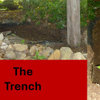
Hey guys, two questions. I need to level this dirt in order to seed it for a lawn. What's the most affordable way to do this (without breaking my back if possible)? Also, there's a ton of compacted dirt clogs, as seen in the picture. What's the best way of breaking those up? Any other tips on preparing for seeding welcome. Thanks!

Comments (13)

  • 11 years ago

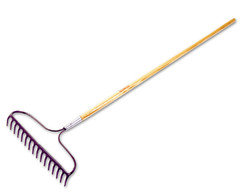
    I believe you'll need to use a garden rake. It's really too small to get machinery in there. Maybe hire some teens and save your back?


    Just curious, how did you get the load of soil in there?


  • 11 years ago

    Thanks for the advice. I tried the rake, it's just not strong enough. The picture makes it look thinner than it is. It's about a 15'x50' long yard and the dirt is pretty tough. I'm going to try roping the sides of a pallet and dragging it across the dirt tomorrow, but would like to hear more options out there, especially how to mash up these hard dirt clogs.

    Oh, and I got the dirt in via wheelbarrow through the 6' fence door behind me in the pic. :)

  • 11 years ago

    I disagree with tilling because a few years down the road the lawn will become bumpy as the fluffy tilled earth settles. I am just one opinion though.

    The pallet may well be ideal for the leveling and may offset some of the fluffing that tilling would create.

    I always had good luck with spraying clear shampoo on hard soil to loosen it to allow digging, maybe it would work for breaking the clods. There is science behind how that works, but I'm not up for the explanation this morning.


    Wheelbarrowing in that much soil has got to be hard work!

  • 11 years ago

    It's too late now but the easiest way would be to use better soil. A rototiller would be no easier than rakes and shovels and much more likely to damage the fence or house. I have a big one and probably wouldn't bother, not that I didn't use one several times before I finally convinced myself of that. A rototiller big enough to actually do something beats up your body quite a bit.

    Decent tools will help as most of the home stores sell junk. A Ewing Irrigation or John Deere Landscapes will get you decent tools or mail order from AM Leonard or such. OSH has some stores in SoCal that have semi-decent stuff like Corona Fiberglass handled tools.

    If you're in the area it appears, water conservation may be beneficial, so mixing in Turface while you are doing this will be a big help. You want 30% in the top 6" so that is a layer of 2". Looks like you may already have too much soil.

    Kids might help break up the clods but I'd rake it myself - but then I'm not much over 60.

  • 11 years ago

    Some really great, but conflicting ideas. Thanks so much guys. I have a lot to think about here.

  • PRO
    11 years ago

    Looks like we're not going to get consensus on this one. I would wet the area down day before and use a rear-tine power driven tiller on it. (A front-tine tiller would be impossible to control. A rear-tine tiller has power drive wheels and can do such things as go reasonably slow and back up.) Once the top few inches are loose enough, rake it smooth. I wouldn't worry that over time you might get a little unevenness. You can smooth out minor depressions with sand over the top of lawn later on. If those are rocks, not clods, try to remove whatever comes to the top during raking.

  • 11 years ago

    They're clods with very few rocks. Rake it lightly at first and step on the clods as you go. Then rake it again to get it closer to final grade with it gently sloping away from the house. Heck, rake it as many times as needed. You can also use the back of the rake a time or two. Just don't try and pull more soil than you or the rake can handle. Tamp it and rake again, or use a roller. Think of raking as fun rather than work. I happen to enjoy it.

    I don't see a need for a rototiller. The soil is already loose and deep enough for a lawn. If you do use a tiller you don't have to till up against the house or the fence, risking damage. You don't want a lawn up against them anyway.

    I prefer a tiller with front end tines for a number of reasons. I have time on both.

    Mike

  • 11 years ago

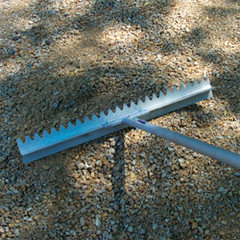
    I have never had the luxury of power tools. This is not back breaking work. You did that already. I use a number of tools. I am an avid gardener so I use things I already own. I start anywhere with an iron rake pulling towards me while walking backward. You will gradually have a smoother area and a pile of clods you raked out. Then I bash a large long handled shovel onto the pile of clods repeatedly. Then move on to next area. After I think I have broken up all the giant clods I begin smoothing with the flat side of an asphalt rake. If I did not already have the rake I would use a board and drag it. It helps to water the whole scene the night before you begin. While it is true that it is hard to find an iron rake worth buying, the cheap one will do the job. They are usually good for a year or two. The hardest part for me is lifting the shovel to bash the clods.

    This is how I have always done it.

    Are you in NJ or CA or some other Inglewood?

  • 11 years ago

    Excellent advice, thanks guys!

    Inglewood, CA. :)

  • 11 years ago

    I would use the rake, hoe, and spike rake shown in the pic by emmarene. And I would also use a dirt tamper after the dirt has been broken up and spread. And for sure, plant it with stuff like Bougainvillea, Ice plant, even some food. I'd put an orange tree there as well. BTW - It won't make me mad one bit if you plant in there ;)

    inglewoodyard thanked stolenidentity
  • 11 years ago

    Excellent thoughts, thanks again guys. It's going great. Using the rakes, hoe, shovels and a couple makeshift masher tools have really helped. It's all leveled and graded now. Almost ready for seeding, so any tips on seeding is welcome.

    I'm using Scotts EZ Seed, tall fescue with a hand held spreader. Thoughts?

  • 11 years ago

    I texture the soil with a metal leaf rake before putting down the seed and then rake it again after the seed is down. Then lightly tamp. I used a roller.

    Then keep damp. Don't let it dry out. Water often and light.

    Mike

    inglewoodyard thanked Mike McGarvey