Software
Houzz Logo Print
aruzinsky

Grafted Shmafted

11 years ago
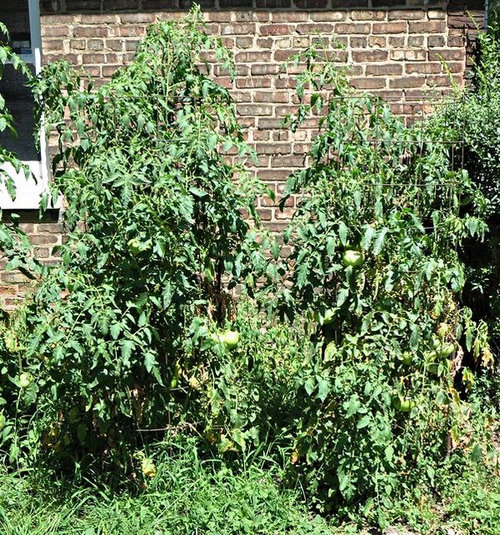
I ordered one grafted Big Zac Tomato plant from Vermont Bean Company and they sent me two. Here are their claims:

http://www.vermontbean.com/dc.asp?c1=Grafted+Tomatoes+%26+Vegetables&c=173

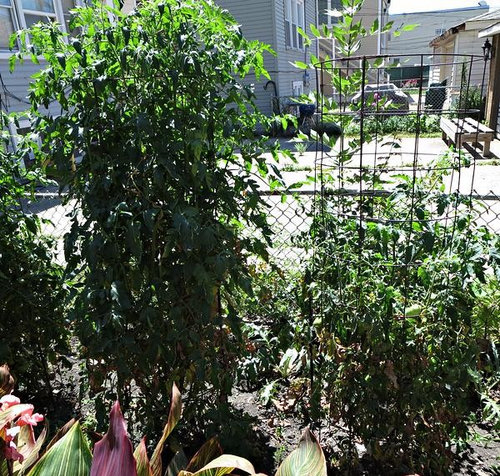
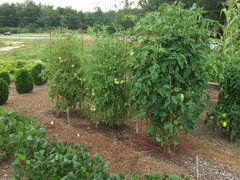
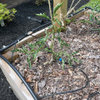
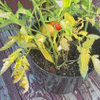
I planted each next to a regular Big Zac seedling. The regular Big Zacs were deep planted, as I usually do, whereas the grafted plants, per instructions, were planted so that the soil line was below the graft. The grafted plants had to be staked when planted because the grafted regions of the stems were too thin to be unsupported. The regular plants were not staked because the stems were thick enough to not need support. Otherwise, I treated grafted and ungrafted plants exactly the same. In the following pictures, the regular Big Zacs are on the left and the grafted Big Zacs are on the right:


Comments (10)

  • 11 years ago

    Wow, sorry to see how poorly the grafted plants did compared to the good ones. It was nice of them to charge you for one plant (that's what I understood) and send two though, looks minimum order was two. Big Zac is really a vigorous plant, I wouldn't have bothered with the graft since anything that cuts back on the stem diameter which in turn might cut back on fruit size. From the looks of the pics with hindsight, you had leaf problems and the roots couldn't do much about that. You make a very good point about deep planting.

    Cheers

    PC

  • 11 years ago

    Agree with your post title. Unless you have one of the resident soil viruses, grafted plants are just a marketing rip-off.

    Dave

  • 11 years ago

    "Big Zac is really a vigorous plant,"

    Yes, it's so vigorous that they should have used it as root stock. Ha, ha.

  • 11 years ago
    last modified: 11 years ago

    "should have used [Big Zac] as root stock. Ha, ha."

    From its performance here, if just maximizing yield is needed, you are right. Not just for Big Zac tomatoes :-) One plant I had last season was a real monster.

    Cheers

    PC

  • 11 years ago

    Grafting is just for some disease resistance. Otherwise it can have disadvantages in terms of plant vigor. In a way it is amputating and attaching another member in its place.

    Sey

  • 11 years ago

    The grafted plant in the second photo is absolutely terrible. That's poor growth for even a delicate heirloom. I associate that kind of poor growth with disease. If not soil born disease, what else could be responsible?

    Theoretically, grafting could be used to control internode lengths of stems because a plant's roots are mainly responsible for a plant's endogenous gibberellic acid (GA) which increases stem internode length. If you grafted any tomato plant onto root stock that produced relatively little or no GA, the resulting plant would have a compact bush-like growth habit.

  • 11 years ago
    last modified: 11 years ago

    'a plant's roots are mainly responsible for a plant's endogenous gibberellic acid (GA) which increases stem internode length"

    Is there a published reference to this you know of? It would be interesting to read or just know more. GA is involved in fruit set and growth in the fruiting stage, so I wonder if the plant also had no source of it for that too due to the theoretical reasoning, if the plant would be dud?

    cheers

    PC

  • 11 years ago

    http://chemconnections.org/organic/chem227/GibberellicAcd.html

    "In plants themselves, gibberellins are mainly produced in roots and young leaves, however they affect growth in leaves and stems, and have little to no effect on roots."

    The easiest way to study the effects of reduced GA is to apply ancymidol (brand name Arest) as a soil drench to potted plants. See http://www.sepro.com/documents/a_rest_label.pdf . Arest is not for food crops therefore any resulting tomatoes should not be eaten. Hence there may be a need for other methods of GA reduction in food crops such as grafting.

  • 11 years ago

    I agree with some previous replies along the lines that it is more beneficial to use a grafted plant if you wanted to grow a notoriously finicky, disease-prone, or low yielding variety. I trialed a 'Mighty Mato' grafted Brandywine Sudduth's Strain and harvested 40 fruit a couple years back (for a Brandywine, this is an impressive feat). The plant was the most vigorous I have ever grown and the base was bordering on becoming woody, I think I actually did have to use a pruning saw to dispose of the plant when fall came around. It is the plant to the far right in the picture below....I was very impressed with grafted plants.

0