Software
Houzz Logo Print
harriett016

Flowers turning black!

11 years ago
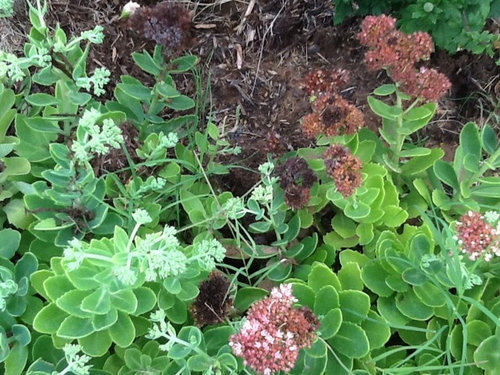
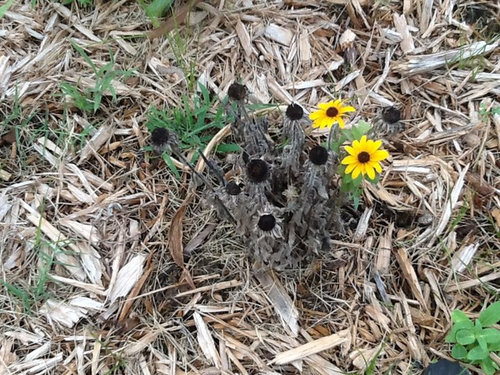
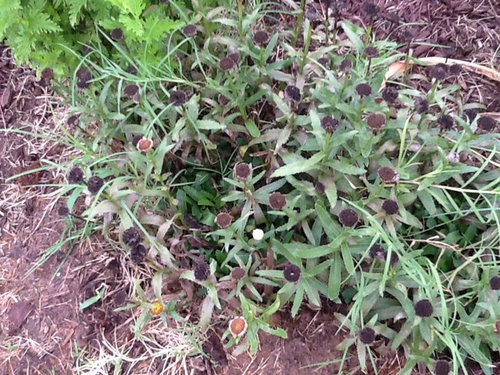
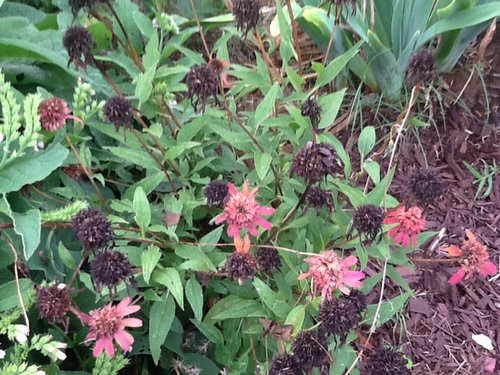
Just in the past month my tough natives are showing black flower heads-and some leaves have a gray powdery look to them. Any ideas?j

Comment (1)

  • 11 years ago

    Hi Harriet,

    It is hard to guess for sure without knowing how much rain you've had in the last month and without knowing what sort of air flow your plants are exposed to, but the gray you describe likely is a fungal infection, probably powdery mildew.

    The black flowers are a tiny bit more complicated.

    With blooming flowers, the flowers don't last forever, and you have to cut them off, which will encourage more growth and, with many flowers, another cycle of blooming. I think that is likely what you're seeing on some of your flowers unless there is PM on the leaves that I'm just not seeing in the photos. I deadhead my zinnias, salvias and other flowers weekly or as needed. Because I like for them to reseed, when I cut off the dried flower heads of healthy plants, I drop them down into the mulch beneath the plants so that they can drop seeds there for next year's plants. When I cut off the dried or dead flower heads of sick plants, I drop them into a 5-gallon bucket I carry with me and dump all the diseased flowers on a hot compost pile. Hot composting will kill the disease microorganisms on the flower heads as they decompose. If you don't have a hot compost pile and only do cold composting, I wouldn't put any diseased plant parts there as the diseases can survive cold composting and come back to haunt your plants next year.

    With some of the plants, like the zinnias in your photo, I think the black flowers are more related to a plant disease. It could be powdery mildew or it could be something else related to the high heat, and the high moisture in the soil and in the air. Powdery mildew is incredibly common in hot, dry, humid weather, especially following a rainy spell.

    This has been a hard year for flowers because of the heavy rainfall and outrageously high (at times) relative humidity. When I grew sedums in my less-than-well-drained soil, they struggled with diseases in wet summers and sometimes rotted off at the ground, so I hope yours are in well-drained soil as the heavy rainfall this year has been very challenging for some plants that need better drainage.

    There are fungicides you can use that are listed for use on powdery mildew, but---as with all fungal diseases that affect plants---once you have PM in your garden on your plants, the best you can hope for in the current year is merely to control it. The spores are everywhere and spread many different ways---via the air, via your hands or garden tools, via soil splash, etc. and you cannot get rid of the PM. However, by removing all the affected foliage and spraying with a product labeled for use to control PM on the plants you have, you often can prevent it from spreading. Most fungicides do not kill fungi. Instead, they attach to receptor sites on the leaves (think of the fungicide as a protective coating) to block the fungal spores from being able to attach themselves to the plants. You'll have to reapply the fungicides (label directions usually specify how often they can be used) as needed, especially if you are in a part of Oklahoma that is continuing to receive rainfall regularly. Powdery mildew is not one disease. It is an entire family and different kinds of PM affect different plants. Normally, though, the same product will control many of the different kinds of PM. There's some exceptions though, which is why it is important to read label directions to make sure the product you're using can be used on the plants you intend to spray. Sulfur, for example, is a fungicide but it can harm or kill the foliage of some plants, so you really have to be careful with it. There's also a kind of complication that occurs when you use both sulfur and neem oil without a certain time of frame, so you have to watch out for that.

    I tend to prefer organic fungicides but there also are synthetic ones, and some of those may be systemic (absorbed into the plant itself), but I am not sure about that because I avoid the use of all systemic products. I'm not sure what your comfort level is with the use of synthetic products, but can recommend a couple if you're open to using them. Normally, I use neem oil, Serenade or Green Cure which all are organic in nature, although I'm very careful about using neem oil (because it is an oil and oil products can damage foliage in hot weather) in the summer months. Also, there are some fungicide products I probably wouldn't use on edible crops, but might not mind using on ornamentals. One of the most widely used fungicide products in this country is chlorothalonil and it is found in many products, including Ortho Garden Disease Control and Daconil. I sometimes use it to prevent fungal disease on tomato plants.

    Powdery mildew tends to be the worst in hot weather (unfortunately) and once it arrives, it rarely just disappears on its own until the conditions change to the point that the growing conditions are not ideal for it.

    Hope this helps,

    Dawn


    Clemson University Info on Powdery Mildew


    Harriett Wahler thanked Okiedawn OK Zone 7