Software
Houzz Logo Print
rober49

which grass to plant?

11 years ago
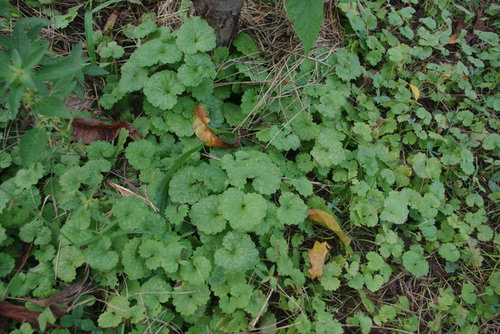
I'm waiting on soil test results but the basics are......I'm just south of the Meramec river from st Louis mo & i'm in zone 6B depending on where you look. my soil is mostly clay & my 1/2 acre has a slight slope. while the slope is not steep during a heavy rain I could float a kayak. I have a row of straw bales across the bottom of my 70' wide vegetable patch to keep the soil from washing out after tilling. I'm not looking for a picture perfect lawn. my concerns are erosion & my hounds tracking in mud. I've been trying to overseed with drought resistant fescue but have had limited success. I also mixed in some dutch white clover but it burns up when temps. stay in the high 90's & leaves bare patches. I'm starting to lean towards KBG. right now I'm battling crab grass, nut sedge & this stuff.

the nut sedge was so bad in my vegetable patch that I wrote it off for this year. after several applications of 'Image' & tilling multiple times it looks like I won that battle. I'm also not sure about how to go about replanting. with erosion being a concern I do not want to till so I thought I might try treating with something like weed be gone, running a disc over the whole yard which would leave the crabgrass roots intact to hold the soil, & then planting seed. any advice will be appreciated. also what would be a good treatment for the weed in the photo? I'm trying not to use harsh chemicals since I have bee hives at the back corner of the lot which is why I'm planting the clover. this is also not an ideal time of year for planting seed.

Comments (4)

  • 11 years ago

    I'm dreadful at weed ID, so I won't even try here. I've seen that before, but I'll be durned if I can put a name to it.

    Under normal circumstances, I'd say the Weed B Gon is a good thing to try, but I'm uncertain as to its impact on bee populations with the hives that close.

    http://www.medinabeekeepers.com/index.php?title=Pesticide_toxicity

    I can't say how accurate this is as I have no knowledge of bees (other than I like them and enjoy seeing them in the garden). However, they don't list any particular cautions for 2,4-D, the heavy-hitter in Weed B Gon.

    Offhand, check the label but I'd say it's worth a shot.

    Post death, there's no need to disk or till the soil at all (it's actually a bad thing to disturb the soil). New seedling roots are entirely capable of penetrating the hardest soils, and don't mind having old, dead roots around them.

    The proper window for seeding is practically open in St. Louis! The correct instant is just as high temperatures start to fall. That gives the seed time to germinate in the warmth, sprout as things just barely start to cool, and develop in still warm but pleasant weather with cooler nights.

    'Round here, in Pennsylvania, that means that the perfect dates for seeding are August 15 - September 1, rather earlier than most places tell you.

    Remember that you'll have to water the seed at minimum once per day (twice to three times is better) until it sprouts fully, then back off water slowly until you reach normal watering for the lawn. Normal watering should be about once a week in hot weather, longer in cooler weather.

    Once you get your test results, I'll be happy to read those for you. But remember to jog my elbow on the fact that you're seeding. That changes things considerably!

  • 11 years ago

    I've used various herbicides without adversely affecting the bees. I use them at dusk when & only if it is dead calm so there is no drift. & I do not use them around clover or anything else they might be foraging on or within 50' of the hives. I had a major problem with brown rot on my peach trees due I think to the wet spring we had here. I need to treat the trees with a fungicide. I have another bee yard so I might move all these hives to the other yard temporarily. that way I can treat the yard & the trees with no worries. you cannot trust labels. 2 years ago the almond growers sprayed their trees with a fungicide that was labeled safe for bees while the pollinating contractors had their hives at the orchards. turns out the fungicide does not kill the bees outright but when it was carried to the hives on pollen it killed off the brood ( eggs & larva ) which killed off the next generation which killed most of the hives. a lot of those beekeepers did not realize what had happened until they got the hives home. a lot of those beekeepers will not be returning to pollinate those orchards again. its hard to recover from those kinds of losses.

    & back to the main question. do you think I should try KBG instead of the fescue? i'll mix in some rye with whatever I plant just to fight off erosion.

  • 11 years ago

    This site says tall fescue and zoysia are best for Missouri. So probably best to stay with fescue. Tall fescue germinates in 1-2 weeks, KBG can take up to a month. The tttf can probably fight off erosion just as well as rye.

  • 11 years ago

    Herbicides will not affect your bee population except under two circumstances. If sprayed directly on the bees, the surfactant mixed with the herbicide will break down the waxy coating that naturally occurs on bees and the water will drown them. (There's a lesson here. If there are bees in a problem area, and they use be killed, soapy water is its effective.) the only other way herbicides affect bee populations are by killing the primary plants the bees are feeding on. This just causes the bees to seek "greener pastures," if you will. Pesticides, on the other hand, are another story.