

My First Soil reports! Need help understanding?
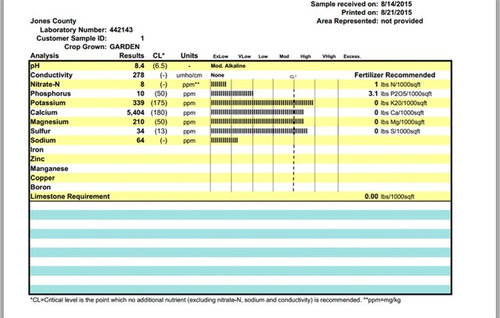
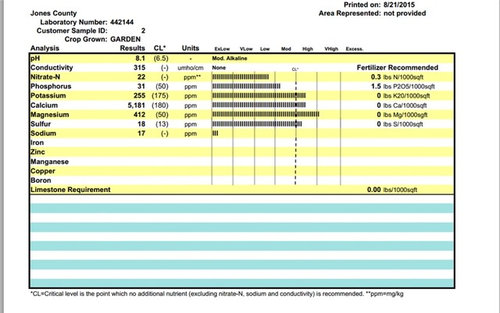
So I had the soil tested in my GH for the first time. Sample 1 is a shallow sample from 0 to 2 inches deep and sample 2 is a deep sample from 10 to 12 inches. I would really like some help understanding these reports. My GH is for growing garden vegetables, not flowers and house plant. Thanks
Sample 1 (Shallow)
Sample 2 (deep)
Comments (37)
 11 years ago
That's alkaline on the bottom. I don't see any organic content reading, but you can do that yourself. They say you have a lot of nutrients, so I'm guessing maybe it's been overfertilized. Do you live in an area where alkaline soil is common?
I would mix the top and the bottom layer together. I would cool it with the fertilizer otherwise. Use an organic mulch --not soil amendment--mulch and when it comes time to fertilize, I would default towards a more acid type fertilizer, like ammonium sulfate.
So, basically, I would chill. Maybe plant vegetables that are a bit more tolerant of alkaline soil.The Jungle Explorer thanked kokopellifiveaThe Jungle Explorer
Original Author11 years agoThe land where I built my GH used to be farm land back in the 1970s, but it has since been left alone. There was nothing but grass and cactus growing there when I started this projected. The only improvements I made it it was to till in about 300 pounds of composted chicken manure and wood mulch. My GH growing area is 800 square feet, so that is about 1/3 pound of compost per square foot.
Related Professionals
Daytona Beach Landscape Architects & Landscape Designers · Tallahassee Landscape Architects & Landscape Designers · Middlesboro Landscape Architects & Landscape Designers · Hilton Head Island Landscape Architects & Landscape Designers · Davenport Landscape Architects & Landscape Designers · Poughkeepsie Landscape Architects & Landscape Designers · Cumberland Landscape Contractors · Columbia Landscape Contractors · Concord Landscape Contractors · Sterling Landscape Contractors · Montgomery Stone, Pavers & Concrete · Albany Stone, Pavers & Concrete · Baton Rouge Stone, Pavers & Concrete · Frederick Stone, Pavers & Concrete · Wenatchee Stone, Pavers & Concrete- 11 years ago
The chemistry might still be settling down. I'd go ahead and plant without additional soil amendments. If you are short of nitrogen still, that can be fixed on the fly, so to speak. You won't be short of P or K.
So basically I stand by my earlier opinion.
The Jungle Explorer
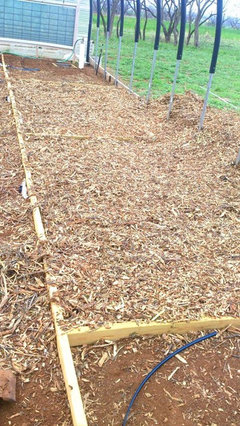
Original Author11 years agookay, thanks. I am trying to use the No Till system (Back to Eden) system. I have 4" of wood chips on top of the soil. hopefully with time things will balance out.
- 11 years ago
Where in the world are you? Who did the testing?
The sample 1 is too shallow, every thing I have seen about soil sampling fro a soil test is the sample should be the top 6 inches of soil. So the sample 2 is from too deep a sample.
The soil pH is high, optimal soil pH for most plants, veggies, flowers, shrubs, trees, is in the 6.0 to 7.0 range. The tests do not have anything about organic matter which should be in the 6 to 8 percent range. That may also be why the Phosphorus levels are so low. The wood chips on op of the soil is a good start but that could be years before some change is seen, because those wood chips being digested and incorporated into the soil are very dependent on the Soil Food Web which if there is not enough organic matter in the soil now may not be active.
Perhaps these simple soil tests may also be of some help.
1) Soil test for organic
material. From that soil sample put enough of the rest to make a 4 inch level in
a clear 1 quart jar, with a tight fitting lid. Fill that jar with water and
replace the lid, tightly. Shake the jar vigorously and then let it stand for 24
hours. Your soil will settle out according to soil particle size and weight.
For example, a good loam will have about 1-3/4 inch (about 45%) of sand on the
bottom. about 1 inch (about 25%) of silt next, about 1 inch (25%) of clay above
that, and about 1/4 inch (about 5%) of organic matter on the top.2) Drainage. Dig a hole
1 foot square and 1 foot deep and fill that with water. After that water drains
away refill the hole with more water and time how long it takes that to drain
away. Anything less than 2 hours and your soil drains’ too quickly and needs
more organic matter to slow that drainage down. Anything over 6 hours and the
soil drains too slowly and needs lots of organic matter to speed it up.3) Tilth. Take a handful
of your slightly damp soil and squeeze it tightly. When the pressure is
released the soil should hold together in that clump, but when poked with a
finger that clump should fall apart.4) Smell. What does your
soil smell like? A pleasant, rich earthy odor? Putrid, offensive, repugnant
odor? The more organic matter in your soil the more active the soil bacteria
will be and the nicer your soil will smell, to a point. Too much organic matter
can be bad as well.5) Life. How many
earthworms per shovel full were there? 5 or more indicates a pretty healthy soil. Fewer than 5,
according to the Natural Resources Conservation Service, indicates a soil that
is not healthy.kimmq is kimmsr
The Jungle Explorer thanked kimmq The Jungle Explorer
Original Author11 years agolast modified: 11 years agoThank you Kmmq. I got my soil sampling kits from my local county extension office. I followed the instructions on how to take samples. This was my first time ever to do this and I was expecting a more thorough report which included soil structure and micro nutrients.
my soil us very high in clay. 30% or more. I tilled in several hundred pounds of compost up 12 inches deep before starting. As far as worms, I do not know, there are almost no natural worms in my area. It's just too hot and dry and the ground usually as hard as a rock ( I mean that literally).
From what I am seeing in this basic soil report. My soil is crap. It way too high in most thing and the PH is too high. Most people have said that to correct the PH I would have to add sulfur, but my sulfur is already over critical levels, so I can't do that. I can correct the Nitrates and Phosphorus, but my soil will still be horribly unbalanced. My friend said that the only solution to my PH is to install an RO system to water with because my well water is very hard and full of calcium. Yeah, that's gonna be cheap. It will take a pretty large system to water a 800 square foot GH. It might be cheaper to replace all the soil. Arggg. I just want to give up!!!!! I am so tired of fighting this garbage land!
- 11 years ago
I don't think your soil is crap. High nutrient levels is much better than having low nutrient levels! It does sound like you have been growing in this for awhile, but you didn't say how things were going. Did you have it tested because the garden doesn't produce well? When did you 'start this project'? If it was more than one season ago, organic matter levels (at least) may have been depleted again.
The two samples are not that much different - the deeper soil has a tad more N and Na (possibly due to leaching) but that's about it. So the soil in between is going to be about the same. pH over 8, high nutrient levels. Come to think of it, County Extension may have asked for the 0-2" and 10-12" samples on purpose if they know that nutrients leach rapidly in your area.
Other than 30% clay, what is this soil composed of? Clay holds onto nutrients rather tightly, so having high nutrient levels in clay soil is not that much of a problem.
I have relatives in NM growing gardens in amended high pH soil made up of granite and limestone fines ('kitty litter' we call it), plus sand and silt. The native soil sets up like concrete when you walk on it. pH is over 8. Yet, when amended with copious organic matter and watered enough, it produces wonderful vegetables. So don't hate your soil. Become friends with it, embrace its qualities good and bad. Feed it. Love it. Amend it. With your knowledge, data and ambition, you'll have treasure underfoot soon enough. Or, throw it away like a waste, buy something different and go for instant satisfaction. It's the American way. :-D
The Jungle Explorer thanked toxcrusadr The Jungle Explorer
Original Author11 years agoBelieve me, I am not your usual American. I did not even grow up in this country. I live by a different set of rules then the overwhelming majority of Americans, most likely including yourself. I live by the first law of survival. This is the law of "Economy of Motion" and it dictates that, any endeavor must return more then it consumes in order it to be a worth while endeavor. The 1st law of survival does not give any value to pleasure and fun, but only value tangible returns of a physical nature that can sustain life.
So success in gardening in my mind is measured on much different scale then your typical American hobbyist gardener. Success for me is only achieved when my garden returns more then that which is invested. Anything less then this is considered a miserable failure.
Where as some Americans might be tickled pink to get a handful of tomatoes off a plant that they invested tens of dollars and hours of labor over six months into, I would consider that a complete failure. You see (since you bought up the subject of the "American way"), Americans are used to having the convenience of living a inefficient and wasteful life because they have the privilege of living in a land of exceeding abundance. Thus, they approach most endeavors from the mentality of pleasure and enjoyment, rather then survival. If they spend a hundred dollars and months of work growing a tomato plant that produces 5 nice beefsteak tomatoes, they will be ecstatic with joy and post pictures all over facebook hailing their "Success". This is hobbyist gardener, not a survival gardener.
A survival gardener sees each endeavor as a closed system. If he invest $20 and hard work (calories) into a tomato plant, that plant must return more in produce then the amount of money and calories invested into it.
I said all this so you can understand my way of thinking. When I said I am about to give up, it was not because I don't think I can grow "Some" vegetables. It is because considering the amount of time and money I have already spent, and the problems I face to continue, I am beginning to believe that I will never reach a point at which my endeavor to grow vegetables on my land will ever comply with the 1st law of survival.
The truth is I have already invested almost 3 years and over a thousand dollars getting my current project going. This only after four years of other failed attempts at gardening. Now I don't mind the work and the expense, as long as I am moving towards the eventuality that at some point, the balance of expense vs return will swing to where there is more return then expense. I moved to the blazing hot desert of Texas during the worst drought in recorded history from the Amazon rain forest, I expected to encounter some difficulty and have to do a lot of learning.
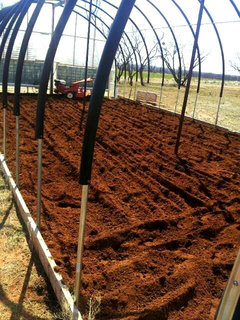
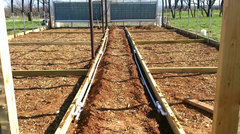
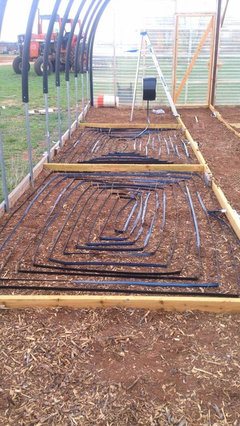
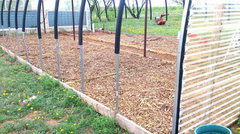
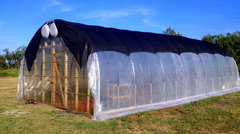
Enough with that. Here are some picture of my GH
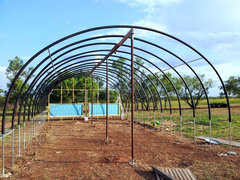 gh · More Info
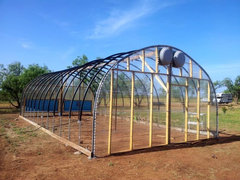 gh · More Info
 gh · More Info
 gh · More Info
 gh · More Info
 gh · More Info
 gh · More Info
 gh · More Info
 gh · More Info
- 11 years ago
Ok, I'm going to sound incredibly insensitive, but... lol...[don'tcha just love a good but?] carts before horses anyone?
The Jungle Explorer
Original Author11 years agolast modified: 11 years agoThank you Wayne. I respect what you said and your experience. You have a very balanced view of gardening and that is refreshing. Let me explain what I have been through and then I will answer your question as to what my goal is.
I moved to this God forsaken desert in 2007 from the Amazon Rainforest where I lived and grew up at (Please don't ask me why). For me it has been like moving from heaven to hell agriculturally speaking. Since I got here in 2007, I have tried to find a way to successfully grow a garden for food. Here are some of the obstacles to success I face.
1. No rain. Less then 10 inches of rain a year on average. Most rainfall comes in does of 1/4 to 1/2" spurts, which provide ZERO benefit to the soil because it evaporates off the very next day.
2. Low producing water well that produces extremely hard water that is high in calcium. My well does not produce enough water to run a small lawn sprinkler and the water it does produce will turn the plants white with calcium buildup after a while if you spray it the leaves.
3. Soil is very hard. So hard in the summer that you cannot drive a pick into more then an inch. It's almost like trying to dig in sand stone. Even after rigorous rototilling, after a few weeks it returns back to it's rock like state.
4. No spring. In general, we go striaght from freezing weather to 100 degree days in the spring. I have seen it go from 95 degree to a freezing blizzard with 4 inches of snow on Easter Sunday. We can have blizzards as late as April and 100 degree days general start in early May and stay through September.
5. Excessive heat. In 2011 we had 110 days of consecutive triple digit temps starting on May 10th. This year (2015) has been the mildest year for my region in 20 years, with more rain and my pinto bean and black eyed peas still died in the field.
6. Insect. One year I planted 2 acres of black oil sunflowers. The grasshoppers not only ate the flowers, but also the stalks down to the ground!
When I first got here, I tried to do a simple garden by tilling up a 25 X 25 foot area and planting a garden. Got a few tomatoes and some zucchini, but everything else died. Next I tried building a small simple 10x10 foot A-frame greenhouse. Things started off great in April, but as soon as May came around, the veggies literally cooked on the plants. One year I planted some melons in amongst a small sparsely planted corn patch (for shade) and they did pretty good, but I almost killed my well trying to keep enough water on it. So I gave up.
Every year I plant 4 acres of winter wheat in September for the wildlife (there was none when I got here. Not even rabbits). It barley survives on the little moisture we get throughout the winter, but there is not much left by spring. This year, because of the unusually high amount of rain I decided to plant the four acres into blackeyed peas and pinto beans in April. The pinto beans died in June without producing a single bean, and the 2 acres of blackeyed peas have so far produced about a walmart shopping bag of un-shelled pods.
So you want to know what my real question is? How the heck do I reliably grow vegetables in this God forsaken land? That's my question! The only person who might be able to answer this question is someone in this area that is doing it and after seven years I have yet to find another person who even dares to try, or does not fall down laughing at the suggestion.
I spent 3 years building this new GH. I tried to think of everything, I engineered a cooling system from scratch, trying to use the scientific principles of evaporation and convection to reduce cost. I designed my watering system to be 99% efficient so that almost nothing is lost to evaporation and there is no calcium build up on the plants. So In April I put the starer plants in the ground. I have beautiful plants, but almost no fruit. My beefsteak tomato has produced only 4 fruits. My Solar Flare maybe 5. My cherry plant is huge but has produced less then 50 tiny tomatoes. My six Zucchini plants that have leaves that are 30" across have produced maybe 10 fruits total. My cilantro, spinach and green onions died. My Collard greens, kale and banana peppers are actually doing okay. The only thing that is really doing well it my two Basil plants. One is a small tree at three and a half feet tall. I am planning on a fall garden, but I need to know what the heck is wrong, because man cannot live on BASIL ALONE! LOL!
So yes, I am trying to find out why things are no going well, thus the soil sample. If everything was going well, I would not even be on this help forum. I am here because after 7 years of trying to squeeze food out of this ground, I am still failing miserably. For Pete's sake, when you cannot even grow black eyed peas that bring their own nitrogen, that's bad. That's really bad.
- 11 years ago
Oh, you didn't say you were in Texas. Sheee-it, pardner. It's so hot in Texas, and the ground is so hard, I once saw a bird using a pickaxe to chop a worm out of the ground. By the time it was free it got so hot in the sun the bird had to use potholders to pick it up.
- 11 years ago
Well, you are unlikely to have success dry farming ( I.e. no irrigation) in west Texas. I suppose if your water is bad enough that could also be a game-ending problem. It would have to be pretty bad, I bet.
Otherwise, the advice on the thread is remarkably consistent: Plant, darn it.
If you are having difficulty getting things to grow, I would suggest an American football metaphor: Run to daylight. Find the stuff that works in your area instead of trying to completely change the environment to meet your preconceived notion of what you would like to have. Nor should you focus on the double secret probation variety that will produce when others won't.
In my area you can consistently grow grapes and raspberries. Not my first choices, but definitely in my top ten. Beats year after year of crop failure, that's for sure.
Just a guess, but I bet there are certain figs and certain mulberries you can grow in your area. Also grapes. I'm pretty sure you can grow collards and other cool season vegetables in that greenhouse all winter long most years. You have Texas A&M for an ag school. I've heard rumors that they know a thing or two about agricultural matters. What do they say should be grown in your area?
PS. Awesome setup.
 11 years ago
He/she lives in cotton country. Seriously, hubby and I drove through his town in June, we got caught in a dust storm the day after it had rained. No visibility at all, just red sand flying in the wind.
- 11 years ago
You have my condolences. Low rainfall totals, and wells that just don't put out enough...it's a hard combo to battle.
Tough problems require tough people. I come from proud Norwegian farm stock...more often than not, we succeed because we don't give up. It's not that we don't know how to give up...we adamantly refuse to. Obstinacy is as much a part of our cultural heritage as bloodcurdling terror.
It can be frustrating to constantly spend, spend, spend and not realize the goal of the spending. So let's look at the questions you have asked, what is working, and what's not.
The first question was almost too broad to be of any use. It was presented without any background...here's the soil test, I'm growing vegetables, what do I do? The background info you provided later narrows the question significantly, and makes the question more like this...I'm getting vigorous leaf growth, but not much in terms of fruit production, what do I do? Coupled with the recommendations from the soil test, you add some phosphorous. try. assess. make adjustments if needed, try again.
You remember what I said about narrower focus questions being better to get answers? If you are getting a lot of foliage growth but not so much fruiting production, the answer is usually in excess nitrogen or insufficient phosphorous.
It looks like you've done the hard part. You've got the greenhouse, engineered solutions for cooling, efficiency...if you can do this much, you are far ahead of most. Water as you describe is always going to be a challenge...if water supply (or lack thereof) doesn't challenge you, the excessive calcium will present challenges down the road. This is where the locals go with RO...but based on what you'd said about how you built your greenhouse systems, an RO system should present little challenge for you. But that is likely something for later, if you desire to.
The hard part with gardening is this...it's easy to grow things. Far too easy. Most people can grow something and not know a bloody things about what they are doing or why, but it works. Voila, they must be an expert! You should do what they do as well, it's obvious they get good results.
If you don't get a heavy dose of sarcasm out of that last, you didn't read it right.
You are a gardener who is expecting production. farmers expect production, but they have the advantage of space. If one tomato plant among three acres doesn't produce to the maximum, not a big deal...if one tomato plant in 800 sq ft doesn't produce, it could ruin a season. So, you are a farm-dener. You have a garden, but expect the production of a farm.
It's when you have problems that you seek solutions. No one is denying that, nor how frustrating the process can be. So you've been trying. That much is obvious, and you should be commended for what you have done...although the laurels you are seeking are of a different sort, and until that is achieved, accolades ring hollow. you've been making adjustments (the engineering and construction) to get to where you are, and what should be the easier part (the growing) is proving to be not quite so easy.
The Jungle Explorer
Original Author11 years agolast modified: 11 years agokokopellifivea Water is key to life and that is what I don't have a lot of. I have paid to have dry holes drilled looking for more water, but no luck. The water I do have is hard, really hard. When I first got here I rented an RO system from a local water company for drinking water. After they test the water they said that they would rent me the system but with not warranty and that I would have to pay for all repairs out of pocket.
The purpose of my GH is primarily to save water. As far as plants go, my purpose is to a wide array of table food. I have planted a several fig tree over the past 8 years and have yet to eat a fig. Figs cannot survive here, even with water. I have a blackberry plant that I have had since 2007. It does produce a few blackberries that would make warhead sour candy taste sweet. In 2012 I planted and orchard of 48 fruit trees. I installed a fully automatic buried PVC irrigation system (comes at night when we don't need the well water). I have peaches, apples, plums, apricots, figs and pears. The figs and the pears died the first year. The Apples look about the same as they did when I planted them. The plums tree are doing wonderful, but have yet to even bloom. The Apricots are growing but not strongly. The peaches are the only trees that are doing well and producing. We got a a few peaches in 2013, more in 2014 and a lot more this year. People fight over my Belle of Georgia white meat peaches.
Again, my goal is to grow a wide range of food for my table. I am not in this to sell produce, so producing a huge abundance of one thing is not meeting my needs or goals.
- 11 years ago
Yeah, I don' think your main problem is the soil either. The soil is well within the range where it should be productive, and the reasons why not are obvious. Climate and water. You had to do the test but unfortunately it didn't give you a magic bullet.
How about building a solar distiller out of recycled junk, distill the superhard water, blend it back with well water to a reasonable hardness value, and water with that? I'm only half kidding.
The Jungle Explorer
Original Author11 years agoI doubt I could build a solar distiller big enough to produce enough water and it would be extremely complex to implement, but a good idea none the less.
.
The Jungle Explorer
Original Author11 years agolast modified: 11 years agoOkay now I am confused. I was going through a drawer and found a brand new Ferry Morse Electronic Dual Soil tester. It supposedly test for pH and Fertility (NPK). It has two 4 inch probes. I tested my soil in several areas of my GH. I got pH readings from 4.5 to 5.7. I even tested the spots where I took the soil samples to send for testing. The deep (12 inches) one came back at 6.8. Thinking the tester might be wrong I tested twenty 4" planting pots that are filled with Scotts Potting soil that I have some starter plants growing in for my fall garden. The pots range from 6.2 to 6.9 but averaged 6.5. The NPK Fertility test results were that my soil was border line too high, but the Scotts potting soil showed to be perfect. Assuming that the Scotts potting soil was balanced from the factory for pH and NPK, would think that my tester is reading accurately within a margin of error less then 0.5. But if that is true, then my pH is too low and not too high as suggested by the soil analysis. So now I am confused!
I also found a water tester and tested my water. Drum roll............ 824 PPM!
I used the pH tester to test the pH of my well water..... 5.2
- 11 years ago
If you can successfully and consistently grow peaches you are in good shape. Exploit that to the max. Can, preserve, and make fruit leathers from the peaches. Then trade them to the neighbors for the stuff they consistently grow. Or even sell them. It's not like trying to give away zucchini.
Again, a guess, but if you can grow peaches there are other simple vegetables that you can grow.
So you are set. You can't expect the array of stuff you have at the grocery store, but you can mostly eat out of your garden. You can also continue to experiment and refine your practices. I bet you can grow potatoes or sweet potatoes in a container.
If you want to go to fully self sufficient prepper-mode from day one, that's unrealistic.
The Jungle Explorer thanked kokopellifivea The Jungle Explorer
Original Author11 years agoPeaches are not reliable as we usually get a late freeze 3 out of 4 years that kills all the peach blossoms, because peaches are the first tree to bloom.
- 11 years ago
Quick tests with a soil probe or a liquid indicator test kit are notoriously inaccurate. The lab test should be more accurate and consistent. They are using much more sophisticated eqpt. which is CALIBRATED daily. Also, the extension and/or the lab people will know what soil typically looks and tests like in the area.
I don't know how that thing measures NPK but pH is measured in a liquid state. If you really want to know, try making a slurry of 50/50 water and soil - use distilled or deionized water! - let it sit for 15 mins and then measure. You can check calibration by trying water from a public system where the pH is known, and by putting 1/4 teaspoon of baking soda in a cup of distilled water (about 8.3) or vinegar (4.2).
 11 years ago
Contact Native Seed/SEARCH. They specialize in arid AG in the Southwest. People have been farming here for thousands of years!
I'm a fellow desert/arid gardener. My production is somewhere between hobby and survival. I grow enough fruit to supply a farming co-op I'm part of for part of a season. The trick is not in soil test results (mine would probably be similar to yours or more alkaline), the trick is to plant what wants to grow. Select plants that can deal with the climate and set up a system to support them. You'll want to look into rain collection. It combats the alkalinity and once it's in, it's not very complicated. That's how people have gotten water here for millennia.
I just want to encourage you--what you want to do can be done. Reach out to Native Seed and ask for advice. Research what the tribes there grew. Figure out how to make the most of your rainwater.The Jungle Explorer
Original Author11 years agolast modified: 11 years agoMarianne. I love your idea and have tried to find native seeds. They just don't exist for my region. Even the seeds recommended specifically for my region by the Texas A&M seed Variety Selector tool are almost impossible to find. Most them don't exist anymore. The bottom line is that there are no gardeners left in my region, thus the native seeds have been lost.
I currently have 150 variety of heritage seeds that I am working through, to see if I can find some that will do well in my region. Yes rain water is great, but you have to have rain! My total rainfall is less then 10" a year on average and there periods I don't get rain for up to 6 months (9 months in 2011). It would be great, but it's just not reliable. As far as native tribes; that I know of, there were none that lived in this area. There is little evidence of any native activity in my region other then nomadic hunting parties; but no settlements or villages.
- 11 years ago
and if you don't want to move there is this solution that uses only 1% of water usually needed.
http://www.gereports.com/post/91250246340/lettuce-see-the-future-led-lighting-helps-farming
The Jungle Explorer
Original Author11 years agolast modified: 11 years agokokopellifivea said: "Then trade them to the neighbors for the stuff they consistently grow. "
LOL! Ha Ha Ha! What neighbors that grow stuff? Where are you located, kokopellifivea? You sure don't live near me anywhere in Texas, do you? Nobody! I mean, Nobody! Grows anything within a 100 miles of me. You seem to think that I live in some time of gardening community here where everyone is growing something and loves to help each other. I don't know where you live, but that is so far from my situation that is laughable. Not only does nobody even try to grow a garden anywhere around me, they laugh at the very idea of it. Not only that, these people are extreme xenophobes that won't have anything to do with you if you were not born in the same town and they did not grow up going to school with you. They are parasitically minding people that survive off a grocery store and have no desire to produce anything. The only agriculture around me is industrial dry land farming (cotton and hay) and I have yet to see anyone of them turn a good crop in 8 years. They survive off of crop insurance.
The bottom line is, there is no one to trade with and few people that would buy something because, if it does not have a purple "U.S.D.A Approved" stamp on it, they do not consider it fit to eat. I cannot even give my free range eggs to them for free.
- 11 years ago
If you have such a poor fit with your community and you live in a desolate wasteland, by all means move.
As to your agricultural situation, it's pretty obvious that the only thing possibly holding you back is water quality. I imagine you've already tested it. If not, that can be arranged at a reasonable cost. I have no idea what the water qualiry limits are for growing food but they must exist. Google them up.
The Jungle Explorer
Original Author11 years agoIt's not me that is the problem when it comes to this community. I have lived in several countries and many different cultures and societies in my life. I have always had great community interactivity. But I have never seen such a close minded xenophobic community as this one near me. One of them told me once that, "If you moved here when you were 10 years old and lived here until you were 90, you would still be considered an Outsider." When comes to culture, I am cultural chameleon and generally able to fit into any community, but it is this very quality that these xenophobic people hate about me. They cannot stand anything that is different or anyone that has an appreciation for anything different then how they think and act. When I first got here, I made great efforts to friend them. I once invited some over to my house to visit. I prepared them a nice meal. They would not touch the food and told me bluntly that if I ever invited them over again, that I had to promise not to cook anything because they have very specific ways they like their food cooked and did not appreciate me putting them into a position where they were pushed to eat something they were not familiar with. You might think that they are some type of health nuts, but the exact opposite is true. After asking around, I found out that what they meant was that, they only eat food that is cooked in the same way they they have eaten it all their life (the way their mom cooked it). I am not joking here. And I am not talking about just a select few people, it is the whole dang area in general. Abilene Texas is a city of about 150,000 people and there is not one exotic restaurant in the entire city. About all you can find is Taco Bell style Texmex, hamburgers, BBQ and low quality Buffet style Chinese places. Any exotic places that do open up like Genghis Grill, close down shortly there after. Not even Zucchini's could stay open here.
As far as water quality, goes, extremely hard is an understatement. I tested it for hardness yesterday and it showed 824 ppm. 11 years ago
What pollinators are in your greenhouse?
Have you tried growing Opuntia?- 11 years ago
Your water comes from a limestone aquifer. It will ALWAYS be hard. It is NEVER going to be a rainforest or even green like east Texas. There is simply not enough rain. That area has been agriculturally farmed for as long as I remember and I'm getting old.
Even in the greener part of the state where I live, I grow alkaline tolerant plants because the soil and the water are alkaline.
It makes more sense to me to not fight what is a normal condition where I live.
It seems that you have a couple of options, accept the conditions as they are and grow what you can or spend a fortune to change the conditions and possibly still be unable to grow what you want. The Jungle Explorer
Original Author11 years agoPKPonder. I appreciate the general wisdom in what you say, but what you don't understand is that nothing grows well here. This area is all dry land farming, and I have yet to see a farmer turn a decent crop in eight years. Even this year with way above normal rain fall most crops were fails because it has not rained for three months and the plants all died in the field. The farmers plant, just to collect crop insurance. There is only one small plot of 100 acres that does well here and the guy spent tens of thousands of dollars to install a advanced buried drip irrigation system with industrial filtration systems.
I planted 4 acres of black eyed peas and pinto beans in early April when the soil was almost to muddy to run my tractor in. The pintos died without producing a single pod. The peas are still alive but yellow and dying. They have produced almost nothing, maybe a 5 gallon bucket full of pods. When you cannot even grow black eyed peas, that bad, really bad.
The point here is that not even native plants do well on my land. So the idea that I should only grow what does well here is kind of useless in my situation, because nothing grows well here.
You say you are in east Texas. Can you tell me what county? I am looking at moving to southeast Texas in the future and I would like to talk with people over there about their struggles and successes in gardening.- 11 years agolast modified: 11 years ago
I am not in East Texas, I'm in Tarrant County near Fort Worth. I find it challenging to keep my flower gardens alive in the heat and drought. My water from the tap is PH 7.8, also from limestone. This is just what Texas is like.
It only rains here in summer (between May and October) if a hurricane makes it this far north. Summer here is like winter to folks in the north, everything goes dormant and perks up in late September....until that first freeze in November. We've been in drought for many years until this past May, but with no measurable rain since early June, it's pretty droughty now. The weather has been this way here since I moved here in the 1980s.
Most farmers around me get their crops in around March 15, last average freeze date to take advantage of the possible spring rains.
I bet that you could grow okra and probably peppers :-) I know that cotton grows there, maybe you could grow that and barter for food crops in Abilene or Lubbock? Cowpeas handle the heat better than pintos or blackeye peas, I hear. I know that gardeners here are harvesting blackeye peas in mid to late May. I don't know anyone that grows pintos. Potatoes, yams, onion and garlic as well as many herbs grow fall through spring, especially with a greenhouse. Snow peas go in in late February, early March. Forget tomatoes, too much water and won't set fruit until evenings get cooler than 75 or so, I get a few in the fall. - 11 years ago
There are large numbers of gardeners in Texas that have successful and bountiful gardens every year. Many are organic growers. Perhaps if junglexplorer were to look up some of these and look at what they were doing to be successful it might help. The amount of produce available at the Farmers Markets in Austin, Fort Worth, Dallas, San Antonio, Waco, and other places indicates that growing food plants there is not really very difficult.
kimmq is kimmsr
The Jungle Explorer
Original Author11 years agoKimmq. I like your"Can Do" attitude. I am doing exactly this (looking for growers in my area).
 11 years agolast modified: 11 years ago
There are a several different methods to help you grow food in arid/desert areas. I recently watched a youtube video about keyhole gardening. This particular method was developed to help families in arid areas of Africa grow food. (Keyhole gardening)
Another method you may want to look into is the Wicking method. You can watch how too videos here. I am sure there are plenty more you should just do the research to choose the best method for you before you put any more money into it.









waynedanielson