Software
Houzz Logo Print
luvabasil

Comfrey

11 years ago

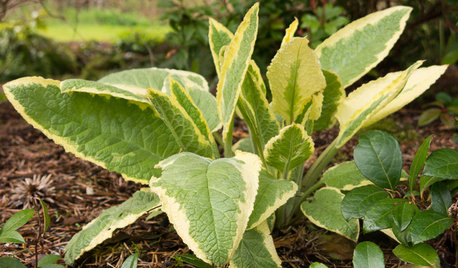
Last time i grew comfrey was several years ago in Arkansas. It was a dainty plant, but served our needs. So here in, Ok, i thought i should grow a bit more. I ordered 6 Russian Block something. Then i had the brilliant idea to lasagna compost the leaves and stems. Yes, yes i did. I failed to ask for the wisdom others first, and now find myself with more comfrey then i will ever use. I have it near all the fruit trees, the grapes, surrounding the garden and in the garden. Its like amish friendship bread. Before i kill the extra, would anyone be interested in some plants at the next spring fling?

Comments (24)

  • 11 years ago

    Second that. Considering how far you must drive, I think comfrey would be an awesome contribution. I might want some, but it's too early to know for certain.

  • 11 years ago

    Okey dokey, the little plants shall live. Please do not laugh when i show up with dozens of those guys......and ideas for what to do with it! Just like that friendship bread! :)

  • 11 years ago

    I let mine spread and run wild. It never gets too out of control because drought gets it every now and then. The drought doesn't kill it.....it just knocks back the spread a bit. I love comfrey but I only compost the leaves, not the roots. Mine spreads better in sandy soil than in clay, but even in clay it can spread fairly well. I love comfrey. When it is in bloom, is it so gorgeous. All mine in the back garden, which hasn't been used as a garden (flooding at planting time) this year and which hasn't been irrigated in the 7 weeks we've gone without meaningful rainfall is wilted, brown and dying back to the ground, but I doubt it is dead underground. Comfrey won't die, and you can't kill it, but I guess you've already learned that. : )

  • 11 years ago

    I bought a pack of 100 seeds last year and never got it planted, but I brought one home from the Fling (from Dawn) and it is crazy big.


  • 11 years ago

    Mine is doing okay. It's growing slow. I mistakenly put it in partial and dappled shade. It bloomed. If I keep it watered, it's happy. I look forward to having more. I just don't have compost material that isn't back-breaking to accumulate. If we close on the house, I'll want MOOOR. hahaha

  • 11 years ago

    I will keep them healthy just in case u need them

    So easy to compost. Lottsa potassium. And makes an excellent boo boo salve. My baby's baby runs to it after every sting and bite.

    And u will prevail. U will prevail. Oh lordy, i almost broke out in We Shall Overcome.......but u shall

  • 11 years ago

    Comfrey. I want some! Is this the comfrey that is used to make salves and medicine?

  • 11 years ago

    Its yours!

  • 11 years ago

    And yes, it is the same.

  • 11 years ago

    It will be fine in dappled shade. I've had some in dappled shade on the west end of the front garden for three years now and it has grown and bloomed just fine. Not only has it grown well, but it also has held its own in an area where woodland plants try to creep in from the woodland that sits only a few feet outside the garden fence, and it hasn't let the monster four o'clocks steal its space either. It has produced many baby plants, some of which managed to pop up six feet away in a raised bed filled with asparagus. The ones that invaded the asparagus bed were dug up and taken to Spring Fling 2015, but there's more back there in the same spot now.....I don't mind invasive plants and search them out on purpose, largely because not much is consistently invasive here. Generally, the ones that are invasive in hot, dry years will falter in wet, cool summers and vice versa, so the invasive plants largely are only moderately invasive. Comfrey, though? It is invasive everywhere, which is why I love it. I wouldn't mind having 14 acres of it, but I doubt that will happen. I use desirable, invasive, spreading plants like four o'clocks, wormwood, morning glories, lemon balm and comfrey to provide tons of fodder for the compost pile, so feel like there's never too many of them. I worried I'd lose the comfrey in the front garden when water stood in that garden for well over two months this spring/summer, but I didn't. And, the ones out back that I wasn't worried about at all in well-drained sandy-silty soil? They looked great until the July-August dry spell hit, but I doubt they're dead. I imagine they're only dormant. As far as I know, I've never had a single comfrey plant die. I started out with maybe 6 or 8 of them, raised from seed, about 3 years ago and have a few dozen plants now.

  • 10 years ago

    MOOOOR !!

    Does comfrey add nitro to the soil while growing or only when composted or turned under?

  • 10 years ago

    It is not a legume so it does not fix nitrogen from the air and it does not add nitrogen to the soil while growing. To clarify, most legumes do not add nitrogen to the soil while they are growing. They fix nitrogen themselves for their own use while growing, but their value in adding nitrogen to the soil doesn't come until the plants themselves are turned under the soil, or cut and placed on top of it, and then left to decompose, by which process they then are returning to the soil the nitrogen that they fixed from the air while growing. Or, if a person prefers to pull out all their legume plants and compost them outside the garden in a compost pile or compost tumbler, then the nitrogen is released into the compost pile as the plant residue decomposes.

    Comfrey's power (other than the power to spread voraciously over every square foot available to it) is in its role as a dynamic accumulator, which means its roots mine the soil and subsoil for nutrients and accumulate them within the plant. Then, as plant parts decompose, those nutrients are released into the soil or compost pile. You also can make comfrey tea, which releases some of the nutrients into the tea which then can be used to water/feed plants. I generally just add comfrey leaves to the mulch around plants and let it decompose in place.

    One caution for anyone using comfrey in soils known to be contaminated with lead or other heavy metals. Because comfrey is likely to accumulate the excess lead or other heavy metals in the soil in a situation like that, I'd use it to clean up the soil, but I'd compost it well away from an area where edible crops were being grown and I'd not use the compost around edible crops. I am not sure where the heavy metals go when it decomposes, but I doubt they evaporate into thin air. Of course, I wouldn't be growing edible plants in soil known to have heavy metal contamination anyway. People who are inadvertently stuck with contaminated soil using have to do a lot of remediation to fix soil like that though, and dynamic accumulators like comfrey can play a part in that process.

    I'm going to link an article about comfrey that mentions how to use it in comfrey tea.


    Comfrey


  • 10 years ago

    I think all of us are talking about common comfrey which is known to be invasive, but bare soil is going to grow something so why not let it be comfrey instead of weeds. If invasiveness is a threat to your space you can grow Russian comfrey instead. Even with Russian comfrey it is hard to totally eradicate because it will come back from any root left in the ground but it doesn't spread like the common type. (At least that is what the books say). My son grows both kinds so I may get some and compare the two. I will also plant my seeds next year, I hope.

  • 10 years ago

    I've got a question for all of the comfrey experts here. :) I have two raised beds in my small backyard here in Tulsa. My beds are lined with double-stacked cinder blocks. I have soil in some of the holes in the blocks, and these holes go all the way down to the native soil. I've thought about trying comfrey (Russian Bock), and I'm wondering if you think they would flourish growing out of the holes in the cinder blocks surrounding my beds.

  • 10 years ago

    I'm no expert and I think they would probably grow because the roots go deep, but would you want them to? The plant gets pretty big, pretty fast. I would be afraid they would be in the way of tending and harvesting the other plants.

  • 10 years ago

    Hi Lee, I think they would grow there, and I think the plants would get big quickly and would flop over into your beautiful raised beds. If it helps to know the mature plant size, my three-year-old comfrey plants were roughly 3-4' across back in mid- to late-Spring. One-year-old plants stay smaller in my soil, but by the end of the summer, they are almost as big as the three-year-old plants. Comfrey plants are monster-sized plants when happy. I'd be worried that with all the rain you get there most years, your comfrey plants would overwhelm whatever is growing beside them.

    I grow the comfrey plants on the edges of my garden where they cannot interfere in the growth of desirable edible plants. Generally, I have an area with hollyhocks behind the comfrey plants and the garden fence behind the hollyhocks. So, in April through late May or early June, the hollyhocks are in bloom and gorgeous with big masses of green plants (comfrey) sitting sort of at their feet with their lovely but more subtle blooms. Then, after the hollyhock plants are done, I cut them back to the ground, and comfrey takes over and fills in the space. Eventually the hollyhocks put out new growth and lots of baby plants sprout, but they have to fight the comfrey for space. Since both of these plants are vigorous and tend to be invasive, I let them slug it out for the space along the fenceline, but I keep them away from my true crop area. Each of them grows well enough to help keep the other one from getting out of hand.

    With those concrete blocks, I'd be worried the roots would spread beneath them after a couple of years and that comfrey would come up everywhere.

    Comfrey won't die and you can't kill it, so be sure you put it in a place where it can take over the world if it wants to, and believe me, it will want to rule the world, or at least your garden.

    Dawn

  • 10 years ago

    Thanks, Dawn. This is exactly what I needed to hear.

  • 10 years ago

    Perfect, Dawn! I forgot about my hollyhock seeds in store. I'm planning to winter sow along the fence line for privacy. I plan on adding some Jerusalem artichokes to the mix. Imagining all the compost materials makes me giddy.

  • 10 years ago

    The one thing I've heard you can grow in cinder blocks is horse radish. I guess it is invasive, too, so growing it in cinder blocks helps keep it contained.

  • PRO
    10 years ago

    I would love some as well. This will be my first Spring Fling!

  • 10 years ago

    I'll bring it! It is my first, as well. I am quite excited!

  • 10 years ago

    Horseradish grows 3 feet tall and spreads wide. You would not want to put plants near one another or you would block your access. I live on a ridge and it isn't too many feet down until you hit solid rock so my low boy septic tank is about even with the ground. It is a bit unsightly, so I sometimes have containers of things on top of it and some tall canna plants on the back side of it. One year I had some horseradish in containers and they were just to the outside edge of the tank. I kind of like the looks of the plant, but when Fall came and I got ready to move it, I couldn't lift the container. After a good bit of twisting effort, I heard several snaps and I removed the pot. The horseradish roots had grown out the bottom of the large pot and made large roots in the ground at the edge of the septic tank. That was several years ago and horseradish comes up every year in that location. I don't try to dig it up because I would never want to use the roots grown there. I would be reluctant to plant horseradish anywhere that I didn't want it to be permanently and would want it to be either in a container or a controlled space. It is food, it is good, but it is also a 'space thug'.

  • 10 years ago

    I always wanted to grow horse radiah, but I've been scared by stories like yours :)

Sponsored
River Mill Construction
Average rating: 5 out of 5 stars2 Reviews
Delaware County's Customer Focused General Contractor