Software
Houzz Logo Print
and_now_its_en2

croton and schefflera

11 years ago

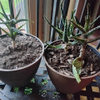
Hey everyone I have an indoor croton and a schefflera both in regular potting soil. They seem to be doing okay although the croton has lost a leaf or two over the months and seems slightly droopy but I think mostly I just can't provide it with enough light in my apartment. I think the soil is starting to attract gnats though - I keep it at a spongy moist.

1. Are the gnats harmful to the plant or just annoying?

2. If I switched to gritty mix, which I happen to currently have a whole lot of, would it make the gnats go away?

3. Do crotons or scheffleras even like gritty mix?


Comments (50)

  • 11 years ago
    last modified: 11 years ago

    Think of gnats more as a symptom of an underlying issue than a direct threat. That they like soggy, rotting vegetation is a clue to the nature of the 'underlying' problem. I'd be very surprised if you had any gnat issues while using the gritty mix - and you'd need to work pretty hard at attracting them to same. I've yet to find a plant that doesn't REALLY like the gritty mix compared to the soils based on all fine ingredients most growers are using. I have and do maintain several scheffleras, all in the gritty mix. Since my primary focus is on bonsai with a marginal interest in succulents, I don't grow croton, though I have - just to be sure I could. There is no reason the croton wouldn't like the gritty mix ..... or the 5:1:1 mix.

    Al

  • 11 years ago

    Thanks Al! I guess it's time to repot!

  • 11 years ago

    Soils too wet, and croton doesn't like draughts. I couldn't grow one

  • 11 years ago

    The Croton wants as much light as you can give it.

  • 11 years ago

    If I had that croton, I would either give it to someone else or just put it in the trash because it would just wind up there anyway.

    they just don't do well in my dry climate, I guess.

  • 11 years ago

    wow, I would have though you would love the challenge, LOL!

  • 11 years ago
    last modified: 11 years ago

    I have certain architectural limitations. My humidity loving plants do fine, but they have to also tolerate a pretty low-light northern window exposure. (Just a tiny bit of supplemental light, just enough to make it adequately "low light" level.)

    I'm not going to subject another innocent plant to that. If I ever move somewhere they thrive, I may try again, but I would need the climate doing most of the work.....or just move to a place with a bathroom facing south.

  • 11 years ago

    Keeping the soil spongy moist is a cultural red flag to me. Plant roots need oxygen, you must let the soil dry a little so they can breathe. Wilted you said? Overwatered plants are actually drying up and wilting because when the roots drown and die the plant can't take up water and therefore not make food. Please use a gritty mix and adjust watering so the soil is not constantly "spongy wet"

    Rhamel

  • 11 years ago

    Okay so I repotted last night into a gritty mix. Incidentally there are technically two crotons in the same pot. One seems perfectly happy and the other I wouldn't say is WILTING but the leaves are just a little more droopy. But they've had good days too. My main concern for it is light - my apartment is recessed by a wide balcony with a giant tree in front, so it is really pretty dark. Not much I can do about it. I'm not really expecting the croton to do very well but I'm seeing how long I can keep it, since I have a history of killing plants within weeks. I'm doing pretty well so far... It's been several months! Next time I move, lots of light is a new factor added to the list.

    By the way when repotting the roots looked okay, I think. The happy one looked a lot better but they both had a pretty big root system, and I could see new growth.

  • 11 years ago

    Crotons will usually lose their color and become mostly green, but I have seem people get away with reduced light. That being said, Crotons can take as much indoor light as possible, as long as they have sufficient water

  • 11 years ago

    Croton is always one of those plants that I dare not get because I'm sure it wouldn't thrive in my house. Too tender for me. Be nice to be proven wrong though!

  • 11 years ago

    Well now it seems I have a spider mite problem. Ugh this poor plant. I even rinsed off every leaf during repotting. How do I get rid of these things?!

  • 11 years ago

    First try the spray it with plain water, the blasting helps dislodge some and they don't like humidity but you'll need to do it frequently at first, maybe everyday. If this doesn't work there are insecticides that can be used on houseplants.

  • 11 years ago

    Yeah it seems all the advice I can find says spray with water, which I do almost every day anyway. All other advice is insecticides I'm afraid to use because I have a cat and the plant is indoors. Or like, get ladybugs, which I'm not doing.

  • 11 years ago

    odd, as spider mites don't like damp conditions?

  • 11 years ago

    is it possible to wipe down the leaves with a damp cloth once in awhile?

  • 11 years ago

    Sure I'll try that. Would having a little bit of soap in the damp cloth help do you think?

  • 11 years ago

    I have a feeling the spider mites are really excited because I have one of those curly crotons so it's very easy for them to make webs and difficult for my water spray to actually reach all of them.

  • 11 years ago

    It might, try it on a small area at first.

  • 11 years ago

    this site might give you some good ideas too.

    http://www.ext.colostate.edu/PUBS/INSECT/05595.html

  • 11 years ago

    Since repotting, both my croton and schefflera have been looking pretty unhappy. The croton is now totally droopy, not that I ever had high hopes for it, and the schefflera is showing signs of underwatering. I can see shriveling on stems and new growth, and leaves browning and falling off when touched. I was expecting some shock from the change in soil, but they don't seem to be bouncing back. Maybe I don't understand how to water with gritty mix. I know these plants like more water than succulents - should I be watering every day/every other day? I can't tell when the mix is dry... it always seems dry... but they don't seem to be taking any water in.

  • 11 years ago

    Yeah, I would let their pots soak in some water (just below the substrate line in your pot) for about half an hour to see if that helps. Gritty mix is a big difference than the bog stuff, it takes some getting used to.

    If you haven't been overwatering and the substrate is dry, the soak shold help the plants hang on a little longlonger while you work out the watering routine :)


  • 11 years ago
    last modified: 11 years ago

    When you first repot, keep an image of what the roots looked like in mind at repot time; then, for the first couple of weeks, make sure the soil is moist where the roots are - even if that requires daily watering or partially covering the pot with aluminum foil or a plastic wrap to slow evaporative water loss. Once the plants have established, you should be golden.

    I rarely have the plants I repot exhibit any signs of stress other than a temporary halt in top growth while the newly pruned roots catch up. It's very important to make sure the roots you're working on remain moist when you go through the bare-rooting/ root pruning/ potting sessions. I think that's where a lot of first-time repotters run into trouble.

    Also, the growers new to repotting might be a little chagrinned to see their plants wilted or losing leaves, but usually they're back in a month or so to report on the new period of robust growth that predictably follows a full repot. THAT type of growth is what the grower might have been experiencing all along if the roots had seen regular maintenance.

    Al

  • 11 years ago

    Al I'm having trouble understanding your second paragraph. What's important in regards to the roots when repotting? I cleaned them off with a wooden knitting needle and washed dirt off in a gentle stream of water. I think I forgot to take photos of roots but they looked okay, although I always have a really hard time knowing what looks good and what doesn't.

    One of my pots has a little dish under it. When I water it has standing water in it. Should I empty that water, or let it stand and evaporate to help humidity?

    Okay so I'm a little early to be concerned, and I will continue watering daily. I'll check back in a few weeks. Thanks!

  • 11 years ago

    I messed up and left a phrase out - didn't I? I fixed it - sorry for the confusion.

    The water in your collection tray should have no pathway back into or contact with the soil in the pot. Salt levels in solutions reach a state of isotonicity very quickly, which means that the salt level in the soil and in the effluent in the collection saucer will quickly equalize if the water in the collection saucer is in contact with the soil. I use a lot of collection saucers in the winter - under ALL my pots, and all pots rest on top of 2" long pieces of 1X1X1" plastic channel.

    Let us know how you fare!

    Al

  • 11 years ago
    last modified: 11 years ago

    There are still critical parts missing from the post, let me refresh and see if maybe you edited it while I was clicking the link to come here.

    Nope, sentence still needs a predicate. Maybe turn that period into a coma and add the rest after the comma? It's important that I find out what most people run into trouble with when they try this!

  • 11 years ago
    last modified: 11 years ago

    I've obviously contracted a bad case of the dumb-ass! I hope it's not a protracted case, and that not too many believe it's a chronic condition. I typed the words needed to 'fix it', but I apparently forgot to do the thing that sends the words from here to there (submit button).

    Time to water.

    Al

  • 11 years ago

    I believe they call that "wisdom" in many cultures.

  • 11 years ago

    hahaha! Welllllllll just threw out my croton... it had spider mites all over it and it was drooping like crazy. I took it out of the soil to see what it looked like and all the roots were rotted. The stem still felt strong but I was tired of killing it and dealing with the mites so I just let it go. Curious about the root rot, I checked on my schefflera, and sure enough the roots looked awful. I don't understand! They looked totally fine when I cleaned them off to be repotted. I guess I heavily over watered them? There was never any water sitting in it... but the gritty mix was way more wet than I was expecting. I guess the top layer dries up and I didn't realize just underneath is still very wet. The stems of the schefflera are all still strong. Is it possible to cut off the roots to find healthy stem and reroot them? It was one of my favorite plants and I'm really sad to see it like this...

  • 11 years ago

    By the way evidently I just kill every plant like it's my plan. I know crotons are notoriously difficult, but I thought schefflera were supposed to be easier... any suggestions on REALLY easy ones? Currently killing a number of succulents too so don't go there... I'm thinking pothos and snake plant? I love plants and want them all over my apartment but I feel awful every time they die because it's definitely always my fault.

  • 11 years ago

    Pothos would be a great choice for you. Especially if you have low light. I think its a great starter plant because its so resilient.

  • 11 years ago

    Pelargonium are easy

  • 11 years ago

    Okay I'll look into those. And yeah I have low light.

    Any thoughts on rerooting schefflera?

  • 11 years ago

    En2, is your name, by chance, Will? Just curious.

    I tried rooting a schefflera top and it rotted on me. Maybe if I had used rooting hormone and not kept it so wet or dry, I don't know what that thing wanted from me.

    can you show us a picture of what you're working with?

  • 11 years ago

    I wouldn't recommend any geraniums at this time of year. They aren't winter hardy and they need high light.

    It's bad enough that I have two giant variegated "citronella' plants I have to find a place for over the winter.

    sometimes I wish I could just throw them in the garage and forget about them til Febriary!

  • 11 years ago

    Low light. Hmm maybe not pelargonium then

  • 11 years ago

    As a still-beginner who has killed some things has a relatively low light (dappled sun from East and West windows blocked by giant magnolia tree), I would suggest these, ranked by ease. Note: This is all based on my personal experience.

    1. Golden Pothos, 2. Heartleaf Philodendron, 3. Chinese Evergreen (the green variegated type, not the reddish one), 5. Parlor Palm, 6. Snake Plant (you must neglect these guys as far as watering or you will surely kill them), 6. Peace Lily, 7. Lucky bamboo

    With your light situation, I would stay away from most succulents and cacti altogether. Also, supplement with some compact fluorescent lighting when you can. If you have a floor lamp with a couple of heads, you can aim the lights directly on the plants and they will definitely appreciate it. Tutorial here:

    http://homeguides.sfgate.com/grow-plants-cfl-lights-43203.html


  • 11 years ago

    If you can get good humidity try ferns. Boston Fern is easy

  • 11 years ago

    lati - that's my middle name... weirdly good guess...

    Thanks everyone! I'll look into all those options.

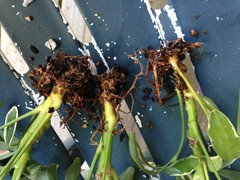
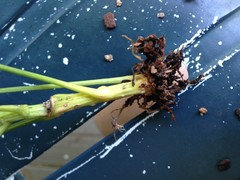
    Here are some photos. I think in the photos they don't look too unhealthy but just touching the roots makes them flake off and they're hollow/brittle. Or some of them it's like an outer layer tube flakes off and a thread of something unhappy is left. I'm almost certainly just going to chop them above the root balls, take off a few leaves, and see if I can propagate them...


    These are immediately after removing them from the gritty mix - didn't even try cleaning them. The stem is wrinkling on two.

  • 11 years ago

    I would allow them to dry out and see what's firm in the morning. You can always cut more off, but you can't put it back once it's done!

  • 11 years ago
    last modified: 11 years ago

    AND YOU HAVE SCALE at least on the shriveled last picture.

    Nope, I see some in all the pictures.

    do they rub off easily or do they stick pretty hard? When you mush it, is it dry or wet?

  • 11 years ago

    Okay so they dried out and there were like one or two firm roots that I left alone on two of the stalks. The other stalks were just dust basically. So I chopped two, removed lower leaves, and replanted all of them in some wet gritty mix. I saw some people but plastic wrap over to keep the roots humid... should I try that?

    I don't think that's scale... although I'll go check on them. But I think those are like scars or something.

  • 11 years ago

    Honestly I can't tell what that is. Some of it I scraped off with my nail. It was kind of flaky but also looked like it was part of the plant, I don't know. Probably scale. I don't have the emotional energy to deal with that. I have Sevin - should I spray some of that?

  • 11 years ago

    I wouldn't use Sevin.

    Are you in Montana?

  • 11 years ago

    Haha no I'm in Baltimore. Why not use Sevin? It's a small indoor pot out of reach from my cat.

  • 11 years ago

    I don't like taking the health risk of even using the stuff. It gets everywhere.

    just regular soapy dishwater would work but be sure to wash the soap off after lol.

  • 11 years ago

    Their roots continued to rot. I threw out two out of the four which had begun to mold. The other two basically have no roots left but are showing new growth somehow so I'm reluctant to chop them. Very strongly considering sticking them in a glass of water and trying to get roots out that way. It worked for my spider plants...

  • 11 years ago

    You think those are like spider plants?

  • 11 years ago

    hahahaha no I'm just at a loss. I've tried repotting, I've tried cutting down, I've tried with water, I've tried with no water... they just want to die.