Software
Houzz Logo Print
dregae

Help with soil analysis results?!?!

I'm hoping someone here can help me with my soil analysis results. After several years of watching my roses not thrive I finally got a soil analysis done, but i'll be honest I don't know what to do with my results. I could figure out what the elements tested were, but what do I do now?!?

I would appreciate any help and advice!!!

Grace e

Comments (14)

  • 11 years ago

    Grow roses that have a Dr. Huey rootstock--which is the most common rootstock used in the USA. It will do just fine with your soil PH.

    Avoid Canadian roses grown on multiflora. Rugosas also don't like your alkaline soil.

  • 11 years ago

    Thanks for the info and help! Does the sulfer need to be applied every year or is this just a one time application? Also Would compost be ok to still add around the garden?


    90% of my roses are own root because of the cold. I've found that they are hardier than the grafted ones. Do you think I could plant rugosas if the ph was lowered or would it just be a constant battle?!?


  • 11 years ago

    I forgot to ask but a lot of my roses exhibit signs of a calcium deficiency is that because of the high ph?

  • 11 years ago
    last modified: 11 years ago

    According to the ARS CR manual, calcium is readily available in high PH soils. You soil is pretty close to neutral (7). When I did a soil test I got readings of 6.0, 5.2, and 6.0. Multiflora rootstock grows like a weed in the side yard that measures 5.2. So does own root Leading Lady.

  • 11 years ago

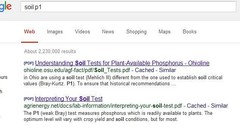
    I googled soil p1 and clicked on the 2nd (agrienergy) and saved the pdf file. The first page has a report identical to yours (not the numbers) and an explanation of each item. Very interesting.


  • 11 years ago

    My soil has the same pH as yours. I would not bother with sulfur since it isn't nearly as forgiving as lime. You can overdo it, and most roses don't really care. Anything that requires acidic soil is going to be a constant battle, requiring annual pH tests, and continual tinkering.


    There are interactions between calcium levels and magnesium levels. You soil has plenty of calcium, but adjusting the magnesium will help.

    When you say the roses don't thrive, what exactly does that mean?

  • 11 years ago

    When I say my roses don't seem to thrive I'm referring to small blooms, and not that many blooms. The colors are faded and the colors tend to be washed out and not from the sun. The plants just never seem that happy. As far as calcium, I get a lot of balling and botrysis which I understand is a calcium deficiency, but it could be caused by something else too. Who knows.


    I enjoyed reading the soil analysis explanation you recommended irisgal_z9. It helped explain things a whole lot better. The only thing I didn't see on my test was the free lime. I would have been curious to see that as we live in limestone country.


    I may try an experiment with the sulfer. Since my flower beds are quite long maybe I'll only do half and see how it does?!?! Or maybe I'll go do the whole thing but you all have given me a lot of advice so it will give me a jumping point to research now .

    Thanks again for everyones advice and help!!

    grace e

  • 11 years ago

    How do the canes look? They become non-productive with age and winter damage.

  • 11 years ago

    Yes, sounds like old canes and winter damage could be the problem, or else watering, or not enough nitrogen.

    Sulfur's effect on pH is very slow but long lasting. Don't reapply without a soil test a year later. If you don't see yellowing between green veins, the pH is not causing the unsatisfactory growth.

    In my experience, rugosas are unhappy at pH 7.2.

    Calcium in the soil won't help with petal blight and balling. Your test shows high calcium, anyway.

  • 11 years ago

    It's possible that there is winter damage. We've had two very hard winters and we get very little snow here. I do have yellowing between the veins of the leaves that is one thing that prompted me to get a test done.

  • 11 years ago
    last modified: 11 years ago

    I find that wrapping the canes with burlap helps in my climate, in which I get a lot of snow, but it doesn't reliably stick around to protect the roses. It can be hard to remove winter damaged canes, but you won't get the blooms you want if you leave them.

    http://www.rose.org/the-rosarian-re-learns-pruning-class-by-class-year-by-year-rose-by-rose/

    Next Spring, you may want to compare how you normally prune them to more severe pruning, and see what works better.

  • 11 years ago

    Own-root HTs are often not vigorous growers or bloomers compared to budded plants. As much are anything, that sounds like what you are seeing.

  • 11 years ago

    Thanks again to everyone, I've enjoyed reading the links that were shared and the advice you have all given. I'm glad to know compost is still ok.

    A lot of my roses didn't pose any pruning questions for me both winters knocked them completely to the ground. The only survivors were my own root roses. I grow pretty vigorous roses mainly antiques and austins and a few oddballs thrown in and most of them bounced back although a few didn't make it. A lot of my plants showed the yellowing leaf margins and a generally chlorotic look this year. On a whim I added some Epsom salts(even though I had been told we didn't need extra magnesium here by other local gardeners, not sure how they got that conclusion) to my normal fish emulsion and I saw such a huge improvement. They started pushing new growth, healthy leaves, bigger more vividly colored blooms and a much stronger fragrance. So those results along with the yellowing leaves prompted me to get a soil test done. Thanks to everyone who helped me understand the results better and gave me pointers I really do appreciate it!!!


    grave e