Software
Houzz Logo Print
kfrinkle

Winter Squash hybrid seeds

10 years ago

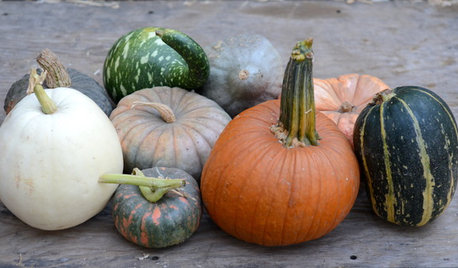
Ok, so question... I am growing a cross between Yokohama and Seminole squash this year, and these vines have been prolific, yielding a large amount of really large sized fruit (significantly larger than either parent's fruit). I am baking one today, and if is tasty, I am hoping that I can save some seeds from some of the better, larger fruit. Now, this year, all I have in my back garden are these hybrids, so the hybrids have been pollinated by like plants. Will these seeds be viable? And will they possibly give me something similar next year?

Comments (5)

  • 10 years ago

    Any time you are saving seeds of hybrids, if you have not isolated them from other squash plants (even wild cucurbits like the ones that grow here), they could be cross-pollinated by anything growing within whatever distance bees and other pollinators fly. Genetically, your Yokohama x Seminole squash seeds from this year's accidentally-created hybrid plants (from last year's cross-pollination) could give you anything because it is likely that your new hybrid (let's call it Yokominole, lol) is not yet stable.

    This instability means that saved seeds from this year's fruit could give you anything. You might get plants next year that produce fruit just like this year's plants. That would be just about the best-case scenario as it would indicate some genetic stability already. Or you might not. You might get even better fruit next year. You might get worse fruits. It just depends on how the genetics of the two combine.

    What you normally have to do when you get a cross-pollinated plant that is, in essence, its own hybrid, is that you will have to grow out multiple generations, always selecting for the qualities you want to perpetuate, until you get a seed that reliably gives you more or less identical plants every year. I don't know how long it takes to stabilize anything in the cucurbit family, but in the tomato family it can take as long as 7 or more generations, though sometimes it takes less.

    Let's say that the plants you grew this year, which resulted from a natural cross between your Yokohama and your Seminole, are the F-1 generation of your Yokominole. When you save seeds from the F-1 generation this year, and plant them next year, the plants they produce will be your F-2 generation. If you see a lot of stability in next year's F-2 line and fruit, that will be a really good sign that your Yokominole may be easy to stabilize. But, you still will need to grow several more generations before you can be sure it is stabilized. To protect whatever stability your Yokominole already has now, you should label each year's seeds with whatever generation it is: F-1, F-2, F-3 etc. as well as the date of the year in which it was saved. Then, never plant all of one generation's seeds in one year. That way, if a subsequent year's generation expresses instability and expresses genetic characteristics you don't like, you still have some seeds left from the previous generation that presumably had genetic characteristics you liked. You then can go back and sow some of the seeds from the previous generation to see if you get the plants and fruit you want.

    Sometimes growing out saved seeds from a cross will give you exactly what you want in future generations, and sometimes you have to do a delicate dance of 'one step forward, two steps back' while you weed out the plants that don't produce good fruit or show vigor while at the same time saving seeds from the ones that do. That's how you improve a cross and stabilize it.

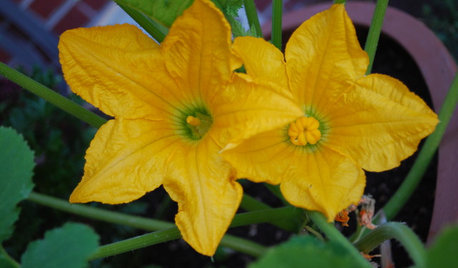
    The only way to keep your squash plants from being accidentally pollinated by any random squash within a mile or two (the distance is an exaggeration, but you get the idea) of you that the bees might have visited, would be to bag the blossoms before they open, then open the bag and hand pollinate, and then close the bag or tape the flower shut, to ensure your flowers were pollinated only from the plants you want pollinating them. I think that for most winter squash an isolation distance of about 1/4 mile is adequate. Having said that, I know there are native squashes right here on our own property that could cross-pollinate my winter squash, although I don't believe they ever have. I generally remove those native squash plants on our property when I see them if I have garden squash plants in bloom. To be sure that yours aren't accidentally cross-pollinated, you'd need to get lucky and not have any native cucurbits growing within 1/4 miles of you in any direction, and also you'd need to have neighbors who aren't growing winter squash within 1/4 miles of yours and in bloom at the same time. Of course, maybe you have native pollinators who are perfectly happy with the plants at your place and don't venture far and don't bring back a lot of other pollen from other areas, but there's no way to be sure of that.


  • 10 years ago

    Thanks for the info Dawn. As of right now, I really do not know of anyone else in the neighbourhood who is growing squash plants. I guess I will save some seed this fall and see if I get something reasonable out of my Yokominole plants next year! These dudes really have been impressive.

  • 10 years ago

    If they are really impressive, once you get them stabilized, you'll might want to give them a flashier name or a more special name than Yokominole. You know, you could call it Frinkle's Special Winter Squash or something. Semihama? Too close to Benihana? Yokonole? Hamanole? I could go on all day. See, it is not just an impressive squash but also great entertainment.

  • 10 years ago
    last modified: 10 years ago

    Hahah.. yeah, I talked to the wife about names, Semihama and Yokonole sounded nifty to us. We shall see how they taste and how the seeds propagate.

  • 10 years ago

    It will likely take a couple of years to stabilize. But there's no reason not to do it, if you'd like to invest the time. Growing a fair number of plants, each generation, will give you a better selection from which to choose your breeders. Hand pollination would definitely speed up the process, by a good deal.

    But given what you started out with, I suspect that EVERYTHING you get will be good.

    Here's a link on hand pollination.

    George
    Tahlequah, OK

    Hand Pollination of Squash