Software
Houzz Logo Print
lbinupland_zone_9

Concern for a nice tree

10 years ago

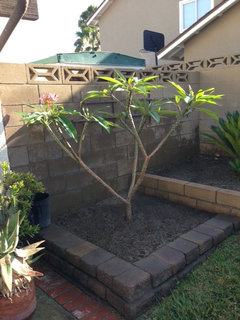
This plumeria is from a cutting, it's about five years old, six feet tall, trunk diameter is 3 1/2" and has seventeen branches, flowers are pink. However, I only have had two inflows this season. It's been in the ground for about a year and a half, couldn't find a pot big enough.


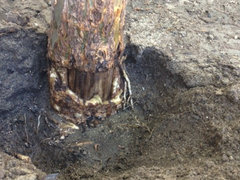
Anyway, the problem. I noticed a slight lean to the right and am gradually pulling it vertical. I cultivated around the base to make it easier and noticed the bark is gone on one side, below ground level. I have been putting pressure incrementally for the last six weeks and now it's about one degree LEFT of vertical.


So, what's to be done? It's a very nice tree, the conformation is very even, and it's a fairly fast grower. I'd hate to lose her. Is there a method for dealing with this problem? Some kind of patch?


Thanks for looking. Any suggestions welcome.

El Bee

Comments (31)

  • 10 years ago

    Wow, you people jump in with multiple advice on the most mundane little problem, but in this case, I really could use a suggestion or two, since I could lose a beautiful tree, if left unchecked. Thus far, the silence is deafening and I am disappointed.

  • 10 years ago

    don't despair...perhaps post a photo so those "in the know" will provide suggestions. I'm a newbie to plumeria..so I can't help much...like Trump says.."useless" LOL

  • 10 years ago

    What's to be done about:

    1) the lean?

    2) the loss of 'bark'?

    Not understanding. When you say 'bark' is gone, is it rotting?

  • 10 years ago

    I have addressed the lean, it was a symptom. I have a rope holding it vertical. I discovered while digging soil around the base, that the bark is completely gone on the side opposite the "lean". When I say there is no bark on half the trunk, below ground level, I mean you can see the wood. This means no nutrients feeding from the root system to the branches and leaves.


    So, is this progressive? By spring, maybe 3/4 of the trunk could be bare wood? I don't know how long this has been going on since I don't normally cultivate close to the base? The term "girding" comes to mind and that is total death to any tree. This does not appear to be "rot". The exposed wood on the side looks dry, comparatively, but since it is below ground level I suppose it is damp when I water?


    I'm just wondering if I might use some type of plaster as when they fill a hollowed branch, something like that? But, whether anything would control the progression of the loss of bark, I have never heard of it, if there is? Possibly, half a circumference of intact healthy bark is "enough" for needed nutrients, if it does not progress?


    Sorry if I was not sufficiently clear in my initial post. LB

  • 10 years ago

    Before you can address the loss of bark, shouldn't we figure out the cause? If it's not rot, does it look like something ate it? I know plumeria don't have much in the way of pests, but perhaps there is something in the soil dining on your tree?

  • 10 years ago
    last modified: 10 years ago

    I'd love to know the reason. No animals, a rogue cat would like to use it but I discourage him. No other tracks, no insects, the planter is isolated and elevated. If it's some disease, it's not apparent, to me? It kind of looks like "healed" frost damage, right down to the "bone" where I can see the little holes in the wood, if you know what I mean? I have another tree that was half exposed, and the whole side had severe frost damage. That was three years ago and the trunk is healed but it's bare wood where I had to cut it back. That's all I know?

    edit: happened to think, if, big IF the ground was frozen, it might cause something like this? Neat trick though, ground frozen, no other damage above ground? Unlikely?

  • 10 years ago

    I would think a plumeria in a container in zone 9 would be very susceptible to freeze damage.

  • 10 years ago

  • 10 years ago

    Photo was taken almost two years ago when it was first put in the ground. Frost damage here is always the uppermost exposed, the tips, which I then have to cut back until white sap runs. This particular tree has never been pruned and is about two foot taller right now. We have had no frost the previous two years, but you never know? I almost lost my staghorn about five years ago and it is under eaves. So, yes frost damage is always possible here but in this case, not very likely. LB

  • 10 years ago

    I was intimidated initially on posting photos, never had any luck but (apparently) they have changed things for the better. I may go out and dig around the base and take a pic since it seems a difficult concept to describe and to visualize?

  • 10 years ago

  • 10 years ago

    Here you can see that it is not rotting. Rather, it looks like the bark is migrating around the exposed area. I squirted it to get the dirt out of the way, but you can clearly see the bare wood, and all of it is below ground level.

  • 10 years ago

  • 10 years ago

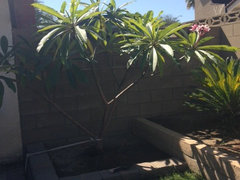
    This pic taken just before noon today. You can see how I am holding the trunk vertical. It was leaning to the right, which got my attention. (yes, I need to mow)

  • 10 years ago

    I notice that the one branch where you tied that side...you might want to stake for support ..else, potential breakage/splitting all the way down. Or you can cut that one and you have another plant for rooting..make sure you leave at least 12" from the main trunk. I've seen other plumies where after cutting, plumie actually will have healthier new stems. Your soil appear to have too much regular soil(?)...water accumulation & clogging enemies of plumies...you can add orchid barks, cactus amendments to lighten up the existing soil.

  • 10 years ago

    Yes, this is planted in our local soil, no potting soil, at all. I have three others, same cutting and about the same size, in pots. This particular plant has very stout branches. I'm not very concerned about breakage.

  • 10 years ago

  • 10 years ago

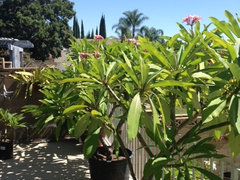
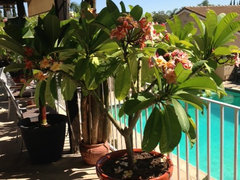
    These are all the same age, pruned from the same plant. Don't ask me the name, I couldn't tell you. Anyway, I don't need any more, but I still would hate to lose the one I put in the ground. LB

  • 10 years ago

  • 10 years ago

    This is a jungle Jack, all I know? But it has been going crazy all summer with the blooms.

  • 10 years ago

  • 10 years ago

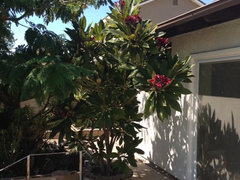
    This tree is in the ground, although it might look like a container. It froze back to within six inches of the ground about ten years ago.

  • 10 years ago

    Wondering where you live. Im in z9a Houston TX area and it didn't take much of a winter to kill a plumie that looked pretty close to the one in your last pic. I thought with a 3.5" dia. trunk, no way I could lose it. Yeah, right I did. Since then all potted and overwintered in garage. As to your pic where bark seemed to have peeled off, Ive never have had that happen to my plumies. But I do see something similar with my young oaks or maples and I've learned it is stress from sudden temperature fluctuations. Perhaps same for plumies? I've lost a couple of young ones as the bare area was an entry way for insects, but I also have many that survived and the bark grew around and sealed the exposed area. You might be disappointed witih this answer but is all I know and I've grown plumies for years

    lbinupland_zone_9 thanked bossyvossy
  • 10 years ago

    Not at all disappointed, thank you for your input Bossy. Yes, I can easily see the open area as entry point for pests. I don't see any pests, <shrug>

    As far as temperature fluctuations; you realize I have something like twenty-five mature plumarias in pots and "they" say that those in pots are far more likely injured from freezing temperatures. As I said above, no frost here the last two years, no plumaria damage...knock on wood! I also have been cultivating Plumaria for quite a while. But this is something new for me, and why I am beating the bushes for answers.

    I'm about 35 miles east of Los Angeles, Upland, CA elevation 1600' between Claremont and Rancho Cucamonga..

  • PRO
    10 years ago

    My initial take is some sort of damage such as sunburn or physical damage as the initial cause. If it was covered in the ground I would have expected to see some sort of root growth in the area. At this point I would clean it up as best as possible, maybe even give it a spray of fungicide, let it dry and then use a brown or tan caulk to close up the wound.


    In the old forum format an unanswered post stays up top. Sorry for not seeing your post until tonight. Life goes on.

  • 10 years ago

    Good advice, I'll do it. Thanks. El Bee

  • 10 years ago

    Looks mechanical to me. I have a citrus tree I got too close to with the weed wackier a couple of years ago, and it had a mark now that looks almost identical to that one about three months after the initial wounding. Today, those rounded edges have grown until they have closed that gap, and all that is left is a swollen pucker mark. I've never done that with a plumeria - so they might heal differently, but it really does look like a cut caused a while back by some sort of garden tool to me.

  • 10 years ago

    Hi LB,

    Sorry, there is no advice from me as I am a learner. I want to tell you that I like all your plumerias. They're looking great!!!

    lbinupland_zone_9 thanked plumerias_lover
  • 10 years ago

    "but it really does look like a cut caused a while back by some sort of garden tool to me."

    Well, I can see why you might say that? I might discuss it with my gardener, but the more you talk, the less English he understands; if you know what I mean? LB

  • 10 years ago

    Yeah, it looks mechanical to me, too - look at how straight the top part of it is. I'm in Claremont, so I agree it's not frost damage - the past winter was pretty mellow in terms of temperature. I think kms's advice is great - that's what I would do.

    lbinupland_zone_9 thanked daogirl - SoCal Zone 9
Sponsored