Software
Houzz Logo Print
fireduck

Fertilize in Fall....

10 years ago

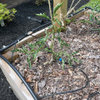
I am learning about organic (non-synthetic) fertilizing...and I understand that the organic/natural types must break down in the soil before useable to the plants. Should I till in some Tomato Tone this Fall, so it can break down over winter? This is for my new raised bed. thanks, Ed of Somis

Comments (19)

  • 10 years ago
    last modified: 10 years ago

    thanks dig...I was hoping for your comment. Along with good topsoil... I actually tilled in bags and bags of aged steer, chicken manure, and compost. As usual...I am just over-thinking it and second-guessing myself.

  • 10 years ago

    If you want to go the organic rout then adding lots of organic matter is the best start, which you have already done.

    I am not an organic gardener so I sprinkle some synthetic time release granular fertilizer few months before plant out and then cover the beds to prevent wash down by rain water. I also do add steer manure in the spring.

    I think that newly built raised beds take a couple of season to get established.


    Sey

  • 10 years ago

    gotcha sey! I am not really an organic guy...just trying to get the herd going in the right direction. I think it will work out fine for next season. Rumors of "el nino" rain event for SoCal this year. However, 10-12 inches a year is all we average.

  • 10 years ago

    Ok, fireduck.

    10 - 12" annual rainfall is not much. We get about 50". Maybe more. That was the main reason for me to build raised beds. Also why I cover them with plastic.

    Good to get the herd going. Any soil with organic matter has them.

    Sey


  • 10 years ago

    Just for the record, Tomato Tone comes inoculated with beneficial bacteria.

    fireduck thanked Peter (6b SE NY)
  • 10 years ago

    That is good to know, Peter. Thnx

    Sey

  • 10 years ago
    last modified: 10 years ago

    I use Tomato Tone (3-4-6) every
    year. In spring.

    The product has a "How to use" section in manufacturer's Website.

    Sey likes
    for sure the 3-4-6 thing. Me too actually.

    The
    fertilizer has excellent reviews in Amazon (4 ½ stars.)

    Useful reading, imo.

    Btw, right
    now in Amazon, the product is 64% off (from $15.99 to $5.70 !)

  • 10 years ago

    Btw, right
    now in Amazon, the product is 64% off (from $15.99 to $5.70 !)

    -------Daniel--------

    Sounds good. What is the quantity , in lbs ?

    Yeah, 3-4-6 ratio seems to be best for tomatoes.


    Sey

  • 10 years ago
    last modified: 10 years ago

    4 lb. bag for $ 5.70.

    If the
    price is right, sometimes I buy large bags, such as this 18 lbs. ($ 26.85)

  • 10 years ago

    I would invest next spring in good quality mycorrhizae for sure. Have been following Phil Nauta, Smiling gardener and love his approach. It has been one stop shop for me too.Smiling Gardener. This year I played with other microbes from Microbe life and it is coming back next year for sure Microbe life

  • 10 years ago
    last modified: 10 years ago

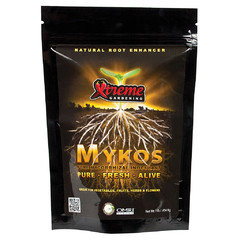
    I used Mykos
    2 years
    ago.

    I’m sure
    it was useful for my plants, but the product is soooo expensive… $ 10 / lb !!! Currently
    on sale in Amazon: 23% off - from
    $31.16 to $23.94.

    [Picture's copyright: Amazon]

    Linda, nice blog (Phil), tx.

    Unfortunately, in my computer Microbe life link does NOT work.

    I think the site is down.

  • 10 years ago

    hmm, site works for me but you can maybe google their products? They have sample size avail for trying. Photosynthesis plus

  • 10 years ago

    I believe if you amend your soil with organic matter and do not overly use synthesized pesticides then your soil already has the needed micro beings (microbes) . My soil is healthy when I find worms and mushrooms growing in it.

  • 10 years ago

    Linda, the site NOW works.

    Tx again for the links.

    Sey, "worms and mushrooms"... I want that !

  • 10 years ago

    Daniel, did you order Tomato Tone ?

    It seems to have good ration of NPK ( 3-4-6 ) for tomatoes. That is almost 1-1-2. Tomatoes seem to benefit from more K.

  • 10 years ago
    last modified: 10 years ago

    You can get free mycorrhiza by making fungal dominated compost or mulch with woodchips (not homedepot woodchips imo). Whenever it rains my garden have mushroom popping up from the woodchip
    mulching, I think it's a good indication, I even notice their root
    system sometimes.

    Warning: long rant.

    I think it's insane to be buying mycorrhizal products, they're so expensive and you don't know how viable it is when you finally get it. I am a fan of John Kohlar, but when I started gardening I use his method, which basically means spending several thousand dollars a year buying all kind of organic products. Rock dust, biochar, worm casting, Sea90, and yes... Boogie Brew. Everyday I'm out there brewing the compost tea and not mulching, so the soil is always dry and needs watering. Yeah I think they all have their benefits, if you can afford them, and it takes a lot of working applying those things. Comparing to just growing companion plants, growing comfrey, mulching and adding compost. Patrick Dolan's YouTube channel OneYardRevolution documented this. I followed his lead and basically dump my worm bins into the raised bed too. I basically converted to buying wholesale mushroom compost by local producer and mulching with free woodchips/leaves, and sometimes free horse manure compost.

    Some people may violently disagree with this, but I honestly feel that when I bought 25lbs bulk of synthetic fertilizers to grow hydroponically, which I'm growing herbs/vegs kratky method using my indoor lights or next to the window, the fertilizers are going to last me probably 3+ years, is less energy consuming than buying all these organic products that cost a lot of money and waste a lot of plastics.

    I swear I could have bought a used Toyota if I didn't waste all my money on those organic products when I started this hobby.

  • 10 years ago
    last modified: 10 years ago

    I am of the same opinion as John. I am not an organic gardener but use as much organic matter that I can get at reasonable costs, like compost , manure. And I use synthetic fertilizers because its cost effectiveness. And Yeah, I do get a lot of mushrooms popping in my garden beds.

    IMO organic practice, when it comes to fertilizing, is more of a matter of concern for the environment not so much for the soil, plants relating to the health issues.

    Sey

    PS: This fall/winter/spring I will fertilize based on the outcome of the soil test that I am going to have done, rather than shooting in the dark.

  • 10 years ago

    Fertilize Or Not Fertilize !

    My soil samples are sent for test/analysis.

    This will be my first time ever to act based on the test results, rather than old fashion guts feeling and reading my plants lips. I know that Nitrogen is the one that is depleted / leached readily. So it has to be applied on regular basis.But P, Ca and some other can stick around for a long time. That is no wonder that most soil tests would indicated more than needed P .

    CEC ? ! ? what is that ?

    Let me give you a definition from the web:

    ""Cation ( cat -ion) exchange capacity (CEC) is the total capacity of a soil to hold exchangeable cations.
    CEC is an inherent soil characteristic and is difficult to alter
    significantly. It influences the soil's ability to hold onto essential
    nutrients and provides a buffer against soil acidification.""

    Interesting recent education for me about soil chemistry. Lets explore it a little more.


    ""Soils are composed of a mixture of sand, silt, clay and organic
    matter. Both the clay and organic matter particles have a net negative
    charge. Thus, these negatively-charged soil particles will attract and
    hold positively-charged particles, much like the opposite poles of a
    magnet attract each other. By the same token, they will repel other
    negatively-charged particles, as like poles of a magnet repel each
    other.""

    Another quote

    "Forms of Nutrient Elements in Soils
    Elements having an electrical charge are called
    ions. Positively-charged ions are cations; negatively-charged ones
    are anions.


    The most common soil cations (including their chemical symbol and
    charge) are: calcium (Ca++), magnesium (Mg++), potassium (K+),
    ammonium (NH4+), hydrogen (H+) and sodium (Na+). Notice that some
    cations have more than one positive charge.


    Common soil anions (with their symbol and charge) include: chlorine
    (Cl-), nitrate (NO3-), sulfate (S04=) and phosphate (PO43-). Note
    also that anions can have more than one negative charge and may be
    combinations of elements with oxygen."

    OK ! Enough for me already.What I get out of this is that some soils can hold onto certain nutrient much longer than other : CLAY SOIL + ORGANIC MATTER.

    Sey


Sponsored
Peabody Landscape Group
Average rating: 3.5 out of 5 stars8 Reviews
Columbus' Reliable Landscape Design & Contracting