Software
Houzz Logo Print
hzdeleted_24200779

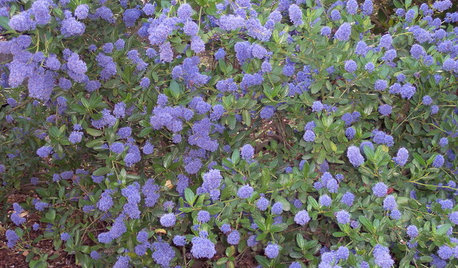
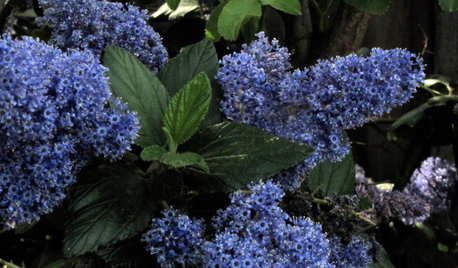
ceanothus thyrsiflorus as a climber?

10 years ago

Could you train a ceanothus thyrsiflorus as a climber? Has anyone done so?thanks, bart

Comments (4)

  • 10 years ago

    Depends on exactly what you mean by that. The shrub has no ability to support itself in the way that other climbers do - no thorns, no vining stems, no areal rootlets or holdfasts - so the grower would need to provide some form of attachment if attempting to train to climb a trellis or pergola, etc. I would think it far easier to just plant close by and prune to shape as if it were climbing.........Relatively easy to espalier against a wall, though. Or as a freestanding espalier.

    I've seen this shrub grown free-form (natural and unpruned), trimmed as a low hedge, sculpted, espaliered and trained as a small tree but never as a climber.

  • 10 years ago
    last modified: 10 years ago

    In Britain Ceanothus are classic wall shrubs, as are various other kinds that might like it a little warmer in summer - and with less direct exposure to frigid winds in winter. In the wild C. thyrsiflorus varies from a low, wind-sheared plant at the beach to a 20' tree in sheltered canyons - if you are thinking of training one of these against a building you will need a fairly big surface.

    Are you in USDA 8? If the shrub is still there the plantings of the Center for Urban Horticulture in Seattle have one that is quite broad relative to its height (40' wide is known from the habitat); some years ago the former garden of the Colvos Creek Nursery on Vashon Island had another example that was a definite small tree, with an elevated crown maybe 15' tall.

    If you aren't at least USDA 8 your place may be too cold for this plant, even on a wall.

  • 10 years ago

    You could use a tuteur-type of structure and have branches spilling out from the structure.

    Las Pilitas says of C. thyrsiflorus: " the plants really want to be in San Francisco, Santa Monica or Oceanside where they can be stunning, instead of dead."

  • 10 years ago
    last modified: 10 years ago

    They are talking about coastal California vs. the interior, where it is too hot and dry. The species grows natively into Oregon, and can be gotten to live in USDA 8 parts of Washington (and BC) long enough to form large specimens, even though damage and losses during the coldest winters are likely. The same can be said of most blue-flowered, evergreen kinds of ceanothus that are in general commerce - the hardier, often white-flowered kinds that grow farther inland (including here in the north, and elsewhere in western mountains) are not prevalent in decorative plantings and retail outlets.

    If bart happens to be asking about 'Victoria' (perhaps the same as 'Skylark', correctly called by that name) this is actually a hybrid plant and not a pure form of C. thyrsiflorus - as shown by its morphology - that has become a sort of standard item on the local market. It has a superior, closer and stronger habit than that species, with denser flower heads of more assertive coloring than is often the case with blue-blossom. I had both planted near one another on Camano Island, the blue-blossom grew rankly and broke in the snow, got overwhelmed by Himalayan blackberries (which easily grew up onto its now bent-down top) and died - without ever having produced a memorable floral display. The "Victoria" on the other hand soon became a feature, is still present.