Software
Houzz Logo Print
providencesparrow

monarch nectar needs in fall migration

10 years ago

Two weeks ago I was at our acreage (in central ok) and was blessed to come across a monarch roost in the evening hours. There was probably 50-100 in a five acre tree/ creek bed area. ( I did report my sighting btw.) We were wondering though- what in the world do the monarchs have for a food source in this type of rural environment where most is dry pastureland and freshly sprouted winter wheat? We plan on moving to this land soon and will plant many flower sources eventually but lots of the acreage will remain pasture for our livestock. What can we do to increase nectar sources in this pasture grazing area? We talked about having areas that we leave unmowed and allow native weeds (ie flowers) to grow. We will need to be careful in severe drought for this to become a firehazard. Also this is grazing area. I know some of you live on acreage like Dawn and others. What do y'all do to help increase nectar sources for Monarchs and others like bees?

thank you! Christina

Comments (4)

  • 10 years ago

    Christina,

    I have sown wildflower blends on part of our acreage and in most years, between the wildflowers and the cultivated flowers in the garden and on the vines, there's plenty for the monarchs and all the other butterflies and moths to feed on during their fall migration.

    I use wildflower seed mixes from Wildseed Farms, which I've linked below. Read the details on each mix carefully, as some of them perform better from an autumn or early winter sowing and others need to be sown in February and March. I have had the best results when I actually take the time to follow Wildseed Farm's planting recommendations.

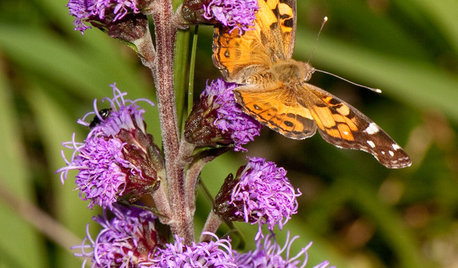
    This fall, these are the wildflowers that the monarchs and other butterflies and moths have been feeding upon here on our land: blazing star (liatris), goldenrod, asters (the native ones with small white or very, very pale blue flowers), frogfruit, coreopsis, helenium, native sunflowers, blue sage (Salvia azurea), verbena bonariensis, Gregg's mist and crownbeard daisy. There may be others, but those are the main ones I've seen in bloom here, where we had almost no rain from mid-July through last week.

    In the cultivated garden, these flowers have been in bloom and feeding the butterflies and moths for months: trumpet creeper vines, morning glories, cypress vine, four o'clocks, hardy hibiscus, zinnias (many varieties in various heights, types of flowers and colors), marigolds, salvia farinacea, autumn sage, red hot poker, moss rose, Laura Bush petunias (one of the toughest and most resilient plants I grow), and tall verbena (verbena bonariensis). The tall verbena probably is more attractive to butterflies than any other single plant I grow, though zinnias attract almost as many. You might have noticed verbena bonariensis is on both lists, and that's because I have it growing both within the culivated garden and out in the pastures. It reseeds readily, but I consider that a blessing because it survives in dry pastures when little else does, making it a very reliable source of food for butterflies.

    For the butterflies that try to overwinter, I always leave henbit wherever it springs up because sometimes it is in bloom as early as December and then blooms on and off through at least April. It is a butterfly magnet during a time when there is very little for them otherwise.

    Within my veggie garden (which you know is a mix of veggies, flowers, herbs and fruit), I try to always have some dianthus, pansies and snapdragons in there all winter long as well.

    In early spring, those winter bloomers and the henbit generally keep the butterflies and moths alive until the early spring bloomers, which include larkspur and poppies (both from fall/early winter sowings of seeds) and the pink evening primrose burst into bloom. I have nothing good to say about pink evening primrose and hate it in the garden, but love it in the fields. It is incredibly aggressive and invasive, but it is tough and blooms like mad, so I yank it out of the proper cultivated garden when it pops up there and let it roam through the fields otherwise.

    Sometimes it surprises me to see butterflies and/or moths out in the wintertime, but the overwintering ones do come out on sunny winter days, even if it has snowed just a day or two below. I feed them in various ways during those times, especially if the snow and the accompanying cold tempertures have bitten back and damaged the few winter flowers that are in bloom. I have a butterfly feeder and sometimes I put out nectar in that, or in hummingbird feeders with the bee guards removed (the bee need help to get through the winter too). Sometimes I cut fruit in half and put it out on logs or stumps for them, or fruit jelly in a dish. I always keep a flat, shallow pan filled with pebbles and just a little water (so they can sip, but not drown) or make mud puddles in the gravel driveway for them.

    When I make my rounds in the mornings, feeding the chickens, etc., I just make sure there's either flowers in bloom or some sort of substitute from us out there for the butterflies and hummingbirds.

    Oh, and one more thing....congrats on spotting the roosting butterflies! We had them here by the thousands one year, simply covering a 40' tall, dead elm tree, and I watched them that night until it was too dark to see them, and then got outside early the next morning to watch them slowly wake up and fly away. It was simply the most magical moment we've ever had since moving here. A special moment like that doesn't come along often so, when it happens, I stop whatever I am doing and savor every single second of it.

    Dawn


  • 10 years ago

    I forgot to link Wildseed Farms. Here's the link:


    Wildseed Farms

    I also failed to mention Datura, which I grow inside the cultivated garden for the moths. It blooms at night, often until November or December.

  • 10 years ago

    Dawn, thank you as always for your insight! I appreciate your advice! I've checked out the website you linked to. When you do plant those seed mixes do you have to till them into soil or do you scatter onto untilled soil? Just curious! Thanks for all the ideas!

  • 10 years ago

    Christina, You're welcome.

    When it comes to sowing the seed, well, it just depends. I get the best results when I do it just the way Wildseed Farms says to do it, so that does involve proper soil preparation. However, as I might have mentioned 1,000,001 times before, our entire property is a sloping creek hollow with very little level land (the house and outbuildings sit on what little more-or-less level land we have), so I have to be very careful about disturbing the soil or rain will erode it and carry away both the seeds and the soil.

    Much depends on which field I'm sowing the seed into. If it is clay, rototilling it doesn't do much good as it just gives me big clay clods, so we cut the grass as low to the ground as we can (I go over it with a weedeater so the grass is scalped back to the ground), I leave the grass clippings to decompose for 2-4 weeks and then broadcast the seed on top of the ground. Then, if I have any compost or even any finely chopped/shredded autumn leaves, I walk around and scatter it by hand on top of the seeds I sowed, hoping that little bit of organic matter will hold the seeds in place so they don't blow or wash away before they germinate. Then, I walk back and forth over the ground, pacing like a crazy person, using my feet to pack down the seed and organic matter to it all doesn't blow away or wash away.

    If I'm sowing in sandier soil, which we do have in a couple of selected locations, I do rototill, rake out the grass roots, sow the seed, rake it in and water it. I get better results when I do it this way.

    In recent years, though, I have often overseeded a pasture just by mowing it in autumn right after the first frost, and then broadcast sowing the seed without doing any soil prep or raking or anything. The timing of the planting seed can occur right after I mow, or two months later---whatever is best for the specific seed that I'm sowing. That is partly a deliberate choice as I already have wildflowers in those pastures and I don't want to disturb the roots of perennial forbs (or native grasses). Some of the flowers that perform best from this lazy way of sowing the seed include poppies of all kinds (except Iceland poppies), bluebonnets, cosmos, Mexican hat, pink evening primrose (I swear, it will grow in concrete), daturas, moss rose, gomphrena, and any sort of amaranth.

    Another downside to disturbing rural soil is that you will get about a billion plants you didn't want, and most of them will be lambs quarters or any of the several different kinds of pigweed that grow here. Oh, and lots of bindweed and croton. There must be 50 years worth of dormant, buried weed seed in the soil just waiting for someone to come along and dig, plow, rototill or otherwise disturb the soil. Just a fraction of a second of sunlight is all a lot of those dormant seeds need to induce germination. So, I'd rather take a chance on lower germination rates by broadcast sowing/overseeding without disturbing the soil than have to deal with all the dormant weed seeds I get if I disturb the soil. I get enough wildflowers in the fields to keep me happy and don't get too many of the weeds.

    On the other hand, some of my favorite areas of native milkweeds didn't have any native milkweed to speak of our first couple of years here. It was only after I disturbed the soil by rototilling it that several kinds of milkweed popped up "out of nowhere", so in that sense, I was glad I had disturbed that soil and awakened the sleeping seeds.

    Living on rural acreage is an adventure, for sure, and if you watch your land over the years, you'll see wildflowers ebb and flow. Some years you'll have wetter weather and wildflowers that you rarely see (because you're usually too dry for them) will pop up everywhere. Other years, it will be markedly drier and different wildflowers will dominate. It is really fascinating. This year we had a hairy blue cluster vine plant pop up in the middle of the pasture after all that spring rain. I was delighted to see it. I hadn't seen one here in almost ten years, so it was nice to know a seed had survived and sprouted after all that time.

    Rain lilies are another cool thing. The native ones pop up randomly after summer rain. I have several different areas where they pop up here and there in the average year, but this year was so wet that some popped up in areas where I never have seen them before. That was a pleasant surprise.

    Dawn

Sponsored
Schlabach Woodworks
Average rating: 5 out of 5 stars21 Reviews
Franklin County's Reclaimed Wood Professionals