Software
Houzz Logo Print
monicabf

First fall/winter with Meyer lemon

Good morning y'all

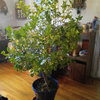
This is my first cold season with my little Meyer tree. I thought it was handling the transition into the house very well but within the last two days it's losing half of its leaves and one lemon (which was very good). What am I doing wrong? Or what could I be doing better. Thanks.

Comments (31)

  • 11 years ago

    Thanks so much John.

  • 11 years ago

    Your tree's situation is quite common when a tree is brought indoors, the condition your seeing is called Winter Leaf Drop (WLD). The answer to your tree's problem is to warm up the soil to around 70 F. Until you can get the soil's temperature up, block the sun from shinning on the leaves by placing a towel between the sun and the trees foliage. This should stop the leaf fall until you can correct the temperature of the root zone. - Silica

  • 11 years ago

    Silica,

    You are partly right; but with the Meyer lemon it is more about changing the light conditions. If you move it indoors into a room that is heated to 60 F or more, no further warming of the soil is necessary; quite the contrary, if the soil is warmer than the room temperature, you will likely get edema, which occurs when the plant's roots absorb more water than the leaves can transpire. In the opposite case, because of direct sunlight from a window, if the plant is warmer than the soil the only downside is the plant will not grow during this time.

  • 11 years ago

    Actually silica could be right, the air temp on the ground indoors by a window can get quite cold in winter. Especially if the pot blocks circulation.

  • 11 years ago
    last modified: 11 years ago

    Growing indoor Citrus for years, I have never had leaf drop if my trees were acclimated to come indoors before the temps drop into the 40'a at night..

    If you brought them in when they were use to being cool, the best thing to do was to put them into a cool sunny room until they adjust slowly.

    The reason why your leaves are dropping is because your roots are way to warm for the lack of sunlight they are getting as compared to outside..If you put heat under your pots in such little sunlight at this time of the year, you can say good bye to them...

    Monica, been there and done that..The best thing to do is leave the roots as is..If they are in a heated room, give them a very sunny window and rotate the trees once a week..If they are use to cooler conditions of if they are provides cool conditions, then you need not worry about direct sunlight until temps warm past the mid fifties again...

    Monica, for instance...I have two Orange trees that are so full and green in a very sunny window...They were use to being in cooler temps..I brought them in a week ago and the room has been kept cool..One day I accidently turned the heat on high and it was hot in there last week for just one day..Buy the next morning, I had several green leaves drop off just like that. I had to lower the temps and the leaf drop stop immediately...None have fallen off since..

    Mike

  • 11 years ago

    One person says too warm roots clause drop, the other says too cold causes drop.


    this is a prime example of a symptom that can be caused by more that one thing.


    can you post pics of your tree, where it's located, and if possible what temp the soil is?

  • 11 years ago

    I don't think too high of a temperature, such as 70 F is not, nor is never a problem. Here is a preview to an upcoming article in
    the California Rare Fruit Growers Magazine "Fruit Gardner" about the problem of Winter Leaf Drop (WLD).

    Many people seem to have problems
    during the winter with their citrus trees. There is a phenomenon that affects
    citrus grown in containers know as Winter Leaf Drop (WLD), which is what happens
    to the trees during storage in winter quarters. With the appearance of fall and
    a decrease in temperatures, the trees are brought indoors to protect them from
    freezes and frost damage. Unfortunately, the most common
    recommendation freely given for storing the trees indoors is as
    follows:

    "Give the tree as much light as
    possible, keep the medium moist, but never over water. Let the medium dry out
    more than in summer. Hold the tree at temperatures around 41 - 50 F (5 - 10
    C)." If you have followed this advice
    and have had no problems, you are lucky because most people who did so had
    problems. The trees start to shed leaves, leaf after leaf drops, and in spring,
    after the last frosts, when the trees are placed outside again, many trees have
    few or no leaves remaining on the limbs, twigs and branches. The cleavage is
    often between the leaf petiole and the leaf blade, the petiole remaining on the
    tree. Often the dropped leaf shows no chlorotic patterns or any other
    discoloration. Our first thought is that Winter Leaf Drop was influenced by
    low-light conditions during winter times. But even with extra illumination
    Winter Leaf Drop continued. Often, after bright, sunny mid winter days, more
    leaves are shed than after longer periods of less bright light. So we tried to
    find out what might be the cause of Winter Leaf Drop. We chose five lemon
    seedling trees, all about one foot high. The seedling trees were placed in
    different locations with different conditions:

    1. The first seedling tree was
    placed in a cool and bright location at a south facing window, at temperatures
    around 43 -50 F (6-10 C).

    2.The second seedling tree was
    placed in the same room, but at a north facing window.

    3. For the third tree, we chose a
    temperate room with temperatures around 59 F (15
    C).

    4. The fourth tree was placed at the
    same temperatures but on a south facing window.

    5. The last plant was placed in a
    warm room of 70 F (21 C) at a south facing window with extra illumination.

    All trees were irrigated as needed,
    just to keep the root ball moist, but not wet and not allowed to dry out. Only
    #5 was irrigated more regularly and fed evenly. After winter we found that #1
    shed nearly all its leaves. #2 dropped some leaves only, and the others had only
    lost some (fewer than five) or no leaves. We found light may NOT be the factor
    causing WLD, so we thought about temperature.After a long discussion with citrus
    experts in Florida and Israel, it was
    found that temperature will cause WLD. The temperature tables from the book
    Biology of Citrus show that citrus stops root growth and root function if the
    soil temperature drops below 54.5 F (12.5 C). Leaf activity will be reduced if
    the temperatures drops below 64 F (18 C). Leaf activity means the full process
    of water evaporation for leaf surface cooling, energy transformation
    (photosynthesis) and starch reduction for building amino acids and other
    compounds for forcing plant growth and cell development. Citrus controls its
    leaf temperature by evaporating water from the leaf blade. This reduces the
    temperature even during hot periods and will maintain the leaf temperature at
    the optimum levels between 77 F (25 C) and 95 F (35 C). But even on cold days
    the sunlight can heat up the leaf surface quite quickly to levels beyond the
    critical temperature of 54.5 F (12.5 C). Photosynthesis itself works better in
    cooler conditions with high light radiation than in the warmer periods of the
    day, so most of the photosynthetic starch production is done in the morning
    before noon and less water is evaporated than during the afternoon. Optimum
    leaf temperature for photosynthetic activity for most plants ranges from 50 F
    (10 C) up to 90 F (32 C). Photosynthesis itself needs carbon dioxide, light and
    water to transform the carbon dioxide into starch and oxygen. During the night
    the starch will be oxidized to provide energy needed for plant growth and
    development. The whole process is called breathing. Water and nutrients for the
    breathing process must be taken up by the roots. Oxygen and carbon dioxide will
    be delivered from the air around the plant, taken up by the leaf surface (and to
    some extent by other green parts of the plant) so leaf and root activity must
    run in a balance to provide the best plant performance for growth, flowering and
    fruit development. If a citrus tree is stored at temperatures below 54 F (12 C)
    but gathers enough light for photosynthesis, this balance is broken. The leaf
    activity requires water, which the roots cannot deliver. The tree stops
    evaporation and water will be unavailable for cooling the leaf surface on bright
    days, so the tree reduces active leaf area by leaf abscission. This seems to be
    the best theory about what causes WLD. Partial or complete defoliation was
    never critical if the root ball was kept a little more on the dry side, but if
    it was too wet, a quick root decline developed even if Poncirus trifoliata was
    used as a root stock. Most of the trees recovered quite will in spring (if the
    roots stayed healthy and a heavy bloom was set). But in recovering the whole
    canopy, often the trees used up much of their starch reserves in the stock,
    which did not fully refill during the short summer times. After some years,
    many trees suffered, growth was stopped and the trees died because all of the
    starch had been depleted.

    So what to do about WLD? Irrigation
    during wintertime seems to be a recommended practice to slow down WLD.
    Irrigation with warm water 77-90 F (25-32 C) supports the root function, even
    the water uptake, so WLD will slow down. Irrigation reduces the plant stress
    during cold winter time and is therefore recommended.Keeping the trees in a room with
    high humidity seems also to slow down WLD but cannot prevent it. Also a place
    more in the shade, to minimize leaf activity, slows down WLD. Keeping the root
    temperature below 64 F (18 C) but at or above 59 F (15 C) seems to work best for
    stopping WLD. The plant functions are minimized, but water and nutrient uptake
    for leaf activity is high enough to support the breathing process and leaf
    surface cooling by water evaporation.

    If WLD persist, force the root
    temperature HIGHER, around 70 F (21 C) this should stop leaf drop. Sometimes
    during the winter, fruits dry out on the tree and drop if the tree is stressed
    too much. So for fruit development and fruit maturity, higher temperatures and
    good leaf activity should be maintained. Irrigation with a nutrient solution
    should be done even in winter.

    Hope this helps -
    Silica

  • 11 years ago

    There are a lot of experts here, who collectively may not have much experience with Meyer lemons. The Meyer is a unique creation that responds differently to a lot of "common" conditions. If you want to know what to do with any other plant, ask the experts; if you want to know what to do with a Meyer, ask someone who knows a little bit about Meyers.

  • 11 years ago

    Silica - thank you. Lots of information to absorb. It's funny because my Eurekas are fine but it's the Meyer that's suffering. I'll have to keep reading that article until it sticks in my mind :-)

  • 11 years ago

    Thanks John! Much appreciated as always.

  • 11 years ago

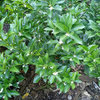
    Photos of my Eurekas that have been in the house for 3-4 weeks.

  • 11 years ago

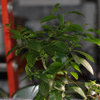
    Photos of my poor Meyer that went through about 15 leaf drops and one of my Eurekas that had a really tough summer (once was almost 4 ft tall with a dozen little lemons)

  • 11 years ago

    John has a lot of experience with Meyer, he also lives in a climate none of the rest of us do.


    try a few different things and see what works best for you.

  • 11 years ago
    last modified: 11 years ago

    Monica, your temps are to warm for so much less sunlight that they were use to..Your trees just may be adjusting...Give them time, as long as you don't over water at the critical time.)

    That article proved my point... I couldn't have worded it better...Thanks for that!

    Now if we could find one on what happens to our trees when she provide too much warmth with very little sunlight...I'll keep looking to prove my point on that one..

    My main first goal has always been to prevent leaf drop and continues to be day after day year after year...I have finally got it I think.....So far so good..

    One has to accept the fact that leaf drop is a natural occurrence growing citrus with just a bit of stress, and accept that, or one may never be happy growing citrus...

    That article showed we can control what happens, but then they admitted it was only a theory..You may end up taking years to discover how to stop it like I did, or by trying to take out what you can from an article like that and hope for the best)

    Pips comment was a good one)

    Monica, here is a great article for you...This hits it right on the head about having to keep citrus indoors in winter...Hope you like it>>>>>>>>) Here is an excerpt...

    http://www.gardena.com/ie/garden-life/garden-magazine/everything-you-have-always-wanted-to-know-about-citrus-trees-and-overwintering-them/

    Understanding the tree

    The species thrives in tropical and subtropical climates but can also cope with the Mediterranean climate which - in winter - can reach zero degrees or just below. This means the following when it comes to their care: Citrus trees need a lot of light in both summer and winter, just as they would get in their natural habitats.

    Light and temperature are mutually dependent since they act both together and alone to activate the tree's metabolism - that's what's tricky about caring for citrus trees in the winter. To put it plainly: The more light the tree receives (which triggers photosynthesis), the warmer it needs to be to achieve a sufficient metabolic rate. The more heat the tree receives (which speeds up its metabolic rate), the more light it requires in order to achieve sufficient photosynthesis.

    If the tree's metabolism is too fast during winter because the temperature is too high (e.g. if the plant is in a living room, in particular behind a curtain) and if it does not have sufficient light, it metabolises more substances than it can generate through photosynthesis - it consumes itself.


    On the topic of temperature:

    Leaves are often also shed because the trees are too wet and because there is a major temperature difference between the roots and leaves: "Hot head and cold feet" as gardeners call it - or indeed "hot feet and cold head". The reason for this is rarely noticed: As the room heats up, most of the tree warms up to the room temperature of, say, 21°C. But it is standing on a floor with a temperature of only 16 to 18 degrees. The colder roots work more slowly than the warm leaves; the tree becomes stressed and sheds its leaves. The remedy: Separate the base of the tree from the cold floor by placing it into a mobile stand or a pot with castors and sufficient ventilation underneath or place a thick polystyrene sheet between the floor and the pot to insulate the tree against the cold of the floor.

    The opposite situation: The tree might be standing on underfloor heating so the roots heat up to 20 to 28 degrees and the crown is only at 18 to 22 degrees. A similar thing happens here: The tree becomes stressed because now the roots are more active than the leaves. Result: The leaves are shed.

    Well, that's provided a lot of reading material for you! However: The better you understand citrus trees and how you can influence them during the overwintering phase, the better you can juggle the situation and develop the best overwintering strategy for your situation at home. And you can respond more quickly with alternative actions if problems do occur.


  • 11 years ago

    Thanks Mike. I have since gotten them a grow light. I brought them in several weeks ago due to all the rain (hurricane Joaquin) and I decided to keep them in since they were already in the screened porch with much less sun light even though the temps weren't bad.

    im hoping the grow lights will help.

  • 11 years ago

    From the two photos of your trees that you posted above it looks quite dark. The grow light should help, - Silica

  • 11 years ago

    I have 2 daylight 6500 k and one soft white 2700 k in the room and they are in a south facing window. It's been raining on and off all day so it's darker than usual. I only have the grow lights on the struggling lemons. Should I add grow lights to the 2 Eurekas that are doing well? Thanks for help:-)

  • 11 years ago

    Adding light can only help.

  • 11 years ago

    Nice choice of color temperature, but honestly intensity is more important. What's the wattage?

  • 11 years ago

    Better photos.......

  • 11 years ago

    Soft white - 2700 k = 20 w

    Day light - 6500 k = 23 w

    all CFL's

  • 11 years ago

    You have a Meyer; so don't spend too much time and stress reading about how to deal with "citrus". A Meyer is a unique creature; it has different light needs and even different NPK ratio needs than typical citrus. Your tree will be just fine, if you continue to treat it as you have been; it may lose many/most/all of its leaves; but it will soon replace them with new leaves. Don't overthink this or over stress about it. The classic mistake has been made; nothing to do about it now, only learn for the next time; the tree will be fine, and all the reading and analysis about citrus Winter Leaf Drop will not make it better sooner.

  • 11 years ago

    You're so right John. I have been stressing over them and my Hoyas! If I just ignore them they will probably do better than me hovering over them (I guess I'm just used to be being a helicopter mom - lol)

  • 11 years ago

    Monica, I have to say that you are not alone nor have been...There use to eb a time where I stressed over them all the time, even threw them all out in the snow just to start over again..lol

    What I do know is that if anyone knows Meyer Lemons it is John..He has a gift about Meyer's that most if no one I have met has...He has also helped me to relax about them and in fact..It never hurts to learn all you can about citrus as a whole, but then stressing is a different story...You are smart and doing a fine job..Never ignore them, just let go of worrying a little more) We are here for you...

  • 11 years ago

    Thanks Mike. I have to admit that the one Meyer lemon (that finally turned yellow once inside the house, that fell off with some leaves) tasted really good! I promise to be patient and observant and report any and all concerns/problems. I know I have an awesome group ready, willing and able to help me! :-)

  • 11 years ago

    Okay, so my two variagated eureka trees were doing really great with the transition into the house for winter

    but it's been raining for days, needless to say we haven't had much sunshine. I put the grow lights on them and NOW I'm getting leaf drop! What should I do??

  • 11 years ago

    What is the temperature of the Eureka's root zone? Remember the room temperature is not always the temperature of the soil. When you put the tree under light you raised the trees transpiration rate. Therefore, you have to also match the according soil temperature. - Silica

  • 11 years ago

    Thanks Silica. Makes sense.

  • 10 years ago

    Monica, how are your trees doing these days? Have the leaves stopped dropping?

    Mike)

  • 10 years ago

    One of my Eureka trees (the biggest) bit the dust. Yesterday I had to do the emergency transplant on another one and I had no leaf drop since, the third Eureka may shed a leaf a day (not really sure why). My Meyer only has 3 leaves left :-( I'm keeping my eyes on that one.

    I also have my Hoyas doing pretty well and I'm rooting a bunch of jade cuttings. So far so good. Thanks. How is your tree doing?