Software
Houzz Logo Print
stevesdigits

On this Day in 1990

Tim Berners-Lee -- published a more formal proposal on 12 November 1990 to build a "Hypertext project" called "WorldWideWeb" (one word) as a "web" of "hypertext documents" to be viewed by "browsers" using a client–server architecture.

A NeXT Computer was used by Berners-Lee as the world's first web server and also to write the first web browser, WorldWideWeb, in 1990. By Christmas 1990, Berners-Lee had built all the tools necessary for a working Web.[Wikipedia]


:o) Steve

Comments (27)

  • 10 years ago

    And we're all here today!

    :-)

    Skybird

  • 10 years ago

    OOOHHH, a Happy Birthday, Internet cake! Looks tasty! Isn't it amazing how technology has evolved in our lifetimes? I'm 51, my daughter is 18. Her listening to me describing my childhood is like like me listening to a great grandparent.

  • 10 years ago

    Willy Wonka & the Chocolate Factory 44 years old and the cast had a reunion, Lizbest1. Some of them were on the Today Show ...


    Forty Four Years!!!


    I was watching some of the clips and thinking about Jack Albertson and how he looked old in that movie, 44 years ago!. Of course, he's gone ... now.


    Anyway, I'm wondering where I'd seen Jack Albertson younger! I mean, other than Chico and the Man, which was about the same time as Willy Wonka. So, I checked Wikipedia and IMBD. Maybe this or that ... Ensign O'Toole with Dean Jones! Sure. You remember Dean Jones ... maybe? From Love Bug and Beethoven ... the St. Bernard?


    Shoot, you don't suppose I am remembering Jack Albertson from the Milton Berle Show, do you?


    olde Steve ...

  • 10 years ago

    And on this day ONE YEAR ago---it went down to 14 below zero!

    Yikes!

    Olde--but not as cold as last year,

    Skybird

  • 10 years ago

    Last year here, it was 13° above zero, Skybird!


    More interesting is this year. The PNW is making national news! A little to the west, some communities hit record high temperatures as this El Nino event swept over us! Rivers in western Washington are flooding!


    Our share?


    We had 3/100ths of an inch of rain. That's right, .003". With an overnight low of about 50°, no self-respecting snowflake is coming anywhere near us ...


    Steve

  • 10 years ago

    I'm pretty sure I saw WW at the movie theater in my home town when it first came out. Roald Dahl was an amazing writer, still love his books. And I thought I remembered Jack Albertson from some 70's western movies but didn't see them in his credits, must've been someone else.

    Much more comfortable temps this year. Don't look forward to sub zero temps at all, makes me with I lived in Hawaii just to think about it....

  • 10 years ago

    Hawaii is not that great, Liz. Well, it's nice to visit, but the novelty wears off before the end of week two. As much as I HATE, LOATHE and DESPISE cold and snow, I wouldn't ever move back there.

    Was it really -14 at this time last year? YIKES! I must have removed that one from my mind, no wonder last winter seemed to last forever. Even with the impending storm heading our way, I'm going to enjoy the heck out of the 60's this weekend!

  • 10 years ago

    My sister said the same thing, Zach. Her husband was stationed there in the Navy for 4 years or so, deployed 6 months out of the year so it was typically just her and their son. She got pretty sick of it. We actually thought about retiring over there but I was afraid I'd go island crazy really quick, there's just so much kayaking and hiking you can do. We looked at some coffee farms on the big island, you'd have to keep busy somehow!

  • 10 years ago
    last modified: 10 years ago

    On 15 November 1966, the last Gemini mission returned to Earth.

    The next manned space mission was Apollo 7, launched in October, 1968. That Earth-orbital test flight had the first live TV broadcast from an American spacecraft.

    Onboard Gemini 12 were Jim Lovell and Buzz Aldrin. Lovell was later the command module pilot of Apollo 8, the first Apollo mission to enter lunar orbit. Aldrin was the Lunar Module Pilot on Apollo 11, the first manned lunar landing in history, July 20, 1969.

    Apollo 12 was the second flight to take men to the Moon. It returned to Earth on November 24, 1969. The Moon has continued to circle the Earth and a lot has happened since.

    Steve

  • 10 years ago

    on this day in 1963,


    the tone dial telephone was introduced.


    http://www.corp.att.com/history/milestone_1963.html


    Notice that it took another 5 years for the * and # to show up. I know I was still renting phones in the mid-80's. Can't remember when I stopped spinning dials. How about you? If you are in your twenties, have you ever used a dial telephone?


    Steve

  • 10 years ago

    We had an old rotary dial phone when I was kid, probably until I was about 10-12 years old so that was somewhere between 1999-2001 when we finally got rid of it, I am 26 now.

    I remember we replaced it with a phone that had programmable speed dial... And I remember fighting with my brother over who got to program their friends numbers into it.

  • 10 years ago

    I actually remember having a party line as a child. Mostly remember because one lady also on that line was on the phone continuously--my mom complained about it all the time, never could make a call without repeatedly asking her to get off the line!

  • 10 years ago

    And I remember.....

    ......having a telephone with NO dial! When you picked up the receiver the operator said: Number Please!!! I was little! And I was never supposed to touch it--and "bother" the operator! I'm sure it was a party line--I don't think there WAS such a thing as a "private" line at that time! (Our "number" was 3 or 4 digits and a letter, something like 311J)

    From what I remember--it was a LONG time ago!--it looked something like this!

    http://thumbs2.ebaystatic.com/d/l225/m/mnboeyyJE8bkySWO77ti0WQ.jpg

    It could have looked like this, but I'm almost certain it was more like the first one!

    https://s-media-cache-ak0.pinimg.com/736x/3f/c6/dd/3fc6dd205b11bab4d3fd3baafc4c141c.jpg

    I think I was about 5 or 6 when we got our first (fancy) dial telephone--and I still wasn't supposed to touch it!

    Then, after I got married (fast forward!) my husband-at-the-time and I moved from Denver to Lancaster County Pennsylvania for a year, and the "upstairs flat" we rented had never had a PRIVATE line in it--and we were the talk of the whole (Pennsylvania Dutch) county when we said we wanted a private line! It took a couple months for them to get our private line put in! I think they were too much in shock to accomplish much of anything during those two months!!! And I basically didn't use the phone at all when it was a party line! You KNEW there was always somebody listening in! (And, get this! While we lived back there we lived in--wait for it--DENVER, Pennsylvania for a while!)

    After a year we moved back to (the real) Denver, and all things got back to NORMAL again!

    Skybird


  • 10 years ago

    You got me beat on that one, Skybird! The dial phone/party line was the first phone I remember. I don't know if things are always quicker now--it took over a month to get our land line here in Elizabeth! We're in a poor cell reception area or we would've just given up!

  • 10 years ago

    On this day, 41 years ago, Lucy was discovered in Ethiopia.


    It is commemorated by a Google Doodle. If you click the doodle, you can read a few newspaper articles written to inform us who Lucy might have been and how our thinking about her has changed first, right after the discovery, and since.


    Personally, I think that Lucy was just a cute neighbor ...


    My ancestors were probably on a different path.


    .


    .


    Steve

  • 10 years ago
    last modified: 10 years ago

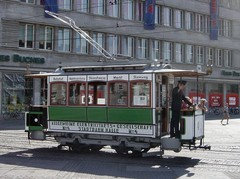
    On this day in 1832, the first streetcar line began service in New York City. These were horse-drawn cars even tho' one or two steam locomotives were pulling rail cars in the US by 1830.

    Can you imagine a steam-powered streetcar? They had them ... probably for only a short time. Talk about early automobiles scaring the horses!!!

    Electricity made it really happen for America's cities and streetcar lines. Public transportation played a huge role in urban development.

    If there is a book on the history of streetcars and streetcar lines in your local library, check that out. It was a little surprising to me to realize that horses or teams of horses were not lined up in stables every 50' in residential areas. Oh, there were horses but lots of those residential areas didn't even develop without the streetcar lines being extended into them. Workers walked down to the corner of their block, climbed on the streetcar, arriving on a regular schedule, and off they went. Shopping, recreation - even here in the rugged environment of the Wild West.

    Steve

  • 10 years ago
    last modified: 10 years ago

    When I think its real bad weather and real bad cold, there is this one to remind me now that it could always be a whole lot worse. I ran across this book 'The Children's Blizzard' last year at the library, fascinating read with unbelievable details describing how it formed. The awfulness of it still sticks in my head, it froze crops in Mexico, the thing was a monster with hurricane strength winds blowing blinding ice crystals that were finer than silica sand filling up houses through cracks under doors or keyholes and blinding people.

    We have old tracks of streetcars here in OKC, but they let it go to ruin so thats all that is left. I wish we still had them, when we were in San Antonio we rode them to different places. Very convenient, affordable and fun.
    The Children's Blizzard

  • 10 years ago
    last modified: 10 years ago

    Texasranger2, the longest reporting weather station in this area still has 4 days of record cold in mid-January, 1888.

    Included are two days at -30°f.

    Right now, this morning, it 15° and there is a lot of smoke in the air. We are right on the cusp of "unhealthy." That isn't just in the middle of the urban area but in the lower part of the Coeur d'Alene River Valley and at the south end of the lake.

    The lifting of the emergency exemptions for woodstove use, because of the 180,000 who were without power after the November 17th windstorm, will happen soon. Power is back on to almost 100% of the area. I don't think it will matter much because we should be getting a little more air movement early next week ... Despite Black Friday sales, weekends have just a little less car traffic on our roads. Koff!

    Steve

  • 10 years ago

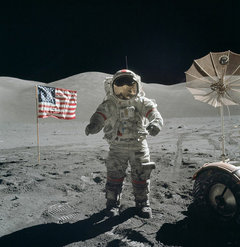
    On this day in 1972, Apollo 17's Eugene Cernan and Harrison Schmitt made the final moonwalk.


    Steve


  • 10 years ago

    Dog gone it! I missed it .... In 1957 on January third, the first electric watch hit the market!


    Within 12 years, the Hamilton Watch Company had decided that this watch was obsolete and had been replaced by quartz and transistor technology. LINK The transistor radios that were on the scene in the 1960's were really something!


    Imagine, an electric watch not until 1957 and a lunar landing 12 years later.


    Steve


  • 10 years ago

    ON THIS DAY 100 YEARS AGO!

    I was searching for the definition of a word (fastuess!) and in the process I ran into this site! Chronicling America, Historic American Newspapers, by the Library of Congress! Here are 1124 newspapers from 100 years ago today!

    http://chroniclingamerica.loc.gov/search/pages/results/?dateFilterType=range&date1=1/6/1916&date2=1/6/1916

    Here's The Washington Herald from January 6, 1916! Scroll to enlarge and then drag to whatever part you want to look at!

    http://chroniclingamerica.loc.gov/lccn/sn83045433/1916-01-06/ed-1/seq-1/#date1=1%2F6%2F1916&index=0&rows=20&sequence=0&date2=1%2F6%2F1916&words=&dateFilterType=range&page=1

    I think this kind of stuff is very cool! And it sort of looked to me like the kind of thing you might be interested in too, Digit!

    What fun!

    Skybird


  • 10 years ago
    last modified: 10 years ago

    Hey! Thank You, Skybird!

    No, I didn't know that this was online from the Smithsonian ...

    Interesting that the British government was still arguing about conscription. Here's what Wikipedia has to say many years after 6 January 1916: "The United Kingdom introduced conscription to full-time military service for the first time in January 1916 (the eighteenth month of World War I) ..."

    Steve

  • 10 years ago

    Yo Skybird! I used that source with a quick search for the name and community of my homesteading ancestors around here. You can't imagine what I found!


    June 28, 1901, The Colfax Gazette: the school superintendent noted the 8th grade graduating class one Elmer Hensley. That's my Great Uncle Elmer! He was my "penpal" right up until I was in high school! He was the grandson of the original Hensley pioneer to Idaho! I knew that 8th grade kid!


    Eighteen years and one day later (June 29, 1919), my mother was born in Lewiston, Idaho!


    ッ Steve

  • 10 years ago
    last modified: 10 years ago

    January 8, 1889: Herman Hollerith was issued a patent for a punch card machine.

    I wonder if Generation X/Millenial people know what punch cards are. Maybe they can think back to their parents paying utility bills. That's the last place I remember them.

    I'm beginning to feel like the guys chatting on park benches on summer afternoons. I remember when those punch cards first showed up in our mail boxes and for us to take home and return later to the school offices. We were told that the technology had been around forever. Wow, 19th century!! Still, it must have taken a post-WW2 nation for them to become widespread and common. I wonder if patents had anything to do with that. If so, what a whirlwind of technology when code for computer operating systems was made freely available so that programmers could create applications in the digital age!

    There were people who had serious psychological problems with the rate of change 100 years ago. We learn that from history. Technology contributed to a shattered economy in the 1930's. We just did not need so many hands on the hoes and the wheels. The whole world suffered as workers failed to find work. Some places, they picked up weapons and seized resources.

    Another search through those ancient newspapers indicates how my family rode that western expansion. Economic crisis wasn't confined to the 20th century. It's estimated that US unemployment jumped about 300% to 400% in the last decade of the 19th century. As they had done before, that family packed up and moved west. It looks like they got lucky on drawing numbers for "unallotted" property. You see, the Nez Perce weren't needing all of that land in Idaho. Seems that a large group of them had failed to peacefully make their move there in 1877. The result was not only a loss of Nez Perce life but their chance to live together in a common place.

    Steve

  • 10 years ago
    last modified: 10 years ago

    I don’t remember keypunch cards with utility bills! The first time I, personally, had anything to
    do with them was when I went along with my husband-at-the-time to keypunch his
    cards for him when he was taking programming—Fortran—in school. Then, when I was registering for some classes
    myself (early 70s!), at registration you went around to the different “tables”
    and picked up a “card” for whatever class you were registering for—and turned
    them in—with your money!—when you were done!
    My, my, my! How times
    change! But I had NO idea they went back
    to the 1800s! Wouldn’t it be interesting
    to see what the “original” “punch” cards looked like!

    Regarding the Western Expansion—and allotments!

    The Nez Perce were one of the first tribes forced into
    allotments. Allotments—The Dawes Act of
    1887—was the last really huge land-grab by the U. S. government.

    Alice Fletcher, who was made an Indian Agent and sent to the
    Nimi'ipuu [Nez Perce] reservation to enforce
    allotments said this of the Act when the Nez Perce tried to resist having their
    lands allotted: “The work must be done for them whether they approve or not.”

    The Dawes Act was one more attempt to “civilize” the
    American Indians, and while it was being debated, Congressman Henry Dawes,
    author of the act, once expressed his faith in the civilizing power of private
    property with the claim that to be civilized was to "wear civilized clothes...cultivate the ground, live in houses,
    ride in Studebaker wagons, send children to school, drink whiskey [and] own
    property."

    During allotments more than 70 percent of the Nez Perce
    Reservation land, as it had been defined by the Treaty of 1863, passed from
    tribal control, reducing the total acreage of the reservation from 756,960
    acres to 175,026 acres by 1895.

    Speaking of ALL the tribes:
    Between the passage of the Dawes Act in 1887 and its repeal under the
    New Deal in 1934, allotment continually deprived Indians of many of their
    remaining lands. The outright sale of
    "surplus" lands—parts of reservations left over after allotments had
    been assigned—and the subsequent sale of allotted
    lands themselves, shrunk the Indian estate from about 150 million acres before
    the Dawes Act to 104 million acres by 1890, to 77 million by 1900, and to 48
    million by 1934. By the time of its
    repeal, according to one study, two-thirds of the Indian population was
    "either completely landless or did not own enough land to make a
    subsistence living." [Much of the
    land allotted to individual Indians was the most barren land, without water,
    that no white people wanted, and after the allotments, many Indians, unable to
    survive on “their” land, were forced to sell it to buy food in order to keep
    from starving—for a time at least.
    Ultimately, they wound up with nothing—no land OR food!]

    From a website: The
    numbers of acres lost to allotment, how much money changed hands in the
    process, and the means by which Natives became citizen-owners of lands on which
    their ancestors had lived for centuries are vexed and dismal topics. These
    abuses happened because the federal government approved a law designed to
    extinguish entire cultures. Under the alibi of enlightened and charitable
    reeducation, the Dawes Act stipulated procedures for merging individualized
    Native subjects into the American body politic and erasing their histories
    while documenting the entire process in state-sponsored institutions of memory. [Most of the Tribal Peoples of North America
    trace their ancestries back for thousands of years, not hundreds of years, and
    archaeological records support this!]

    In resisting being forced onto the newly created Nez Perce
    reservation in 1876, Hinmatóowyalahtqit (Hin-mah-too-yah-lat-kekt)—Chief
    Joseph—made this statement:

    Perhaps you think the Creator sent you here to dispose
    of us as you see fit. If I thought you
    were sent by the Creator, I might be induced to think you had a right to
    dispose of me. Do not misunderstand me,
    but understand fully with reference to my affection for the land. I never said the land was mine to do with as
    I choose. The one who has a right to
    dispose of it is the one who has created it.
    I claim a right to live on my land and accord you the privilege to
    return to yours.

    Digit, since “your territory” is up in Nez Perce Country,
    and you’ve mentioned them around here a couple other times, If you’re
    interested, I could email you links to a couple video documentaries about
    them—their “run for freedom” in 1877.
    Let me know if you’d be interested.
    (And if you found any good historical newspapers with “Nez Perce news,”
    I’d be interested in links to them!)

    Skybird

  • 10 years ago

    It's a sad chapter, isn't it?


    Yes, that is how my mother's family came to be here. Ironically, my father's family was caught up in the ethnic cleansing thing, straggling along part way on a Trail of Tears. The patriarch of the Idaho folks was a union soldier who had a preferred position in the allocating of Nez Perce lands.


    The union veteran was 60 years old when he brought his three youngest children to Idaho. One was already married with three children of his own, my grandmother included. The old fellow and his wife lived another 30+ years so escaping those panics and depressions in the late 19th century turned out okay.


    Some of the Joseph band still live north of here on what historically was Salish, not Nez Perce, lands. It was not easy for the Salish-speaking people to make room for more on what they had been limited to.


    With 700 generations of North American heritage or just a few, my family members almost seem like leaves blown from trees and scattered by events. Mom and Dad arrived briefly in Carmel-by-the-Sea for my birth. And from that 122° West birthplace, they still found a location another degree further west in Oregon to raise my brother and me. After moving where we could see the Pacific Ocean from our front yard, the 4 of us resigned ourselves to moving east and north to live near that original west of the Rockies homestead.


    Steve