Software
Houzz Logo Print
dsyoung92

burning bush look alike

10 years ago
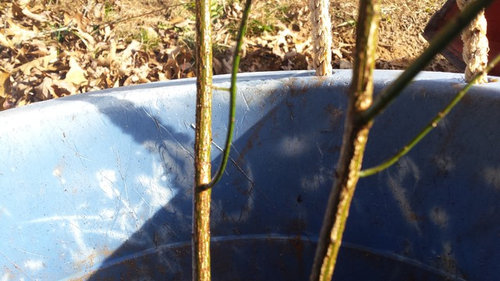
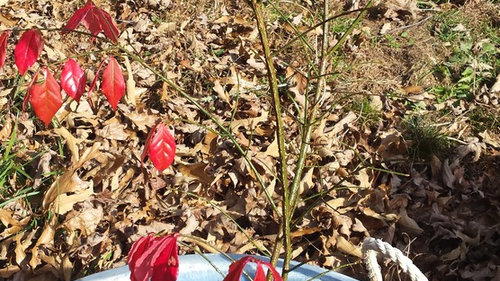
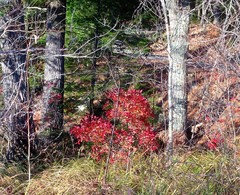
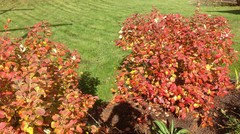
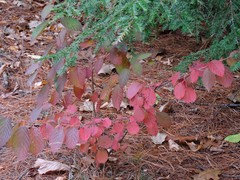
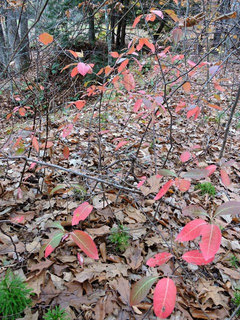
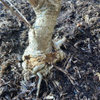
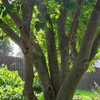
Found this little bush on the edge of the woods on my land in the mountains of NC zone 6B. It has the leaves and ridged bark on the stems like a burning bush, but can't imagine how one would get there, considering this was a tobacco field and there were no houses. Unless of course, they grow wild. Don't know that much about them. There is a much larger one that is beautiful but would be impossible to dig up. Do these pics give any idea of what it may be?


Comments (13)

  • 10 years ago

    "Unless of course, they grow wild" If you Google the words 'Burning Bush' and 'Invasive' you will see that they do indeed grow wild, or rather go wild, and, despite their beauty, they are bad news for your woods.

  • 10 years ago
    last modified: 10 years ago

    The most common way they get into the wild is that a bird eats the burning bush fruit in someone's yard, and then flies somewhere else and deposits the undamaged seed in its droppings when it's done digesting the berry, along with a dose of fertilizer. Around here it is easy to see BB/ Euonymus alatus in the woods as it colors up in the fall. If you do a search on this forum, someone posted a photo earlier this fall of a rather bad infestation.

  • 10 years ago

    Ditto the above comments. Has become a bad invasive here in Wisconsin.

    +om

  • 10 years ago

    Thanks folks. Since there are only two bushs on my ten acres, I think I can replant this one in a more prominent place and take advantage of it's beauty

  • 10 years ago

    In most cases, species which are destined to become invasive problems go through a "latency period" where the problems they are going to create are not obvious. This sounds like one such example. Here in my part of the world, I wouldn't rate winged euonymous as quite up there with the worst terrestrial invaders. Those spots are reserved for-obviously-common buckthorn and various non-native Lonicera (honeysuckles). But even as I write this, autumn olive appears poised to take a top ranking, my having recently found whole hillsides full of this crap. And in areas south of here, the wonder that is Callery pear is taking over vast swaths of the countryside. I think you could do better than this non-native troublemaker. But that, of course, is just an opinion!

    BTW, there is an excellent native Euonymous, with an equally excellent common name-the eastern wahoo. Marvelous plant, it is native to wet areas here in WI and may do well where you are. One has to see it in fall and winter to get just how special it is.

    +oM

  • 10 years ago
    last modified: 10 years ago

    As someone who battles invasive woody plants, I'd love to have you rethink that if you are in an area where these are listed as invasive. (In NH they are bad enough to be on the list of plants that are illegal to sell.) Each bush can produce thousands of seeds annually, and just because you've only found 2 that are bush size doesn't mean it will stay that way; you are making that decision for everyone you share birds with as well. I really don't want to sound like I am lecturing - rather consider it the voice of experience from someone with many years of gardening in both rural and suburban areas. I currently live on a farm with quite literally thousands of invasives that we battle via pulling, mowing, and herbicides, though I don't like having to use herbicides. Seeds can remain in suspended animation in the soil for years, to grow when conditions are right, so if you wait until there's a problem with an invasive, it's too late to do more than control it. You can check with your state's department that deals with environmental issues or even just do a web search with burning bush and your state's name to find out if it is a problem in your area.

    There are native Euonymus with red fall foliage that might be a better choice if you really want a Euonymus, but in all honesty, I find several plants to be more attractive if you want some alternatives. Euonymus are just big (make that giant if you don't want to prune annually) green blobs for most of the year. You don't say where you are, so I'll give you some plants that grow locally for me, and at the bottom I will add how to add your location to your profile so you may get some other, more appropriate suggestions.

    - Blueberries are a similar bright red in the fall. Some have colored winter twigs, and they have ornamental spring flowers as well as the berries for you and the birds. They do need acid soil.

    - Another similar acid lover with nice gold and orange fall color is Enkianthus which has similar bell-shaped flowers to the blueberries.

    - Fothergilla has fuzzy white bottlebrush spring flowers that smell like honey that come from attractive chartreuse buds, and the fall color is a symphony of red, gold, and orange. I think it's the top shrub I've ever seen for fall color.

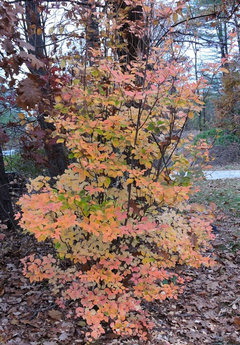
    - Many of the viburnums I grow have great fall color. Probably the best is one of the V. plicatum cultivars (perhaps Maresii?) which has billows of white spring flowers and bright red fall foliage. Sorry I couldn't find a fall photo of it. Many of the others are natives that might be hard to source but here's one of them, I think a Popcorn viburnum that's in mostly shade. IME would be brighter with more sun.

    This is one of the wild viburnums in the woods, probably V. cassinoides, in full shade, though it has lost many of its leaves and would be fuller and nicely shaped grown in more light. (I just don't have any photos of the nicer ones in good color.)

    - My ninebark (Physocarpus opulifolius) Coppertina has reddish foliage all season but gets brighter to form a deep purple-toned red in the fall. In addition it has a lovely fountain shape, pinkish-white late spring flowers, and red seed capsules that contrast beautifully with the summer foliage.

    Here's how to add zone and location info to your profile:

    Go to Your Houzz in upper right of every page, click Edit Profile, and on the left side click advanced settings. Well down the advanced settings page is a blank labeled Climate Zone for Garden Forums along with a link to find your zone.

    If you add info on your state or the nearest large city you will get even better information since zone only relates to average coldest winter temperatures.

    Then return to the top of the page and click Done Editing.

  • 10 years ago

    Euonymus are more clean looking than many other popular deciduous shrubs and special in other ways. However where particular species of them have become a nuisance those specific kinds should certainly not be planted.

  • 10 years ago

    NHBABS, My original comment specified to my location. I live in the country with hundreds of acres surrounding me. Although being told that my mimosa is invasive, I see only a scattering of them along the roads. My running bamboo is also taboo from what others tell me, but see little evidence of its invasiveness, except in some suburban situations. Homes all around these parts have burning bush hedges that look beautiful, but yet there is no evidence of them at the edges of most woods and hedgerows or meadows. I have been on my acreage for 15 years and these two are all I have ever seen.

    The scourge as I see it on my property and along all the roadways are the locust. That foul plant pops up all over my property and sends out runners for thirty feet or more and grows 4 feet in a season. The burning bush will mind it's own business and the crows, which we mostly have here, seem more interested in eating my garden . Thanks for the info though. I do appreciate it.

  • 10 years ago

    Plant infestations often start small.

  • 10 years ago

    Exactly^. This is what I referred to above, the latency phase, where all seems right in the world. You're in such a phase right now, I'd be willing to wager.

    As for rhizomatous bamboo types, they are invasive only in the localized sense, and this is decidedly second- or third-tier in terms of invasiveness. So, someone's individual property, or worst-case, them and their neighbors may have to contend with such a bamboo type, but that is laughable in the context of what things like Euonymous, buckthorn, black locust, et al are capable of. I'm reminded of some person's hysteria over creeping charlie (Glechoma) in lawns, themselves completely non-native plant communities, and her pronouncement of how bad an "invasive" that plant is. That is simply not what we're talking about when we say "exotic invasive plant species". That's a lawn weed, and the running bamboo is only slightly more problematic.

    +oM

  • 10 years ago

    "Bamboo" is often mistakenly used in reference to large weedy knot-weeds, unlike non-native bamboos these do pop up and form large patches in places they were not planted.

  • 10 years ago

    Things like Japanese knotweed-Fallopia japonica (or Polygonum cuspidata if you prefer) are what's being mentioned above, and indeed, I've heard more than one person call these plants bamboo. What I was talking about above was, of course, actual bamboo.

    +oM