Software
Houzz Logo Print
sam_md

Cherry Laurel

10 years ago


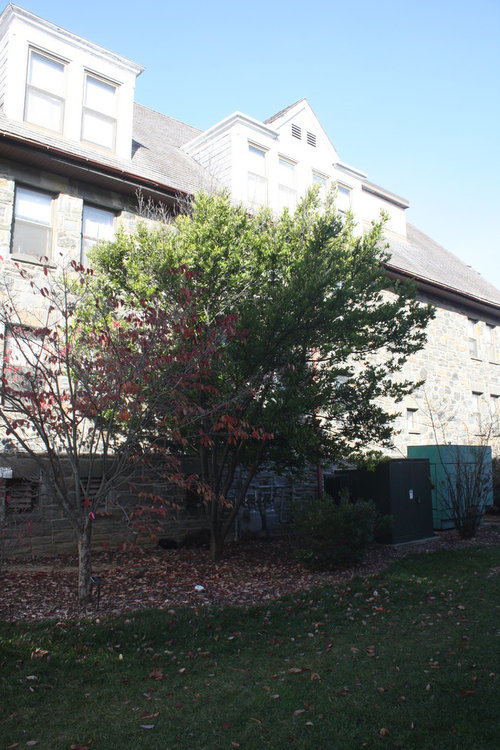
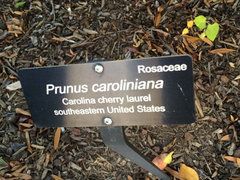
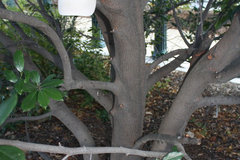
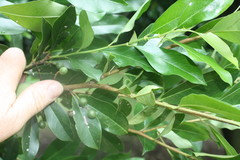
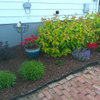
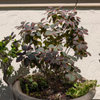
I took this pic of P. caroliniana today at the Scott Arboretum, SE Pennsylvania. I guess this might also be called a tree. They have it tucked up next to a large, stone building. It seems to come through the winters fine. No sign of fruit or seed or volunteer seedlings. I find the foliage attractive. Does anyone else see this tree growing in zone 7? Are there any negatives with it? It would be nice to add this to the list of native BLEs.

Comments (67)

  • 10 years ago

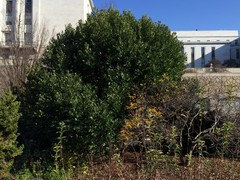
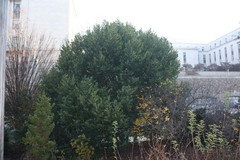
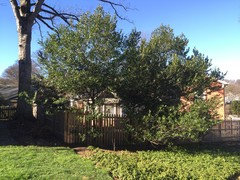
    Got some photos in DC. It's pretty big actually, but it definitely has branches close to the ground, which you can't see from these pics. It's the tallest of the plants in the photos:


  • 10 years ago

    Nice specimen! Great photos!

  • 10 years ago

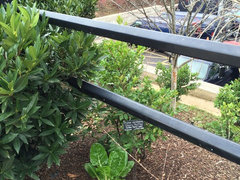
    I made it to Bartholdi Park this morning, I had to dodge all the runners???????


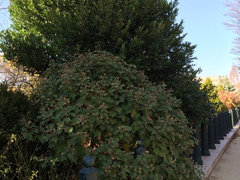
    Let's call it a bushy tree with polished, evergreen foliage. I walked past it the first time I thought it was a holly. A mystery to me why they are uncommon in the mid-atlantic. Thanks mattp321 for the location.

  • 10 years ago

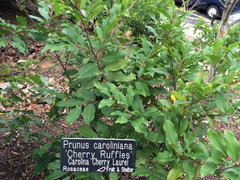
    Ran into another (patch of) Carolina cherry laurels today in Washington. These are small, perhaps 30" tall. Cultivar is "cherry ruffles". Location is outside the southwest side of the museum of natural history in the bird garden. (Beside sidewalk). There were maybe 8 of these on the slope...


    (The chartreuse shrubs in the background... I believe the larger darker one in foreground is an Otto leuken (sp?)

  • 10 years ago

    That would be a Prunus laurocerasus 'Otto Luyken'.

  • 10 years ago

    Since all of you are the only ones discussing this, I will throw my question in here. I am looking for a privacy screen at the edge of my woods from the neighbor who built an orange house and is rude. Long story! How fast would these grow at the northern edge of zone 7? I do not have to prune these and it seems they are not invasive this far north.

  • 10 years ago

    seydoux, where more specifically do you live? Sun or shade? good drainage? or poor? sheltered by wind or no? Help us help you.

  • 10 years ago

    Also how much space are you willing to give up along your edge for this? Also how tall does the screen need to be to block the view? (Check the viewing angles)

  • 10 years ago

    Seydoux wrote He is uphill so even a tall fence will not block the view.

    You are in SW Pennsylvania, right? Am not sure that Carolina Cherry Laurel is the plant for you. I can't think of any shrub that will give you the privacy that you want. As far as running bamboo, do a search and see what a nightmare that can become.

  • 10 years ago

    sorry I gave all the information on the other post and forgot to include it here. Southeastern Pa zone 7. The area is all sun because the neighbor bulldozed it. good drainage, southern exposure and sheltered from the northern winds by the hill. I have 6 and 1/2 acres so giving up some to cherry laurels would not be a problem. Currently the area is cleared is 72 feet long and 30 ft deep, thanks to the neighbor. I have deer. He built a 6000 sq/ft orange home up hill so the taller the better. So a fence would give no privacy. He placed his house as close to the property line as he was able and hates our trees which is why he cut several down.The woods that are left have 30 mtr trees. I am also planning to put white pines in the area and many beeches in the foreground because they keep their dead leaves all winter. Other had suggested hollies but they are very slow growing. ph is 6.5.

    So would cherry laurel help to provided a quicker screen? I also like it because it is native and would feed the wildlife

  • 10 years ago

    Sam southeastern Pa near the Delaware border, near Longwood if you are familiar with that garden. Same growing zone at Northern VA and much warmer than any of the mountainous regions in VA. My son went to school in that area so I know

  • 10 years ago

    https://edis.ifas.ufl.edu/st505

    this is the plant to which I am referring


  • 10 years ago

    If you go with a LEYLAND cypress you might be able to block him out, with the added benefit of making him look at the ugliest conifer ever.

  • 10 years ago

    "ugliest conifer ever." Really?? While I will readily admit Leylands can have some issues, especially in the southeast where they are most prone to disease and insect problems, a well grown Leyland is a stunning tree - rich green foliage, a graceful sweeping branching structure and in most cases, limbed right down to the ground. I happen to live next door to a long, 20' tall "wall" of Leylands that are planted as a privacy screen to shield against a public beach access that runs between the two properties. They do get sheared periodically to maintain a specific height and width but they are nonetheless handsome plants that attract an amazing amount of wildlife - birds find them a welcome perch and shelter and there's lots of spring nesting going on.

    The ugliest conifers around here are examples of Colorado blue spruce which invariably suffer from climate challenges and associated insect and disease problems, resulting in large, half dead trees with little tufts of blue needles on the very tips of otherwise mostly bare branches. Like Charlie Brown Christmas trees on steroids!!

  • 10 years ago

    well the question still is if I mix the cherry laurel specifically the carolina cherry laurel with the cypress will it grow quickly in zone 7a and what is its maximum height. From the link I sent it seems to be ideal. How much sun does it need? I am looking for a plant that will thrive in the area. I may have 30 more years and after that the next owner can deal with the orange house lol

  • 10 years ago

    Seydoux, the Carolina Cherry Laurel in my OP is located in Delaware County, PA. It was the first one I had ever seen. It is sheltered by a large, stone building. When I look at the pic it looks like it may have been damaged by the polar vortex and froze back several inches at the top.

    My recommendation for you would be something tried & true like Nellie Stevens Holly. I cannot name a single source of Carolina Cherry Laurel in the mid-Atlantic.

  • 10 years ago
    last modified: 10 years ago

    Some Carolina Laurel Cherries growing in Bethesda, Md. Photo taken Jan 3, 2016. Hard to gauge height , but I would say 15 to 20 feet high.

  • 10 years ago

    thanks Dave


  • 10 years ago

    Excitement! I just found a data base and the cherry laurel grows at Longwood Gardens. I can not go and take a photo now because they are all in the area that is closed for the fountain renovation. Apparently they have been there longer than I have been alive. Now to find a source. What I have planned is a mixed planting of white pine, Virginia pine, Leyand cypress and cherry laurel.That way the different life expectancy can be me at well as the need to screen ASAP. And if one does not do well then I have others to fill in.

  • 10 years ago

    They grow Prunus caroliniana at Longwood?

  • 10 years ago

    they grow prunus laurocerasus which they list as cherry laurel but it is also known as english laurel. I was looking for a laurel plant, and I am just as happy with the english laurel as it is also a fast grower. Supposedly prunus carolinus is hardy in zone 7 here. Because of the Chesapeak and Delaware bays coming up the climate is much more mild than most of PA, but I don't want to try it if is marginal because it will be in an area without easy access.

  • 10 years ago
    last modified: 10 years ago

    OK, so P. laurocerasus is a very hardy spreading shrub. Not a tree, of course. You might also check into Prunus laurocerasus 'Schipkaensis', the so-called Skip laurel. Can take more sun than 'Otto Luyken' and gets taller - maybe around 10 feet or so. Did you say how tall a screen you needed?

    I would stay away from white pine and other trees that later on drop their lower limbs. These are fine for a few years, but then they get so big you can't plant anything under them. With dropped limbs you suddenly have no screening again.

    Regarding American holly -- great choice. Good things come to those who wait. Cryptomeria might be another good choice or 'Green Giant' Arborvitae, but not sure about your local deers' taste in trees.

  • 10 years ago

    thank you Dave. I was going to mix the screening on several layers to get the screening, the laurel will be more in the foreground nearer my house so it will eventually fill in the lower bare area. i was looking for rotundfolia or caucasia. There say 18 feet which would be a great help. I think it is a better option than just the american holly because that is so slow growing. Forest farm has a large form Laurel. As to the arborvitae the deer on my property say thank you for dinner. Too bad they had quite a few very large ones at a nursery that was closing for an incredible price. So thank all of you for your help. I have taken all of the ideas to heart. No mono-culture, mixing species to assure better screening, and using all of the species all of you have suggested. In addition I will probably add some American beech in the foreground where some trees have died, because the keep their brown leaves for the winter so in addition to the screening I have the visual contrast against the dark green.

  • 10 years ago
    last modified: 10 years ago

    I would reconsider planting at least a few American holly. They'll do OK in shade, and over time will eventually become sizeable. At that point you might want to remove other trees around them to give them some space. You'll also enjoy watching the birds feast on the berries in January and February. Ilex x 'Nellie Stevens' is much faster.

  • 10 years ago
    last modified: 10 years ago

    IME young American beech (Fagus grandifolia) will keep its leaves all winter quite well, but older trees lose them. Regardless, though it is highly ornamental to my eye and I love the light chestnut leaf color, it isn't great for screening as the retained leaves aren't particularly dense. IME the white oaks on my property hold their leaves a bit more as they age. Despite that, I'd still plant the beeches since they are beautiful trees.

    "I have taken all of the ideas to heart." . . . so nice to have someone who listens to the answers they get.

  • 10 years ago

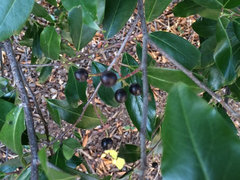
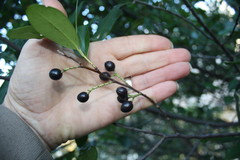
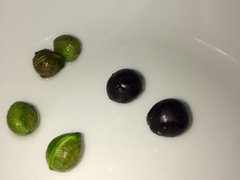
    Okay so I obtained 6 prunus Caroliniana drupes. Started cold moist stratifying them in peat a few weeks ago. Today I pulled them out and used my fingernail to scrape the "meat" off the fruit and inside I found the hard woody pit or whatever you call it. The exterior has lines on it- looks like a brain. It's a greenish color. Also, it seems to have an asymmetrical "joint" running halfway around the nut.

    this pic shows a few after scraping them, and 2 (brown, at right) with the skin still on:


    The "meat" later was very thin- in other words the nut is almost as big as the original drupe.

    i returned them to the moist peat and back to the fridge.

    my question is: am I doing this right, or do I need to break open the woody "pit" and find some smaller seeds inside? I've never grown anything like this before and I'm unable to find any instructions online for this species.

    im planning on letting it stratify until late February and then start it under lights in my basement.

    thanks for any advice!

    ps - seydoux if these actually grow I'll mail you one to test out in your planting if you want. Anyone else for that matter if there's interest.

  • 10 years ago

    NoVA Dave, you made a nice find yesterday in Bethesda.

    City of Trees is a field guide of trees in the capital area. The author is Melanie Choukas-Bradley. Of P. caroliniana she states it is just barely hardy here if planted in a sheltered place. She gives three locations: The White House grounds, US Botanic Garden (Bartholdi) and Kenilworth Aquatic Garden

    It is interesting how a species considered weedy down in Dixie can be so desirable here.

  • 10 years ago

    I wonder if Matt (or anyone else) can ID the shrub that is in front of the P. caroliniana in the second photo that he posted on 12/5. Thanks!

  • 10 years ago

    Nova Dave, I would be interested. I have an area with old stone walls on two sides that get the afternoon sun. I would like to know more specifically what the growing requirements are. I would need to test the soil for a specimen like that. Our property is odd in that the soil varies considerably form one location to the other having everything from rich acidic loam to serpentine soil.We do grow many 'southern trees' on the property; magnolias, crepe myrtle. I checked and our average temps are very similar to DC. The two solid stone walls would raise it even higher as they have a lot of thermal mass.

    Sam it might also be that in a more marginal area the tree has a more refined shape and growth pattern or all of us gardeners are crazy.

    And Babs by the time that beech is so high it drops its leaves. It will be dropping them on my grave lol or maybe I will live to 120. But i was just picturing the light chestnut leaves in front of the darker evergreens, it will give a nice three dimensional effect.

  • 10 years ago

    Babs, I did see it in bloom and I seem to remember it covered with flowers. Next time I'm down there I'll search for a label.

  • 10 years ago
    last modified: 10 years ago

    matt: Prunus caroliniana does not need to be stratified. Just peel the dark skin off, and plant.

    Babs, not exactly sure which photo you are referring to, but it might be the one with the 'fence'. If so, the shrub on the left is likely Prunus laurocerasus ‘Schipkaensis’.

    http://st.hzcdn.com/simgs/cc42d8ea0680b250_9-4847/home-design.jpg

  • 10 years ago

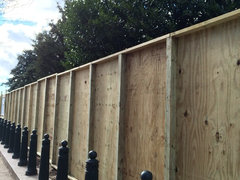
    Thanks, Matt and Dave. Dave, not that photo - I was asking about the one from earlier in the month, 12/5. The photo has iron bollards in it.

  • 10 years ago

    OK, this one?

    http://st.hzcdn.com/simgs/7242df400663d8c5_9-4157/home-design.jpg

    Yeah, I'd be curious to know as well. Looks evergreen, but we had a very mild December and many plants are 'evergreen' down to 28 degrees or so!


  • 10 years ago

    Way back in the thread I notice Dave in Nova said of P laurocerasus 'Not a tree, of course.' In the right climate and if left unpruned they can grow into trees. Not forest-sized admittedly but it can reach 40 - 50 feet. P laurocerasus trees.


  • 10 years ago
    last modified: 10 years ago

    floral:

    I believe I was talking to someone in zone 6b/7a Pennsylvania about P. laurocerasus, wasn't I?

    Here in zone 7a, unfortunately, the larger growing straight species P. laurocerasus, which becomes a tree in the Pac. NW, is not completely hardy. For some reason only the more diminuitive 'Otto Luyken' cultivar, 'Zabeliana' and 'Schipkaensis' laurels are. So, I was not referring to the straight species.

    Although 'Schipkaensis' can get some size to them, I've even seen them freeze to the ground in an exposed spot.

  • 10 years ago

    Point taken, Dave. But not everyone reading this is necessarily in the OP's location and you did name the straight species to begin with. 'OK, so P. laurocerasus is a very hardy spreading shrub. Not a tree, of course .'

    Just clarifying for the general reader - who could be anywhere in the world.

  • 10 years ago

    Yes, floral, you are right of course. :-) Prunus laurocerasus can be a tree.

    What I had hoped to convey to seydoux was 'don't expect to find a Prunus laurocerasus 'tree' at Longwood in SE Pennsylvania.'

  • 10 years ago
    last modified: 10 years ago

    P. caroliniana offered mail order by Woodlanders:

    Not trying to be an enabler, but....

    http://www.woodlanders.net/index.cfm?fuseaction=plants.plantDetail&plant_id=188

  • 10 years ago

    Babs,

    bad news. The park is now under renovation and it's closed... A wall is now up around the location of the laurel and the unidentified bush:


    Signs say it will be reopened next year, but they also say some of the plants are getting changed out... So that one might be gone!

  • 10 years ago
    last modified: 10 years ago

    My guess for the mystery shrub would be Rubus odoratus. It might be worth reposting the photo on Name That Plant.

  • 10 years ago

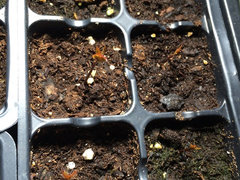
    6 Carolina cherry laurel seeds planted feb 13th. Today all have germinated and average about 1" tall. 5 are purplish-red, one (top left cell) is much greener than the rest:


  • 10 years ago

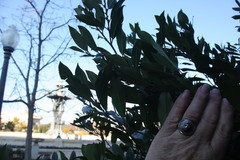
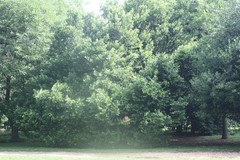
    You will have to take my word for it, the rounded shrub/tree here is P. caroliniana, see my straw hat for scale.


    To me it is interesting how variable in habit this species can be. The location is Kennilworth Aquatic Gardens in Wash DC. The grounds are somewhat "unkept" and even though there was prolific fruit production I didn't notice any volunteers but I completely understand how this species could be "weedy" in a milder climate.

  • 10 years ago

    Whats a BLE?

  • 10 years ago

    Larry - BLE is Broad Leaved Evergreen. In the States the word 'evergreen' appears to be generally used for conifers so they distinguish between them and other evergreens. This is partly, I imagine, because in many areas BLEs are not very common being generally less hardy than conifers. I had to learn this term on these forums since it isn't really used much over here. There are so many BLEs here and they are so much more popular in gardens than conifers, that 'evergreen' covers them.

  • 10 years ago
    last modified: 10 years ago

    That's right floral. Here in zones 7 and colder, many associate the term 'evergreen' only with conifers...spruce, juniper, etc. As one moves from zone 7 into colder zones 6 and 5, the number of BLE species hardy there tapers off dramatically, leaving primarily conifers as nearly the only evergreens able to survive in zone 4 and colder.

  • 9 years ago


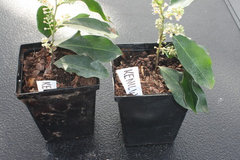
    Prunus caroliniana rooted cuttings blooming today, I found them very easy to root. The cuttings were taken June 24.

  • 9 years ago

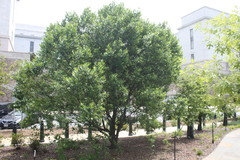
    Good news, Bartholdi Park is open to the public again. Here is the same Carolina Cherry Laurel.


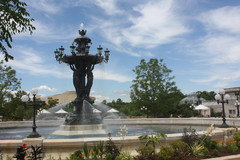
    In case you were interested, here is the famous fountain. They have removed much of the rock garden area. There are now benches, tables & umbrellas so people can enjoy the fountain.

  • 9 years ago
    last modified: 9 years ago

    Good thread. It's a shame such an attractive BLE is not more commonly planted in DC and environs. (As is the case with the stunning Ilex purpurea at the National Arboretum. But that one is known to be impossible to root.)

  • 9 years ago

    Not impossible to root Ilex purpurea, but one would probably need a commercial misting system and some serious hormone. I got one rooted -- barely, but then it died.

  • 9 years ago

    I see them here and there. They had some on sale at lowes last week.