Software
Houzz Logo Print
crrueth

Help please, first time bonsai owner!!

10 years ago
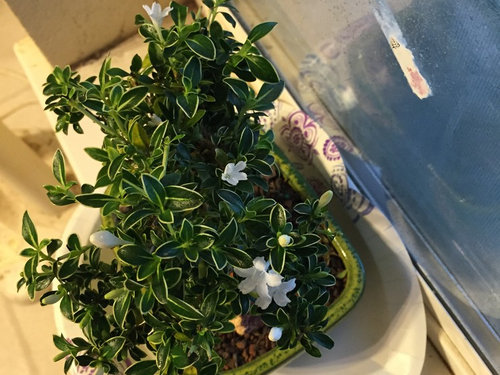
I'm afraid of sounding extremely amateur over this, but I desperately need some advice for my little bonsai.

So here is a spark-notes version of my story:

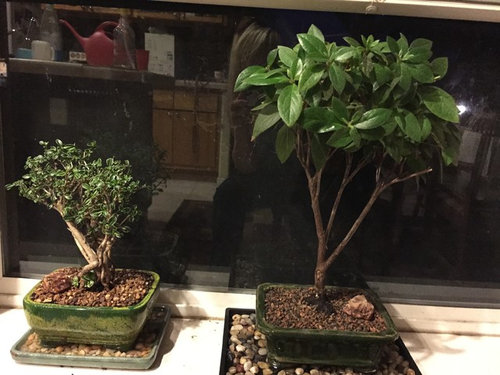
In May of this year, I received two bonsai, a Mt. Fuji Serissa and an Azalea (I forget the exact type)

In the beginning, they did great. While the azalea never bloomed, the serissa had gorgeous flowers, but as time progressed, the serissa's condition worsened and, well the azalea remained the same.

Frantic to fix any type of error, I tried to fertilize them in September with slow release fertilizers from Bonsai Boy. I even used Chelated Iron. (Oh, and they came from Bonsai Boy)

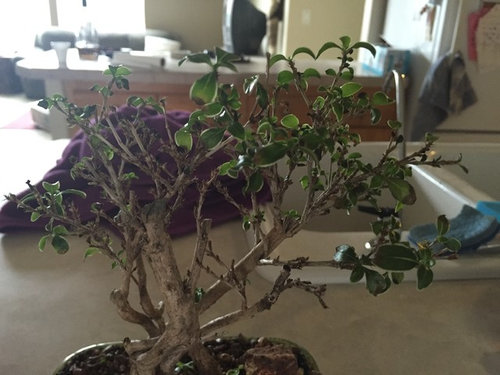
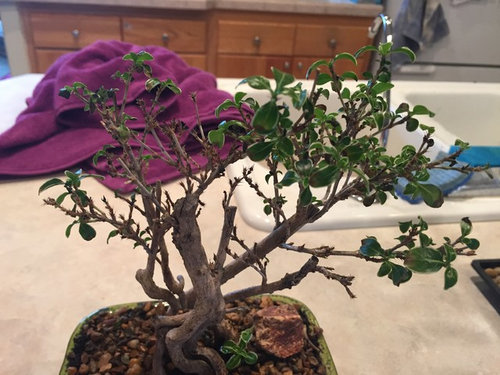
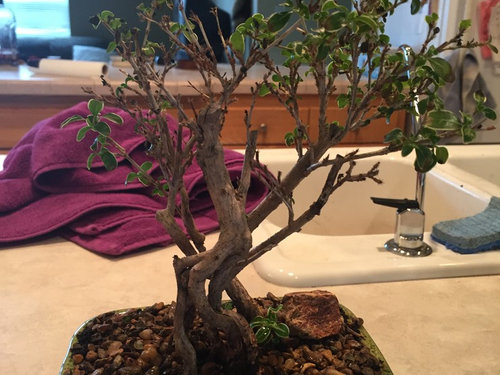
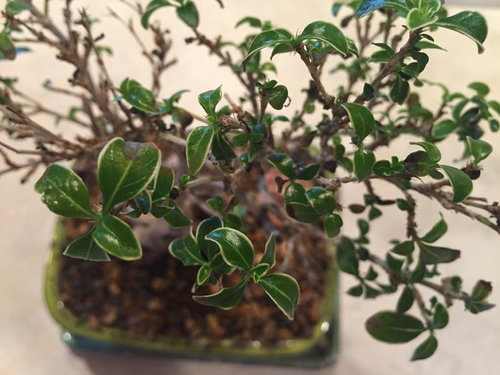
While the azalea seems to be doing fine, the serissa is practically balding (and I am weeping). I have enclosed photos to somewhat show their progression a little.

As of this current date, they are in the same soil they arrived in and they are watered almost daily (I try not to water them daily, but sometimes I have this weird thought that they're drying out even though they're fine). They also sit in an eastern facing window. They were last trimmed in September, the same day I used new fertilizer. I live in Idaho, where the sunlight has reduced quite a bit.

I am open to any advice, regardless of whether I need to buy additional supplies or not.

The serissa in May (the last time my precious baby looked alive)

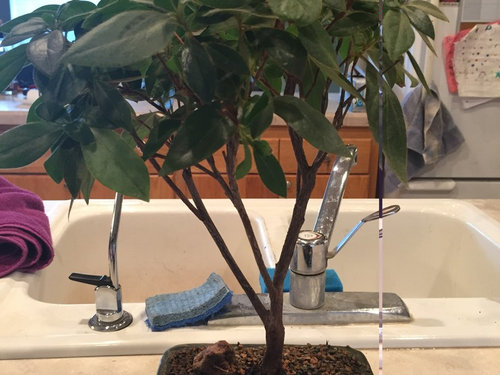
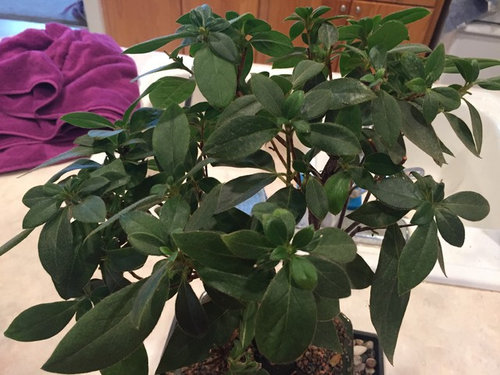
The serissa and azalea in September (when I refertilized them)

I fear the main beam has died, there is very little growth

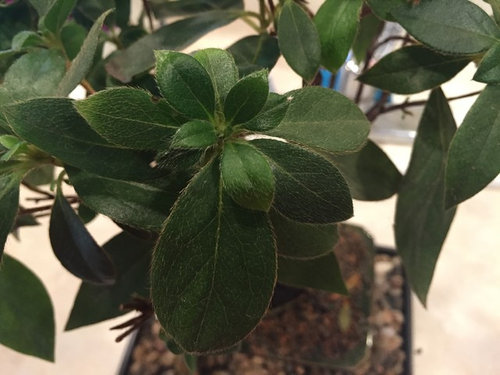
Close up of the leaves, they have lost all fullness, rich dark color, and ever appear to dry out at the tips. There has also been no blooming ever since May when the initial flowers bloomed and fell.

My azalea seems to be a little super trooper through all of this, it just has never budded and bloomed flowers.

Comments (8)

  • 10 years ago

    Your Azalia also needs bright sunlight, and hard tap watered isn't considered good for them. Their flowers are very finicky to grow, and if you choose to repot-- you should do so in a soil without lime, a specially formulated soil for Azalias, and there are special fertilizers for Azalia to help bloom them.

    crrueth thanked Garnet Ruby
  • 10 years ago

    @Garnet Ruby

    Ok! So I checked the Serrisa and 1 of the 3 beams did die. It is the main beam in the image that is severed at the top. What are your suggestions for that??

    Also, I will promptly repot them, however, what soils would you recommend?? Brands and such.

    At lastly, are there any additional products I can purchase to substitute sunlight and humidity?? They are currently inside since it is about 40F during the day and 28F during the evenings.

  • 10 years ago

    Serissa's roots ALWAYS smell rotten - that's where the second half of the binomial (S "foetida") comes from -'foetida' means foul-smelling in Latin.

    Repotting a severely weakened tree at this time isn't likely to end well, but if you lift the plant and find lots of root rot, it might be your only option. If you DO repot, make sure it's into an APPROPRIATE soil - one you can water to beyond saturation with no worry the soil will remain soggy so long it impairs root function and limits the plant's ability to move water and nutrients.

    You need to get in the habit of checking your plants to see if they actually NEED water. That the surface of the soil is dry is not a good indication the plant needs watering. Buy a 1/4 or 5/16 wooden dowel, cut in half and sharpen all ends in a pencil sharpener. Push it to the bottom of the pot to test for moisture. Water only when it comes out dry or nearly dry.

    It's hard to jump into bonsai with both feet and not get frustrated. If you don't have the knowledge required to keep plants alive and attractive, frustration is a part of the bargain until such time as you do have the skills required to keep plants happy. THAT's when bonsai really starts to reward you for your efforts. I sincerely hope you make it. Let me know if there is anything you think I might be able to help you with.

    Al

    crrueth thanked tapla (mid-Michigan, USDA z5b-6a)
  • 10 years ago

    @Al

    Hi again!

    So some of my follow up questions include:

    What kind of soil is appropriate for my bonsai, specifically the serissa?

    What kind of water regime should I try to adopt now, especially since it is winter where I live? Should I gather additional materials to substitute sunlight??

    And on top of all that, I also am curious about fertilizers. Currently I am using a long term fertilizer from bonsai boy, but after repotting, should I look more towards a frequent treatment?? Also, I have confirmed that one of the beams did in fact die, should I remove it from the tree?? (For the majority of these questions, I am curious as to specific brands of items you would recommend as well! Even some supplemental reading material!)

    - Crrueth

  • 10 years ago

    First, let me say that understanding how water behaves in soils and the impact too much or too little water has on your ability to keep plants healthy is a primary requirement for proficiency, so I heartily recommend you gain a good understanding of the concept explained in this thread (click me).

    An appropriate soil is one you can water to beyond the point of saturation, so you're flushing the soil of accumulating salts when you water, w/o having to worry your soil will remain saturated long enough that it imposes limitations by inhibiting root function or compromising root health. There are lots of ways to combine ingredients, but essentially the concept centers on particle size and the individual particles ability to hold water internally. Air in the rhizosphere (root zone) is as important as water, so the higher the quality of your soils, the easier it is to maintain plants in good health - all other factors being equal.

    I use this as the basis for all my bonsai plantings:


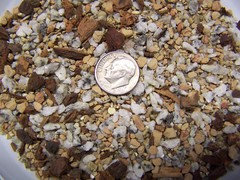
    It's equal parts (by volume) of screened fir or pine bark, screened Turface, and screened crushed granite or cherrystone (quartzite).

    You should water on an 'as needed' basis, not on a schedule. Buy a 1/4 0r 5/16" wooden dowel rod, cut it in half, and sharpen all 4 ends in a pencil sharpener. Insert it into your soil to check for moisture content. Water only when it first comes out clean, dry, and not cold on the inside of your wrist. Over-watering and poor soils are both limiting; together, they are deadly, so learn to avoid over-watering.

    "Should I gather additional materials to substitute sunlight??" I'm unsure what you mean. There is no substitute for sunlight, but some high quality light sources can come close.

    I use Dyna-Gro's Foliage-Pro 9-3-6 for almost everything I grow, including my trees. I use it because I've conceptualized the ultimate goal for fertilizing plants in containers and that fertilizer offers the best chance I've found to realize the goal. Simply put, our focus in supplying supplemental nutrition to
    our plants should be on ensuring all the nutrients plants normally assimilate
    from the soil are A) IN the soil and available for uptake at all times, B) in
    the soil in a favorable ratio - that is to say in a ratio that closely mimics the ratio
    at which the plant actually uses the nutrient, C) at a concentration high
    enough to ensure no nutritional deficiencies, yet still low enough to ensure
    the plant's ability to take up water, and the nutrients dissolved in that water
    won't be impeded (by a high concentration of solubles in the soil
    solution). Most fertilizers ensure this goal is unreachable. The FP 9-3-6 puts it within grasping distance; grasping distance because I tend to believe there are so many variables associated with "the perfect nutrient supplementation program" that it's doubtful anything would be perfect for any length of time.

    There is only one degree of 'dead', so removing wouldn't cause any physiological issues, and it doesn't appear the plant's appearance would suffer if the dead trunk was removed, so do as you choose about that point.

    You asked about supplemental reading. The info in the second link is probably the most important concept a container gardener can gain an understanding of, but please consider the first link as a primer and read that first. Once you get a good understanding of how to produce productive soils, half the battle is won. IOW - it's very important. But again, do read the first link offered first.

    A basic overview of growing in containers.

    This one contains info that will help you maintain healthy root systems, which are critically important (prerequisite, actually) to a healthy plant.

    This one is a discussion About Fertilizing Plants in Containers.

    Al

  • 10 years ago

    @Al

    ok! So I went ahead and created the gritty mix recipe, repotted both bonsai four days ago, and removed the dead trunks from the serissa! I also bought the Dyna-Gro Pro Foliage 9-3-6 fertilizer and am waiting on a grow light!

    I've noticed how quickly water runs out of the plant, so now I use my wooden dowel to estimate the best time to water!

    Now for more follow up questions! I'm not sure if my serissa is just recooperating/healing, but I've noticed the leaves seem very thin and almost "soft". They don't feel quite so firm anymore, should I be concerned now, or should I wait and see what happens?? Also, what do you recommend as the best regimen for the new fertilizer??

  • 10 years ago

    Got your message - sorry for the tardy reply, but Christmas is a busy family time around here & I'm always spread thin.

    I'm concerned about the timing of the repot, so don't judge the medium harshly if your trees take a turn for the worse. Generally, the serissa would be repotted in spring, about the time you can move it outdoors, and the azalea at the same time or right after blooms fade. If you plan to repot, it's best to disbud (remove the flower buds) when you repot, which means you'd be choosing the early spring option as opposed to the late spring after blooming option.

    Don't fertilize until you see new growth being pushed. Keep the soil damp but not wet. If possible, use snow melt or rain water on the azalea and add a half teaspoon to a quart of rain water or snow melt when you water.

    If things don't go well, don't give up on bonsai. It takes some effort and dedication. but the personal rewards can be very significant.

    Al

Sponsored