

Moved: Our architect process.
Originally posted in http://ths.gardenweb.com/discussions/3622780/new-construction-advice-comments?n=68 moved as requested.
My architect and I are not working together in any way similar to the suggestions of people I respect, and I am starting to wonder if I have chosen poorly or if I have chosen well and the architect is just adapting to my wants and needs.
Some of the things that make me a difficult client is that I have extensive experience with project costing and a warped sense of value. I will give some insights as to what I am looking for in a house and then our work so far.
First, I have no budget. I would prefer a house cost $200,000, I am willing to spend 10 times that. What I want for the extra money is efficiency, in other words I want every dollar spent over $200,000 to get me more than the previous dollar did. The problem with this is it starts making for a huge house. A lot of the costs in a house are actually mixed costs (part fixed and part variable) and efficiency is easy to get by just making it bigger. The challenge is getting good value without ending up with too much house.
Second, I have an opinion on everything, but I don’t always know it until I see it. My typical opinion is, “what a waste of money”. This is not to say people who like these things are wrong, they are just not me. To give you an example of this, I have seen many great designers separate the bathtub into its own bump-out, my response to this very popular design choice is, “so I am building a foundation, 3 walls and a roof over a bathtub, which will look gorgeous and I will not use.” However, I can be convinced this is good, the architect only need say, “It will cost an additional $3,000 but will increase the appraisal value by $6,000.”
Finally, I could absolutely not care any less about the outside of my home. I don’t want my neighbors to put out a hit on me, toilet paper my house or refuse to wave when I come home…other than that, I don’t care. I am building the thing to live on the inside, not the outside.
In response to this, and my critique of some early plans, my architect is having me draw plans and he is critiquing them. Some things I have picked he really likes, such as the pantry. Other things that I picked he did not. Some suggestions he liked, others he crossed out, such as the coat closet near the hall (his words – You are letting people talk you off your game. Think about having a conversation as you walk people into the gathering area, take their coats and hang them while they are beginning to interact with other guests and family in the living spaces.)
While I am certainly a difficult client he seems genuinely interested in the project. He asks me so many questions about costing and actual value vs. perceived value that I sometimes feel like I am teaching him cost accounting, and the way he explains things makes me think he is educating me even more.
Having said all this - It looks like the house will be designed by me with his help and not vice versa. Should I get a second opinion or trust my gut? My gut has been wrong before. A couple of good strokes of my ego and I am your guy. But I need people to tell me when I am being stupid, because I am pretty good at it and even better at not seeing it.
Comments (26)
 10 years ago
When I work with service providers I like to ask them what I can do to make the process work well (other than the obvious paying the bills on time).
Some questions to ponder:
>Does your household truly know what it wants (macro level as well as specifics)?
>If not, how do you plan to decide?
>Who in the household is best suited to drive the process (this might not necessarily be the person who knows or cares the most)?
>Do you trust your architect? What part of the process is "not working" for you?
Let me add one more thought. It is fine to have a non-standard process. I would have loved to have taken architecture courses and designed our house but just not feasible to do in the desired time frame. I told the professionals I worked with that I wanted an education too and warned them that I was going to ask lots of questions. I spent a lot more time learning stuff than was warranted (and still do) because in my view I got as much out of that as I do by actually having our new house.
I think you noted on another thread that you could plop down any number of houses on your property and be perfectly happy. But is that what you want?
 PRO10 years ago
Well, this should certainly be an interesting thread...
You begin by saying, "... My architect and I are not working together in any way similar to the suggestions of people I respect, and I am starting to wonder if I have chosen poorly or if I have chosen well and the architect is just adapting to my wants and needs...", yet you conclude in the next to last paragraph that "...While I am certainly a difficult client he seems genuinely interested in the project. He asks me so many questions about costing and actual value vs. perceived value that I sometimes feel like I am teaching him cost accounting, and the way he explains things makes me think he is educating me even more..." That doesn't sound like two adults who are not working together. Am I missing something?
"...Some of the things that make me a difficult client is that I have extensive experience with project costing and a warped sense of value. I will give some insights as to what I am looking for in a house and then our work so far..." and "...First, I have no budget. I would prefer a house cost $200,000, I am willing to spend 10 times that. What I want for the extra money is efficiency, in other words I want every dollar spent over $200,000 to get me more than the previous dollar did. The problem with this is it starts making for a huge house..."
Well, everyone is an individual to be sure and due their own individual points of view. Efficiency is an interesting word, but it's not one that I would equate with "making for a huge house". In fact, I would think just the opposite--efficiency means getting the most from a limited or small space. Nautical design is one example where efficiency is paramount. A 5,000 sf house is not my definition of efficiency. Perhaps it's your definition. When I think of $1 spend on a custom home, I think of value--personal value, real estate (investment) value and intrinsic value. As I see it, value is not simply bigger or simply more efficient, it's more about better--better appeal, better comfort, better value for you/me/whomever is footing the bill.
"...Finally, I could absolutely not care any less about the outside of my home. .."
No offense, but I am glad I'm not your architect! I have long felt that any architectural design of quality is the sum of its parts, inside and outside, site placement and design, energy strategy, building code and ordinances, budget, etc., all of which must be brought into a creative harmony, else the design is either incomplete or a failure due to its lack of regard of these and other essentials.
Sounds like your architect has found a way to involve you in the process of successful resolution of these challenges without your being aware of it, or at least without having you challenge it, time and again, and waste time/money. Having you draw and s/he critique is a masterful way to help one with strong opinions learn what they don't know.
Finally, ".. It looks like the house will be designed by me with his help and not vice versa...", from your description it sounds to me like s/he is designing the house through you, and you just haven't recognized it yet. Or perhaps your are aware of it when you say
"...While I am certainly a difficult client he seems genuinely interested in the project. He asks me so many questions about costing and actual value vs. perceived value that I sometimes feel like I am teaching him cost accounting, and the way he explains things makes me think he is educating me even more..."
So from what I read it sounds like things are moving along constructively and positively, yet you seem unsatisfied. Can you explain further?
PS: I hope you are on an hourly-rate basis with your architect, so that you have some responsibility for the direction and expense of the design phase of your project! Good luck and I'll be reading comments with interest.
Related Professionals
DeRidder Architects & Building Designers · Roanoke Architects & Building Designers · Mankato Architects & Building Designers · Santa Maria Architects & Building Designers · Kennewick Architects & Building Designers · Port Saint Lucie Design-Build Firms · Hopkinsville Design-Build Firms · Wausau Design-Build Firms · Cape Coral Home Builders · Philadelphia Home Builders · Peoria Home Builders · Fort Wayne Home Builders · Keene Home Builders · Burlington Home Builders · Victorville Home Buildersbry911
Original Author10 years agoDoes your household truly know what it wants (macro level as well as specifics)?
It's a house. If I am lucky I will spend 10 years in it. I want a few specifics and as few regrets as possible. I have very specific A/V, office, and shop requirements, for the rest I want the list of "I wish we had," to be shorter than the list of "I am glad we did."
Who in the household is best suited to drive the process (this might not necessarily be the person who knows or cares the most)?
Yes. This one I am absolutely sure of.
Do you trust your architect? What part of the process is "not working" for you?
I haven't said anything isn't working for me. I have said that people I respect are saying that here is the process and mine doesn't look like that.
I think you noted on another thread that you could plop down any number of houses on your property and be perfectly happy. But is that what you want?
Yes, it is. Remodeling old houses is my passion... If I could economically move my current house onto my new lot with 10 foot ceilings in the basement we would be done.
bry911
Original Author10 years agolast modified: 10 years ago@ Virgil - I think we are working together great...But there are a lot of threads where people keep noting that the process I am using is not a good one.
As for the definition of efficiency...It is using less inputs to produce more outputs. While space may be your input - thus making bigger bad. On the other hand use can be the output. In my case it is simple, money is my input...money and enjoyment are my outputs.
Very simply - when I look at the cost of something, there are two things I care about (1) will I get an enjoyment out of it that in some way exceeds the cost? (2) If not, is there some return on investment or the liquidity feature that makes it worth doing?
For example, a tub. I will not use a bathtub in a house but if/when I decide to sell I want a larger pool of possible buyers and some will really want a tub in the master.
I don't know what in the world gave you the idea that I am either unaware or that I don't challenge him. I can assure you that I am both very aware of what is going on and I challenge it just as much. As far as time goes, this is much longer. Every time I design a plan he does too. We then sit and pick out the best of both worlds and go again. I can't imagine it is faster than the typical process.
- 10 years agolast modified: 10 years ago
I have ... a warped sense of value ...
First, I have no budget. I would prefer a house cost $200,000, I am
willing to spend 10 times that. What I want for the extra money is
efficiency, in other words I want every dollar spent over $200,000 to
get me more than the previous dollar did ...Second, I have an opinion on everything, but I don’t always know it
until I see it. My typical opinion is, “what a waste of money” ...Finally, I could absolutely not care any less about the outside of my
home. I don’t want my neighbors to put out a hit on me, toilet paper my
house or refuse to wave when I come home…other than that, I don’t care.
I am building the thing to live on the inside, not the outside ...Oh, my. You and I are the same person. Well, except that I have no desire for a huge house, and I do care a bit what it looks like on the outside. And, yeah, I've been known to be difficult -- just ask Pete.
bry911
Original Author10 years agoCouldn't you just build a replica if that's the case?
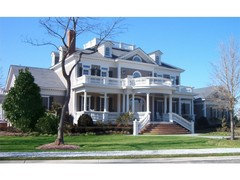
It won't fit...It is way too deep and would stand out, I might be able to fight it past the architecture board but my whole waste of money thing goes down the drain with it. I would spend too much on the porch.
When I said that I don't care about the outside I should modify that to, I am really trying hard from falling into the trap of caring too much about the outside. I just don't want to build a house for my neighbors.
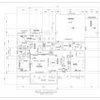
This plan is close to my current home but without the attached garage, and the sunroom is on the side, and add about 100 years to it.
- 10 years ago
>>>I haven't said anything isn't working for me. I have said that people I respect are saying that here is the process and mine doesn't look like that.
I haven't seen anyone say that your way doesn't work. I might have liked to have done it your way except we wanted to move while our kids are still kids. Well, that and pretty sure the architect I wanted to work with would not have agreed to do it.
Actually, the process I am using to furnish this house is a lot like your design process. It is going to take a long time but I am ok with that (and the family is not complaining).
- 10 years agolast modified: 10 years ago
The image you just posted is lovely, what ARB is going to say no to that?
>>>I would spend too much on the porch.
No, if the porch makes the house, you will not spend too much on the porch. Try not to look at the design as just bits and pieces -- a tub, a porch, etc. -- but as a whole. What else are you planning to do with the money?
Once we had our initial design we looked at value engineering. In the end we made very, very few changes because each thing we considered "taking away" or "downgrading" would have detracted far more from the overall house than the value of the cost savings.
How will you know whether each design decision is "worth it" or not until you see how everything fits together?
[I am adding this about the porch. We have a wraparound porch, I have no idea what it cost as a separate line item because it is integral to the design of the house. And my mother always wanted a house with a porch. And we use it year-round. We are making memories on that porch. So it is worth it to us.]
- 10 years ago
Oh my goodness...that is way too lovely of a house for someone who doesn't care about aesthetics!!
- PRO10 years ago
Bry911, I wouldn't be very concerned about a "traditional" architectural design process, only one which is creatively and effectively addressing one's own individual situation and needs. Sounds like your process is working fine for you. That's all that really matters! We're all different!
bry911
Original Author10 years agolast modified: 10 years ago@JDS - I must be getting old; I can't follow any of this.
I think moving this may have been a bad idea, as part of the other thread it is simply asking about the process I am using with my architect. At the architect's urging we are doing the same thing that you, Architectrunnerguy, Mark Bischak, and Cpartist all advised against. The advice, don't draw your own plans, invest in a good architect and let him design the house for you in ways that you never even imagined, is something I see regularly here. I am doing most of the designing, we are working with my plans and he is fixing them. Sometimes rather dramatically sometimes very subtly but there has been none of the, "giving me what I want in ways that I never imagined." He is instead showing me how to produce what I want. The conversations have sprouted a seed of doubt.
I am simply asking if you think I need to reevaluate my architect or the process we are using so far. I thought the backstory might help understand why he presented us with this idea. While the backstory is becoming the story in this thread, it really isn't part of the question.
 10 years ago
My guess is that your architect has found a way to work with a strong willed / opinionated individual such as yourself. You seem to be pretty specific in your wants and needs and have confidence in your choices, so he may be capitalizing on that part of your personality so that you will be more pleased in the outcomes since you are more involved than most.
bry911
Original Author10 years agolast modified: 10 years agoOh my goodness...that is way too lovely of a house for someone who doesn't care about aesthetics!!
I kind of regret this comment, it is a massive oversimplification. To lengthen it out, I have shutters on my home. My neighbor, who is a really good guy, came by over the summer and asked me if I knew my shutters had fallen down a couple of months ago. I didn't. He laughed at me for being oblivious and I immediately got them fixed (I assure you that I was appropriately mortified). Such is my relationship with the outside of my house. We have been driving by shutters hanging off the house in the middle of summer without noticing them. Which made me question why I spent so much money on it, when we discussed it, we decided to not do that this time.
Try not to look at the design as just bits and pieces -- a tub, a porch, etc. -- but as a whole. What else are you planning to do with the money? - This is where my happiness lies. The challenge is to see if I can increase the appraisal value well over the cost. This house is as much an exercise in my ability to get a maximum return on my dollar as it is a home. Which is why I think my architect is putting up with me, he is almost as interested as I am.
 PRO10 years ago
I suggest designing the home to meet your physical need for comfortable shelter, then after it is constructed and only after it is constructed sit down in the living room and financially analyze the hell out of it. Architects design homes WITH their clients. The amount of the envolvement a client has in the design of a project varies widely. Your project appears to be well within the range of normal. Keep calm and continue working with your architect.
bry911 thanked Mark Bischak, Architect- 10 years ago
Bry911, I must admit I share your initial confusion. I've previously posted plans here that I've sketched, attempting to narrow in on what it is that I want (for example, after sketching a bit I've realised a 1.5 storey might be more up my alley than single level living). Each time I've done so, I've been shouted down by posters that say I'm doing something worse than useless because I need to let an architect come up with something my non-artistic self would never consider. Since I don't have the budget you've mentioned, I've continued to sketch without posting. Like you, I still have yet to zero in on anything that seems right. Considering I'm living in a small town in Canada where the average (decades old because there was little building during a long slump) house costs less than 200k and new builds are almost always somewhere between 300-400k including land, I'm not certain that an architect will be worth it. There's only 4 architecture firms in the whole town. I definitely know it wouldn't have been worth it to go in and start a design process after the first mass "you need an architect" thread I experienced, because I might have ended up with a single level house plan. I still don't know enough about what I want to end up with my perfect plan.
So you're not crazy Bry911. However, I know people will come along and tell you the difference is that you're being guided by a professional, rather than being guided by the rest of us on the internet.
bry911 thanked paraveina - 10 years agolast modified: 10 years ago
If it's a good idea, it doesn't matter which person had it first. If the process works, it works. The combination of an engineer/accountant and an architect is surely not a bad one, and he may be learning as much from you are you are from him. Who knows, maybe this will turn into a new business venture for both of you.
However, I don't get the "I don't care what it looks like." If the goal is to max out the appraisal, ugly doesn't come into the analysis, at least directly. But you don't bank the appraisal, you bank the check at resale. And that's where the rubber meets the road-- ugly houses are harder to get top dollar for.
bry911 thanked scone911 bry911
Original Author10 years agoHowever, I don't get the "I don't care what it looks like." If the goal is to max out the appraisal, ugly doesn't come into the analysis, at least directly. -
You would think this was true but from my experience it isn't.
Architectural preferences are very regional and here the preference is ugly (at least to my eye). There are near half a million people in this city and one tract builder has built nearly the entire town. The first house I bought was built by them, I would guess that 80% of all houses for sale under 60 years old were built them. He now owns car lots and restaurants and most of the rental property and the list goes on. That one tract builder has also defined the architectural style of this community. That style says houses must be brick, they can't be either craftsman, contemporary or farmhouse. A quality house doesn't have siding of any type...
A picture is worth a thousand words so here are some ideas.
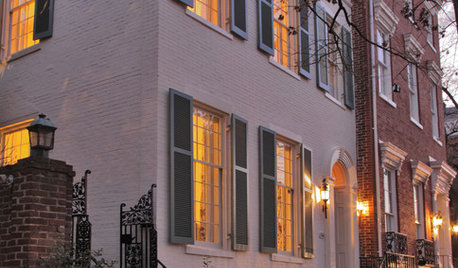
The typical style in this area is to make your house unique with as many bumpouts and roof changes as possible while building an all brick house (note these are not in my area but are very typical of the area):

or this with a little less white.

My original inspiration pictures:
or

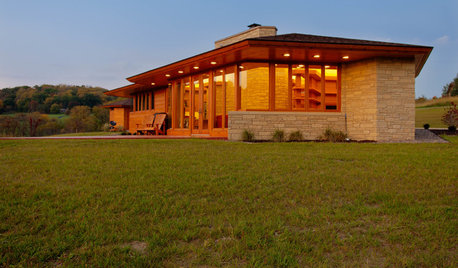
Which got shouted down by several realtors, coworkers and anyone I asked in this area because this was a much prettier house:

I don't get it by the way. How is that bottom house prettier and "much more salable" than my two inspiration houses...What hell do I live in?" By the way if you disagree with me, and think the bottom one is prettier - Well hello neighbor...
- 10 years agolast modified: 10 years ago
I think you're conflating two different things. AS you know, there is the appraisal done for the bank loan, tax assessment, and insurance. That's typically based on location, square footage, and a standard laundry list of items like number of garage bays, number of bedrooms, amount of land, age of house, etc. It's supposed to be objective. "Looks" don't really enter into it, because it's not very quantifiable.
You can check this out for yourself. Look at the tax assessor's note on the town website. Usually there is some document that details how the assessment is made. It's essentially a scoring process based on some sort of checklist of physical features. These entities have to justify the appraisal based on tangible items on the property, or it won't stand up in court.
But when a realtor does a market analysis, they are thinking of resale value, and that definitely takes looks into account, because ugly houses don't sell as well as pretty houses. (Landscaping plays a role here as well.) A resale value "appraisal" is more nebulous and subjective than the above-- it's a list of features, but also a popularity contest-- there are non-quantifiable intangibles, like "charm." It's hard to pin down how much "charm" adds to the value, and different realtors will give you different views, but it definitely does have an effect. You just can't put it in a spreadsheet.
Typically people want to maximize value for insurance and resale purposes, but minimize value for tax purposes! Presumably you want to maximize the value at resale, and that's something of a crap shoot, and a moving target.
- 10 years ago
I think that there was a general revolt against "5 over 4 with a door" style that speaks to you - because it was "overdone". It's efficient, if somewhat boxy and it ended up lending itself to non-creative types doing a traditional "4 rooms downstairs" approach to everything. So there was an interest in things like first floor masters, a "French country" look, less boxy, more complicated rooflines, etc.
I think we all end up coming full circle, just with tweaks.
I like the cape cod look and don't like the most traditional, but, I REALLY don't like the "let's make it look as looming, complicated and ostentatious as possible" design either - we have a TON of that in my area.
So - you are doing the right thing - getting an architect and building what you want.
I STILL don't understand why anyone would say a cape cod / 1.5 story is all that more salable than what you REALLY want. If I were you - I'd get what I wanted - and that classic style will ALWAYS appeal to some buyers.
bry911 thanked just_janni  10 years ago
bry on this I agree with you 100%. I especially LOVE the second one.
Personally, I think you should build the second one and realtor's be damned because the truth is a well designed house will always look good and sell.
bry911 thanked cpartist PRO10 years ago
Hi, bry911,
Like you, I prefer traditional style homes over the transitional style homes that apparently dominate your future neighborhood. While preferences in our area are trending away from the transitional style and back to more traditional ones, I infer from the Realtor input you received that it's not the case in your area. area.
I encourage you to consider the context of the neighborhood and carefully consider building a home that strays too far from the dominant architectural style. Will you be content to drive down a street full of homes you dislike enroute to your traditional style home? Will a future buyer with a preference for traditional architectural styles be content to look out the front windows at the neighboring homes?
Best wishes for a successful outcome.
bry911 thanked Charles Ross Homes 10 years ago
That first brick house you posted used two different bricks. Then it looks like they started to paint it yellow. Wth?
i love old houses. Really like the colonial you posted.
you already know this. You are a smart guy. Don't overbuild for the neighborhood, no matter what you can afford or what you want.
 10 years ago
I like your two inspiration houses as well as the bottom house. The first two houses in that post are too complicated looking, but the bottom house still has a clean design to my eye. In fact, it kind of looks like your second inspiration picture without the second floor.


cpartist