Software
Houzz Logo Print
edlincoln

What should I remove?

10 years ago
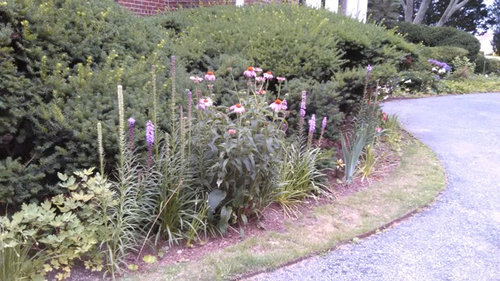
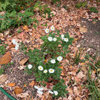
I got interested in Native Bulbs, and planted Nodding Onion and Liatris in a row in front of this homely yew hedge. When I saw a perennial I liked in the bargain bin at Lowes I bought it and stuck it here.

The nodding onion took off quickly, but everything else limped along and looked sparse...so I kept trying more things. Then last year the liatris and one echinacea exploded. Worried it's starting to look a little cluttered. What should I remove?

I have a Minerva echinacea that got huge, a dwarf orange echinacea that looks
great but grows slowly, a fluted echinacea that is doing terrible, two
bee balm that are doing terribly because of powdery mildew, A bleeding
heart and Montauk daisy I planted when I fell off the native wagon
recently. (Too early to tell if they are doing well). Also a tiny smooth aster.

The spot is very dry and VERY windy, shaded to the southwest. Gravely acidic soil. Looking to stick to natives and go cheap. Hoping for things pollinators like.


The Minerva Echinacea and liatrist are showiest...but could smother the nodding onion.


The nodding onion buds are actually better then the flowers...they are elegant and look great with the bleeding heart foliage. The flowers are anticlimactic, though.

Comments (20)

  • 10 years ago

    What are your goals for the space?

    I ask because I would personally remove anything tall, and grow a skirt under the yews. I'd also get rid of the grass edge since those things are a pain to mow.

    The closer cultivars are to the wild species, the tougher they are going to be.

  • 10 years ago

    My goal is a splash of color and attract pollinators.

    Ideally I'd like a low skirt of plants under the yew with a few tall things sticking up above the skirt in places. The liatris clumps more then I thought, and the foliage spreads out wider. The wild type echinacea is taller then I visualized.


    I can't seem to get anything to grow under the yew though...too dry and too dim. Wild ginger didn't take.

    I've been told to remove the grass edge by others,. I've been sort of passive aggressively hoping the perennials spread into it...

  • 10 years ago

    I think you could get a nice gradient of sizes between the yew (which I assume you have to hack back a bit each year?)... then the "tall" plants... and then after you remove the grass ... the "short/skirt" plants. The grass can't be fun to have to mow... plus it's forces you to work in such a narrow bed... it might look off if you just had short plants right up agains the giant yews. I could see some nice low plants that drape out to the driveway at bit. Catmints would work nice... and don't require anything special.

  • 10 years ago

    Along a walkway under a pergola, I have all kinds of flowering thymes(mostly white) growing in front and underneath the yew hedge. Thyme attracts butterflies and an assortment of pollinators and along with various heights of sedum,there is contrast. I constantly tell myself to keep it simple.

  • 10 years ago

    Yeah, but I never have enough time to do these things.

  • 10 years ago

    Yep, forgive my rudeness, but it is a bit of a mish-mash isn't it? Because the hedge is quite a heavy monochrome background, those little dots and dabs of vague colour are not doing any favours here. I would suggest you took them all out apart from the echies and alliums, whipped that grass stuff off the front (pointless) and filled up the rest of the space with grasses and maybe a couple of airy umbellifers. I honestly think you need the whole space filled confidently, with 2-4 species, in 3s and 5s at least. Movement, texture will counterbalance the heft of the yew. Heliotrichon, stipa, carex testaceae...any of them really, You can go the seed route or buy a couple of pots of grass and split them.

    Apols, I hardly ever chime in with suggestions, and am never usually so truculent about existing choices..but honestly, stay away from the bargain buckets and get shot of the grass or whatever it is at the front edge at least.

  • 10 years ago

    I think it looks great! Agree with removing the grass and letting them fill out to the sidewalk.

    edlincoln thanked mattp321
  • 10 years ago

    Grief, Edincoln - apologising again for rudeness - must have been having a hard day - sorry for calling it a mish-mash, disregard my snottiness, pls.

    Although true, it is sometimes better to just make a bold move rather than a bit of tinkering around.

  • 10 years ago

    The grass.

  • 10 years ago

    Yes, the grass.

  • 10 years ago

    the horizontal sloping nature of the shrubs.... is offended by the tall spikes .... and if i were redesigning it all ... i would tend to enhance the low spread of the shrub ...


    just something to think about.. design-wise ...


    ken


  • 10 years ago

    I had thought about drifts of something like Geranium macrorrhizum 'Bevan's Variety'. That ought to handle the dry part sun setting, and I think it would work with Ken's idea of low spread.

    I hadn't mentioned it though since it's not a native and it wouldn't be cheap up front.

  • 10 years ago

    How about a native geranium or aster like ionactis linariifolius? It looks like the Rhode Island Native Plant initiative has flats for sale. I think they don't ship but maybe they are a reasonable distance from you for a plant road trip?

    A whole flat feels expensive but it is a great per plant value. A flat also provides a counter balance to the one-of-this, one-of-that tendency we all seem to have. It does take some effort to bring small plants along in the first year but will be well worth it in the long haul. As several folks have mentioned a drift (or edge or skirt or whatever you want to call it) in front instead of grass ties the whole thing together. With the yews at the back and a relatively consistent species or two at the front, the mid height ribbon's diversity could feel lively, not cluttered.

    I've read that mountain mint is amazing for pollinators, native and not really aggressive. I'm a wimp about anything with the word "mint," but it might work for you in this spot. Also available from the RI folks.

    I don't think I've ever seen any plants growing under yews, even weeds - not in public gardens, private gardens, or wild areas. The only thing I've ever seen that can live under a yew is a rabbit.

    edlincoln thanked User
  • 10 years ago
    last modified: 10 years ago

    WoodsTea 6a MO(6a)', I saw geranium maculatum on sale. Would that work?

    Maisie (6b), thanks for the Native Plant Initiative suggestion. Reasonably nearby. I'm interested in the Amelanchier laevis and Nyssa sylvatica. I'm not sure where to go to actually buy from them. They seem to sell in greater quantities then I need, though.

  • 10 years ago

    Geranium maculatum seems like it could be a good fit for that location, especially if you massed it in drifts. I don't think it's quite as drought-tolerant as G. macrorrhizum, might decline somewhat (or even disappear like the Dicentra) in a really dry summer. I've got some, but haven't had it long enough to say much about its performance. On the plus side, it's native.


    edlincoln thanked WoodsTea 6a MO
  • 10 years ago

    Bigelow Nursery in Northboro has Amelanchier laevis and Nyssa sylvatica in various sizes:

    http://www.bigelownurseries.com

  • 10 years ago

    The local bowling club has a yew hedge which is fronted by a row of Midwinter Fire cornus alba...all winter it has been looking simply tremendous - really exactly like a row of flame. You could do worse than planting a similar redstemmed dogwood, underplanted with ophiogon and snowdrops for a lovely all season vignette.

  • 10 years ago

    Oh, the area in Spring...


  • 10 years ago

    I like the vertical spikes of liatris with the coneflowers!

    I am pretty ruthless with getting rid of anything that isn't doing great after a reasonable amount of time. I think if there's any plant that you're not really happy with its performance, perhaps try to move or get rid of it, otherwise it will likely continue to bug you.

    I do think if you got rid of the grass strip, you'd have a little more depth to this bed to give you more room for groupings. Being a plant collector, I tend to have lots of "onesies" and that can make a bed look cluttered. I've been trying to focus on making drifts or patches of plants that I like, by division or buying more of the same. (Key word is "trying" - but I keep finding new plants -lol!)

    I'd bet if you grouped together your liatris, onions, etc. it might look less cluttered to your eye. Agree with the others that a low groundcover would look nice and pull things together. I actually like the yew hedge behind; it gives it a nice backdrop.