Software
Houzz Logo Print
hzdeleted_8959062

Muhlenbergia

10 years ago

We have been doing the ornamental grass thing for years in the UK - Miscanthus and calamagrostis are more ubiquitous than box hedging and roses...but with some weird omissions. Prairie style planting has been well popular and we are well versed in the New Perennial movement but where, O where are the bluestems, the sporobolus and most astonishing of all, the muhlenbergias? You really wouldn't be;ieve the difficulty I have had finding m.capillaris or .reverchonii. I paid an eye-watering amount for a plant from Ebay (because UK nurseries just....don't)...and am on my second seed attempt.

Anyway, I never resort to heat but experimentally, I brought one of the pots inside and sat it on top of the fishtank and now....seedlings. So now am anxious that I can't shove them back into the freezy hurly-burly of the greenhouse...but well-lit windowsills are not much of an option - they are either already full or unreachable (I am reproached by a suffering agave every time I walk down the stairs).Should probably ask over on the winter sowing forum because I still have a couple of pots in the greenhouse.

OT but I am horrified at the number of pots which no longer have labels - some of them even have seedlings but I have no clue what they might be...

Comments (19)

  • 10 years ago

    Well Camp...I know you don't want to 'resort' to lights too, but that's what they need....

    (Hopefully this helps with your denial? ;)

  • 10 years ago

    If you need seed from a M. dubia and M riverchoni, just ask. I might have a M. lindheimerii. I often grow out the nameless wonders and wait for them to tell me who they are.

  • 10 years ago

    Sigh - yes, I sort of knew I was going to have to drag the prop-lights out. I have a couple of growlights - compact fluorescent things, so shall sit them in a cupboard with 400watts. I may as well get some use out of the electricity though - what else would you suggest I could sow apart from the obvious peppers.

    Thank you, Mara - may well take you up on that offer - I really don't know why these have not got traction in the UK...when posh gardeners are still faffing with restios and the like.

  • 10 years ago

    Well I collected 2 types of M reverchonii (one native to my land and an "undaunted" one that was originally collected west of Dallas). M. dubia, M. lindheimerii, Muhlenbergia "pink Flamingos". They are small envelopes since this was not the best year for inflourescens due to the very late arrival of our fall rains. So speak up if you want them before I loose the envelopes in the seed and office clutter.

  • 9 years ago
    last modified: 9 years ago

    and an "undaunted" one that was originally collected west of Dallas

    Update:

    I often see glowing reviews of this grass i.e. Muhlenbergia reverchonii 'Undaunted" and an earlier blooming version "Fast Forward"

    For those of you that have had experience with it how do you like it?

    Any experience with it regarding its hardiness for a zone 4/5?


  • 9 years ago

    My little seedlings have survived the winter. True, they are still tiny...but undeniably alive. Thrilling!

  • 9 years ago
    last modified: 9 years ago

    @ Rouge, It is a robust surviver that performs differently in different environments. My inflorescence is not as colorful here than where it grows in TxR's yard. It is also larger in her yard. It is native to my land, But my variety grows smaller than the "Undaunted" until it finds it's seep to stick its toes in. That is why it is called seep muhly. The roots can go deep. I like its smaller dry form on the dry calcarious soils. It makes small wirey tuffs. A very nice low mounding texture in drifts. I will try to get a photo tomorrow. They are reputed at being more cold hardy than the M. capilleris.

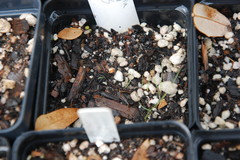
    @ Camp. They do start out tiny. The weeping muhly seems a bit faster from seeding.. My M. capileris is damn invisible. These are about a couple of weeks.

  • 9 years ago
    last modified: 9 years ago

    Yep, mine is exactly the same (unsurprisingly). Oddly enough, we appear to be using exactly the same pots'n'perlite'n dead leaves mix.

    getting a nice little collection now - rigens, reverchonii,dubia, capilleris....got my eye on bamboo muhly, m.dumosa from Knoll Gardens (spendy though).

  • 9 years ago
    last modified: 9 years ago

    Dead leaves are from the oak tree above. I do like to give these natives a fast draining mix in hopes they don't damp off. The Bamboo muhly makes very few seeds and mine rarely flowers. I have kept my eyes on it but not caught it. It is a beauty of a grass. I did get freeze back on it this year when we dropped to 16F / -8C.

  • 9 years ago

    Just an aside but perhaps the reason the Muhly grass has not "caught on" in the UK is the weather. These grasses are just not good "doers" here in the PNW, likely due to our wet winters and soggy winter soils....even those that are well draining. The plants just don't make a strong comeback after winter, if they survive at all. We simply don't have a very "prairie minded" climate and I'd suspect your very similar UK climate is the same.

  • 9 years ago

    True GG...but small though the UK is, we do have some extraordinary geographical differences...and semi-arid east anglia looks like being a possible fit for muhly's (unlike anywhere at all on the western edge of Britain)...and anyway, it wouldn't be the first time I have embarked on a fool's errand. Note that M.capilleris is now being sold by 5 vendors according to the RHS plantfinder - a 250% increase in a couple of years...so finger's crossed.

  • 9 years ago
    last modified: 9 years ago

    M. capilleris does take the soggy ground of the east coast of the US. It is native all the way up from the Gulf of Mexico (why they call it Gulf Muhly) to coastal Massachusetts. NOW , I do not know how prevellant or what soils it is in Massachusetts. Desert muhly's like the drainage.

  • 9 years ago
    last modified: 9 years ago

    Rouge, Like I said , I grow the Undaunted in a daunting way in a warm fall climate. Further north it takes on more fall color, I hear. I like my native one better for the curly wiry appearance that it does in the dry washes that I have. My dirt is very thin. So this does act differently here than in Oklahoma and in places where the soil evaporation is less.. Bluestem and other colorful grasses act differently here. They get much larger there.AND they are more floriferous. They call it the TALLgrass prairie for a reason. I am in the midgraus prairie. I feel more like short, but that is even shorter. LOL

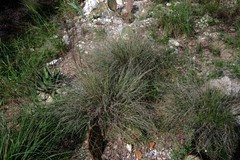
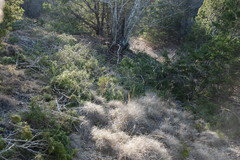
    3 year old "undaunted"

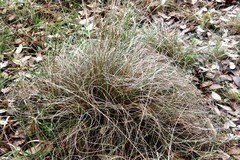
    Native one endemic to my land. TxR grew this one and it got large in her garden quickly.

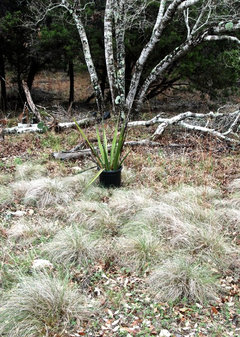
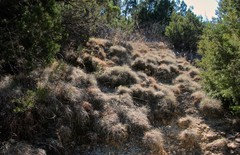
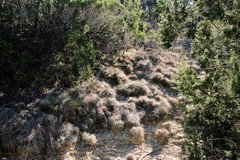
    This is a native patch that slowly gets larger. I think these are about 8 years old. The softness is very nice.

    It does beautiful things with afternoon light. And good for controlling erosion.

  • 9 years ago

    An excellent set of photos wantonamara. Thanks for doing this.

  • 9 years ago

    Rouge, This is a one sided show. It shows a grass in a specific extreme garden on very infertile soil.......NOT ontario. Muhly are famous for changing their behaviors according to environment. M lindheimeri will change from long and wispy, drapy and not very large in dry shade to a HUGE clump in a rich deep soil situation with routine water and sun..

  • 9 years ago

    Fore sure I understand wantonamara.

    I do want to incorporate more ornamental grasses in our garden. Too simply put I am looking for gorgeous and hardy ;). So I appreciate reading about other people's faves coupled with their location.

  • 9 years ago

    The discussion about Muhleys and how differently they behave depending on environment is most interesting. I discarded our native Muhlenbergia rigens because it was just too big and messy. Massive really. I went to M. lindheimerei which is still large but definitely smaller and essentially evergreen in my climate. I find it much more manageable and an agreeable bluish color.

    I bought M. Capillaris about four years ago and it is smaller yet and quite attractive though it didn't flower for me last year. It gets almost no water.

    I tried M. emersleyi and have no idea why I don't have it any longer. Well, probably because I didn't have a space for it. It was definitely a small Muhley.


    I am just experimenting with others. I bought a tiny Fast Forward from Santa Rosa Gardens last fall. And I am much interested in giving M. dubia a trial.

  • 9 years ago
    last modified: 9 years ago

    Hmmm - gorgeous and hardy grasses. My favorite grass might work in Ontario. Pennisetum alopecuroides and its many cultivars aren't called Fountain Grass without good reason. I love its very graceful arching form. It greens up very early, sometimes as early as late January in my garden, but this year not until about mid February and then slower than usual, no doubt because our winter was colder and wetter than normal. Then in summer to late summer, depending on cultivar come it's pretty flowers. It's best show comes in fall when it becomes multicolored as it gradually changes to its late fall/winter color of straw. I absolutely love its pleasing all winter presence and it only needs cutting back before it starts to shoot again in spring.

Sponsored
Buckeye Basements, Inc.
Average rating: 5 out of 5 stars40 Reviews
Central Ohio's Basement Finishing ExpertsBest Of Houzz '13-'21