Software
Houzz Logo Print
romy718

Grout/Caulk Backsplash Problem

10 years ago
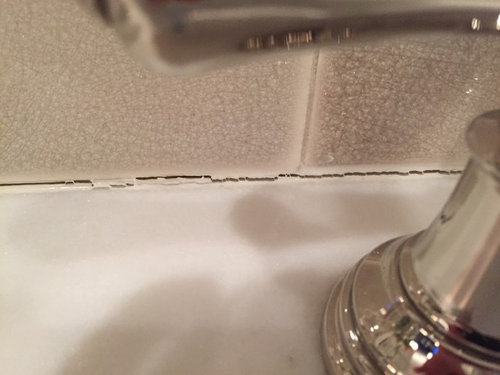
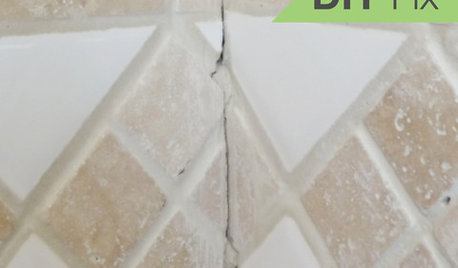
When my backsplash was installed, the tiler used grout where the tile meets the countertop. I knew this was wrong (thanks GW) and brought it to the attention of the GC. The tiler came back & caulked the area. The caulk began having minimal cracking behind the sink which has now become more significant. Does this mean the tller caulked over the grout? If yes, I'm guessing that both the caulk & grout need to be removed & recaulked. The only cracks are behind the sink. Should I have all the grout & caulk replaced or just that area?

Comments (25)

  • PRO
    10 years ago
    last modified: 10 years ago

    Absolutely have it replaced. I doubt caulk would crack like that, so I suspect the tiler just ran a thin bead of caulk over the grout instead of removing it first. Your GC should take care of it no charge.

    romy718 thanked StarCraft Custom Builders
  • 10 years ago

    We had the exact situation. I'm shocked our GC's tiler used grout which deteriorated in 6 months along the counter. My husband just caulked this weekend but didn't remove the old grout. We shall see how it lasts...

    romy718 thanked brdrl
  • 10 years ago

    Oh, Romy....noooo!!!!!! Not the Encore! Well, at least we get to see a pretty, close-up shot. :) I've re-caulked all our showers and tubs over the years (going behind the builders who, yes, similarly used grout where tile met tub/pan), and caulk can last years and years -- do over!

    romy718 thanked javiwa
  • 10 years ago

    I don't know why I put off contacting our kitchen company - I had suspected all along that the grout wasn't removed & the caulk was applied over it. I sent the pics this morning & got an immediate response that they will take care of it. They have been very responsive to any & all issues throughout the whole reno. Should I have them do the whole kitchen? I'm not worried about damage to the tile but I have Danby marble countertops.

  • 10 years ago
    last modified: 10 years ago

    How much kitchen are we talking -- linear feet? It wouldn't hurt to ask, given this company is so responsive and this is an obvious oopsy. I would think it's more cost effective and less hassle for them to fix a long stretch now, rather than continue to return as the caulk separates.

    ETA: Though, I guess the potential tradeoff is that in those areas where the grout is sound, you'd be asking them to dig it out. That may be inviting collateral damage (as one of my tradespeople put it) to your tile and Danby.

    romy718 thanked javiwa
  • 10 years ago

    Same thing here - GC grouted all along the edge. I didn't know until after entire job was done & paid for that he should have used caulk. I think it was only a few weeks before it started cracking, and, now, it's cracked all along the edge, where my counter meets my back splash.


    romy718 thanked Carrie B
  • 10 years ago

    I have this issue too where grout was used at the joint instead of caulk. Is removing the grout (which is cracked and missing in spots) something that I can do, or do I need to hire a professional? If I can do it, what tools do I need? TIA.

    romy718 thanked friedajune
  • 10 years ago

    This is based on my DIY experience only (certainly am NOT a pro, but based on the folks who've trekked through this past 18 months, I KNOW I'd be more careful with my house/surfaces): don't create more work than you need to, in this case. I'd remove the grout bits that are loose (basic surface prep before grouting), then caulk. Who knows? The area may not experience any more movement, and this may be your last crack. :)

    You have to be careful the match the caulk 'ends'/joints as smoothly as possible. Color match is an entirely different animal: if the caulk in place has been there for years, even if you used the same stuff, the older caulk may have discolored. Depends on how picky you are and/or where the offending area is located -- e.g., right behind a faucet where it's very visible and water constantly splashes, or in a dark, dry out-of-the-way corner underneath cabinets where a well placed fruit bowl would hide any less-than-perfect patchwork?

    romy718 thanked javiwa
  • 10 years ago

    Oh my. Oh my. tragedy.

    romy718 thanked User
  • 10 years ago

    What rebunky said...gasping in MI.

    romy718 thanked autumn.4
  • 10 years ago

    Same thing happened to me. GC grouted where backsplash and counter meets and insisted it won't crack. Guess what, it did in less than a few months! Had them came back and reddid it. I was not home that day but DH was and I told DH to make sure they take out the grout and not caulk over the grout. BTW, really pretty backsplash!

    Can the GC tell you how they will remove the grout underneath the caulk? If that method seems to be safe for you, I would recommend do the whole kitchen. But if what they explain to you concern you that it might damage the pretty Danby marble, then just do the section you have cracks.

    romy718 thanked yeh_yeh
  • 10 years ago

    Romy - thank you for posting. This was just the nudge I needed to get in touch with my GC. I just sent him the following email (with photo):

    "Hi B****,

    Hope your winter has been a good one, and that you and your family are all happy and healthy.

    The grout where my backsplash meets the counter has cracked all along the sink wall (the fridge side looks fine.)

    I’ve heard that silicone instead of grout where the counter meets the backsplash could be an alternative.

    Wondering if you’d be available to stop by sometime in the next two weeks to have a look & let me know what can be done.

    Warm regards to you, Preston and the Jesses.

    Carrie


    romy718 thanked Carrie B
  • 10 years ago
    last modified: 10 years ago

    To his credit he emailed me right back:

    "That is normal. It will need to be caulked. I will call you."

    Heh. So, yes, it's normal when you use grout instead of caulk... so, if it needs to be caulked, why wasn't that done in the first place? I think he's fairly competent and he is responsive, so I won't push him on the above. But... uhm?


    Romy - It seems that I've hijacked your thread. My apologies, but I do hope this can be useful information, and this seems a good place to put it.

    romy718 thanked Carrie B
  • 10 years ago
    last modified: 10 years ago

    No worries, Carrie. I needed a nudge also, which is why I started this thread. When they do your repair, be home & make sure they actually remove the grout before applying the caulk. They should also be able to color match the caulk to your grout. I wouldn't assume that they will take the extra time to do that. I don't mean to sound cynical.

    I'm also not going to push the issue, but I really don't get it. I'm also not going to mention that the grout line should have been 3/16" versus 1/8th to avoid lippage & with that slightly wider grout line, sanded grout is used. Non-sanded grout for up to 1/8". I also recently learned on GW that the grout should be mixed with distilled water versus tap water as white grout may turn yellow due to the iron content in tap water.

    Javiwa - I have only two short (2 feet) sections of tile on my range wall that are not cracked. I think I'll see how it goes on the sink wall & if all goes well, have them repair all if it. Thank you.

    Edit - I corrected the grout line size & sanded versus unsanded grout info.

  • 10 years ago

    This is very useful info since I just placed my order for Encore silver crackle tile!

    Romy - Could you tell me how you ended your tile to the left of sink? I saw your backsplash reveal post and see that it aligns to your wall cabinet, but can't make out if you used bullnose or other method.

    http://ths.gardenweb.com/discussions/2704151/silver-crackle-backsplash-done?n=95

    romy718 thanked mamazc
  • PRO
    10 years ago

    Rip some plastic laminate into 1" wide strips and break those into 6" long sections. The laminate is sharp enough to remove the grout, but soft enough to not scratch the countertop. When you get dull, break off a new edge.


    That looks like paintable, not silicone, caulk. That stuff's as bad as grout when it comes to expansion and contraction. When you get the old grout out, or most of it, fill the void with color matched silicone caulk only.

    romy718 thanked Joseph Corlett, LLC
  • PRO
    10 years ago

    Joseph Corlett, LLC

    Now that is a clever idea.

    romy718 thanked StarCraft Custom Builders
  • PRO
    10 years ago

    Here is what the "Tile Installation Bible" (TCNA* Handbook for Cermaic, Glass and Stone Tile Installation)

    "Caulk penetrations, corners or abutments to dissimilar materials with a flexible sealant. (emphasis supplied)".

    Cement grout, which is not flexible is never an appropriate material in these areas.

    *TCNA = "Tile Council of North America"

    romy718 thanked StarCraft Custom Builders
  • 10 years ago

    Joe - can I buy plastic laminate at Home Depot? Are you talking about countertop plastic laminate? Any particular brand of caulk? I'm not going to DIY but I think I'll get some silicone caulk in case he shows up with non-silicone caulk.

    Mamazc - I did use a bullnose tile. Please do share some pictures of your Silver Encore.


  • PRO
    10 years ago

    "Joe - can I buy plastic laminate at Home Depot?"


    Yes, but you'll probably have to buy too much. Stop by a local cabinet maker and ask for a scrap.


    "Are you talking about countertop plastic laminate?"

    Yes. Not the V-32 thin vertical grade.


    "Any particular brand of caulk?"


    No, just make sure it says "100% silicone" and does not say "paintable".

  • 10 years ago

    Questions - I've heard a good deal on here about "color matched caulk."

    So:

    1. Color matched to the grout, I'm thinking? If so, do you buy that at the tile shop, if that's where I bought my grout? Or do I just find the closest match at the big box store?

    2. What are advantages to color matched vs. just getting the clear stuff - is there a big difference? Assume it's all about aesthetics.

    romy718 thanked Carrie B
  • 10 years ago
    last modified: 10 years ago

    And ya know what, romy? Every time you get more stressed and post a message, your Encore is ever taunting me!!!!!!!!!!!!!! ;) (Recall I posted my BS 'dilemma' a while back. I need to settle this once and for all, and seek out my local Encore dealer and lay this to rest, one way or another!)

    Yup...I've seen those spit references, too. But they know what they're talking about. Caulking is not rocket science: just takes practice. Yes, please relax. Trust me: a bad caulk job is low on the list of issues (i.e., in terms of fixability).

    Think of it as: too much information brings you that many steps closer to an even more beautiful kitchen! (As I type that, I'm trying to remind myself of same.) Really good place for advice, that John Bridge forum.

    Trebuchet/Joe recommended a while back a translucent caulk that he swears by. I'll see if I can find the link, unless he replies first. I'm going to have the same issue as I don't think either a white or grey caulk (the standard fare at Big Box) won't look obvious next to my Calacatta quartzite, regardless of what BS I go with.

    ETA: if the person coming to remedy the situation also laid down the first line of caulk, how does that look (the uncracked portions)? If it looks fine, then you're good to go.

    romy718 thanked javiwa
  • 10 years ago

    "Sometimes too much information is just not good"

    Cannot agree more!!!

    romy718 thanked yeh_yeh
  • PRO
    10 years ago

    I always specify that the first row of tile be set 3/16 minimum to 1/4 maximum above the counter.

    If you have 1/64" seasonal movement of your house, half the thickness of a dime, and you only have 1/8" for caulk, then you are expecting the caulk to flex to 125%. Increase. To 3/16 and now it only must expand to 116%, at 1/4-112.5%. More than 1/4 is too big.

    Always push the caulk tube, never ever pull it. Pulling allows air pockets.

    I have never had a failure when that spacing has been used combined with color match caulk (Mapei or Laticrete "latex syliconized acrylic"). My own is a heavy 3/16, done once, 10 years ago.

    romy718 thanked MarkJames & Co