Software
Houzz Logo Print
margi46

Bad mix?

I am ready to start some seeds, under lights, in the basement. I am a seed-starting veteran, but I have a dilemma. Last Fall I bought some seed starting potting mix. I used some and the rest has been stored in the original bag, top of the bag rolled down to keep it closed.

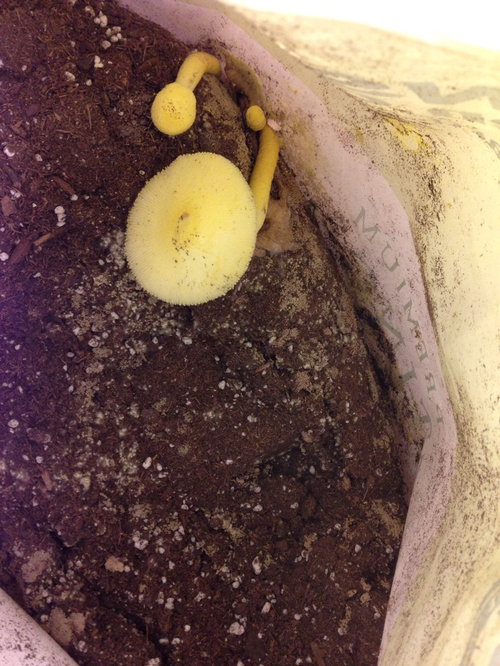
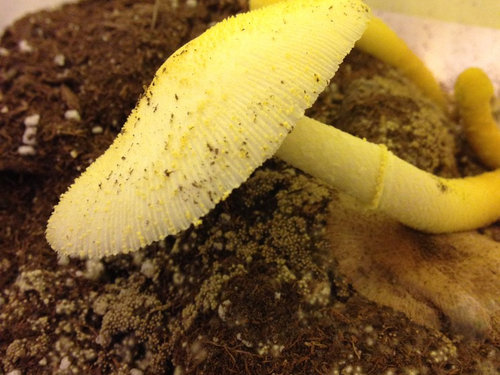
Fast-forward to today. I just unrolled the top of the bag to fill some six-packs for parsley and impatien seed. Imagine my horror when I found fungi. Here's a couple pictures:

What should I do?

i am hesitant to use this mix now. I certainly don't want to start out with problems! I rolled the top of the bag back down and will wait for advice.

Thanks in advance.

Comments (18)

  • 10 years ago
    last modified: 10 years ago

    I think you answered yor own question....

    "Bad mix"

  • 10 years ago

    Storage conditions aren't growing conditions. Not even close. Use the stuff. If you have doubts, once dampened just nuke the stuff enough to get some steam rising. Fungi are everywhere.

  • 10 years ago

    Not a risk I'd be willing to take, especially with seeds.

    I'm an old gardener, but new at growing from seed. I feel using fresh, greatly increases my success rate. I've seen what old soil can do to plants...although I never nuked it :)


  • 10 years ago

    I'm with Grubby. It wouldn't bother me. The fungi come from the storage imo, not the original product. Fungal spores are everywhere around us. Providing the seed containers are not overwatered and have plenty of air circulation I'm pretty sure the fungi will disappear. I'd just stir up the surface of the mix and proceed to sow.

  • 10 years ago

    I'd remove the fungi and use the mix and wouldn't worry about it!

  • 10 years ago

    The little yellow mushrooms are probably Leucocoprinus birnbaumii. It’s a fungus and the fruit of the fungus is the mushrooms. I understand that the fungus is not easy to get rid of. I’m wondering if you use the soil mix, will you have mushrooms popping up in your plants later on? Probably okay to use it but frankly, I’d feel better about just getting some new potting mix :-)


    See: http://www.gardeningknowhow.com/houseplants/hpgen/getting-rid-of-mushrooms-growing-in-houseplant-soil.htm


    Art


  • 10 years ago

    That's what you get for using "green" alternatives to peat moss. I have never seen fungus grow in peat moss or mixes in which peatmoss is the only organic component.

  • 10 years ago
    last modified: 10 years ago

    "Where does the OP say what sort of mix it was?"

    I regard the fungus as evidence that peat moss is not the only organic component in the Op's mix.

    "Besides which I never use any mix with peat in it and I've never had fungi growing."

    Peat moss is not the only organic component that resists fungus growth but, probably, the most common. Parboiled rice hulls comes to mind, but it contains about 1% rice that mold grows on. After the rice has composted, which takes about a week after the media is first moistened, no more fungus.

  • 10 years ago

    Well, I'm certainly not using parboiled rice hulls ;-) I just buy one of the many commonly available peat-free mixes/composts at the garden centre. It doesn't grow fungi unless badly watered. Assuming the OP's compost is peat free because it is growing fungi seems very shaky logic.


  • 10 years ago
    last modified: 10 years ago

    "Assuming the OP's compost is peat free because it is growing fungi seems very shaky logic."

    False logic. I never suggested or implied that the OP's mix is peat moss free. Instead, I implied that peat moss is NOT the ONLY organic component of the OP's mix because, if peat moss were the ONLY organic component, then there would be no mushrooms growing in it.

    Parboiled rice hulls (PBH) is a good substitute for perlite, not a substitute for peat moss. The fact that PBH is unpopular is further evidence that people are stupid.

  • 10 years ago

    That is the ubiquitous 'yellow potting mix mushroom', Leucocoprinus birnbaumii, as was mentioned. It is very common in the typical soilless, peat-based media of choice today. MiracleGro is such an example, but there are hundreds of others.

    It is not a modern phenomenon, but was originally described in the late 1700s, in a greenhouse full of plants!

    This is a saprophytic fungus, meaning that it is a decomposer and a recycler of organic matter and not directly harmful to our plants. The mushroom is merely the temporary fruiting body and the actual fungal body consists of hyphae and mycelium that do the actual decomposing spread and grow throughout the medium. Evidence of that is seen in your picture.

    Thoroughly decomposed potting medium is not a good thing. It becomes sludgy in a container and even hydrophobic. You could pasteurize the mix in small batches, but your oven will never smell the same. ;-)

  • 10 years ago
    I heard enough comments suggesting that I shouldn't use the mix for starting seeds, so I bought some fresh Jiffy Seed Starting mix to get me going. I am thinking that the suspect mix would probably be OK to use in outside pots this summer. Yes?
  • 10 years ago

    It would probably be okay, but best use would be simply as a top dressing on the lawn or outdoor garden.

  • 10 years ago

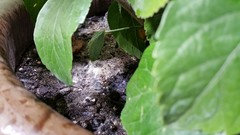
    I'm going to piggyback on this topic if you guys don't mind: I've been meaning to ask about this growth I've noticed on the soil of my hibiscus. Is it anything to worry about?

    The soil is Miracle Grow Cactus, Palm & Citrus (for drainage) with a light layer (1/2 cup (?) applied a week ago) of EB Stone Hibiscus & Palm food. Should I just scrape off that top layer and wait to feed until this is outside?

    Thanks in advance!


  • 10 years ago

    Tyler it is just another of the many soil based fungi that will grow when ideal conditions exist. See the FAQ here called "Something white is growing on my soil".

    When the soil is kept too wet and there is poor air circulation in and around the plant it develops.

    Just cut back on the watering and let the soil surface dry out and it dies. It poses no threat to the plant unless it is allowed to run rampant.

    Dave

  • 10 years ago
    last modified: 10 years ago

    Just to add to Dave's good advice, I had something similar starting on my indoor Schlumbergera truncata cuttings. Because they hadn't yet developed root systems, the medium remained wet for longer-than-optimum.

    The cure? Well, I couldn't let them dry out, so instead I put them into dappled sunlight. Yep, sunlight kills (or at least hinders the growth of) most fungi.

  • 10 years ago

    I just wanted to thank you guys for the advice! The plant is now outside and the fungi is indeed starting to die off. You weren't kidding about the sunlight taking care of things!