

Just do it!
The best way to learn is by doing, IMVHO. Reading a thing & looking
@ pics isn't the same as seeing it happen in person over time. What
works for person A might not work for person B. Anecdotes can help
temper unbridled enthusiasm into reasonable expectations, and help one
go toward the most promising ideas, but never let anyone's perfectly
valid pessimism deter you if you want to try something. Only by pushing
the boundaries will you learn what they are at your house/climate, in
your style of care, for each plant. "Experiments in pessimism" and
"what would happen if..." are my favorite topics & things to do. Anybody can just watch a plant, but there's no active fun in that for
me. I like doing proactive things to observe the results.
Comments (25)
 10 years agolast modified: 10 years ago
" "Experiments in pessimism" and "what would happen if..." are my favorite topics & things to do"
Controlled experiments? People are generally too lazy to perform controlled experiments and too eager to come to false conclusions from uncontrolled experiments, whilst hypocritically advocating a work ethic.
Incidentally, if you carefully observe cats, you will see that they learn almost everything by trial and error, the crudest form of experimentation. And, cats, unlike some people, do very well for their brain size.
 10 years ago
Let me tell a story, when I just got married we moved here from California. It was totally different experience in growing plants. My family was one of the old school types that grew plants in tea cups with no drainage, watering only twice a month. No plant in our house had drainage, very few had direct lighting, and every one did wonderfully. That's just the way plants were grown in our house and plants that didn't grow that way, weren't grown.
When I went to high school I took Ornamental Horticulture. I knew more about plants than my teacher, He only taught the class because he was the Ag teacher and the other Ag teacher taught welding that period. Needless to say we just puttered around the greenhouse and experimented. When I married, I thought I knew a lot because I had had three years of OH class. I could grow just about any plant you wanted and would even discuss and argue with nurserymen on how to properly care for plants in a home setting.
After joining this forum about 20 years ago, I came to realize that I knew very little about growing plants. I was an educated idiot, as my mom used to say. When we moved here I could grow plants you would not imagine possible in California. Plants did wonderfully for me here. I had trained myself to grow in high humidity and all my plants thrived. After moving back to California, I tried growing the same plants. Almost all of them died within a year because I had depended on the rains and humidity to sustain my plants. I had forgot how to water properly.
I had to learn all over again how to grow plants and aim my growing towards plants that grow well in a dryer climate. Now that I am back in Tennessee my plants are thriving again, but I can't grow my beloved cactus and succulents like I used to all year round outside.
My point is the way to look like you know something is to try it in many situations. Some plants will fail for you, some will succeed. It all depends on how you want to grow a plant then find a plant that will grow that way. A lot of research, trial and error, personal preference, and just plain plant voodoo come into play.
Now that I know better, I could probably not be able to grow an amazing orchid in no drainage because sometimes knowledge kills the experience of exploration. Don't let 'the norm' keep you from trying things for yourself and failing because who knows, you might just succeed.
Tiffany, purpleinopp Z8b Opp, AL thanked Mentha (East TN, Zone 6B-7A)Related Professionals
Dalton Landscape Architects & Landscape Designers · Houma Landscape Architects & Landscape Designers · Newport News Landscape Architects & Landscape Designers · Anniston Landscape Architects & Landscape Designers · Gloucester Landscape Architects & Landscape Designers · Bowling Green Landscape Contractors · Cookeville Landscape Contractors · Rock Hill Interior Designers & Decorators · North Adams Interior Designers & Decorators · Lincoln Interior Designers & Decorators · Green Bay Interior Designers & Decorators · San Luis Obispo Interior Designers & Decorators · Stockton Interior Designers & Decorators · Colorado Springs Interior Designers & Decorators · Evanston Interior Designers & DecoratorsTiffany, purpleinopp Z8b Opp, AL
Original Author10 years agoDragging others down won't build you up. What a bummer of a 1st response to trying to cheer people on to try things and step outside of their comfort zone. Virtual hugs, Azurinsky, hope it helps!
Mentha, lovely.
- 10 years ago
"What a bummer of a 1st response to trying to cheer people on to try things and step outside of their comfort zone."
My message was the same as yours except with an emphasis on controlled experimentation. Now, I suspect that you were bummed because controlled experimentation is outside your comfort zone, which you do not want to address, as evidenced by your failure to answer my question, "Controlled experiments?"
And, my praise of cats was obviously intended to inspire people to experiment more.
Tiffany, purpleinopp Z8b Opp, AL
Original Author10 years agoI have no idea what kind of experiments people might be considering. But whatever they are, I would not be interested in labeling them or the people considering them with negative, judgmental words like lazy & hypocritical. We're talkin' house plants, not trying to invent a new miracle medication. I do a lot of stuff on impulse, as I've seen others do too, much of it crude, uncontrolled. Nor would it occur to me to draw any conclusions or even consider a fellow plant-o-phile's work ethic or their brain size.
If all of that negativity somehow meant "Yes, wonderful people of the house plant forum, experimenting has been fun for me and if you are having thoughts about it, you would probably enjoy it too because there's certainly nothing special about me or my plants," I really didn't get it, and apologize. I believe you if you say that was your goal and you can chalk it up to me being dense. I don't "read between the lines" very well because I don't say things with hidden meanings. I just say what I mean as clearly as possible, I always think, though I've been misunderstood also.
I didn't start this discussion to talk about me, and if I have a comfort zone, IDK what it is. The overall goal is to make a ton of plants every summer that help me pretend I live somewhere tropical and totally embrace temporary denial, that make my yard look amazing, that I don't have room to keep, then give them away so others can see what they can do with 'em. In the process, I observe a myriad of interesting tidbits.
 10 years ago
I look at it this way - I 'lurk and learn' and then experiment using the knowledge I've gained, mixed with a little curiosity and a dollop of "what if I...."
Keeping houseplants is different for everyone. Some are scientific, some more free spirited. We can all learn something new. I dig that. (Pun intended)
Tiffany, purpleinopp Z8b Opp, AL thanked hardcorevioletsTiffany, purpleinopp Z8b Opp, AL
Original Author10 years agoTY, Al. Your message wasn't on the page yet when I opened it. And totally agree, some things would yield better results if there was more investigation beforehand. Too impulsive. I hope to applaud the effort and to encourage another try with some tweaking.
There are also those that investigate things to the point of minutiae, buying moisture meters, heating mats, artificial lighting, humidifier, read a shelf full of books, but never work up the confidence to try any cuttings, pruning, that kind of thing. No sense of adventure or lack of optimism? I never know.
I wasn't looking for any right or wrong, just encouraging. An experiment that's never tried is always a failed one.- 10 years ago
"I think the best way to learn is by removing as much of the 'error' from 'trial and error' as possible, which allows the 'trial' part to serve as a validation of what one already knows."
Not according to statistical decision theory. See
https://en.wikipedia.org/wiki/Decision_theory
Consider an experiment such that
1. the chance of failure (error) is high.
- the chance of success is very small but greater than zero.
3. the cost of failure is zero
- the reward for success is high
then, it is rational to perform the experiment because there is nothing to lose.
I am reminded of an experiment that almost approaches this situation. In this paper, https://jxb.oxfordjournals.org/content/58/12/3099.full.pdf , it mentions,
"Sommer and Franke (2006) presented evidence that treatment of seeds with green lasers led to enhanced fresh weight of plants at the time of harvest."
Although I estimate the chance of success to be very low, it costs me less than $3 and negligible time and effort to perform this experiment, therefore I will perform it.
Incidentally, I bought my green laser for $2.69 at http://www.ebay.com/itm/Fashion-Focus-Green-Military-Laser-Pointer-Pen-5mw-532nm-Zoomable-Burning-S4W-/161866175358?hash=item25aff9d37e:g:O78AAOSwo6lWKPYv . The entertainment of being amazed by the brightness of this laser, alone, was worth $2.69, so I'm already ahead.
Tiffany, purpleinopp Z8b Opp, AL
Original Author10 years agoThinking about this again last night when my daughter called to ask for cooking advice. I'd told her the whole thing before, but something wasn't the same. I won't bore you with irrelevant details, but we went over it again, she tried again & it was better. I think food is a decent anecdote.
Most things usually go better after some trial/practice period, regardless of how well they may have been explained with words and pictures. People learn things like medicine, clerical, construction, pretty much anything called a job... by doing. No, doctors don't start with brain surgery, but after some reading, it's time to start learning in a hospital, by watching others, then giving it a try with your own hands.
When I asked here a few yrs ago about putting house plants in the ground temporarily for summer, I got all kinds of helpful input. By the time the weather was ready to get started, there were so many thoughts rumbling through my mind, I felt really confused about how to put all of that into practice. After doing it for a few yrs, many lessons were learned, with many more to come I'm sure. And almost every piece of advice or warning has come to fruition in some way. I can see in my minds' eye now how it will look this summer... until I actually start doing stuff. Then impulses will show up, suggestions will be made, & things will be tweaked.With plants, the only risk is sentiment and $. Only the owner of a
plant can make those decisions. I still ask for advice for many of
mine, about timing, method, expectations, absolutely.Not everybody wants to do anything with plants but have some awesome plants and watch them do what they want to do. Nothing wrong with that at all. I LOVE seeing specimens that have been lovingly and benignly neglected and have become giant WOW plants. Putting a little crowd of propagated but much smaller plants next to one of those doesn't get the standing O or win any photo contests. Just like the pic of seedlings sprouted from saved seeds vs. the pic of the flower macro of the plant @ the store.
I cheer for the seedlings, the little forest of propagated cuttings, the air layering, and say thank you to anyone who has ever taken a minute to try to share some helpful thoughts, anecdotes, &/or encouragement.
 10 years agolast modified: 10 years ago
Edited to say: Tiff - this is in reply to the post above yours.
That model doesn't hold water for this application.
"Consider an experiment such that
1. the chance of failure (error) is high.
- the chance of success is very small but greater than zero.
3. the cost of failure is zero
- the reward for success is high
then, it is rational to perform the experiment because there is nothing to lose."
But when the cost of failure is NOT zero, when it's a spoiled growing season or significant disappointment after a notable outlay for a favored plant, or just the frustration associated with failure, we want to minimize the likelihood of failure by learning before we act. The model then becomes:
Consider an experiment such that
1. the chance of failure (error) is high. (lost plants, sick plants, wasted time, frustration .........)
- the chance of success is very low (no one is innately proficient at growing)
3. the cost of failure is high (lost plants, sick plants, wasted time, frustration .........)
- the reward for success is high
And the appropriate questions are: Would we be better off making the effort to arm ourselves with knowledge to make the later model a reality or should we approach the model willy nilly by trial & error? In reality, the later is closer to the model we would use when considering an appropriate path re husbandry. I'm pretty sure the farmer/food producer, doesn't follow the trial and error method; this, simply because there IS something at stake. When your cat gets loose and is confronted by a trapper's rub set, is it logical to think that trial and error is going to carry the day? when learning how to drive? learning about poison? high-stakes poker? our OWN nutrition? Is it better to think that since fertilizer is necessary for plants that more must be better, so let's put a big ol' scoop of this 33-0-3 lawn fertilizer on each of our plants ........ or would we be better off learning the mechanics of appropriate nutritional supplementation BEFORE we commit as many mistakes as it takes to get us at least in the near vicinity of 'appropriate'?
Trial & error is simply a very poor way to learn when the chance AND cost of failure is high.
Al
Tiffany, purpleinopp Z8b Opp, AL thanked tapla (mid-Michigan, USDA z5b-6a)- 10 years ago
I got to thinking about painting, A lot of painters learned the basics before they learned how to push the envelope. Granted the how and why is not always needed to be known when growing plants, it doesn't hurt to know it, most times it helps. While a lot of people have their own way of growing plants, a lot of factors come into play. Even a few feet of floor space could mean the difference between success and failure. Don't be afraid to experiment a little at a time.
When I kept fish. I could tell you what their scientific name was, how to properly care for them, where they were from, how to breed them etc. I even made my own working protein skimmer with a little PVC pipe, some caps, and a funnel. My husband on the other hand, just thought ooohhh pretty colors. Sometimes I envy his simplicity, other times it annoys me to no end.
- 10 years agolast modified: 10 years ago
I think that if we take all the hobby growers out there as a group, less than 1% of them have the ability to interpret what their plants are telling them with enough accuracy to allow them to react appropriately (pot growers excluded). Using Mentha's example of a few feet of floor space making a big difference is a good place to start. How many people show pictures of plants that are all stretched out and obviously starved for light, yet they have no clue this is an issue until someone TELLS them it's an issue or they take it upon themselves to do research enough that they LEARN what the problem is and then act appropriately? How many growers of many years haven't figured out that watering in sips is inherently problematic? How many would never discover there are tiny monsters called mites, and in not knowing suffer their impacts in accordance with their population fluctuations? Learning by doing might NEVER offer a resolution to these issues because it's extremely unlikely we would intuit one.
the reason I can say that, learning first and using your practical experience as validation of what you've learned instead of. simply muddling about doing things inefficiently over? and over until you hit on something, that worked but. you don't know why it worked or what you did that worked because there are so many variables you can't keep track of them and you - don't know ...... enough to enterpret! what you"re seeing is because I;ve seen so many newbie growers: zoom right past ]in ability[ others who have been growing in the same way for many years longer but havnt taken the, time to learn anything about what they!re doing other than what they?ve learned via trial and error ?by just doing it?
The paragraph above is pretty much what it should look when punctuated by trial and error. Learning a little about punctuation before I started the paragraph would obviously go in the 'beneficial' column. ;-)
Al
- 10 years agolast modified: 10 years ago
I'm the one who wrote that message to Al about being 11 (I'm 32 now) and killing all of my ficus at the time. Trial and error just didn't work at all for me. It was all mainly error and that killed every tree I had.
I've learned a lot from many of you, but I really have to thank Al for everything hes given me regarding ficus trees. I have removed almost all of the trial and error and I do what is known to be best for the trees. They're all doing well and exceeding any expectations I had growth wise.
I love learning from others who are experienced and know what works and what doesn't. I don't like guessing and wondering if what I'm doing may be slowly killing my plants or hindering their growth not letting them reach their full genetic potential.
im always open to ideas or things I could do to better my plants. Unless someone is posting info that's known to be false or is being stubborn thinking their way is best just because their plants aren't dead.
- 10 years ago
"Trial & error is simply a very poor way to learn when the chance AND cost of failure is high."
That is absolutely correct but those circumstances are atypical for house plants. A prevalent problem in this forum is that people ask advise on growing cheap, petty, easily replaceable plants. e.g., coleus, when, instead, they should be doing trial and error. On rare circumstance, someone might own a $1000 orchid plant, in which case, they better know what they are doing.
Tiffany, purpleinopp Z8b Opp, AL thanked aruzinsky - 10 years agolast modified: 10 years ago
"I have removed almost all of the trial and error and I do what is known to be best for the trees. "
No, you do what is known to be ADEQUATE for ficus. Nobody knows what is best for any plant. Someone usually finds a better way by experimenting.
- 10 years agolast modified: 10 years ago
Thank you for assigning such a meager value to everyone's plants, but my experience is that most forum visitors place considerably more value on their plants than you place on their plants. Until enlightened, I think we had no idea our passion for growing things centered on nearly worthless herbage, or that any efforts to improve our charges lot and increase the enjoyment we get from our efforts is so wrong-headed, lest it all be done by trial and error.
Did you not read what Dave said, and what thousands of others have also said? He said "I couldn't. I learned; then I could." IOW, his trial and error efforts produced no fruit. His ability to maintain his trees in good health occurred as a direct result of his effort to acquire the knowledge that allowed him to side-step the frustration of the infinitely slower trial and error method. Dave's not a dumb guy, but in spite of his considerable mental acuity, trial and error failed him - a little bit of knowledge turned his failures into successes. What might have taken him years to figure out had he chose to perform a bunch of trial and error experiments was accomplished by investing a few hours in reading.
Al
Tiffany, purpleinopp Z8b Opp, AL
Original Author10 years agoIt never occurred to me that what I said would be interpreted as advocating for, or that this would be a discussion about what is the best way to learn something, or that mere trial & error would be it. I can see where it has come up, but not at all what I was saying, or discussing.
- 10 years ago
Wow. While I realize many are totally into doing everything correct, perfectionism is not always a good thing. I signed up for forums to learn some new things, not to be sidelined by the "do it this way or your plants will suffer" mentality. People on the forums are at all different levels, and a lot of them just want to keep their $4 plant alive because they like the plant, but appreciate some input from those that know more about plants.
The one thing I have found on these forums, is that doing things and learning in the real world is much more enjoyable. So long.
Tiffany, purpleinopp Z8b Opp, AL thanked User Tiffany, purpleinopp Z8b Opp, AL
Original Author10 years agoYes, I was trying to say you don't have to know everything to buy, prune, repot, or propagate a plant. And I don't think anybody knows everything, and many of them don't want to know everything. Including me. Do I read much about orchids? No, I don't care, and don't have any. They want to know the answer to one question. Whether or not that leads to seeking more info or not is totally subjective, optional, and has no bearing on what kind of person, just their level of interest in (some) potted plants.
Whether or not you pick the right time, place, method to do something IS, unless dumb luck, dependent upon what info you've gathered. IDK anybody who was highly educated in the subject the first time they did something like that.
How is one supposed to know if they've gathered all info or not? Are new books, facts, info about plants not still being discovered & shared? I've
been gathering for decades and still do it for hours every week. There's no way I'll gather all info about the particular plants I love, and if I ever thought I did, I'd be bored. No amount of knowledge can keep every plant alive, or cause every attempt to manipulate them to go well, or even as expected.- 10 years agolast modified: 10 years ago
Sorry, Tiff. I'll bow out of the conversation. When you offered as your opening statement in the OP, "The best way to learn is by doing ....." it left me with the impression that's what the topic was. I sincerely believe there is SOME value in doing, and we certainly do learn some things, but when you have so many that have gained so little from doing before coming here and gaining so much from learning, it acts as a pretty forceful argument for learning all you can and then using what you do to confirm the fruit of your efforts to learn. 90% of the forums participants are hear to learn because 'just doing' has failed them.
Al
Tiffany, purpleinopp Z8b Opp, AL thanked tapla (mid-Michigan, USDA z5b-6a) Tiffany, purpleinopp Z8b Opp, AL
Original Author10 years agoI feel like bowing out too, but hope I don't and you don't either, if the discussion still has legs. I did say that, and I regret it on one hand, but think the discussion about it has been awesome, just a little contentious, which is my fault. I'm the one who should be apologizing. The emphasis in my mind was putting what you've learned into practice, and that sometimes you realize later there was more to learn, though I did a poor job of getting it going. I'm sorry, I guess I'm totally infected with cabin fever. I'm delirious. Hopefully one of the versions of what I said is maybe something like what I meant.
 10 years ago
Tiffany - The idea of the thread is pretty appealing and I think I get what you were going for.
Some aspects of growing were a pretty intimidating to me due to their complexity or perceived cost. In the end, learning those things wasn't that scary or difficult. With a bit of patience, buying the tools to answer my questions wasn't very expensive either.
The biggest part was taking the plunge and trying something new. I ended up adding a large number of picky/more advanced species to my plant collection this year, which I never thought I would have done.
Aruzinsky - I'm still on the fence about many behavioural theories (although I am knowledgeable about several), but I definitely agree with your comments on experimental accuracy.
In my day-to-day work, making just a single error can have very grave consequences, so I really appreciate a structured approach to learning as well as verification of 'facts' and knowledge.
However, I do realize that not everybody may care to experiment or work this way, nor has any training or education to support that type of approach.
Regardless of the approach, I enjoy seeing what people are trying and experiencing because it helps spur my own ideas. =)
Al - Mites ARE tiny monsters! Like many bad things... they are very hard to see unless you know exactly what you're looking for. And without proper treatment they only get worse.
I find it frustrating when I can't find the information that I'm looking for and things come down to trial and error. At the least, before I do something I prefer to be confident it will succeed!
For me, time and growing space are my most valuable growing 'resources'.
 10 years agolast modified: 10 years ago
I find it hard to belive anyone got to the point their at now and the level of knowledge they have about plants without any trail and error. I agree with Tiffany and some others above that trail and error can be an effective way to gain knowledge and is also alot more fun. I've learned alot on how to care for my plants by failing to care for them properly. By messing up my watering or not having them in enough or too much light has allowed me to see what those symptoms are for future reference and how to act accordingly if they show up again.
There is a vast amount of knowledge on here and really everywhere on how to properly care for plants and so on, but it's not always right or it might not always work out for everyone. Thus why most people do have to go by trail and error as there's fifty different websites telling you that rocks aid in drainage, rocks don't aid in drainage, use sand not rocks, don't use sand, use rocks only at the bottom, use only perlite, don't use perlite and so on. How is any average Joe supposed to know which one is correct? Well obviously they pick a method and it either works out for them or it doesn't. They either give up and buy a new plant or they try and fix the problem by asking for help. They then go to a forum where people tell them what they belive is the proper way to take care of that plant and the person follows that. And it either works out for them or it doesn't.
How is anyone supposed to figure out anything without trying it first? Because some stranger on the Internet said not to do this and to do that?
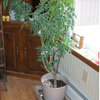
For example if you search anywhere on the Internet about Majesty palms millions of results say that they won't survive indoors, they're the worst house plant, they'll be dead in a month etc. Just because it dosent work out for the majority doesn't mean it won't work out for you. And how are you supposed to figure out if it works for you? You try it and experiment with it. I got a sickly looking majesty palm as my 3rd ever house plant from the clearence rack at Home depot. After I looked up on how to care for it I almost thought of throwing it away as everywhere said it wouldn't survive. Yet I decided to see if I could keep it alive and I guess I've succeeded as its been 3 years exactly and it's still going strong.
Based on some of your logics I was supposed to take the information provided and not even attempt to grow it at all, but rather get a more suitable plant. It was only by experimenting with it that I was able to see that I could get it to grow and live in my conditions.
Yes it might not be the most cost effective way or the fastest but I do think you learn alot more. You have alot more fun and learn alot more from going to Mexico rather than reading about it from a brochure.
I too would get bored if I didn't experiment with my plants or do things that I'm not supposed to with them. I've cut back my schefflera in the dead of winter, grown many outside only plants inside, mixed plants that are not suitable together, and have tried growing things inside that aren't recommended.
And by doing so I've figured out what can grow in my environment and what can't and what I cant do and what I can. Apparently I can grow frogbit and pickerel weed in my window sill, apparently I can over winter fuchsias and ensetes, apparently I can cut back a schefflera in January and have it sprout back, apparently I can't grow COT and Jade together and I can't grow pineapples for the life of me.
I would definitely not recommend or tell anyone else to do those things but they shouldn't be afraid to do them.
It's fun to experiment and try new things with plants. As plants are supposed to be fun and bring you joy not be a pain or another burden to take care of.
People should experiment more and do what they want to do as in the end they are just plants. There are things though that people shouldn't do like it's not wise to cut back plants in winter or mix unsuitable plants together....
Of course the experiments should be done within a few confinements of proper care such as ensuring the plant has ample drainage and the other basics.
I think people have to first gain and try to learn as much as they can about their plants then experiment accordingly and accept the risks that might come about from doing so. Only experiment on plants that you are willing to lose as you might very well lose them.
Everyone should always try or attempt at something instead of giving up based on popular vote.
Want to try and grow a pineapple in zone 3b? Sure go ahead, it didn't work for me, Bob and Susie, but it can be done so it might work for you.
I'm not trying to add any fuel to the fire, but I'm just trying to say that in the end it's your plant and your free to do whatever you want with it. Most people do try to give their plants the best care which they should but that doesn't mean you cant try something new and see if it works out. If you realise it doesn't just switch it back to how it was before. Everyone's entitled to their own opinion, but Id encourage people to experiment to their hearts content.
Now, I hope I got my point across and don't sound like a babbling idiot....
- 10 years ago
Hi
I remember reading a quote from Luther Burbank. "The fact that I had no formal education was a blessing long term because it didn't give me lot of pre conceived ideas of plant potential" I'm sure I paraphrased that but who was more successful at manipulating plants than him??
I'm sure if I were a farmer or even a serious gardener or even a landscaper I'd be a LOT more careful. But since I'm a hobbyist mostly collector I'm totally free to experiment?? lol II always found growing plants FUN not laborious and very serious . If it was I'd have moved onto another hobby long ago???
gary










tapla (mid-Michigan, USDA z5b-6a)