Software
Houzz Logo Print
stephensilva1

Stephen's 2016 Soil Test - Year 2

10 years ago

Hey Morpheus! Looks like we're Spring is arriving early this year. The ground was soft enough for me to grab some soil samples and get a head start on this year's plans.

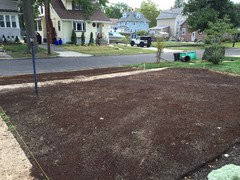
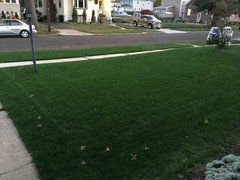
Just as a quick update, I did a complete reno last August with elite KBG which turned out great! I followed last year's recommendations and did notice a change in the soil when I was pulling samples as compared to last year. I mulched a lot of leaves this past fall and it seems to have paid off with a slight bump in the OM.

Some of the other numbers seemed to have shifted a bit, but I'm not entirely sure if that was because last year's samples weren't that accurate. This year I was much more precise at getting samples from the 3-4" level and believe I was able to capture a more accurate picture.

I have the following ingredients on hand: Milorganite, Lesco 18-24-12, Borax, Calcitic Lime, SOP, Epsom Salt, and Manganese. Will be picking up some Corn and Alfalfa meal in the near future.

Looking forward to the soil analysis and thanks in advance!

2016 Soil Report

2015 Soil Report

Comments (9)

  • 10 years ago

    Before

    Seed Down

    After

  • 10 years ago

    Sorry for the delay and thanks for nudging me via message!

    I always do a flat read, then go back and compare previous years. So let's begin...

    Exchange Capacity: 6. Compared to last year's 9, I'm going to say you've probably got some soil variances in your lawn. This one says sandy, the 2015 said sand-silt. We'll run with sand as it's safe to do so.

    OM 3.9: Up from 3.1. You're moving into the Good range, so keep doing what you're doing. 0.8 is a significant one year change.

    pH 5.8: It nudged a bit, but less than I would like. More down under Calcium.

    Phosphorus 179: Not appreciably different from last year, and still very close to the optimal 200 (there's a lot of give). I'm going to recommend ignoring this as it's not a problem, but if you accidentally slipped in an app of starter fertilizer around May 21st, I wouldn't object. It's not necessary, however.

    Calcium 51.2%: A little lower than optimal. I can't remember if we applied Ca last year, but we definitely need to again. We use calcitic lime to fix this, and I recommend Encap, Mir-A-Cal, or Pennington Fast Lime. Recommendations below.

    Magnesium 13.3%: Nose-on optimal. No Magnesium required or desired.

    Potassium 6.4%: Technically a bit high, but this is actually just where I like it. No potassium required or desired this year.

    Minor Elements: Most look fine, but boron and iron bear mentioning.

    Boron 0.22: Deficient, and it actually slipped from last year. We're still going to be gentle (boron gives us no choice), but this may become a habit in your soil, at least until the OM rises and helps us out. We use Milorganite as a carrier and 20 Mule Team Borax as the boron source. You can purchase 20 Mules at the grocery store in the laundry section. In a wheelbarrow or the like, dump the Milo. Spraying very, very lightly with water (I use a spray bottle like the kind people use to damp their clothes when they iron) will help the boron stick. Add the recommended amount of 20 Mule Team Borax and stir, spraying occasionally to get the stuff to stick to the Milo. Then apply over the recommended area. So if going for bag rate Milorganite (1 bag per 2,500 square feet), you'd add 12.5 tablespoons of 20 Mule Team Borax.

    Iron 177: This actually slipped a bit from last year, which is probably sampling differences. Milorganite, whenever you like, will slowly raise this, but it's not deficient. It's just a little low for optimal color.

    Recommendations:

    April 1: Apply 4 pounds per thousand square feet of calcitic lime.

    May 1: Apply 5 tablespoons per thousand square feet 20 Mule Team Borax in Milorganite carrier.

    October 1: Apply 4 pounds per thousand square feet of calcitic lime.


    stephensilva1 thanked User
  • 10 years ago

    Thanks!!

    Yeah I was pretty happy about the bump in OM. I hauled in a bunch of leaves last Fall and the mower's air filter was extremely dirty.

    I did apply calcitic lime last year, so I'll keep at it this year. Same with the borax.

    Now in terms of nitrogen: I'll probably stick to Milorganite for my main feedings.

    However, I was thinking of throwing down an application of corn meal in the spring (and possibly again around June) to help feed trichoderma and fight off any fungal issues with the new lawn. How would you space these out with any Milorganite applications? I fed the lawn well last Fall and winterized so I don't want to feed the grass too much too early.

    I also considering one application of alfalfa per year and was thinking Fall would be a good time in order to promote root growth?

  • 10 years ago

    When you say the pH will rise, is it possible for the pH to overshoot in my soil or will it just hover around 6.2-6.8 thanks to the other ions?

    Thanks for the schedule, that's just what I was looking for!

    I'm going to source corn meal this year rather than cracked corn. Last year, the cracked corn took awhile to break down (my soil also wasn't used to organics either) and there were a ton of birds feasting on it every day.

    However, I'm having a hard time finding any alfalfa meal. Do you have any experience and/or would recommend alfalfa pellets? They seem to be much larger, but I wonder if they'd still attract birds and would break down in a reasonable amount of time?

  • 10 years ago

    We might overshoot on your pH, but it's unlikely. The amounts I'm adding aren't sufficient for a severe overshoot, so anything over a pH of 7.1 (very temporarily) is improbable in the extreme. Worst case, it would drift down again over a year or so. And I doubt it'll happen anyway.

    Alfalfa pellets are just fine! In a severe pinch, chinchilla food does just fine--it's primarily alfalfa with some other stuff in it, and you can get it bulk at most pet food stores. Passing rodents may nibble at it (my local bunnies adore the stuff) but birds don't seem to have any interest.

    Side note: If you have a rose bush, apply it fairly liberally to that as well. A small double handful in spring will help enhance blooming--and you can feed it monthly with that if you want to.

    stephensilva1 thanked User
  • 10 years ago

    Yes I purchased two Knockout Roses last year (might pick some more up with different colors) and I've read your previous posts where you mention that they love regular feedings of alfalfa and epsom salt. I didn't have alfalfa last year, but they performed amazing last year with monthly epsom salt and milorganite.

    They went from about about 18 inches to almost 4 feet! I had to trim them down this winter as I want them to stay around the 2-3' height.

    I saw pictures of your knockout roses and they seemed to be kept very neat and tidy. Do you trim them during the growing season as well?

  • 10 years ago

    You can probably discontinue or severely lower the amount of Epsom salt on the roses this year as the soil's probably up to speed. While Mg hungry, roses don't like an overly-heavy magnesium soil any more than most other plants do!

    Actually...um...except for some early season neatening up, I haven't really trimmed my Knockouts in...er...five years? If a branch tries to go nuts, I cut it, but that's about it. They're mostly on their own and pretty happy about that fact. I just feed, water, and enjoy.

    The shrub is self-limiting to about four to five feet in height, so for me that's great and just about what I want there. You can certainly cut it lower if you want to, though. I wouldn't mind if my Sunny Knockout were a touch shorter (it's next to a magnolia), but that was my fault and I won't stress the bush for something I did by accident to it. :-)

  • 10 years ago

    When will we get away from cation saturation percentages? Ignore them - they are not meaningful. The plant root is quite selective - it cares about actual concentrations. Look at those levels on your soil test report.

    Your soil pH will start causing problems if it gets much lower. You should lime up to a pH of about 6.5. The only other thing you need to address in nitrogen supply, which is not reflected in soil tests. Put on as much as your specific crop needs.

Sponsored
Industry Leading Landscape Contractors in Franklin County, Ohio