Software
Houzz Logo Print
sc77

Species ID

10 years ago
last modified: 10 years ago
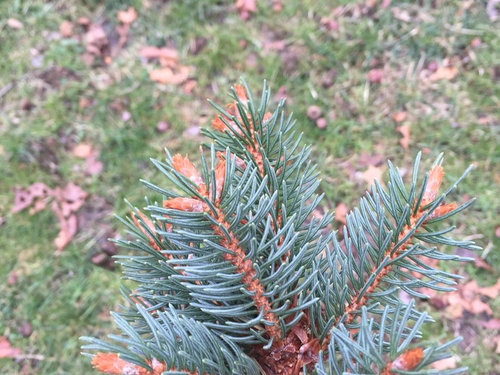
Trying to confirm species on a broom I found.

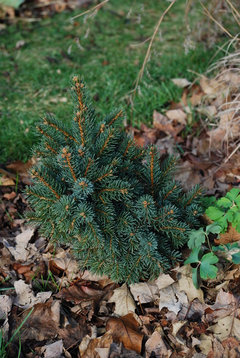
Grafted

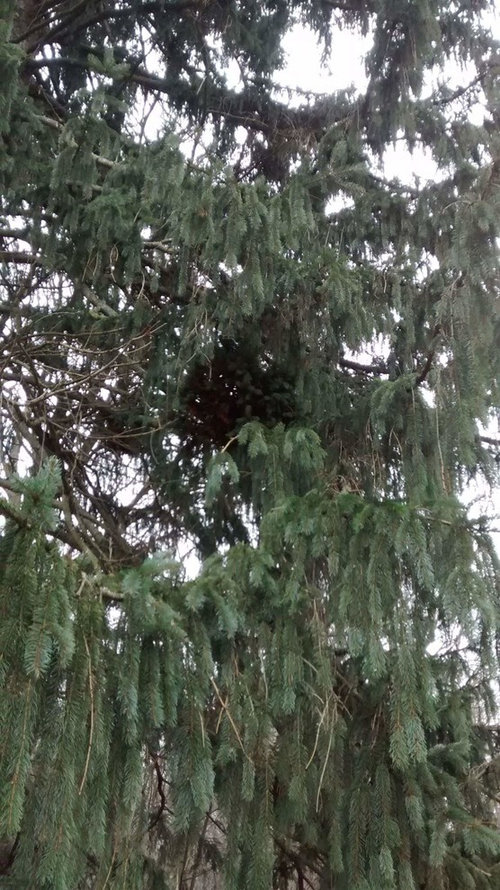
Parent Tree

Closer shot with broom visible

Thanks,Shawn

Comments (21)

  • 10 years ago

    Great, thanks Clement!

  • 10 years ago

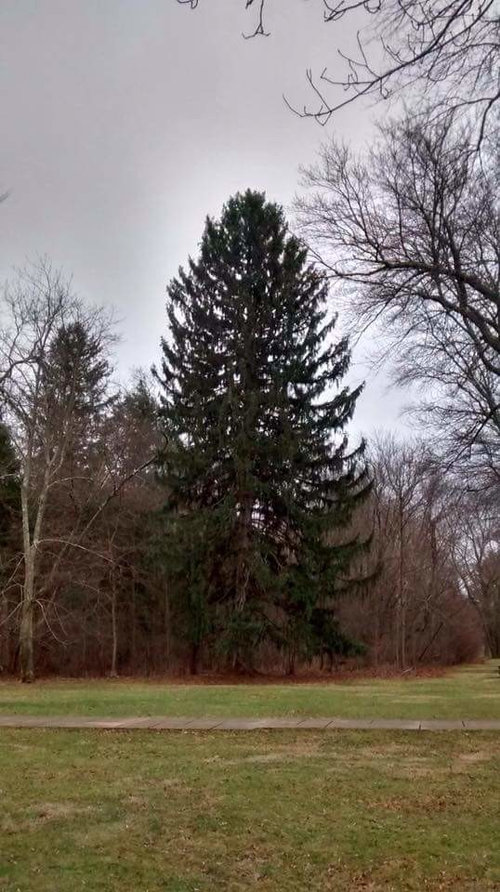
    What is odd about this thread is that the initial pic sure looks like Picea pungens-Colorado blue spruce...whereas the overall tree shot is surely Norway spruce. One wonders if sc isn't trying to test us!

  • 10 years ago

    Nice work Shawn, it looks like the experts are all in agreement on this one backing up your original assessment.

  • 10 years ago

    Thanks Alex! I actually found documentation at the park that this was 1 of 13 Norway spruces that were planted by landscape architect John Nolen to create what he called the "Spruce Room" at the park.

    @Tom - No trick. The first picture you see was taken with a iPhone (no filters), shortly after I got the broom down from that giant (green) norway spruce you see above. As soon as the scions fell to the ground I knew I had something interesting. Based on the parent tree, I was 90% sure this was Picea abies, but couldn't rule out one of the closely related species that I am not familiar with. The identification of Picea abies was confirmed both here and on facebook, so it looks like we have a positive ID on this one.

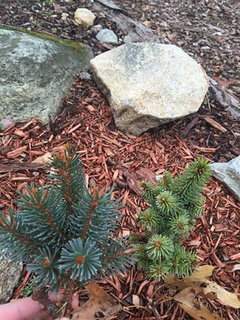
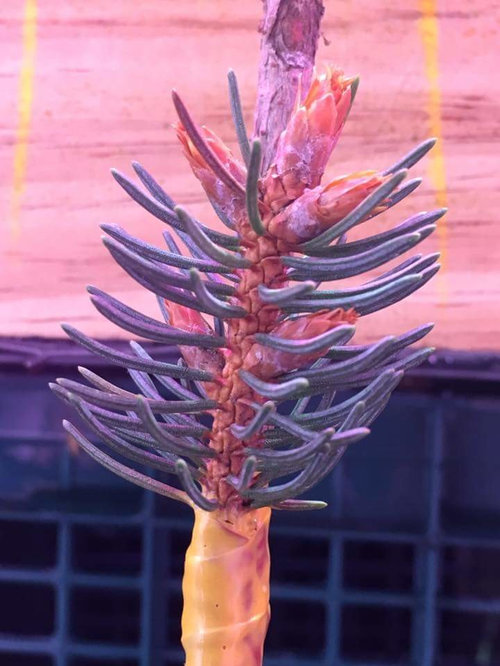
    I hope this color holds as the grafts mature, It's the bluest norway spruce I have ever seen. Pictured below is my broom, I called 'Bird Park' pictured next to 'Suncrest', which is considered to be blue for a norway... you can see how different the color is.

  • PRO
    10 years ago

    Broom color is fantastic! Needles also look thicker and longer compared to typical abies.

  • 10 years ago

    I've seen an occasional P abies with a glaucous look, but not that blue. Definitely worth propagating.

  • 10 years ago

    I couldn't give two you know whats if another broom mini ever gets propagated again. There, I said it. But that is some color! So, are you saying the broom really is that color, the camera fooled us, or what? And if it is that the broom is really this color, then not the rest of the tree?

    For the record-and who hasn't heard this record yet?-I love Norway spruce. The basic, deep, dark, mossy green is right on. That said, a glaucous version would be magnificent, both alone and in contrast with the greenies. Not as a little lump in some landscape bed, but as a full-sized tree, I mean. But I think you're telling us that just the broom foliage looked like this, right? That is odd in and of itself.

  • 10 years ago

    If I were on the site mulling over the parent tree I would want to check it against Picea obovata.

  • 10 years ago

    @Tom, just the broom is blue. I mean, it's tough to capture exact color in a photo, but it's quite blue. That's why I photographed it next to suncrest for comparison. When the scions fell down, I said to myself "what the hell...".. Just looked so different from the parent tree, and I couldn't see the broom well, because under the canopy of that tree it's literally dark...I bet this broom will be dead in a few years due to the low levels of light.


    @Embothrium, for color, yes obovata would be a thought, but no way this community park would have one at all, never mind that size. Plus, I found documentation from the park that indicates it's Picea abies. I don't even think the Arnold arboretum has obovata, but I could be wrong.

  • 10 years ago

    I got this one from Dennis Dodge several years ago. Not quite as blue, but still nice.

    Picea abies 'Blue Cushion'

    tj

  • 10 years ago

    Wow, that's a nice blue too! Never seen that one

  • 10 years ago

    Agreed^. Great color there too. Thanks gentlemen-I learned something. I would not have thought broom material would differ from the momma plant so much!

    As to P. obovata, to what extent do any of you folks think this species to have even been planted in say N. America? I only first heard about the species when Dax et al started grafting some.

  • 10 years ago
    last modified: 10 years ago
    Tom, just musing, but a broom is a mutation, so different coloring would be a possibility.


    Sc77, the parent tree itself is impressive -- nice size & form.

  • 10 years ago

    It's my opinion that obovata is extremely rare in the US, both in species, and especially in cultivation. The Europeans post cultivars of this species on facebook on a regular basis, yet virtually none of those cultivars have made it to the US, except in maybe a few private collections. I thought I had read somewhere that a European nursery owner made an expedition to Russia, specifically focused on this species, and brought back a number of cultivars. Can't recall or find his name now, but that is likely where most of those European cultivars came from.

    I do stand corrected on the Arnold tough. They currently have 7 species obovata in their collection, the oldest from 1911, and listed as in good condition. I will try to snap some photos of these next time I go.

    Yes, like Tom, I too have become a big fan of the Norway spruce, which historically was not a top species for me. My admiration sort of developed out of a respect for the fact that the species does so well here in MA. It's really the only conifer, other than the White Pine, that you can see a 100yr old specimen still looking great. The norway's actually look even better than the native white pines, because they so shade tolerant, and can maintain their full branching down to the ground. I don't know the exact year that parent tree was planted, but the park was formed in 1925 and I believe that section was part of the original planting, so I would guess the tree is about 80-90 years old.

  • 10 years ago

    Yeah, it's a beauty. Not sure if many of you folks remember occasional member here Spruceman? He and I kind of started a mutual Norway spruce lover society! He's planted a bunch, on land he owns in Western Maryland. He got at it years before I did and so a lot of his NS are already 100 ft. tall. And everything you just said, SC is exactly right. NS, like a number of other large-growing conifers, has the ability to maintain a reasonably fast growth rate far, far into its future. So, even that 100' tree could conceivably still be growing a foot a year or more.

    Thanks Beng. I should have thought of that.

  • 10 years ago

    Jacobson (1996) goes with listing Siberian spruce as a subspecies of Norway spruce because of the fact that they blend together in the wild, says it is

    Slow growing, small and homely in cultivation. Of no value usually and seldom grown

    - yet also lists a 1982 record for one 65 1/2' tall that was planted in the Arnold Arboretum during 1901.

    He also says how to tell Siberian spruce from Norway spruce:

    Twigs thing and hairy. Needles duller-colored, sharper, short (1/3"-3/4" long). Cones 2 3/8"-4" long, with scales wide and rounded (hence the name obovata) rather than narrowed and notched as in typical P. abies


  • 10 years ago

    Indeed Embo, I've seen a variety of views on the relationship between the two species. You've got your lumpers and your splitters, not to mention the huge geographic area across which both of these tree species are found, leaving it likely that local genotypes, etc. etc. could and probably have occurred. For my part-and I've said this before-the discovery of a land race with the glaucous foliage would be the ultimate find for this species. Hey, I like the occasional grafted plant, but to be able to get close with seed strains would be my wish, since I prefer the natural variability of non-clones. But that's just me. I have relatively little interest in the known attributes and consistency so prized in landscape applications. I'm just into the trees themselves.

  • 10 years ago

    wisconsitom: I'm not a fan of dwarf conifers either, but a blue Norway Spruce would be really useful, even if it is a dwarf...it could provide an alternative to all those badly sited Blue Spruce.

    sc77: I half agree. Norway Spruce is the only old conifer you regularly see attractive, old specimens of in suburban Massachusetts. I'm a huge fan of Eastern White Pine, but it tends to look better in the woods.
    My parents have two species of old (circa 100 year old) conifers surviving in their yard. One is Norway Spruce the other is...something else. Concolor Fir? I think that can look good after a long time in the right sites in Massachusetts...but it's ever been that popular.

    Every so often you see an attractive old blue spruce...but you see so many homely ones, I think it's kind of a result of the law of averages....


  • 10 years ago
    last modified: 10 years ago
    A medium-size, very dense Norway spruce in west MD -- my guess about 30-35 yrs old. In fall 2003 it had an extraordinarily heavy cone crop:

  • 10 years ago

    As so often reported by Spruceman when he frequents this board, NS is a highly variable species. Far more so than many other common coniferous trees. so take Beng's latest pic....there are specimens that look just like that here in town also. But there are others with considerably less density, and everything in between. One aspect of this is the species' wide geographic range, leading to the development of land races. From eastern Siberia to western France, and from northern Scandinavia to the southern Balkans, this tree grows over so much real estate that it was bound to differentiate, however slightly, over time and space.

Sponsored
Wannemacher Interiors
Average rating: 5 out of 5 stars26 Reviews
Customized Award-Winning Interior Design Solutions in Franklin Cnty OH