Software
Houzz Logo Print
saafalconer

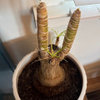
Yellowish leaves on seemingly healthy maranta

10 years ago
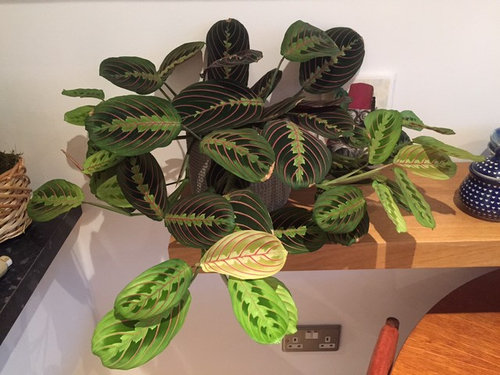
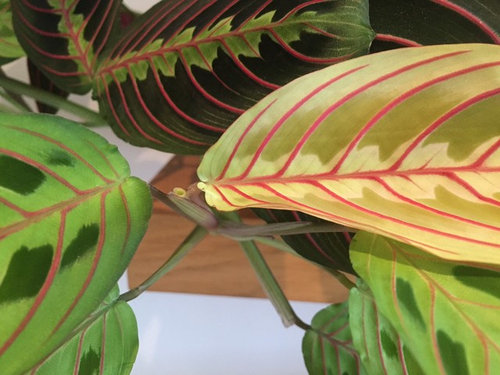
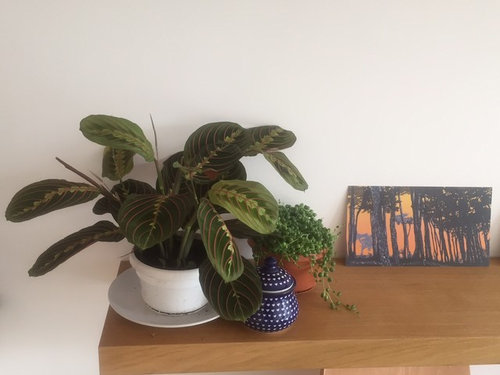
I'm hoping someone can offer me advice or reassurance about some new growth on my red maranta. I've had the plant since July of last year, and it's been growing well here in London despite the grey weather - the entire west/southwest wall of my flat is a window so it gets excellent light. I keep the soil moist and recently started feeding it (half strength house palm fertilizer, it's what I had), and it's responded with a huge amount of growth since January. The thing is, recent leaves seem to be more yellow than green, and it's still pushing out more growth! The new growth has always been paler in the past, but not to this extent. Is this something I should be concerned about? Maybe I shouldn't have fed it so early in the year?

That pale leaf in front really is yellow, it's not just the lighting!

See?!

From last July, to show growth

Comments (17)

  • 10 years ago
    last modified: 10 years ago

    "half strength house palm fertilizer, it's what I had), and it's responded with a huge amount of growth since January. The thing is, recent leaves seem to be more yellow than green"

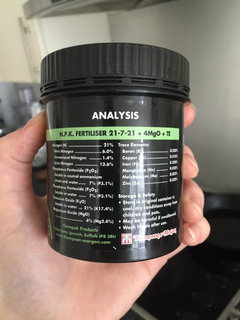
    Possibly an iron deficiency but I am uncertain. Does the label of your fertilizer show the iron (Fe) content? Better, yet, show us the complete analysis on the label.

  • 10 years ago
    last modified: 10 years ago

    One other thing to check: is the soil wet or moist? Could it have gotten too much water prior to the light colored leaves? Possibly too wet during winter?

    Fertilizer imbalance is possible as arzinsky said.

  • 10 years ago

    I'd be really curious to hear what you think about the fertilizer content! It's all greek to me. Here you go:

  • 10 years ago
    last modified: 10 years ago

    I see nothing in the labeled analysis that would account for yellowing of young leaves. According to

    http://mrec.ifas.ufl.edu/foliage/folnotes/maranta.htm ,

    "2) ChlorosisSymptoms - Plants grown at elevated pH-above 6.0, or with nitrogen sources in mostly nitrate form often have chlorotic younger leaves. This is usually due to insufficient iron (Fe) entering the plant.Control - Use iron chelate, reduce soil pH and use ammonium sources for nitrogen."

    Your fertilizer N is not "mostly nitrate" therefore I suspect that your soil pH is too high AND the iron in your fertilizer is not chelated. Correcting either condition might eliminate the yellowing. Your fertilizer label should show a list of ingredients. What is the iron compound listed? If it is not a chelate, the easiest remedy is to change to a fertilizer with an iron chelate. Can you buy Miracle-Gro Lawn Food in the UK? I ask because, as I recall, it contains 1% iron in a chelated form.

  • 10 years ago

    I'm watching this thread with interest because my maranta has been putting out a lot of new leaves in the last couple months - pale compared to old foliage, but none of them have been really yellow like that - and so I've been giving it some fertilizer (DynaGrow 3-6-9 at about half-strength).

  • 10 years ago

    Hello, new to the forum!

    I am having the same problem with my maranta and it just started in the last week. It's a very temperamental plant anyway, and I have a feeling it's the combination of changing of the season and watering. We just went from super cold, snowy and overcast to warm and sunny in one week, so the way I normally water had to be adjusted. To resolve the dramatic shift of the daylight issue and to avoid scorching the leaves, I moved it to a north window, and it seems a lot happier there. I think this should be called the Drama Queen plant......"No, I want the north window, water only when I want it, and if I change my mind, you have to do what I want quickly or I'll throw a tantrum...."

  • 10 years ago
    last modified: 10 years ago

    Hi, Sarah and Sara. The list of issues that cause chlorotic foliage in containerized plants is long. High on the list of causes is root damage/disease/rot or inefficient root function due to soil compaction and/or soggy soils. A dearth of oxygen in the root zone (usually from over-watering) can cause iron and manganese (both of which cause chlorotic foliage - but usually of the interveinal type)
    to become electron acceptors. This leads to their
    precipitation (makes iron and manganese unavailable for uptake) and,
    even though these elements
    might be adequately represented in soils, the plant’s inability to assimilate
    them. Soggy soils can also make Ca uptake problematic. In
    addition to iron and manganese, there are several other nutritional deficiencies and toxicities that cause chlorotic foliage. If it IS a an uptake issue related to high pH, you can usually 'cure' that issue with the addition of small amounts of white vinegar or citric acid to your irrigation water at each watering - if you've been fertilizing regularly with something appropriate.

    I don't think the pale foliage is caused by an actual (caused by a lack of iron in the medium) iron deficiency, but if it is a deficiency related to pH lowering pH is likely to gain you the most traction. If you DO decide to treat with a chelate of iron for whatever reason, your best bet would be a product like Sprint 138, which is formulated for high pH applications.

    Al

  • 10 years ago

    Welcome SaraM! These plants don't like winter much, but usually bounce back after the humidity returns to normal and the days get longer and brighter. I keep mine in a bright north window. Lots of good information here on the site as you have already found out , because you joined the dialog, LOL!

  • 10 years ago

    just a tip: caked hard soil can be more gently removed if you soak the root ball in luke warm water for 10 to 30 minutes. Often, once the soil is saturated and soft you can gently swish and bob the plant in the water and some of the soil will just fall away.

  • 10 years ago

    Thanks so much for all your advice, everyone. It's very helpful! After reading your comments, Al, I'm guessing I need to repot. The plant is in a quite small container with soil that stays moist for a quite long time in between waterings - I only actually water the plant every couple of weeks but it's never got dry soil.


    Does anyone know whether the yellow leaves will turn green eventually with soil improvement, or are they likely stuck in their pale state?

  • 10 years ago
    last modified: 10 years ago

    If leaves are in the process of being shed, it's not a reversible process, so there is no chance of them recovering. When chlorotic due to poor cultural conditions, including nutritional issues, if the conditions are righted recovery is very probable. Almost certainly, the later applies to your plant.

    Al

  • 6 years ago

    Hi Sarah, I am having the same problem that you had (I see, back in 2016). I am wondering if you simply reported it and how did it work out for your maranta. Please let me know!

  • 6 years ago

    I meant "repot it". :)

  • 5 years ago

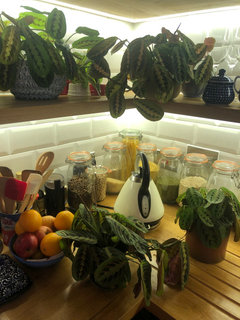
    Long overdue update - the plant recovered and thrived! It has since become the parent to many marantas, 5 of which I’ve kept (see photo for a little “family portrait” 😆) and perhaps 8 of which have been given as gifts. I suspect the problem was soggy soil, as suggested by tapla. The yellow leaf never recovered, but it grew plenty more, just fine, with improved attention to the watering regime.

  • 5 years ago

    Strong work, Sarah! ..... and thanks for sharing your successes.


    Al