Software
Houzz Logo Print
ne1one

help starting first compost

10 years ago
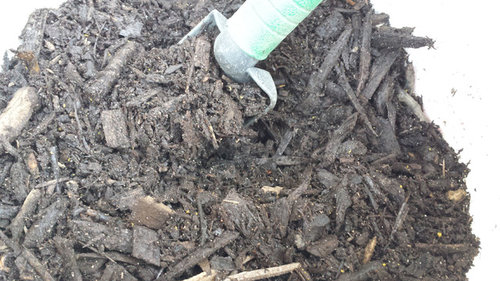
i turned a 35 gal barrel into a tumbling composter. i have tons of carbon (shredded oak leaves), but limited iin the nitrogen side a bit. only have about 1 gal worth of food scraps. so i'm trying to figure out how can i fill this compost barrel with more things other than leaves and just a gal of nitrogen scraps. someone told me to do 2-3 parts carbon to 1 part nitrogen, let me know if this not a good ratio.

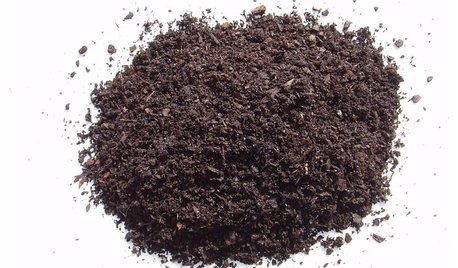
i have some partially decomposed mulch that has been sitting in buckets for a year or two. still has visible wood chips, wondering it i can add a little of this to the leaves in the barrel to have a bit more material to compost. also, what about adding a bit of clay/sandy yard soil to the compost bin? if any of these can be added, about how much for a 35 gal bin?

i've attached a pic of what the half decomposed mulch looks like.

Comments (20)

  • 10 years ago

    While the Hunzas' taught Sir Albert Howard that putting soil into a compost pile was necessary, current research says it is not necessary because the bacteria that will be digesting the material are already present. His original formula, 6 inches of vegetative waste to 2 inches of manure, works out as a ratio of 3 parts vegetative (or high Carbon) material to 1 part manure (or high Nitrogen) material so whoever told you 3 parts Carbon to 1 part Nitrogen was kind of close to right.

    Wood chips are a very high Carbon (400 to 1 C:N ratio) material that may require a higher than normal amount of a Nitrogen source and I find often that people do not take into account that C:N ratio when putting together a compost pile.

    Perhaps this tutorial may be of some help.

    http://sarasota.ifas.ufl.edu/compost-info/

    kimmq is kimmsr

    stevie thanked kimmq
  • 10 years ago

    Presumably the food scraps will keep coming? You can add them gradually with a bunch of the leaves with each addition until the whole container is filled. The two of us easily get a gallon of peels, trimmings and tea/coffee dregs every couple of days.

    stevie thanked floral_uk z.8/9 SW UK
  • 10 years ago
    last modified: 10 years ago

    yeah food scraps will keep coming, so i guess i'll add them as i can get them. might try visiting a local farmer market to see if they have old produce to give away. is there a limit to how much used coffee grounds i can keep adding? because, i have more UCG than food/veggy scraps.

    im in the northeast so temps are still on the chilly side (50s) and the grass is still kind of dormant, but in another month or so i will have tons of grass clipping (courtesy of an 18 hole golf course).

  • 10 years ago

    As soon as your grass supply get's rolling I would make a wire bin. Better air flow will help emensly and worms will move in to munch on UCG and veggies plus no more rolling the barrel. Lifting bin or cutting a door to pull material off bottom and mixing with new additions is something I do every two or three weeks.

    stevie thanked klem1
  • 10 years ago

    Yeah, in a month you'll have so many grass clippings you'll wonder what you were worrying about. Keep those shredded leaves near the bin, exposed to weather so they will begin to decompose on their own while you are waiting for greens. Keep adding those kitchen scraps.

    I'd use that mulch as mulch, it looks to have some fully composted stuff in it which will benefit the soil it's put on. If you get overloaded with grass clippings, you can use it as a brown, but it will be fairly slow to decompose.

    I prefer a mulching mower myself but in spring I do get some heavy mowings and I bag a few to make some batches of compost with last fall's leaves. Works for me.

    stevie thanked toxcrusadr
  • 10 years ago
    last modified: 10 years ago

    thanks all. one final one:
    regarding the C/N ratio. how do you measure ratio on something light such as leaves, they weigh practically nothing! since i gather most do something like 2-3 parts carbon to one part green. if i have a gallon of green (about 8-9lbs by weight) would 3 gal of shredded oak leaves (packed in of course) be enough carbon?

  • 10 years ago

    There's no reason not to add some garden soil to your compost bin and the clay fraction will help maintain moisture and harbor microbes and fungi.

    Before you use the grass clippings, you should determine if the GC uses persistent herbicides in their turf-care process.

    You'll discover that the wood chips break down very slowly. Be sparing with those because they won't decompose soon. In small amounts they are a worthwhile addition to garden soil.

    From personal experience, I'm not a believer in carbon/nitrogen ratios. I'm a believer in making your compost pile large enough (4' x 4' x 4') for it to maintain its own environment.

    stevie thanked User
  • 10 years ago

    Thinking out of the bin,so to speak. (>_>)

  • 10 years ago

    There are tables that list the various Carbon to Nitrogen ratios. The C:N ratio of leaves varies from 40 to 80 to 1, depending on age. Wood chips tend to break down very slowly because of the very high (400:1) C:N ratio and the density of the material.

    While the C"N ratio is of importance most of us actually guess at the ratios as we build out piles.

    http://www.planetnatural.com/composting-101/c-n-ratio/

    kimmq is kimmsr

    stevie thanked kimmq
  • 10 years ago

    Ratios can be tricky because the CN ratio of each material is based on DRY weight. Problem is everything is not dry or even the same level of wetness. Leaves might be dry, kitchen scraps or grass clippings are at least half water. All you can do is guess. But guess by weight and not by volume. So 8 lb of wet greens might take three times that by weight of leaves, times two if the leaves are dry.

    You'll get a feel for how much of this and that will make a warm pile when you mix up a large batch, and how thick of a layer of browns to cover your daily kitchen scraps with to eventually get a nice batch of compost. It's fairly forgiving too, so all you really have to know are the signs of good decomposition vs. signs of being out of balance. Smelly = high N/moisture, cold/uncomposted stuff after waiting a long time = not enough N.

    stevie thanked toxcrusadr
  • 10 years ago
    last modified: 10 years ago

    i came up with the idea to start soaking the dry shredded oak leaves overnight in a bucket of water. a compressed 5 gal bucket of dry oak leaves absorbed like a half gallon of water. even though it doesn't have to be perfect, at least i can get the ratios a bit better. i'm hoping soaking them should also help soften the tough oak leaves so they decompose faster since they're so dry they almost repel water by just spraying them in the bin.

    thanks all.

  • 10 years ago

    I have oak leaves, they are very waxy. I used to bag them over the winter but now I have a big wire mesh bin I pile them into in the fall and smash them down. They do start decomposing out in the weather so they are that much farther along by spring. You can pile them on the garden and cover with plastic netting, tomato cages, etc. or stuff leaves into your tomato cages. I do that too and lay the cages around the outside of a garden bed to make a corral, and then fill that with leaves. All kinds of ways to stash them where they will get wet over the winter.

  • 10 years ago

    Better than soaking the leaves in a bucket of water, which could cause a loss of nutrients, would be to reduce the size of the leaves. As a general rule of thumb the smaller the bits and pieces of the material put in to be composted the faster and better will it be digested.

    kimmq is kimmsr

  • 10 years ago

    Good point, forgot to mention that. Mowing or shredding or sucking into a leaf sucker/shredder in the fall is a good way to make them take up less space as well as decompose faster. It allows microbes easier access to the tissues.

  • 10 years ago

    The last two posts might open debate wherther packed material alow's less air which make's turning/tumbling more important. I subscribe to tox's view that time usually take's care of it anyway so it's not worth alot of fretting about ratios, material prepration and management. If you have time on hand,micro-managing piles can be educational as well as speed up the process. Personally,I prefer building more piles, spreading time between them,,,,,,,,,,,,,and taking extra malt pop breaks. ^_^

  • 10 years ago


    Like others have said, the ratio is not about the weight, so making leaves wet doesn't mean you increased the nitrogen ratio.

    Besides grass clippings, you will probably get plenty of greens from pruning, weeding, and doing other things around your garden. I know that at some points of the growing season, I even cut down some canna lily stalks that are growing in the wrong place, or perhaps too thickly in a particular area. Just one of those stalks, cut down to maybe 1" segments, adds quite a bit to a 3x3 pile of compost. And if I didn't want to cut down an entire stalk, I might just take a leaf or two and cut them up for the compost pile. That's only if I wanted to do that, because otherwise, as a household, we generate enough greens from fruits and veggies that keep adding ingredients to the compost pile.


  • 10 years ago

    I don't think OP was wetting them to change the ratio, but rather to make the moisture content of the browns more similar to the greens, which in turn makes it a bit simpler to estimate amounts to add. It is a little more work, and I haven't ever done this, but it can't hurt anything and it does have one advantage: dry leaves are probably easier to get uniformly wet in a bucket of water than in a compost pile.

    I usually end up mixing dry ones with grass clippings on a big tarp, which works better when they're dry. OR I layer handfuls of already wet leaves from my leaf bin into the compost on top of greens. So I haven't had much reason to wet them. But it's all good, whatever works for you.

  • 10 years ago

    > I don't think OP was wetting them to change the ratio, but rather to
    make the moisture content of the browns more similar to the greens,
    which in turn makes it a bit simpler to estimate amounts to add.


    yeah exactly.

    one of my problem is when i spray/water the leaves (rather than soaking them) i noticed that there are a lot of areas that stay almost completely dry even after tumbling several times. i definitely shred them as much as i can using a leave blower which can also reverse to suck up and shred leaves into a bag. i end up with leave shreds between 3/4 inch to around 2".

    as for kimmq tip about leeching nutrients out of the leaves by soaking the leaves, i use the water from the soaked leaves too. leaving nothing to waste :)
    after soaking the shredded leaves, the water becomes dark, like black coffee, and i'll rehydrate the bin with that water as needed.

  • 10 years ago

    I think you're on your way. Keep an eye on your compost and evaluate whether it's got enough leaves or too many, same with moisture. Observe and adjust. And let us know how it goes!

Sponsored
Peabody Landscape Group
Average rating: 3.5 out of 5 stars8 Reviews
Franklin County's Reliable Landscape Design & Contracting