Software
Houzz Logo Print
sammy_gw

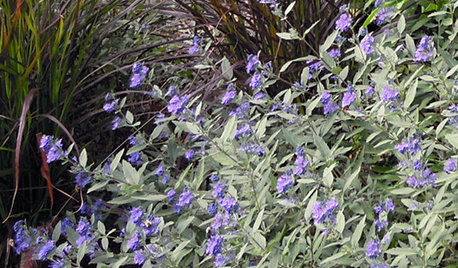
Caryopteris

10 years ago

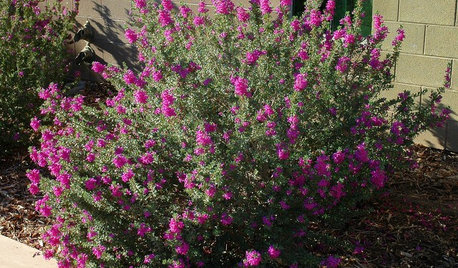
I have asked a few times about my 7 Caryopteris plants, and nobody seems to grow them. They are perennials with little flowers. The weight of the bees on the flowers in the summer bends the canes to the ground, and weeds begin to grow into the plants.

All of them send out canes that lie on the ground, and root. That would be good if I were in the caryopteris business, but since I am not sure what to do, I am thinking that I should treat them as I would treat a rose, and cut them so I can more easily reach in and prune.

Do any of you have advice on caring for these plants, and/or recommendations for other good plants to use to fill the rest of the bare area next to them?

Thanks,

Sammy

Comments (8)

  • 10 years ago

    The only Caryopteris I've grown is "Blue Knight" and it was indeed a beautiful plant. At the time I grew it, our soil was not as improved and not as well-drained as it is now, and the caryopteris died in a very wet year. That probably was in the early to mid-2000s. If I were planting one today in the same area, I think it would be much happier because the soil drains much better now. You can prune them back hard in springtime to within just a couple of inches of the ground and that should give you strong regrowth that might make them more manageable. Mulching heavily underneath them with larger wood chips should help keep the weeds down and might keep them from rooting into the ground when the weight of the blossoms weighs them down. If you use really small wood chips, the plants probably could root right into the mulch.

    How large is the area of bare ground around them that you want to fill in with other plants? Is there a specific color of bloom you want that would blend well with surrounding plants? With thousands of perennials available, it is hard to randomly pick one to recommend without knowing what already is growing in that area.

  • 10 years ago

    Thank you, Dawn, and large chips plus clipping the low branches will work well.

    I want easy care shrubs that are low enough for me to see the hillside that slopes down, but tall enough to be easy care, and help me with the "grassless" area.

    The 7 Caryopteris (yes, Black Knight, Blue mist) are staggered behind my rose beds, and I need an equal amount for the other side, so I can use less Round Up, and maintain the area better. Boxwoods are behind the area, and work fine, but I wanted something that is wider and possibly more flamboyant. Mid summer I want to be able to ignore these plants as much as possible. All the bushes are behind my 4 various rose beds.

    Sammy

  • 10 years ago

    My caryopteris did well for a few years and then died out. I chalked it up to being like a perennial woody salvia. But it could have been the spot I had it in too.


    (I'm trying to go through my beds in my head, so this will all be a little disjointed)


    I do like autumn salvias, but they may compete in color with your roses. Nepeta (walkers low is what I have) and artemesia might give you some good ground cover. Both of those are low water plants. I really like achillea "moonbeam" as well. I grow mums that act as perennials. They will cover quite a bit of ground as well, and give you good bloom in the fall. Mine look like the daisy type mums. They do need to be trimmed twice, once at Memorial Day and once at 4th of July to keep them a sturdy size.


    Oh, speaking of daisies, "Becky" is my very favorite white daisy. The stems are strong and they will spread and handle some neglect.


    For taller plants, you could also do false indigo, baptisia, Miniature crape myrtles would give you bigger plants as well.


    I wish you lived closer. you could come see mine.


  • 10 years ago
    last modified: 10 years ago

    If you have any shade in that area, my black and blue salvia gives me beautiful blue blooms and is tall. They are thriving under the dappled shade of my vitex / chaste tree, so I assume they need some shade, but I could be wrong.


    *Thank you Gardenweb for the edit feature!

  • 10 years ago

    I like Lisa's suggestions and grow many of the same plants she recommended. Salvia farinacea could handle full sun, but stays shorter than some of the perennial salvias like black-and-blue. I have grown pincushion flower (scabiosa) as a shorter background flower behind roses and it was a very pretty combination, but for me scabiosa is more of a short-lived perennial or a reseeding annual than a true perennial. That might be because of the clay soil, as the scabiosa comes back more reliably in the sandy soil out back, but the voles eat them out back. Do you already have Russian sage? I think it looks pretty with roses, but I think you already have it. I have red-hot poker and hardy hibiscus in my perennial border along with daylilies and autumn sage, all in full sun, but I don't have roses in that border. One of my favorite background plants is Malva sylvestris, often called French hollyhock, though it is not a true hollyhock. I have "Zebrina" and "Mystic Merlin" and they reseed themselves and pop up around the garden. They are spectacular while in bloom and rebloom well as long as I remember to deadhead them occasionally. I also grow figleaf hollyhock as a background plant. It is not prone to rust like most hollyhocks are. Have you ever tried growing larkspur or poppies back in that area where they would provide early season color? They are reseeding annuals in my garden and give us lots of pretty color, generally April through June but it varies with the weather.

  • 10 years ago

    Thank you Lisa and Dawn. You have given me some very good suggestions, but I grow many of those plants, and I am looking for something to equal the size of the Caryopteris. Each plants is about 8 feet around. The objective is for it to be left alone except for water, and mild pruning. I am developing a path around my garden, and need to fill in that area. I think I have about 30 or so beds or individual plantings. I do not want these to be in a bed, I want them to act as a transition between the beds and the hill that goes down to the creek.

    It is a huge problem for me. I have 16 large crape myrtles, so smaller ones could be the answer. Boxwoods don't have the (flow) I am looking for. I need to look up many of the plants you have mentioned, and do so much appreciate your suggestions. Now the yard is calling me even though it is very cold outside.

  • 10 years ago

    I had to look up caryopteris. It's beautiful! I'm going to have to find some for my garden.