Software
Houzz Logo Print
umfuad

Feeding and fertilization

10 years ago

As you know l am new to rose growing .can you please explain the difference between feeding and fertilization as l have noticed that same ingredients are used in both ? And please share your routine for growing big healthy blooms .

Comments (23)

  • 10 years ago

    HI pink rose: Feeding is above the surface, and fertilization can be done in the planting hole. Fertilization can be done BEFORE planting, such as Rose Unlimited nursery recommendation of 2 cups alfalfa meal, or Mill's magic mix (has sewage sludge). If you don't have alfalfa meal, 2 cups of Rose-tone or Tomato Tone will be great. Since my hole is very big, 2 feet deep by 2 feet wide, I use 2 cups of Espoma "Tone" product, which has higher NPK than alfalfa meal.

    Feeding is best done via SOLUBLE, if you look at previous thread where Hareball asked a question on foliar-feeding, you'll see the answer. Since you are in hot climate, alfalfa hay on top works great: both to shade the root, locks in moisture, plus releases nutrients. Some feed store grind alfalfa hay for you for a small fee. If you don't have that available, Standlee alfalfa pellets is the best, zero smell, zero salt, zero sugar.

    If you don't have tons of roses, I would use Alaska Fish Emulsion as fertilizer, one cap per gallon, it's low-salt, so great for hot climate. It's sold at HomeDepot for $10 per bottle.

  • 10 years ago

    Thanks straw . so I fertilize with rose/tomato tone every month and use the fish emulsion once a week ? what about sulfate of potash & gypsum tea ?

  • 10 years ago
    last modified: 10 years ago

    Hi pink rose: What type of soil so you have? Sandy or loamy in Florida? For loamy & fluffy soil like potting soil, that's what rose-nursery does: once a month with Espoma Tone, and weekly soluble like fish emulsion.

    But if your soil is sandy, then you need some "greens" as mulch to release nitrogen and to lock-in moisture. Greens can be alfalfa hay, or any leaves like palm which is local in Florida. Alfalfa hay is in thin strands, which allow air and water to soak through. I used tomato-branches to mulch my roses .. resulting in lots of earth-worms below. Whatever greens you use, make sure it's in thin strands, to allow air and water to get through.

    Advantage of mulching with "greens" over wood-chips: Wood-chips have zero nutrients, but greens release nutrients whenever water passes through, plus when decayed, it support beneficial bacteria, which fix nitrogen from air, so you don't have to use salty-chemical-nitrogen, which UP the need for water, plus attract pests.

    Sulfate of potash, at 1 teas. per gallon, is useful when there's lots of rain, which leaches out potassium. Both roses and tomato have a high need for potassium, and last year's constant heavy rain, REDUCED my yield by 1/2. Nitrogen is constantly fixed by beneficial bacteria, but potassium has to be supplied since it leach out with rain.

    Gypsum, at 2 teas. per gallon, is useful when it's dry & hot .. calcium helps plant to handle heat & drought. Plus folks use tap-water, which is ALKALINE above 7.5, so you need the 17% sulfur in gypsum to LOWER the pH of tap-water down to that of rain water (pH 5.6). The water has to be slightly acidic to break down the granular fertilizer or minerals in soil.

    It depends on the type of soil you have. Texas have clay soil, which retains fertilizer too well, so Chamblee nursery recommends ZERO fertilizer when the temp. is above 80. But you are in Florida, with sandy and loamy soil ... fertilizer is leached out with rain. If you have more than 4 hours of rain per day, plus sandy/loamy soil, then granular fertilizer is OK once a month.

    Soluble fertilizer can be supplied more than once a week (reduce dosage by 1/2) if your soil is sandy/loamy and constant rain. My definition of SOLUBLE is either you dilute with tap-water, or you sprinkle around rose-bush before a heavy rain.

    I prefer minerals like sulfate of potash or gypsum, over organics like bone meal or chicken manure (ingredients in Tone products). I avoid stuff high in phosphorus & attract pests. Folks report maggots and flies with bone meal, fish meal & other stinky organics. Parts of Florida soil are high in phosphorus, that's where they mine phosphorus for export.

    Our annual rainfall in Chicagoland is 37 inch, but last year it was like 45 inch. My regret was I DIDN'T apply fertilizer before a heavy rain, nor in the planting hole of my tomato.

  • 10 years ago

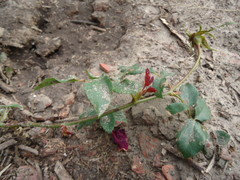
    straw ,I think we have sandy soil but when I water it ,it clumps up and forms a hard surface on top ? I try to use a hand rake to loosen it a bit before applying anything . the rainfall is mostly during summer . for the last couple of months the temperature was mild and almost never rained .

  • 10 years ago

    pink rose: Water drains well in sandy soils. If the water is not going down quick than it might be a hard clay. Could you post any photos

    best regards

  • 10 years ago
    last modified: 10 years ago

    The above is Pink rose' soil, taken from previous thread on RRD. IF THERE'S NO RAIN, THEN DO NOT USE GRANULAR FERTILIZER, stick with diluted soluble.

    The problem with granular fertilizer, be it Espoma-tone, corn meal, or garden lime: they gunk up on top if there's no acidic rain to break it down. Other people from Florida reported sandy soil on top of a bottom clay layer. Alkaline tap-water pH is from 7.6 to 9, thus nothing can be dissolve in tap-water, and form a hard-surface on top. Things to do when there's no rain, and it's hot:

    1. Dissolve 2 teaspoon of gypsum and 1 teas. of sulfate of potash per gallon of water, before watering. The 17% sulfur in gypsum and 21% sulfur in potash will bring down the pH of tap water and prevent clumping & hard surface. Calcium hydroxide is added by municipals to treat water, and that's the same stuff they use in making concrete. If you use alkaline TAP-WATER that can't drain well, that will form a hardened crust on top.
    2. Improve drainage by digging past the clayish-bottom of the hole. Folks with clay at bottom use a post-hole digger. I use gypsum at the bottom of the hole, to dissolve the hardened clay for better drainage. My soil is tested barely adequate in calcium, but your soil might be high in calcium ...

    I see some whitish stuff on your soil, in case it's accumulated hydrated-lime (from tap-water), I would use peat-moss at pH 4 to break up the hard-crust-gunk-up. Peat-moss is HIGHLY recommended for sandy soil, but NOT for clay soil like mine. Columbus Rose Park in Ohio (thousands of roses) use peatmoss to fix their sandy soil. Organic matter like leaves, alfalfa hay or pellets are better than peatmoss. Peatmoss have zero nutrients, plus too acidic at pH 4.

    A HUGE BAG (40 lb). of Standlee alfalfa pellet is $20, but it lasts for 1 year and improve the texture & moisture holding ability of soil, compare to $10 of fish emulsion which last for a few months. pH of alfalfa pellet is around 5.8, still a safe zone for roses.

  • 10 years ago

    Thanks a lot Straw ! you are a blessing in this forum .

  • 10 years ago

    by the way ,does any one use chelated iron ?

  • 10 years ago

    pink rose wrote:"Thanks a lot Straw ! you are a blessing in this forum"

    Indeed she is.... absolutely

  • 10 years ago
    last modified: 10 years ago

    Chelated iron is used for VERY ALKALINE, or VERY ACIDIC soil, at which iron is less available. There's harm in using one particular element only, it's best to aim for neutral pH at 7, where ALL trace-elements are available. I don't see any iron deficiency in your rose. Iron deficiency would be very pale, almost yellow youngest leaves.

    I'm suspicious of any pH meter, even the $200 pH meter needs to be re-calibrated to be accurate. The procedure is complicated, so I don't even bother with pH meter, I use red-cabbage juice to get a more accurate pH, since it involves PROLONGED soaking, rather than few-seconds dip.

    For example, the rose park nearby sprinkled sulfur in spring-time, so I got a sample of their soil to test for the pH. At first it registered pinkish in red-cabbage juice (acidic pH 5), due to sulfur break down instantly, releasing acid. But AFTER 1/2 HOUR SOAKING IN RED-CABBAGE JUICE, the alkaline-minerals in that soil break down, to change the color to dark blue, which is pH over 7.6, typical of our alkaline clay. I'm only 15 min. from the rose-park, and my soil pH is tested professionally to be near pH 8.

    pH meter is never accurate, unless you re-calibrate it 1st, and you dip the meter LONG enough in a wet-solution. Best if you test your soil pH with the red-cabbage juice procedure below, only $1.50, $1 for distilled water, and 50 cents for red-cabbage-leaves.

    http://forums.gardenweb.com/discussions/2132487/cheapest-way-to-test-soil-ph-using-red-cabbage

  • 10 years ago

    straw ,how often do you use horse manure in roses ?

  • 10 years ago

    Pink Rose: I used twice a year during cool spring and cool fall. Horse manure has salt, so U. of Colorado Extension recommend only ONCE a year for warm climate. Even chicken manure is known to last for 1-year, best used ONCE in spring.

  • 10 years ago

    Thanks Straw . unfortunately I used a cup of black kow manure brand in each rose bush a couple of months ago .how long do think it will stay in the soil ? can I use aged horse manure as mulch now in 80 degree weather ?

  • 10 years ago
    last modified: 10 years ago

    Pink rose: one cup cow manure won't do much harm, just have to put some organics on top (leaves or compost) so it can grow some beneficial bacteria once decayed. 80 degree weather is too hot for the salt in horse manure .. unless you get tons of rain, like all-day rain.

    Check out Khalid's post NPK of organic matter, where he showed how to make home-made compost in terra-cotta posts. Home-made compost from kitchen scraps (veggies) is the best fertilizer for warm climate, zero salt, zero antibiotics.

    http://forums.gardenweb.com/discussions/3528532/npk-and-ph-of-organic-matters?n=105

  • 10 years ago

    Thanks !

  • 10 years ago

    Pink Rose: I haven't used the processed cattle manure that you get in USA but what we get here in Islamabad is the well rotten (year old) cow / buffalo manure from private animal farms that is not given any treatment. It is just kept in heaps in open and allowed to decompose for around a year time. Quality differs from farm to farm. It comes with lot of weed seeds and at times, termite eggs also. Then, it has a relatively high salt content and provides proportionately more nitrogen and phosphorus than potassium which is not a very good proportion for roses.

    I have stopped using all kind of manures since last about 5 months and only feeding my roses with homemade compost that Straw mentioned in the above post. It is rich in Potassium and Calcium, contains enough nitrogen too and little phosphorus. Addition of wood ash adds trace elements too. My roses have never grown better. It is so convenient and almost free of cost (the only money I spent was on buying 6 terracotta pots which will last many years. Bought the cheapest ones as I was not interested in design / looks). However, it will take 3-4 months for first compost pot to be ready for use. After this, a cycle starts and every 15-20 days, I have a pot ready to be used.

    best regards


  • 10 years ago

    Wow !! 3 to 4 months to compost ... that's so neat to live in a warm climate. It's snowing in Chicagoland right now, March 24, and my compost takes more than a year to be like soil. Thanks Khalid, for a good example of composting.

  • 10 years ago

    Straw: I realise here that compost making in warm climates is much quicker. However, my process has been further quickened by use of clay pots (air circulation + less matter to be composted), adding river soil which already contains lot of microbes and few worms too and adding vinegar periodically to quicken up the process. Sprinkling a bit of soil every now and than has really quickened the process I guess. A couple of pots where I did not sprinkle soil and only added the compostable matter took more time.

    best regards

  • 10 years ago

    Same in my zone 5a, I layer soil with leaves, so the microbes in soil help to break down the leaves faster. I also use vinegar to break up the hardened & compact clay on top .. that broke my shovel one year !!

  • 10 years ago
    last modified: 10 years ago

    Hi Pink Rose, I live in Florida too and I agree that you have sandy soil. Sandy soils here can be hydrophobic, meaning that they repel water. Water will bead on the top and run off in streams never wetting more than the first 1/4 inch when the soil has been dry. The solution is having organic material in the first few inches of your soil and this condition goes away.

  • 10 years ago
    last modified: 10 years ago

    Khalid wrote:

    pink rose wrote:"Thanks a lot Straw ! you are a blessing in this forum"

    Indeed she is.... absolutely

    And I couldn't agree more! :-))))

    and so are you Khalid :-)))

    what a lovely thread, I am so happy to have found this...

    About sandy soil... I used to stay in an area where there was only sand...like beach sand, with impenetrable rock clay about a meter underneath. I also couldn't get the water inside the sand, and then started using logs, planted into the soil in a circle around the plant, which really helped that it doesn't run away, and contained all the organics added inside the circle. (as suggested in all the above posts).

    Logs keep the roots moist and protected from heat/cold. Plant at least 40 cm (1.31234 foot) into the soil, with about 10 cm (3.93701 inches) showing above. like a wooden pot made with branches. Some water can still flow out it won't be water-logged, and won't dry out too fast either. Also try Hugelkultur with some logs planted vertically below the plants....that way the logs draw the water up to the roots.

    I didn't use Eucalyptus because it can be poisinous, and also avoided pine.

    =

  • 10 years ago

    Jess: Fantastic tips on using logs !! Agree with you on pine .. it's a softer wood and drier than other hard-wood. Thank you, Jess and Val, for info. in sandy soil. For my cold winter, I'll use your log-circle to winterize.