Software
Houzz Logo Print
davelayoj

Ficus alii strange growth (fruit or flower??)

10 years ago
last modified: 10 years ago
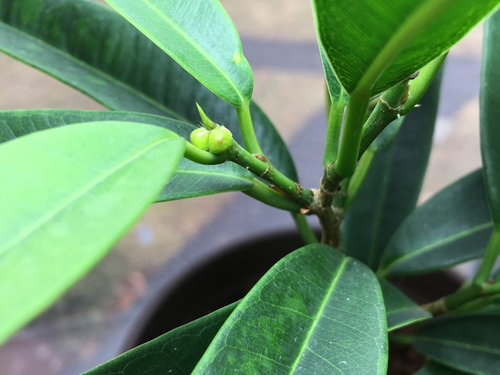
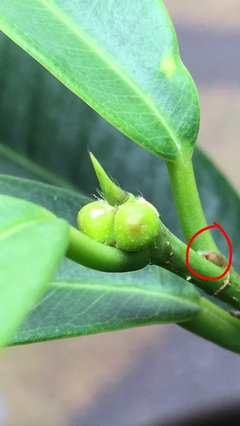
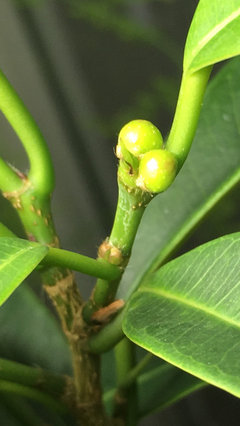
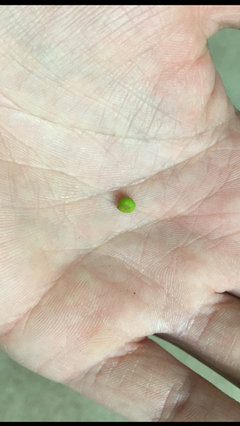
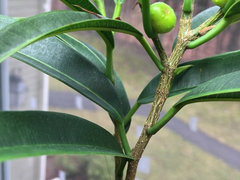
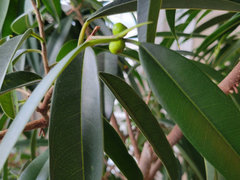
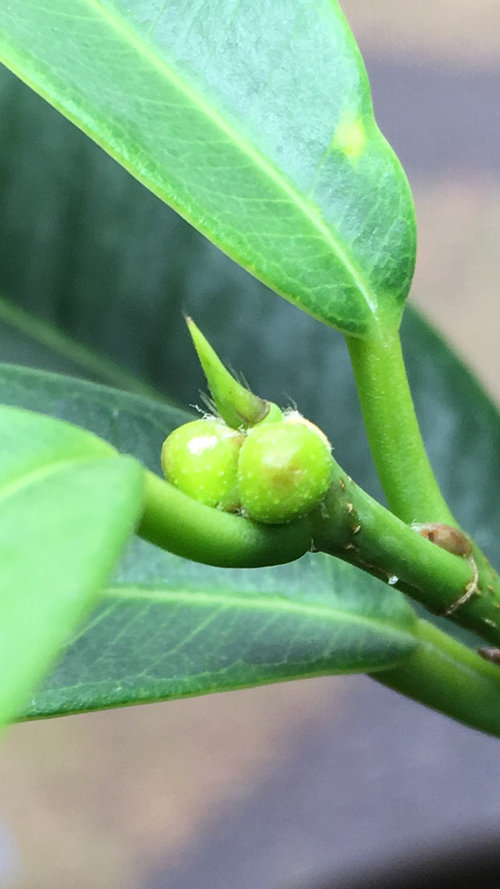
What are these round balls growing next to the bud?

ive never seen it before. I was gone on vacation for a couple weeks and they weren't there prior.

do these fruit or flower? I've never seen this before.

Comments (26)

  • 10 years ago

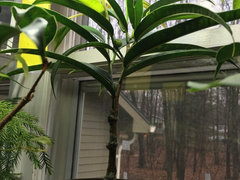
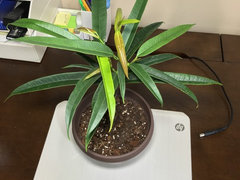
    I don't know what it is (do not grow this plant) - just wander if there is a scale on the leave in the bottom part of your photo?...the round brown thing...

  • 10 years ago

    It's not scale. It seems something at one point was sucking on the leaf there. Probably when it was outside last summer.

  • 10 years ago
    last modified: 10 years ago
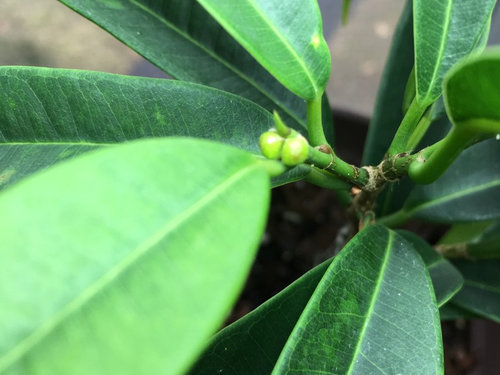
    It's fruit and flower. Figs (the fruit) are inverted flowers called syconiums.


    I noticed that brown 'thing' in the leaf axil too, Rina.

    Al

    Dave thanked tapla (mid-Michigan, USDA z5b-6a)
  • 10 years ago
    last modified: 10 years ago
    Thanks! I thought Alii was similar to benjamina and normally didn't fruit unless grown from seed. My alii are from cuttings I took last year.

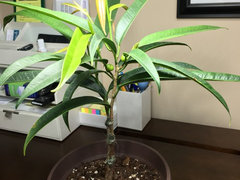
    Al, are you speaking of the bottom photo? That's a small bud that seems to be shedding a layer. i thought Rina was speaking of the brown spot on the leaf in the first and second photo.

  • 10 years ago

    The brown spot is visible in all 3 photos, and I'd bet that's what's caught Rina's eye. I was talking about the two round balls in the leaf axil between the mature leaf and new bud that's starting to mature - the ones you asked about. Those are figs.


    Al

    Dave thanked tapla (mid-Michigan, USDA z5b-6a)
  • 10 years ago

    I guess I'm not sure which brown spot you're all speaking of. I don't seem to see one in the third pic.

  • 10 years ago
    last modified: 10 years ago

    It's very conspicuous in the leaf axil immediately proximal to the figs.


    Al

  • 10 years ago
    last modified: 10 years ago

    Al,

    is this what you're speaking of? You know me, obviously if there's an issue I'll tackle it asap

  • 10 years ago
    last modified: 10 years ago

    I don't know - you'd need to ask Rina. I'm betting that's what she was talking about & what I noticed, too. I'm guessing it's just a stipule, but since I can't really get a good look ...............

    Al

  • 10 years ago

    I'm 99% sure that's just a small bud forming. I will take a better look and report back tomorrow. Either way, thanks for brining it up.

  • 10 years ago

    Here is a view from another angle. Seems to be a stipule.

  • 10 years ago
    last modified: 10 years ago

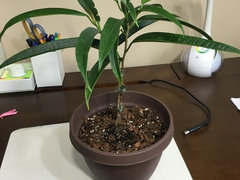
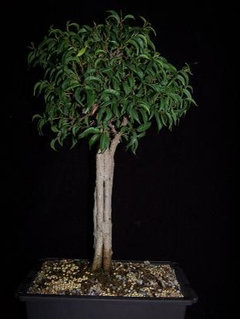
    Still tiny! Took the cuttings from a tree where my girlfriend works. They each had one leaf when I took them late last summer.

    I'm going to keep trimming it until it gets about 4 feet tall and then prune it back to make it full out.

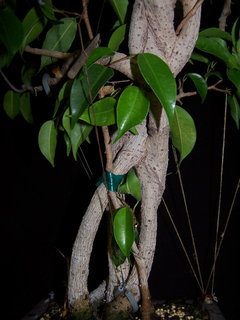
    its two small trunks that I've tied together hoping they'll fuse

  • 10 years ago

    Dave, Al,

    I didn't notice the posts, sorry for not answering.

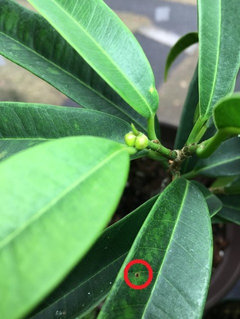
    I was actually looking at the leave with a round spot:

    but Dave said it is actually a small hole. Noticed the 'other' brow bump, but I assumed it was a new bud...

    Nice plants from cuttings, Dave! How did you root them?

    I am no expert on this, but 'wounding' the sides of the stems that touch may help in fusing? Al to the rescue! :)

    Dave thanked rina_Ontario,Canada 5a
  • 10 years ago

    Exposing the cambial tissues of both plants where they contact would
    definitely hasten inosculation. I've had the best luck by wrapping both
    parts I wanted to fuse together with grafting tape.

    In the tree below, you can see what the tape looks like, and that there has been a lot of inosculation going on over time with this tree.

    The picture below, though the tape has been removed, illustrates the results of wrapping the stems together. Also, you'll get a more interesting trunk if you twist them together so they fuse in a sort of spiral form.


    Al

    Dave thanked tapla (mid-Michigan, USDA z5b-6a)
  • 10 years ago

    Thanks to both of you!

    Yep, the brown spot is just a spot where something must have munched on it at one point. It's just dead tissue. The other thing in question is a bud.

    Rina, I rooted then in water. I know there are better methods, but air layering definitely wasn't an option as it tree wasn't mine and rooting in anything such as pelite has never worked for me. Not once.

    I know that roots formed in water are not the same as roots formed in a medium where they have access to air and that can make the process take longer, but it worked well.

    Ive reported it twice. Started it in a peat based mix, grew slowly. Then I bare rooted and placed back in the same pot with the 5:1:1 mix. Three roots grew out of the drain holes and filled the small pot within a month. I noticed the roots that grew in the 5:1:1 were larger, firmer and just had a much better structure to them than the ones that grew in the peat based mix. It filled the pot so fast I again had to repot. Should be ok for a bit now.

    Al, thanks for those pics! I'll have to find some graphting tape. I'm currently using twine and have them tied tightly together.

    Do alii grapht as well as benjamina? Every time I see them braided in stores, the benjamina has always fully graphted, whereas the alii has not.

  • 10 years ago

    I've never tried fusing alii, so can't say. Cuttings with smooth, young bark do fuse much more readily than cuttings with older, furrowed bark covered with dead periderm tissues. Wrapping the stems with grafting tape also causes the trunks to fill any voids left after wrapping. Your plants will actually grow around the twine you tied them together with if you're not careful or if the twine doesn't rot away before that occurs.


    Al

    Dave thanked tapla (mid-Michigan, USDA z5b-6a)
  • 10 years ago

    I will get some graphting tape sooner than later. Thanks for the tip!

  • 10 years ago

    They have both since fallen off. Is it possible to dry them and grow an alli from the seed?

  • 10 years ago

    Not always, but usually a single species of wasp is the dedicated pollinator of a given species of Ficus, so in situ plants can be grown from seed, even if they're usually not, and ex situ plants are almost always sterile.


    Al

    Dave thanked tapla (mid-Michigan, USDA z5b-6a)
  • 10 years ago
    last modified: 10 years ago

    Dropped the two it was growing when I took the pic. However, two more are growing in a different area and are about twice as big. Kind of cool.

  • 6 years ago

    I had a Ficus for thirty years, inside winter, outside summer, it did not have the fruit until year 36! I air grafted two different trees from this plant. On the second one, only two feet tall, it is now growing the fruit. Yes, they fall off if moved so maybe the older one had them during the summer and I did not notice since the pot was sitting on a pea gravel area! 💕


  • 6 years ago

    I also have a Ficus Benjamina that constantly puts out fruit. All year long, all over the tree.

  • 5 years ago

    My Alii just grew some and I'm trying to figure out what it means and what to do with it. I don't know much about plants, though I tend to be pretty good with them. I've had this one for just over a year, it's about 5' tall. I read that the berries should be removed. Does anyone know about that? Or can I start a seedling from it, that would be cool, I've never tried before.


  • 5 years ago

    It is my understanding from research that unless your plant is outside, theywill not be fertile. If is has been outside, they should grow seedlings. I came home from vacation and found five on the floor, I missed them totally. Good luck!

  • 5 years ago

    The fruit of a fig (a synconium) is actually a receptacle for it's flowers, which grow inside the receptacle. Figs are pollinated almost always wasps, that crawl into the synconium through a hole (ostiole) in the distal end/bottom of each synconium. The female wasp(s) carry pollen into the fig, pollinate the flowers, and die inside. Male wasps emerge and mature first. When female wasps emerge they meet the males and mate. The males then dig escape tunnels for the females before dying inside the fig. The females then go in search of another synconium, which completes the circle.

    So, whether or not your little synconium gets pollinated depends on a highly specific wasp having access to them.

    Better to attempt propagation by way of cuttings.

    Pecking Order of Plant Parts

    Trees and herbaceous plants prioritize their parts, but perhaps it's better to say that the strength of energy sinks has a distinct order: Energy is first allocated to respiratory function, i.e. to maintenance of living tissues, then, to production of fine roots, followed by flower and seed/fruit production, then primary growth (extension of both roots and shoots), then secondary growth (thickening), and finally, the synthesis of defensive chemicals. From this, you can conclude that additional energy will be available for primary and secondary growth as well as the plant's defenses.

    As a bonsai practitioner, I always remove blooms from developing plants as soon as they appear. If I miss removing some of the blooms, I remove the developing fruit to free up extra energy in order to increase the plant's mass. On more developed plants where bloom and/or fruit appreciation is one of the plants most desirable properties, I generally limit blooming/fruiting to every other or every third year in order to keep the vitality level of the plants as high as possible. While I realize you are not tending a bonsai, this is a useful bit of information applies to any potted tree you would grow indoors or outdoors.

    Al

Sponsored
Hope Restoration & General Contracting
Average rating: 4.7 out of 5 stars35 Reviews
Columbus Design-Build, Kitchen & Bath Remodeling, Historic Renovations