Software
Houzz Logo Print
rick7072

Identify this (I think) weed?

10 years ago
last modified: 10 years ago
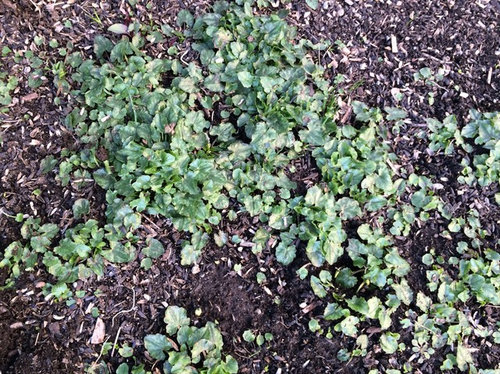
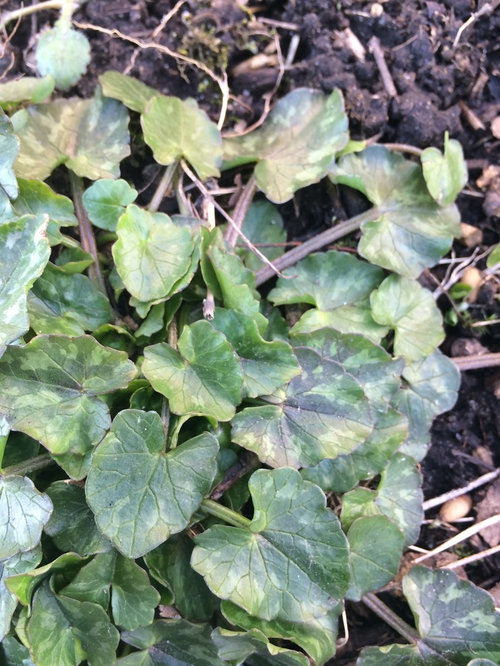
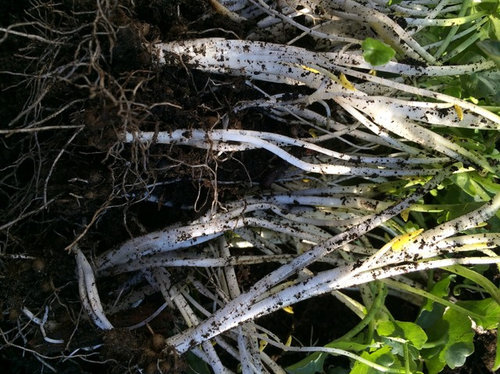
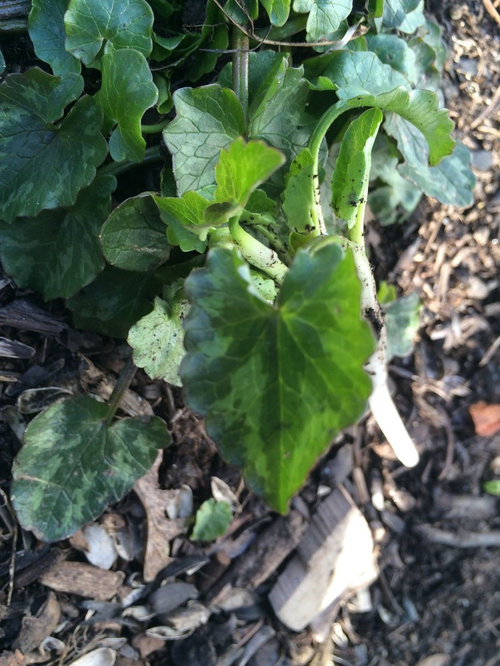
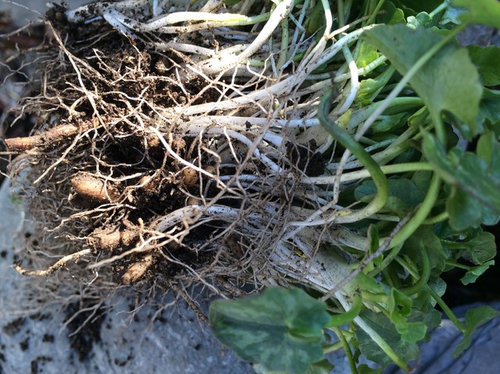
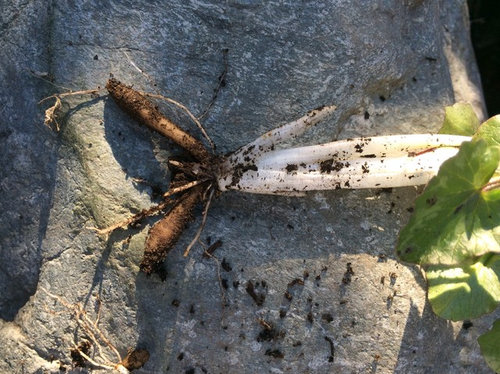
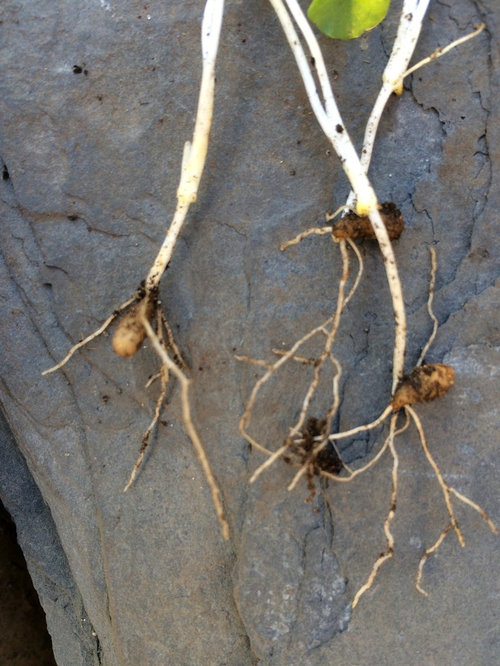
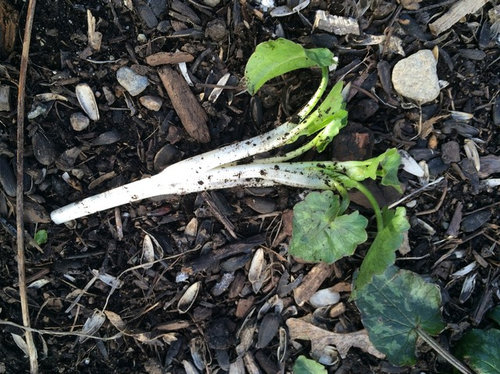
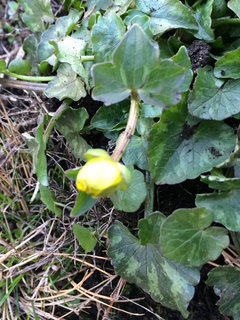
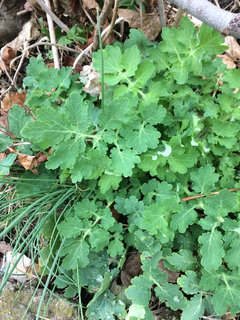
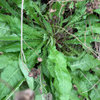
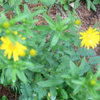
This has appeared all over one area of my yard this year (southern New England). Someone has suggested it might be garlic mustard but I'm not sure about that. It's possible it's from seeds I planted last year that needed winter stratification, but I doubt it. Most leaves have this interesting mottled pattern, though the leaves of some other plants are a more straight green. I pulled out a bunch to see the roots, and there are many plants growing densely together. Some roots have interesting nodules on them, which look like nitrogen-fixing but it doesn't look like a bean-family plant. Any thoughts?

Flower Garden · More Info

Flower Garden · More Info

Flower Garden · More Info

Flower Garden · More Info

Flower Garden · More Info

Flower Garden · More Info

Flower Garden · More Info

Comments (13)

  • 10 years ago

    the root structure.. in the third pic above.. shows over wintered roots ... that one at least is not from seed this spring ...


    ken

    Rick (zone 6b, MA) thanked ken_adrian Adrian MI cold Z5
  • 10 years ago

    It's Ficaria verna aka Lesser Celandine. Ken is right, those are bulbils not seeds and they will stay in the soil when you pull the plant. It is a nightmare to get rid of. Good news is it goes dormant in summer. A noxious weed in some states.

    Rick (zone 6b, MA) thanked floral_uk z.8/9 SW UK
  • 10 years ago

    Thanks, floral_uk. I see a photo of it on the web and the basal tuber certainly looks very similar to what I have here. Ugh -- they all just came (seemingly) out of nowhere. Never saw one of these plants before this year and now they're all over this one part of the yard. Just to confirm: these basal tubers are bulbils? I think of bulbils as produced either on the aerial part of a plant or on the leaf axils, no?

  • 10 years ago

    Firstly, I would emphasise that there is absolutely no doubt about the id. I fight this UK native constantly. The plant can spread by tubers, tubercles ( bulbils) in the leaf axils and seed. You might not have noticed them before if you didn't go to that area in early spring. They disappear in late spring.

  • 10 years ago

    Well, today I was out in my garden and adjacent lawn areas where this plant has established itself. I was trying to figure out the best ways to get rid of it, digging and pulling but trying to not to spread the tubers and bulbils (a task well-nigh impossible, it seems). And I think that on some unconscious level I was still in shock and therefore only 99% convinced that this was Lesser Celandine, until I looked at one clump and saw....

  • 10 years ago

    isolate the area .. and spray it with round up.. for as many years as it takes to kill it ...


    we were clearly told.. digging up a nightmare like this .. is.. well .. a nightmare.. lol


    ken

  • 10 years ago

    Ever since learning here about this invasive, I've wondered:
    wherefore the scientific name 'Ficaria' (Latin for 'fig') and one of its common names 'fig buttercup'? What in God's name does the plant
    have to do with figs?

    Well, I poked around online and I see that Google Books makes available an old 1896 volume called The
    Encyclopaedic Dictionary: A New, Practical and Exhaustive Work of
    Reference to All the Words in the English Language, With A Full Account
    of Their Origin, Meaning, Pronunciation, History and Use,
    edited by Robert Hunter and Charles Morris. In the entry found therein for Ficaria, the authors indicate that the species is "so called because the fasciculated
    knobs of the roots have been fancifully compared to little figs"

    Hmm... I'm not sure that idea would have come to me from looking at those blasted tubers but I like the spirit of it.

    btw, I note also that the name is now Ficaria verna but I believe it was previously called Ranunculus
    ficaria
    .

  • 10 years ago

    You get an A+ for an excellent post. A+ photography-nice detail. A+-multiple photos A+ answered ongoing and clarifying questions. You could be our poster person for a most excellent post!

    Rick (zone 6b, MA) thanked xiangirl zone 4/5 Nebraska
  • 10 years ago

    Thank you kindly. This forum is such a wonderful thing and I think it inspires me. It's not just useful, but also beautiful. (Anyway, I've always thought gardening and literature go together.)

  • 10 years ago

    Speaking of Celandine, I just realized that in one area of my yard, not 20 feet from each other, I have both Greater and Lesser Celandine. Totally different and unrelated plants, of course -- GC is in the poppy family and LC is a buttercup. Apparently 'Celandine' is from the ancient Greek chelidon which means 'swallow,' as in the bird. Wikipedia says that ancient writers apparently believed that the flower bloomed when the swallows returned and faded when they left. I guess they felt this applied to both the Greater and the Lesser, or did Linneaus have something to do with this nomenclature?

    Sometimes Greater Celandine is called Swallowwort.

    So these plants have taken me on quite a journey, from highly invasive weed to listening to the ancients observing the habits of swallows.


  • 10 years ago

    I am sorry to tell you that Chelidonium majus is also a pest with seeds that seem to last almost forever in the soil, though plants are far easier to remove than those of Ficaria verna. I've been at my current home for just shy of 20 years, and even though I pull all that I see (those bright yellow spring flowers are easy to see if I've missed the foliage) and put any flowers or developing seed pods in the trash, not the compost, I still have some that come up every year.

  • 10 years ago

    I have a Greater Celandine problem as well and it is annoyingly on my fence line. Thankfully it is fairly easy to pull.