Software
Houzz Logo Print
tanazarteaga

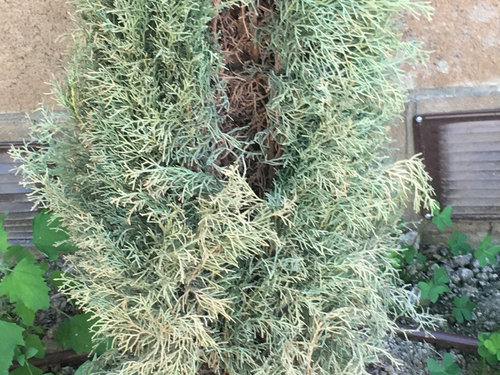
Tiny Tower cypress dying- please help

10 years ago

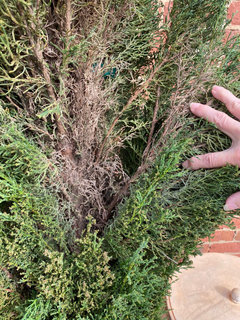
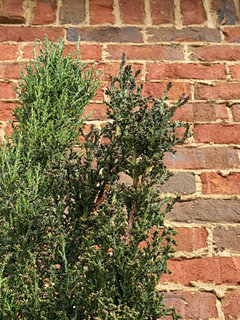
We live in Southern California and recently planted a small garden in an approximately 7x40 foot area along our fence behind the pool. The focal points along the wall are 5 Monrovia tiny tower Italian cypress trees. There is a surface irrigation system in the bed, surrounding plants are small sedums and succulents and the area is prone to weeds that grow faster than I can keep up with. One of the trees appears to be dying. It was planted about two months ago in soil mixed with a treated dirt for our area the nursery suggested. Can I save this plant??? Any ideas about cause? Please help.


Photos below.


thanks in advance!!!!

Comments (13)

  • 10 years ago

    Yup-often extremely dry up against a foundation like that, especially if roof overhang is wide.

    tanazarteaga thanked wisconsitom
  • 10 years ago

    Thanks for the replies! We have been having extreme weather and it does seem dry. So would I just water more often? Or will I end up overwatering? Any other things I can do not to lose the trees? One other of the five is starting to turn yellow too and these were expensive . Sigh.

  • 10 years ago

    The only true test for watering need is to manually check the soil every so often....after you've done it for a while, under your conditions, in your location, you'll have a good idea how often-and then water when the top couple inches of soil feels dry. Even this last bit where I said top couple inches-that too will vary depending on site factors we can't know-things like soil texture and its accompanying impact on drainage characteristics, light exposure.

    In other words, watering-although universally considered among the easiest of jobs-is actually something that must be learned and which is part science, part art.

    In the photo provided, your soil actually looks dry to me. That can be a fooler though. Right around here for example, we've got this clay-loam soil that can look very dry on top yet still be moist just under the surface.

    tanazarteaga thanked wisconsitom
  • 10 years ago

    Since Tiny Towers is a Monrovia proprietary cultivar and Monrovia has a dubious reputation for offering potbound containerized plants, a congested or circling root system may also be present. Was the rootball disturbed at all before planting?

    And I wouldn't discount lack of sufficient water to be a big contributor as well.

    tanazarteaga thanked gardengal48 (PNW Z8/9)
  • 10 years ago

    I agree on the near-universality of pot-grown root anomalies-this vendor or otherwise-but while that is indeed a serious problem for the plant, I think of it as manifesting slowly and generally not being apparent right away. Have you seen otherwise, gg? I suppose in a seriously deformed specimen, things could go so awry so quickly that basic root function could be impaired....but still, mostly a slow-motion disaster for the plant, I think.

    tanazarteaga thanked wisconsitom
  • 10 years ago
    last modified: 10 years ago

    The main problem with rootbound woody stock is toppling some years later after the top gets heavy enough for the specimen to pivot over on its inadequate anchorage, when additionally weighed down by snow or being pressed against by high winds. I've had shrubs fall over in snow about 25 years after planting, turn out to have small, tight turnip-like root crowns due to having spent too long in 4" pots at the production facility. Sometimes also a girdling main root will actually pinch off part of the top, resulting in deterioration and death of the part above the root.

    Watering issues with recently planted trees and shrubs are due to textural differences between the field soil or potting medium on the roots and the soil around them - this is one reason why bare-rooting at planting time has become recommended in later years. Plants with intact rootballs or root masses surrounded by soil of a significantly different texture often have moisture wicked away during dry conditions if the soil around the plant is of a finer texture - as will very often be the case when the plant is in coarse potting soil, surrounded by an unmodified native soil - or may instead attract water, become sodden if placed in a heavy and wet soil. Liberal amending of planting hole backfill merely enlarges the area of impacted water movement that the plant has to survive and root across. Amending of an entire bed of soil around the plant does push the zone of interaction with unamended soil out farther but this altering of soil texture lasts only until the amendments decompose - not long enough for long term plantings like those made using woody plants. Amending with mineral materials like sand avoids the problem of decomposition of organic soil amendments, but if a soil does not already have a fairly high percentage of sand an enormous amount may have to be added before the desired level of improvement is seen. Resulting in the height and volume of the bed exceeding the space. Also if too much sand is added a droughty and leaching (poor) soil may be produced.

    tanazarteaga thanked Embothrium
  • 10 years ago

    Yes, it can be an almost immediate issue, at least with this vendor. Being held in the pot too long and the associated root congestion makes adequately hydrating the rootball both before and after planting difficult. This cultivar in particular seems to be returned frequently to my nursery due to a failure much as illustrated above. I recommend thoroughly soaking the container before planting and then roughing up or disturbing the rootball as much as possible without overly damaging it before planting.


    tanazarteaga thanked gardengal48 (PNW Z8/9)
  • 10 years ago

    Yeah, I can see that. A thought: Wouldn't it be grand if research was to be conducted on what I would imagine to be significant differences amongst the genera, species, and cultivars in terms of the ability of their respective root systems to inosculate, thereby perhaps remaining functional. I've heard anecdotal evidence that this may be true in some plant types......but some hard science might be of significant help, not only in knowing when a situation is hopeless, but also, those situations in which root system architecture does not matter so much. This of course assuming such plant types are really out there.

    With OP's plant here though, I think water might just have been too late in coming...or too little.


    tanazarteaga thanked wisconsitom
  • 10 years ago

    I was worried about the root ball suggestion but I was there for planting and I remember they carefully tried to remove the potting soil and mixing it with the additive containing dirt we purchased to help treat the clay soil. We probably did disturb the roots a bit but I doubt they were destroyed. My uncle planned the area and did the planting with the help of a nursery assistant who delivered and helped plant. We planted the day of delivery. My uncle is an irrigation specialist and worked as a landscaper many years ago. But he went back home a few weeks ago and really hasn't seen the results. I am guessing it is more us and watering than the planting given their experience. Let's hope I can save these plants!!!! Thanks everyone!!!

  • 10 years ago

    Not seeing how the density of the root exceeds the texture of the potting medium as being the main effect on how water enters the potting medium. And if bound roots alone are preventing adequate water from getting to potted stock to a fatal degree, how come this is not happening at the production facility?

    they carefully tried to remove the potting soil and mixing it with the additive containing dirt we purchased

    There was no point in doing this as the newly planted specimen was still left in a small area of amended soil surrounded by a larger area of unmodified soil with what was most likely a significantly different texture. Any special planting procedure undertaken to try and prevent watering and establishment issues resulting from soil textural differences will if successful result in the plant being nested in a uniform soil texture throughout its entire potential rooting area from the base of its stem outward.


    tanazarteaga thanked Embothrium
  • 6 years ago

    Could spider mites be hidden culprit? My tiny tower is sick also. I did find spider mites , they appear to be gone
    We are in ala. Bought 4 from Texas about one year and 1/2 ago
    I had a horrible time finding them. Very concerned as the point at top seems to be drying up in places. Other 3 are perfect. Any ideas

  • 6 years ago

    once the canopy grows and covers interior greenery.. that greenery will die due to lack of sunlight .. and it should be cleaned out once in a while ...


    so... im not sure what the pix show.. other than normal interior browning and shedding ...


    im not saying you are wrong.. im just saying what i see in the pic ...


    the second pic seems to show both juvenile and mature foliage ... ... i cant see any drying in this pic ...


    ken